NMR Image Processing Software (2D/3D)
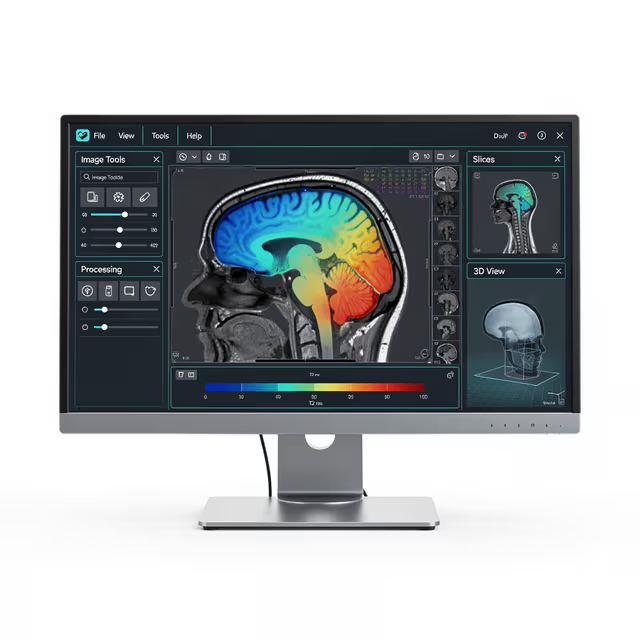
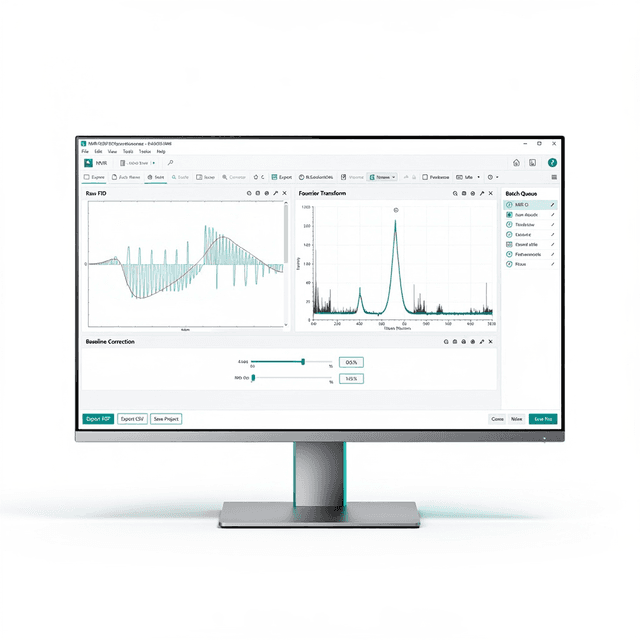
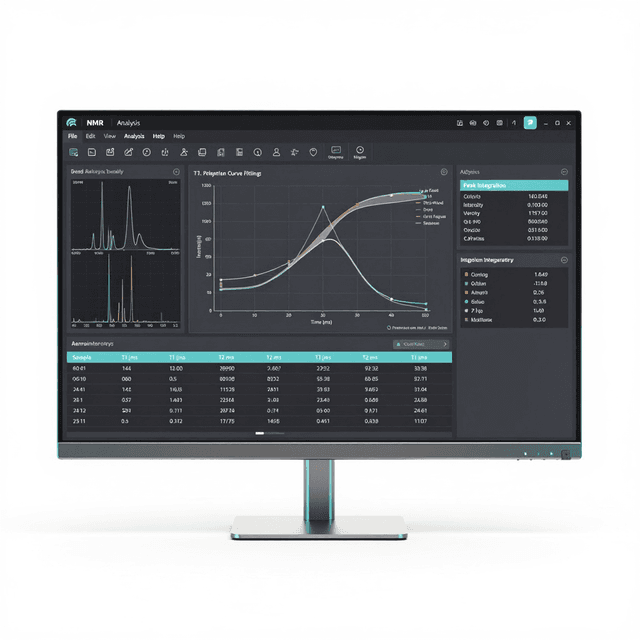
Windows-based software for 2D/3D NMR image analysis, offering pore structure quantification, volume reconstruction, and dimensional measurement capabilities for imaging datasets.

Louise Corscadden, PhD
Director of Science · ConductScience
Ask Louise about NMR Image Processing Software (2D/3D) fit, setup, configuration, or quote prep.
Already working with us? Sign in to connect this with My Scientist.
Key Specifications
Full details →- Model fit
- Configured during quote
- SKU family
- NMS-SW-IMGPROC
- Shipping box
- 29.7 x 22.3 x 29.7 cm
- Ordering
- Online checkout and quote request available
- Category
- NMR/MRI Software
- Build notes
- Confirm accessories, station layout, and support needs before purchase
The NMR Image Processing Software (2D/3D) provides comprehensive analysis capabilities for nuclear magnetic resonance imaging datasets. This Windows-based application transforms raw NMR imaging data into quantitative measurements and three-dimensional reconstructions, enabling detailed characterization of porous media, biological samples, and material structures.
The software processes 2D image stacks to generate volumetric reconstructions, quantifies porosity distribution, and performs dimensional analysis on imaged samples. Core analytical functions include pore structure mapping, saturation calculations, and grayscale intensity analysis, making it essential for researchers requiring quantitative spatial analysis of NMR imaging datasets.
How It Works
The software processes NMR imaging datasets by analyzing signal intensity variations that correspond to nuclear spin density and relaxation properties within the sample. Raw 2D image slices are imported and processed using digital image analysis algorithms that identify material boundaries, calculate porosity from signal void regions, and reconstruct three-dimensional volumes through slice interpolation and rendering techniques.
Quantitative analysis functions operate by applying threshold-based segmentation to distinguish pore spaces from solid matrix material, calculating volumetric ratios to determine porosity percentages, and measuring geometric parameters through pixel-based dimensional analysis. The grayscale extraction capabilities enable intensity profiling across regions of interest, supporting quantitative comparison of material properties within the imaged volume.
Features & Benefits
Platform
- Windows 10/11
Automation Level
- semi-automated
Brand
- Greenwaves Scientific
Research Domain
- Analytical Chemistry
- Environmental Monitoring
- Food Science
- Materials Science
- Pharmaceutical QC
Shipping weight
- 0.22 lb
Shipping box
- L: 29.7 cm
- W: 22.3 cm
- H: 29.7 cm
| Feature | This Product | Typical Alternative | Advantage |
|---|---|---|---|
| 3D Reconstruction Capability | Integrated 3D model reconstruction from 2D image stacks | Basic visualization tools may lack automated 3D reconstruction features | Eliminates need for separate 3D modeling software and ensures proper slice registration for accurate volume analysis. |
| Specialized Analysis Tools | Purpose-built pore structure analysis and saturation calculation functions | General image analysis software requires custom programming for specialized measurements | Provides ready-to-use quantitative tools specifically designed for NMR imaging applications. |
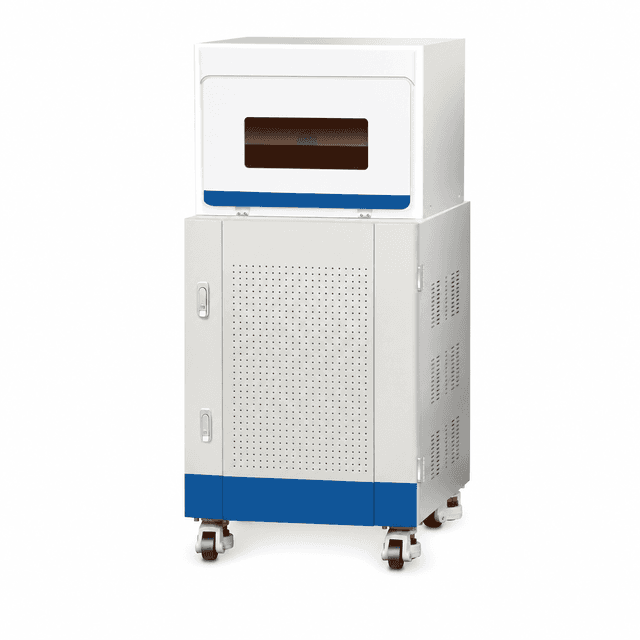
| Instrument Integration | Compatible with Greenwaves Scientific imaging-capable instruments | Third-party software may require format conversion steps | Streamlines data processing workflow through direct instrument compatibility and optimized file handling. |
| Platform Requirements | Windows 10/11 support | Some specialized software may have limited OS compatibility | Ensures compatibility with standard laboratory computing infrastructure and IT support systems. |
The software combines 3D reconstruction capabilities with specialized NMR imaging analysis tools in a single Windows-compatible platform. Integration with Greenwaves Scientific instruments and purpose-built quantitative functions provide streamlined workflows for porous media characterization and material analysis applications.
Practical Tips
Establish pixel-to-physical dimension scaling using reference objects or known sample dimensions before quantitative analysis.
Why: Proper scaling ensures accurate dimensional measurements and porosity calculations from imaging data.
Regularly backup processed datasets and analysis parameters to prevent data loss and maintain workflow consistency.
Why: Complex image processing workflows require preservation of analysis settings for reproducible results.
Optimize threshold settings for each sample type to ensure accurate pore-matrix segmentation in porosity analysis.
Why: Material-specific thresholds improve measurement accuracy and reduce artifacts in quantitative analysis.
Verify slice alignment and spacing parameters when importing 2D image stacks for 3D reconstruction.
Why: Proper slice registration is essential for accurate volume calculations and dimensional measurements.
Monitor system memory usage during large dataset processing and close unnecessary applications to prevent processing errors.
Why: Large 3D reconstructions require substantial system resources and may fail with insufficient memory allocation.
Document analysis parameters and processing steps for each dataset to ensure reproducible quantitative results.
Why: Standardized processing protocols enable comparison between samples and validation of analysis methods.
Compare grayscale intensity profiles across known reference regions to validate image processing consistency.
Why: Intensity validation helps identify processing artifacts and ensures reliable quantitative analysis results.
Setup Guide
What’s in the Box
- Software installation media (typical)
- User manual and documentation (typical)
- License key and activation instructions (typical)
- Quick start guide (typical)
Warranty
ConductScience provides standard one-year software support including technical assistance and software updates. Extended support packages are available for mission-critical applications.
Compliance
What image file formats are supported for data import?
Consult product datasheet for complete file format specifications. The software is designed to process 2D image stacks from NMR imaging instruments.
What are the minimum system requirements for processing large datasets?
Windows 10/11 is required. Specific RAM and storage requirements depend on dataset size and complexity - consult product datasheet for detailed specifications.
Can the software quantify pore connectivity in addition to porosity?
The software provides pore structure analysis capabilities. Consult product documentation for specific connectivity analysis features and algorithms.
What output file formats are available for 3D reconstructions?
Consult product datasheet for supported 3D file formats and compatibility with common visualization and modeling software.
How accurate are the dimensional measurements?
Measurement accuracy depends on image resolution and pixel scaling calibration. Proper calibration with known standards is essential for quantitative analysis.
Can multiple datasets be processed simultaneously?
Batch processing capabilities depend on system resources and software configuration. Consult product documentation for workflow optimization recommendations.
What training is available for new users?
Technical support includes user documentation and guidance. Contact ConductScience for training options and application-specific consultation.
Have a question about this product?
Have a question? Just ask.
Send it over and we'll email you a personalized answer — no call, no scheduling.
Prefer to talk it through?
Accessories
Enhance your setup with compatible accessories