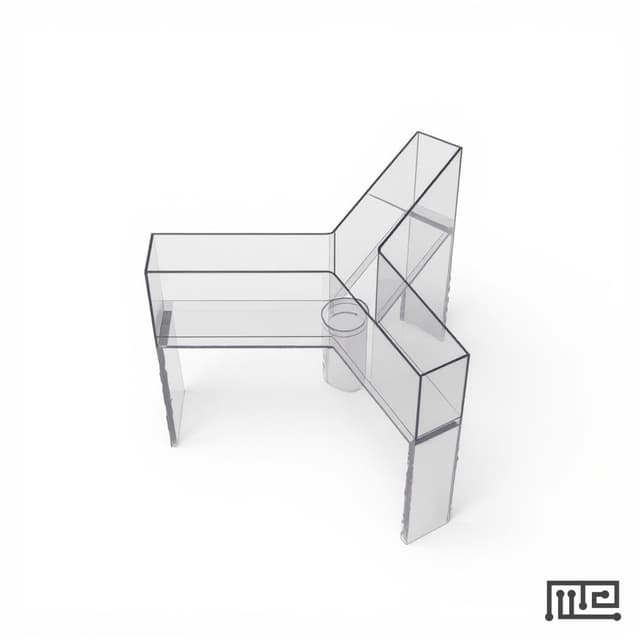
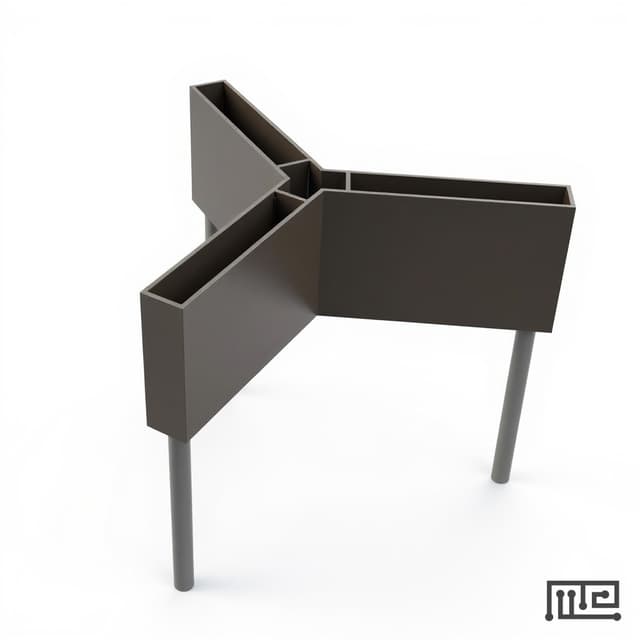
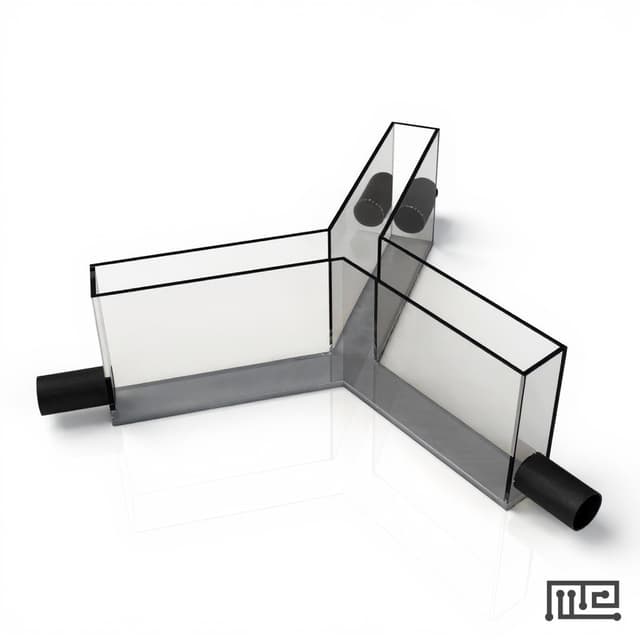
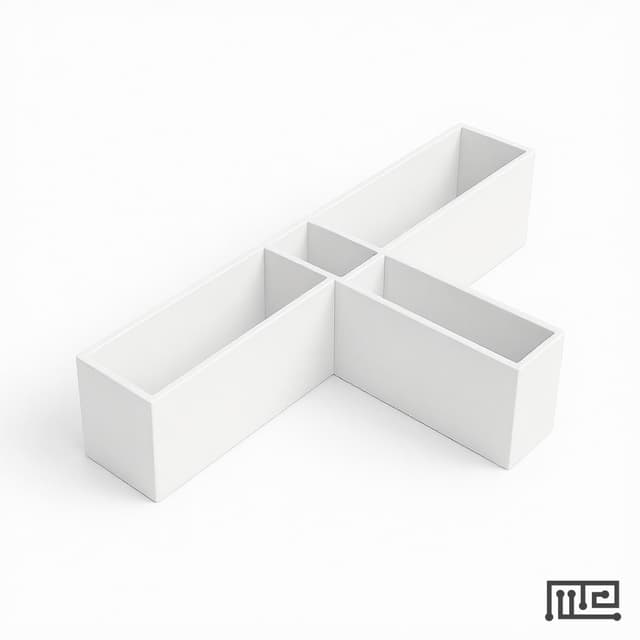
Octopus Round Arena
Circular behavioral testing arena for spatial learning and memory assessment in laboratory animals, supporting radial arm maze and spatial navigation protocols.
| Automation Level | manual |
| Species | Mouse, Rat |

The Octopus Round Arena is a circular behavioral testing apparatus designed for spatial learning and memory assessment in laboratory animals. This arena provides a standardized environment for conducting radial arm maze protocols, reference memory tasks, and spatial navigation studies. The circular design eliminates corner preferences and provides uniform spatial cues for consistent behavioral measurements.
The arena supports multiple experimental paradigms including place learning, spatial reference memory, and working memory protocols. Researchers can configure the apparatus with various cue arrangements and reward locations to assess cognitive function, spatial processing, and memory consolidation in rodent models of neurological and psychiatric conditions.
How It Works
The Octopus Round Arena operates on principles of spatial cognition assessment through controlled environmental testing. Animals navigate within the circular space using spatial cues to locate reward zones or escape platforms, engaging hippocampal-dependent spatial memory systems. The circular geometry eliminates directional biases present in rectangular mazes while maintaining consistent spatial relationships between cues.
Behavioral measurements rely on tracking animal movement patterns, latency to target locations, path efficiency, and error frequencies. The arena can be configured with external visual cues, internal landmarks, or geometric patterns to assess different aspects of spatial processing including landmark navigation, dead reckoning, and cognitive mapping strategies.
Features & Benefits
Behavioral Construct
- Spatial Memory
- Working Memory
- Reference Memory
- Spatial Navigation
- Cognitive Mapping
Automation Level
- manual
Research Domain
- Aging Research
- Behavioral Pharmacology
- Learning and Memory
- Neurodegeneration
- Neuroscience
Species
- Mouse
- Rat
Weight
- 6.06 kg
Dimensions
- L: 65.0 mm
- W: 36.0 mm
- H: 27.0 mm
Comparison Guide
| Feature | This Product | Typical Alternative | Advantage |
|---|---|---|---|
| Arena Geometry | Circular design with uniform spatial environment | Rectangular mazes with corner biases or linear tracks with limited spatial complexity | Eliminates directional preferences and provides consistent spatial relationships for reliable cognitive assessment |
| Protocol Flexibility | Supports radial arm, spatial reference, and working memory protocols | Single-purpose apparatus designed for specific maze types | Allows researchers to conduct multiple experimental paradigms with one apparatus |
| Construction Type | Modular assembly with reconfigurable components | Fixed construction requiring permanent setup space | Enables easy storage, transport, and reconfiguration for different laboratory spaces |
| Tracking Compatibility | Compatible with standard video tracking systems | Varies by model with some requiring proprietary tracking solutions | Integrates with existing laboratory tracking infrastructure without additional software investment |
The Octopus Round Arena provides a standardized circular environment optimized for spatial cognition assessment. The modular design and protocol flexibility support diverse experimental approaches while maintaining consistent spatial geometry for reliable behavioral measurements.
Practical Tips
Allow 10-15 minutes between trials for complete odor dissipation even after cleaning.
Why: Residual scent cues can influence spatial navigation behavior and confound cognitive measurements
Verify tracking system coordinates match physical arena boundaries before each testing session.
Why: Accurate spatial mapping is essential for reliable path analysis and distance measurements
Inspect wall connections regularly for gaps or loose joints that could affect arena integrity.
Why: Structural consistency is critical for maintaining standardized spatial environments across testing sessions
Record ambient lighting conditions and maintain consistent illumination throughout testing periods.
Why: Variable lighting can affect animal behavior and spatial cue visibility
If animals show persistent wall-hugging behavior, increase trial duration or modify spatial cue salience.
Why: Thigmotaxis can mask spatial learning abilities and reduce task sensitivity
Ensure wall height is appropriate for test species to prevent escape while allowing normal behavior.
Why: Proper containment maintains experimental control without inducing stress-related behavioral artifacts
Setup Guide
What’s in the Box
- Circular arena wall sections (typical)
- Floor base components (typical)
- Assembly hardware (typical)
- User manual with protocol examples (typical)
Warranty
ConductScience provides a standard one-year manufacturer warranty covering defects in materials and workmanship. Technical support is available for setup guidance and protocol optimization.
Compliance
What animal sizes can be tested in this arena?
Consult product datasheet for specific dimensions. The arena is typically designed for standard laboratory rodents including mice and rats.
Can the arena be used with automated tracking systems?
Yes, the circular design is compatible with overhead video tracking systems for automated behavioral analysis and path tracking.
How do you prevent olfactory cues between subjects?
Clean arena surfaces thoroughly with ethanol solution between subjects and allow complete drying to eliminate scent trails.
What spatial cue configurations are possible?
External visual landmarks, internal geometric patterns, or texture cues can be arranged around or within the arena depending on protocol requirements.
How long do typical testing sessions last?
Session duration varies by protocol, typically ranging from 5-15 minutes per trial depending on task complexity and animal performance.
Can multiple reward zones be configured?
Yes, the circular design allows placement of multiple target locations or reward zones for radial arm maze and multi-choice protocols.
Have a question about this product?

Upgrade Options