Olfactory Hole Board
Behavioral testing apparatus combining hole-board exploration with controlled odor presentation for investigating olfactory perception and emotional behavior in laboratory animals.

Louise Corscadden, PhD
Director of Science · ConductScience
Ask Louise about Olfactory Hole Board fit, setup, configuration, or quote prep.
Already working with us? Sign in to connect this with My Scientist.
Key Specifications
Full details →- Model fit
- Mouse, Rat
- SKU family
- CS-958224
- Sizing
- 65.0 x 36.0 x 27.0 cm
- Ordering
- Online checkout and quote request available
- Category
- Behavioral Mazes
- Build notes
- Confirm accessories, station layout, and support needs before purchase
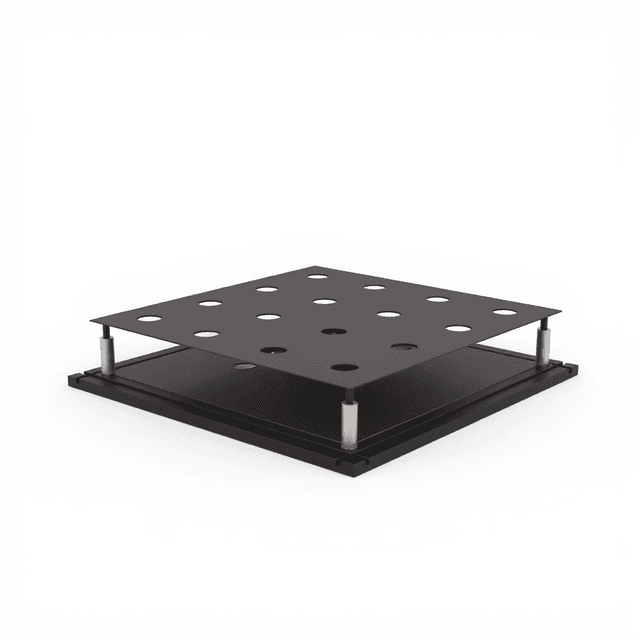
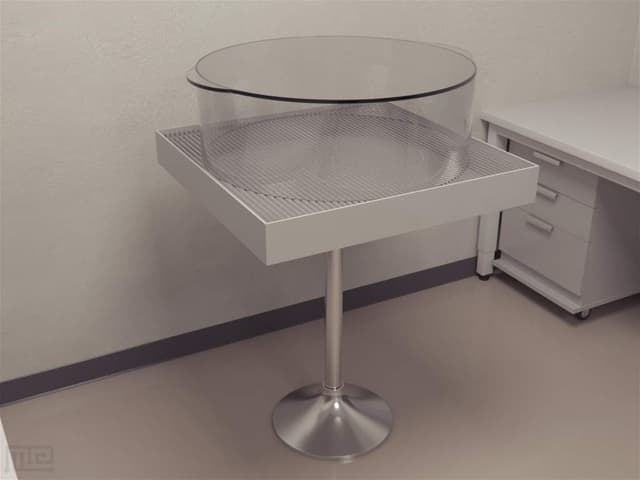
The Olfactory Hole Board is a specialized behavioral apparatus designed for investigating olfactory perception, emotional behavior, and exploratory activity in laboratory animals. This instrument combines traditional hole-board exploration testing with controlled odor presentation, enabling researchers to assess how olfactory stimuli influence animal behavior and emotional responses.
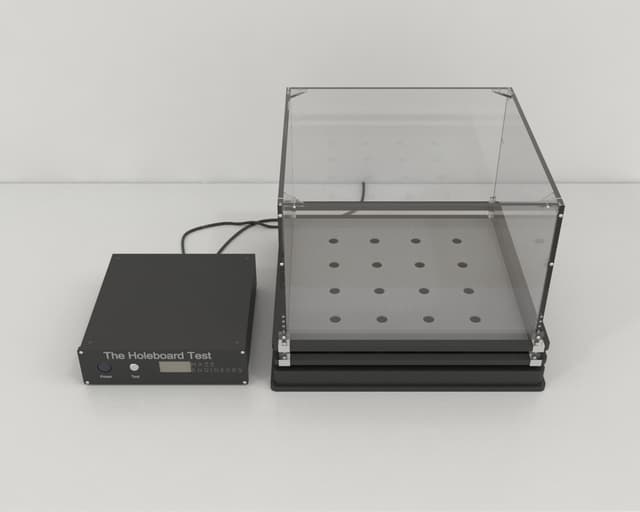
The apparatus features a standardized platform with multiple holes that can be equipped with odor sources, allowing for systematic evaluation of olfactory preferences, aversions, and recognition capabilities. Research applications include studies of olfactory function following experimental manipulations, assessment of emotional behavior in animal models of psychiatric disorders, and evaluation of drug effects on exploratory behavior and olfactory processing.
How It Works
The Olfactory Hole Board operates on the principle that laboratory animals exhibit natural exploratory behavior when presented with novel environments and stimuli. Animals typically investigate holes in the apparatus through head-dipping behavior, which can be quantified and analyzed. When odor sources are placed within or beneath the holes, animals' exploration patterns reflect their olfactory preferences, aversions, and recognition capabilities.
The behavioral paradigm relies on measuring head-dipping frequency, duration, and latency to investigate specific holes containing different odor stimuli. Changes in exploration patterns indicate the animal's olfactory perception and emotional response to the presented stimuli. This approach allows researchers to assess both the sensory aspects of olfaction and the emotional or motivational responses elicited by specific odors.
Features & Benefits
Behavioral Construct
- Exploratory behavior
- Olfactory perception
- Anxiety-like behavior
- Emotional response
- Preference behavior
Automation Level
- manual
Research Domain
- Addiction Research
- Aging Research
- Anxiety and Depression
- Behavioral Pharmacology
- Learning and Memory
- Neuroscience
Species
- Mouse
- Rat
Compatible Tracking Software
- ConductVision
Weight
- 6.06 kg
Dimensions
- L: 65.0 mm
- W: 36.0 mm
- H: 27.0 mm
| Feature | This Product | Typical Alternative | Advantage |
|---|---|---|---|
| Behavioral Paradigm | Combines hole-board exploration with controlled odor presentation | Basic hole boards without odor capability or dedicated olfactometers with limited behavioral assessment | Enables simultaneous evaluation of both exploratory behavior and olfactory function in a single test session |
| Stimulus Presentation | Multiple holes allow simultaneous presentation of different odor stimuli | Single stimulus presentation systems require multiple test sessions for comparison studies | Reduces testing time and allows direct comparison of olfactory preferences within subjects |
| Species Compatibility | Designed for standard laboratory rodents | Some systems limited to specific species or require extensive modification | Provides standardized testing conditions suitable for common research models |
| Data Collection | Compatible with video tracking and manual observation methods | Specialized systems may require proprietary software or hardware | Offers flexibility in data collection methods to match laboratory capabilities and experimental needs |
This apparatus provides a versatile platform for olfactory behavioral research, combining the established hole-board paradigm with controlled odor presentation capabilities. The design supports multiple concurrent stimuli and flexible data collection approaches suitable for various research applications.
Practical Tips
Test odor distribution patterns before experiments to ensure consistent stimulus presentation across holes.
Why: Uneven odor distribution can introduce confounding variables and affect behavioral responses.
Clean apparatus thoroughly between subjects using ethanol or appropriate solvent, followed by air drying.
Why: Residual odors from previous subjects can influence subsequent animal behavior and compromise experimental validity.
Allow animals to habituate to the testing environment before introducing odor stimuli.
Why: Habituation reduces stress-related behaviors and provides baseline exploration patterns for comparison.
Record both frequency and duration of head-dipping behavior for comprehensive behavioral analysis.
Why: Different measures provide complementary information about olfactory processing and behavioral responses.
If animals show no exploration, verify lighting conditions and check for environmental stressors.
Why: Excessive lighting or noise can suppress natural exploratory behavior and affect experimental outcomes.
Ensure adequate ventilation when using volatile odorants to prevent researcher and animal exposure.
Why: Some olfactory compounds can be toxic or irritating at high concentrations.
Randomize hole positions for different odor stimuli across test sessions to control for position preferences.
Why: Animals may develop spatial biases that could confound interpretation of olfactory preferences.
Setup Guide
What’s in the Box
- Olfactory hole board platform (typical)
- User manual and protocol guide (typical)
- Assembly hardware (typical)
- Cleaning instructions (typical)
Warranty
ConductScience provides a standard one-year manufacturer warranty covering defects in materials and workmanship, along with technical support for setup and operational questions.
Compliance
References
Background reading relevant to this product:
What species can be tested with this apparatus?
The apparatus is primarily designed for mice and rats, though hole dimensions and platform size should be verified for compatibility with specific strains and age groups.
How do I prevent odor contamination between test sessions?
Thoroughly clean the apparatus with appropriate solvents between sessions and allow adequate ventilation time. Consider using removable inserts for holes to facilitate cleaning.
What types of odor stimuli can be presented?
The apparatus can accommodate various odor sources including liquid odorants, scent-marked materials, food odors, and commercial olfactory compounds depending on the experimental design.
How long should testing sessions typically last?
Session duration varies by research question but commonly ranges from 5-15 minutes to allow sufficient exploration while minimizing habituation effects.
Can this apparatus be used with automated tracking systems?
Yes, the standardized design is compatible with video tracking software that can analyze head-dipping behavior and spatial exploration patterns.
What behavioral measures are typically recorded?
Common measures include head-dipping frequency, duration of investigation at each hole, latency to first investigation, and overall exploration patterns across the apparatus.
How do I establish baseline behavior before odor testing?
Conduct habituation sessions without odor stimuli to establish individual exploration patterns and account for apparatus-specific behavioral responses.
Have a question about this product?
Have a question? Just ask.
Send it over and we'll email you a personalized answer — no call, no scheduling.
Prefer to talk it through?
Accessories
Enhance your setup with compatible accessories

Frequently Bought Together