This productGeneral purpose
Square Open Field Arena
40 x 40 cm mouse or 100 x 100 cm rat formats
Most common configuration for locomotor activity, anxiety-like behavior, habituation, and drug-screen controls.
$1,290

Standard behavioral apparatus for measuring locomotor activity, exploratory behavior, and anxiety-like responses in rodents through analysis of movement patterns and zone preferences.
| wall_types | opaque or clear |
| wall_feature | easily detachable for easy cleaning |
| floor_inserts | grid floor inserts available for video tracking |
| arena_shape | square |
| alternative_sizes | 27 x 27 cm and 50 x 50 cm sizes mentioned |
| wall_finishes | opaque colors and matte finish available |

The Open Field Test is a standard behavioral assay used to assess locomotor activity, exploratory behavior, and anxiety-like responses in rodents. The apparatus consists of a square arena where animals are placed to freely explore while their movement patterns, zone preferences, and behavioral metrics are recorded. This test is fundamental to neuroscience and behavioral pharmacology research, providing quantitative measures of spontaneous locomotion, thigmotaxis (wall-seeking behavior), and center zone exploration.
The Open Field Test serves dual purposes in research protocols. When configured with clear walls, it effectively measures anxiety-like behaviors through analysis of center versus periphery time allocation. When equipped with opaque walls, it supports novel object recognition studies and general locomotor assessment. The apparatus accommodates both mouse and rat subjects with species-appropriate dimensions, featuring removable bases for efficient cleaning and optional grid floor inserts for enhanced video tracking compatibility.
The Open Field Test operates on the principle that rodents exhibit measurable behavioral responses when placed in a novel, open environment. Animals naturally display thigmotaxis (preference for wall proximity) as an anxiety-related behavior, while exploration of the center zone indicates reduced anxiety or increased exploratory drive. The square arena design eliminates corner preferences that could confound behavioral measurements in alternative configurations.
Movement tracking relies on the contrast between the animal and the arena floor, with optional grid markings facilitating manual scoring or automated video analysis. Clear walls allow researchers to observe natural anxiety responses, as animals can see beyond the immediate testing environment. Opaque walls eliminate external visual cues, focusing attention on objects placed within the arena for recognition studies. The matte finish reduces reflective glare that could interfere with video tracking systems or alter animal behavior.
| Feature | This Product | Typical Alternative | Advantage |
|---|---|---|---|
| Arena Dimensions | Species-optimized sizes: 40x40 cm (mouse), 60x60 cm (rat), 25x25 cm (XS) | Many alternatives offer fixed dimensions regardless of species | Proper sizing ensures natural exploration behaviors and appropriate center-periphery zone ratios for each species. |
| Wall Configuration | Interchangeable clear and opaque walls with detachable design | Fixed wall types require separate apparatus for different protocols | Single apparatus supports both anxiety assessment and novel object recognition studies. |
| Cleaning System | Removable base with 70% ethanol compatibility and odor-resistant materials | Integrated bases often require more complex cleaning procedures | Rapid turnaround between subjects minimizes olfactory contamination and experimental delays. |
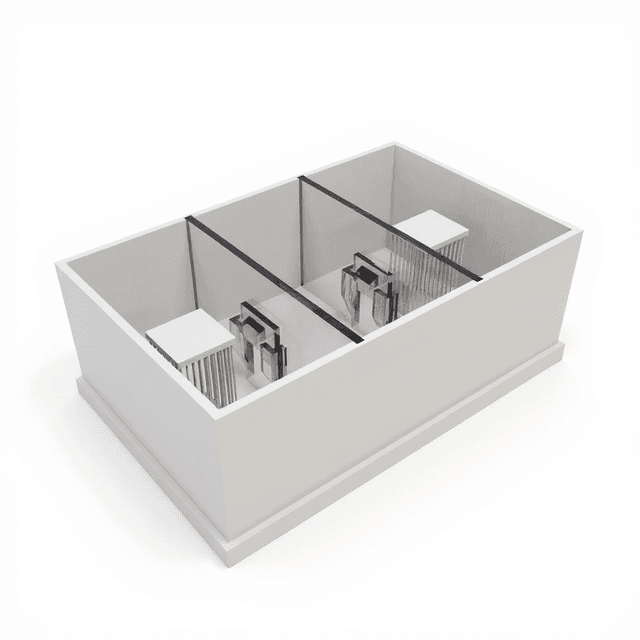
| Multi-Chamber Option | XS model converts between single arena and four-chamber configuration | Separate apparatus required for individual versus group paradigms | Flexible testing configurations maximize experimental throughput and protocol versatility. |
| Surface Finish | Matte finish acrylic construction eliminates reflective glare | Standard acrylic often creates visual artifacts during recording | Improved video analysis quality and reduced visual stimuli that could confound behavioral responses. |
This Open Field Test apparatus offers species-specific sizing, interchangeable wall configurations, and modular design features that support multiple behavioral paradigms within a single system. The emphasis on cleaning efficiency and video-compatible surfaces addresses common practical challenges in high-throughput behavioral testing.
Maintain consistent ambient lighting conditions across all testing sessions to avoid confounding variables in exploratory behavior.
Why: Light level changes can significantly alter anxiety responses and locomotor activity patterns.
Inspect wall attachment points regularly and ensure secure connections before each testing session.
Why: Loose walls can create noise or movement that disrupts natural exploration behaviors.
Allow animals to acclimate to the testing room for at least 30 minutes before behavioral assessment.
Why: Transportation stress and novel environment exposure can temporarily alter baseline locomotor activity.
Verify video tracking software calibration using known distance measurements on the grid floor insert.
Why: Accurate spatial calibration ensures reliable quantification of distance traveled and velocity measurements.
If animals show excessive corner-seeking behavior, check for external visual or auditory stimuli that may be increasing anxiety responses.
Why: Environmental distractors can override natural exploration patterns and confound behavioral measurements.
Ensure all acrylic edges are smooth and free from cracks that could injure animals during active exploration.
Why: Physical safety maintains animal welfare standards and prevents injury-related behavioral artifacts.
Randomize testing order and balance treatment groups across different times of day to control for circadian rhythm effects.
Why: Locomotor activity naturally varies with circadian phase, potentially confounding treatment comparisons.
ConductScience provides a standard one-year manufacturer warranty covering defects in materials and workmanship, with technical support for setup and protocol optimization.
Background reading relevant to this product:
What is the Open Field Test?
The Open Field Test is a behavioral assay that measures locomotor activity, exploration, and anxiety-like behavior in rodents. Animals are placed in a square or circular arena and their movement is tracked over a set period.
How does the Open Field Test work?
A rodent is placed in an open arena and its movement is recorded via video tracking. Metrics include total distance traveled, time in center versus periphery, rearing frequency, and velocity - providing a comprehensive locomotor and anxiety profile.
What research applications use the Open Field Test?
The Open Field Test is used in psychopharmacology for drug screening, assessment of motor function in neurological disease models, and baseline activity profiling. It is essential in ADHD, Parkinson's, and general behavioral phenotyping studies.
Use this apparatus with
Automate center, wall, corner, distance, velocity, and immobility measures from overhead video.
ConductVision Open Field →Session setup, arena zones, illumination, habituation, and metric definitions for locomotion and anxiety screens.
ConductMaze Open Field Protocol →Free calculator for center time, thigmotaxis, distance traveled, entries, and zone preference.
Open Field Analyzer →Choose your configuration
Pick the apparatus configuration that matches the cohort, species, and protocol. Species-specific adaptations should be interpreted within their own validation literature.
40 x 40 cm mouse or 100 x 100 cm rat formats
Most common configuration for locomotor activity, anxiety-like behavior, habituation, and drug-screen controls.
$1,290
Opaque walls, low-glare floor, overhead tracking compatible
Scaled arena for mouse center-periphery behavior and repeated activity monitoring.
$1,090
Round wall geometry for lower corner bias
Useful when the study design prioritizes continuous wall-distance analysis over corner-zone endpoints.
$1,390
§ 1
The Open Field Test measures spontaneous locomotion and exploration in a novel arena. It is used as a baseline activity assay, an anxiety-like behavior screen based on center avoidance, and a control for interpreting other behavioral tasks. 1
The classic readout is the tradeoff between exploration of the exposed center and thigmotaxis near the walls. Because total distance, immobility, and velocity can shift for non-anxiety reasons, open-field interpretation depends on reporting both affective and locomotor endpoints. 1
Open field is often paired with EPM, light-dark box, rotarod, fear conditioning, or spatial learning assays so researchers can separate general activity from task-specific performance. 1
§ 2
Single-session or repeated-session arena exploration, typically 5 to 30 minutes.
Critical methodological constraints
Core open-field endpoints ConductVision scores from arena trajectories.
Center Time
Anxiety-like behavior
Wall Time
Thigmotaxis
Total Distance
Locomotor control
Center Entries
Exploration frequency
Velocity and Immobility
Activity state
+ Additional metrics: corner time, rearing, grooming, path entropy, turn angle, zone transitions, and habituation slope.
A normalized center preference endpoint for comparing animals with different activity levels.
§ 3
Aggregate publication data, sample apparatus output, and recent findings from the live PubMed feed.
PubMed volume and co-occurring methods for locomotion and anxiety-like behavior.
Representative center-periphery and locomotor endpoints.
Mechanistic insights into the antidepressant effects of the Angelica sinensis and Ligusticum chuanxiong Herb Pair: Involvement of the PI3K/AKT signaling pathway.
Yang TY, Sun XM, Xiong ZW, et al.. J Ethnopharmacol. 2026 May 23.
The Angelica sinensis and Ligusticum chuanxiong Herb Pair (DC) serves as a core pairing in Traditional Chinese Medicine for treating blood stasis and blood deficiency syndromes, which are frequently associated with depressive-like symptoms in clinical practice.
miR-146a-3p drives major depressive disorder pathogenesis via BDNF suppression: a novel diagnostic and therapeutic target.
Sun K, Qin T, Kang Z. Gene. 2026 May 20.
Major depressive disorder (MDD) is a debilitating neuropsychiatric condition characterized by persistent low mood, affecting approximately 322 million individuals worldwide. With a staggering 15% mortality rate due to suicide among patients, MDD represents a critical global health challenge.
Betahistine attenuates vestibular stimulation-induced mitochondrial damage and neuroinflammation in Deiters' neurons.
Zhuikova NS, Mikheeva IB, Antonova OY, et al.. Neurosci Lett. 2026 May 15.
Dysfunction of the vestibular nuclei, which can arise from various causes, is a common problem, affecting more than a third of people over 40. Its characteristic symptom is vestibular vertigo. This dysfunction is also associated with neurodegenerative diseases.
High-frequency rTMS mitigates acute sleep deprivation-induced anxiety-like behaviors and working memory impairments associated with hippocampal transcriptional modulation.
Sun Y, Rong Z, Maimaitiming D, et al.. Neuroscience. 2026 May 14.
Acute sleep deprivation is known to impair cognitive function and emotional regulation, yet effective interventions and underlying molecular mechanisms remain unclear.
§ 4
Limitations of the paradigm, methodological caveats, and current directions.
Variables that shift Open Field Test results independent of anxiety state.
Distance and velocity can change center time independent of anxiety-like behavior.2
Illumination intensity strongly changes center avoidance and must be reported.
Residual odor changes exploration and wall preference. Keep cleaning and drying intervals consistent.
Handling, injection, and transport stress can shift center behavior before the session begins.
Habituation changes novelty-driven locomotion. First exposure and repeated exposure answer different questions.
Open field is a broad screen, not a standalone anxiety diagnosis. Center avoidance can reflect anxiety-like behavior, low activity, visual impairment, freezing, or altered novelty seeking. 1 Strong designs pair center endpoints with locomotor controls and, when needed, another anxiety assay such as EPM or light-dark box. 2
Report both when possible. Center time captures dwell behavior, while entries capture approach frequency and can be less sensitive to one long center visit.
Yes, but repeated sessions measure habituation and activity adaptation. Do not pool repeat sessions with first-exposure anxiety-like behavior.
Yes. Square arenas introduce corner zones, while circular arenas emphasize wall distance. Treat shape as a protocol factor.
Quarterly editorial review of emerging Open Field Test methodology. Q2 2026
Studies increasingly compare home-cage baseline with novelty-evoked open-field behavior.
Path entropy, turn angle, and wall-distance distributions supplement center-periphery scoring.
Open field remains a standard control before memory, depression-like, and sensorimotor tasks.
Pose-based scoring is adding rearing, grooming, freezing, and stretch-attend states to basic zone data.
§ 5
6 curated Open Field Test methods and validation papers. Schema-marked as ScholarlyArticle ItemList.

