Path Regularity Mazes
Perspex cylinder maze system for studying spatial navigation and learning strategies in honeybees through four distinct path regularity patterns.
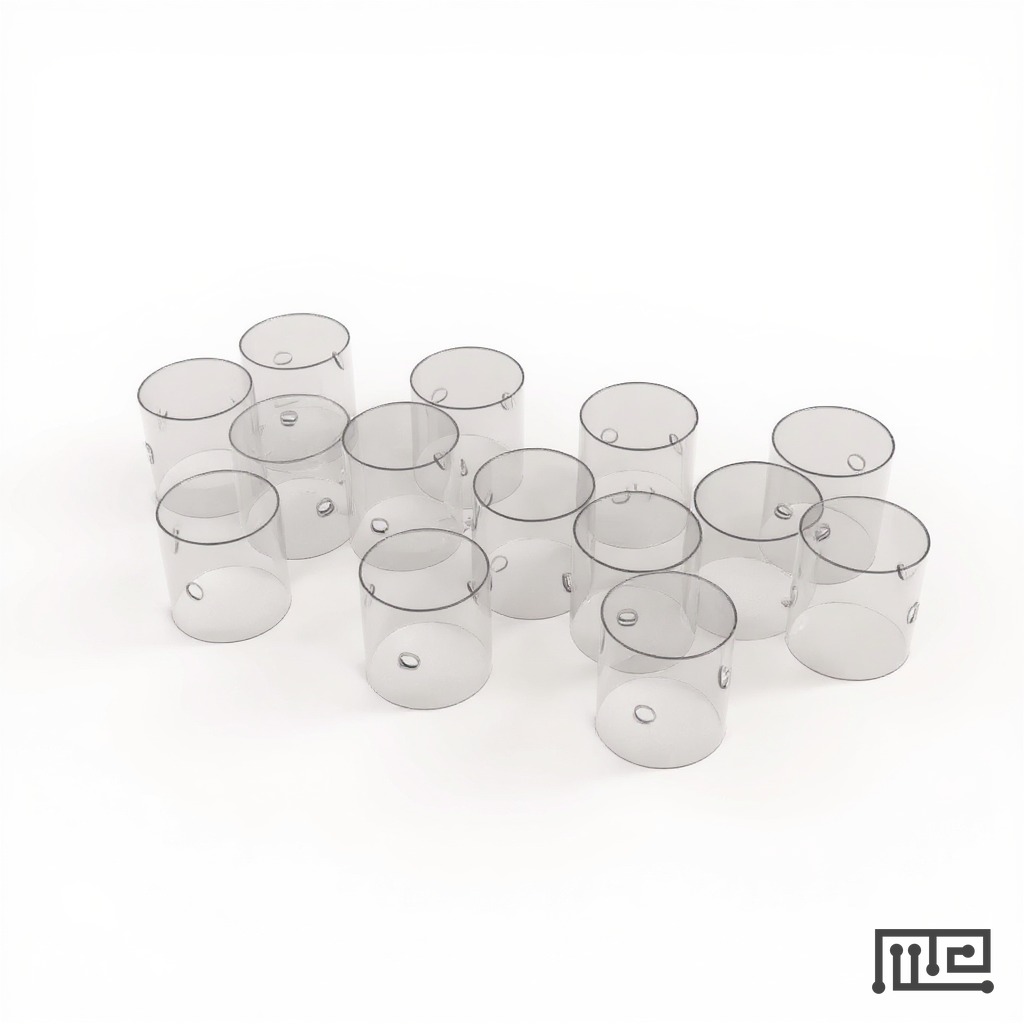
| cylinder_diameter | 22.5cm |
| cylinder_height | 25cm |
| hole_diameter | 4cm |
| hole_position_height | 12.5cm above base |
| exit_hole_angle | 45º to the right or left relative to each other |
| number_of_holes_per_cylinder | 3 |

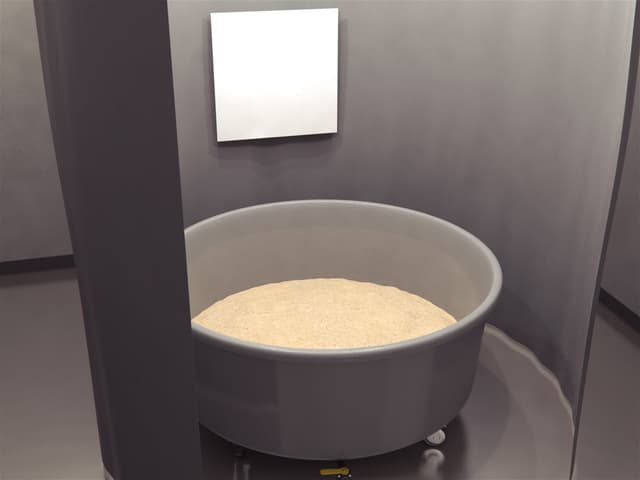
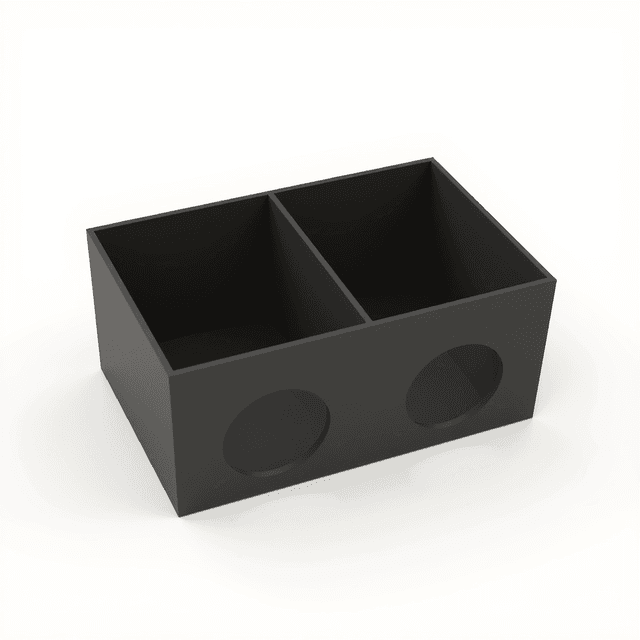
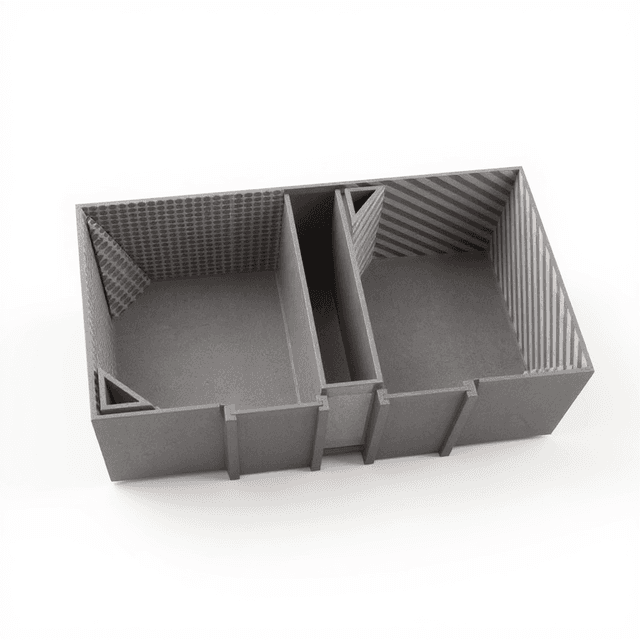
The Path Regularity Maze is a specialized apparatus designed for investigating spatial navigation and learning strategies in honeybees. Constructed from perspex cylinders measuring 22.5cm in diameter and 25cm in height, this maze system employs four distinct navigation patterns: constant-turn, zig-zag, irregular, and variable irregular configurations. Each cylinder contains three 4cm diameter holes positioned 12.5cm above the base, with the exit hole positioned at 45° relative to the entrance direction.
This apparatus enables controlled studies of insect spatial memory and orientation behaviors by presenting honeybees with varying degrees of path regularity. The maze operates within temperature ranges of 17°C ±3°C (night) to 24°C ±5°C (day), accommodating the thermal requirements of honeybee behavioral studies. Training protocols typically involve 8-10 bees per group over 6-hour sessions, with experimental groups of 10 bees and 1-hour pause durations per chamber.
How It Works
The Path Regularity Maze operates on the principle of spatial learning through varying degrees of path predictability. Honeybees navigate through interconnected cylindrical chambers, each presenting three exit options positioned at specific angular relationships. The maze exploits the natural foraging behavior of honeybees, requiring them to make sequential navigation decisions based on spatial cues and learned patterns.
Four maze configurations provide different levels of navigational complexity: constant-turn mazes require consistent directional choices, zig-zag patterns alternate turning directions, irregular mazes present unpredictable sequences, and variable irregular configurations introduce random path elements. This systematic variation allows researchers to quantify how path regularity influences learning acquisition, memory consolidation, and navigation strategy selection.
The 45° angular positioning of exit holes relative to entry points creates controlled decision points that challenge the bee's spatial memory systems. The 135° separation between entrance and exit holes ensures that successful navigation requires active spatial processing rather than simple stimulus-response associations.
Features & Benefits
cylinder_diameter
- 22.5cm
cylinder_height
- 25cm
hole_diameter
- 4cm
hole_position_height
- 12.5cm above base
exit_hole_angle
- 45º to the right or left relative to each other
number_of_holes_per_cylinder
- 3
table_height
- 30cm
maze_types
- constant-turn, zig-zag, irregular, variable irregular
training_bees_count
- 8-10 bees per group
experiment_bees_count
- 10 bees
training_duration
- 6 hours
pause_duration_per_chamber
- 1 hour
Behavioral Construct
- spatial navigation
- spatial memory
- learning acquisition
- maze learning
- orientation behavior
- navigation strategy
Automation Level
- manual
Material
- Perspex
Temperature Range
- 17°C ±3°C (night) to 24°C ±5°C (day)
Species
- Honeybees
Research Domain
- Behavioral Pharmacology
- Developmental Biology
- Environmental Monitoring
- Learning and Memory
- Neurodegeneration
- Neuroscience
Weight
- 21.0 kg
Dimensions
- L: 43.2 mm
- W: 38.0 mm
- H: 27.9 mm
Comparison Guide
| Feature | This Product | Typical Alternative | Advantage |
|---|---|---|---|
| Maze Configuration Options | Four distinct patterns (constant-turn, zig-zag, irregular, variable irregular) | Most insect mazes offer 1-2 fixed configurations | Enables systematic comparison of learning rates across different levels of spatial complexity within a single apparatus. |
| Chamber Dimensions | 22.5cm diameter cylinders with 25cm height | Smaller chambers often restrict natural flight patterns | Accommodates natural honeybee movement while maintaining controlled navigation decision points. |
| Navigation Hole Design | 4cm diameter holes at 12.5cm elevation with 45° angular positioning | Fixed positioning without standardized angular relationships | Creates consistent spatial challenges that require active navigation decisions rather than random movement patterns. |
| Temperature Control Range | 17°C ±3°C (night) to 24°C ±5°C (day) | Many systems lack specified temperature control | Maintains optimal thermal conditions for consistent honeybee behavioral responses across experimental sessions. |
| Group Size Accommodation | Training groups of 8-10 bees, experimental groups of 10 bees | Individual or small group testing only | Enables both individual learning assessment and group behavioral dynamics studies within controlled protocols. |
| Material Construction | Perspex cylindrical chambers | Opaque materials limit behavioral observation | Provides complete visual access for continuous behavioral monitoring and detailed navigation pattern analysis. |
The Path Regularity Maze offers systematic spatial complexity variation through four distinct maze configurations with standardized angular relationships and controlled environmental conditions. The perspex construction and optimized chamber dimensions accommodate natural honeybee behavior while providing comprehensive behavioral observation capabilities.
Practical Tips
Verify angular measurements of exit holes using precision protractors before each experimental series to ensure consistent 45° positioning.
Why: Accurate angular relationships are critical for standardized spatial challenge presentation across trials.
Clean perspex surfaces with antistatic solution between experimental sessions to prevent electrostatic bee attraction or repulsion.
Why: Static charges can influence honeybee navigation behavior and introduce uncontrolled variables.
Allow 1-hour chamber pause durations during training to enable memory consolidation assessment and prevent behavioral fatigue.
Why: Adequate rest periods are essential for distinguishing learning acquisition from performance limitations.
If bees cluster at chamber connections, verify that hole diameters are exactly 4cm and edges are smooth without sharp corners.
Why: Navigation hesitation often indicates physical obstacles that can confound spatial learning measurements.
Record ambient temperature every 30 minutes during experimental sessions to verify maintenance within the 17-24°C range.
Why: Temperature fluctuations outside the specified range can significantly alter honeybee activity levels and navigation accuracy.
Position emergency bee collection equipment near maze exits and maintain ventilation to prevent overheating during extended trials.
Why: Proper safety measures protect both research subjects and personnel during behavioral testing sessions.
Randomize maze configuration order across experimental groups to prevent learning transfer effects between different spatial patterns.
Why: Systematic configuration ordering can create confounding learning advantages that affect spatial memory assessment.
Video record navigation sessions from multiple angles to enable detailed path analysis and verify behavioral scoring accuracy.
Why: Multiple viewing angles capture complete navigation sequences that may be missed by single-point observation.
Setup Guide
What’s in the Box
- Perspex cylindrical chambers (set for complete maze configuration)
- Connecting hardware for chamber assembly
- Support table mounting components
- Assembly instructions and training protocol guide
- User manual with configuration diagrams (typical)
- Maintenance and cleaning guidelines (typical)
Warranty
ConductScience provides a standard one-year manufacturer warranty covering material defects and construction quality. Technical support includes training protocol guidance and maze configuration assistance.
Compliance
What training duration is required to establish baseline learning in honeybees?
Training protocols typically involve 6-hour sessions with groups of 8-10 bees, followed by experimental trials with groups of 10 bees. One-hour pause durations per chamber allow for memory consolidation assessment.
How do the four maze configurations differ in complexity?
Constant-turn mazes require consistent directional choices, zig-zag patterns alternate directions, irregular mazes present unpredictable sequences, and variable irregular configurations introduce random elements, providing systematic complexity gradients.
What temperature control is necessary for consistent bee behavior?
The system requires temperature maintenance at 17°C ±3°C during night phases and 24°C ±5°C during day phases to ensure optimal honeybee activity and consistent behavioral responses.
Can the maze configuration be modified during experiments?
The modular perspex construction allows reconfiguration between the four maze types (constant-turn, zig-zag, irregular, variable irregular) to test different spatial learning paradigms within the same study.
What behavioral parameters can be measured with this system?
The apparatus enables measurement of navigation choice accuracy, path completion times, error rates, learning acquisition curves, and spatial memory retention across different maze configurations.
How is the 45° exit hole positioning significant for spatial learning?
The 45° angular relationship between entrance and exit requires active spatial processing and prevents simple stimulus-response navigation, ensuring that successful maze completion depends on spatial memory formation.
What group sizes are recommended for statistical power in learning studies?
Training groups of 8-10 bees provide sufficient behavioral variation for learning assessment, while experimental groups of 10 bees offer adequate statistical power for detecting spatial memory differences between conditions.
Have a question about this product?
Accessories
Enhance your setup with compatible accessories

Frequently Bought Together