Bee Soccer
Behavioral testing system for investigating cognitive flexibility, social learning, and problem-solving in bumblebees, replicating the methodology from Loukola & Chittka (2017) Science study.

Louise Corscadden, PhD
Director of Science · ConductScience
Ask Louise about Bee Soccer fit, setup, configuration, or quote prep.
Already working with us? Sign in to connect this with My Scientist.
Key Specifications
Full details →- Model fit
- Bees
- SKU family
- ME-32101
- Shipping box
- 43.2 x 38.0 x 27.9 cm
- Ordering
- Online checkout and quote request available
- Category
- Behavioral Mazes
- Build notes
- Perspex, Plastic, Wood
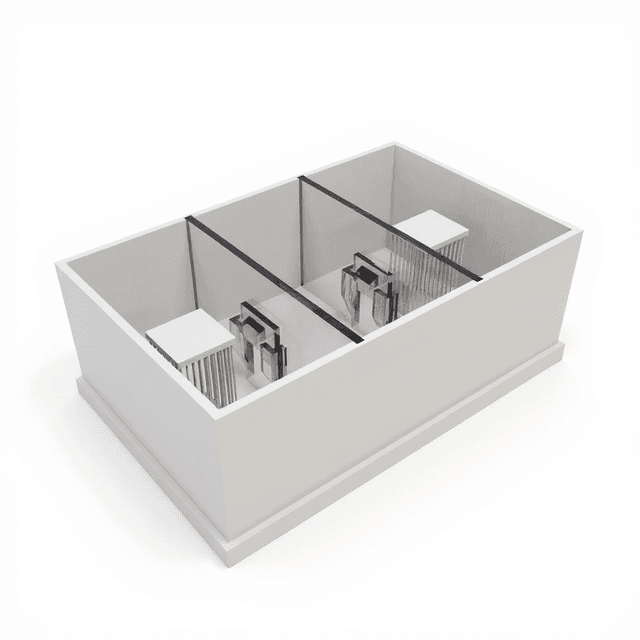
The Bee Soccer apparatus is a specialized behavioral testing system designed to replicate and extend research on cognitive flexibility in bumblebees. Based on the landmark study by Loukola & Chittka (2017) published in Science, this system enables controlled investigation of social learning, problem-solving, and behavioral innovation in bee colonies. The apparatus consists of a bipartite wooden nest box connected via a Perspex corridor to a flight arena, allowing researchers to observe how bees learn complex tasks through demonstration and improve upon observed behaviors.
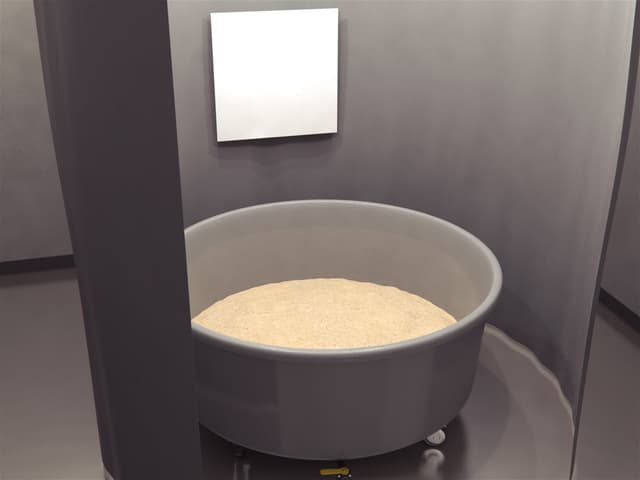
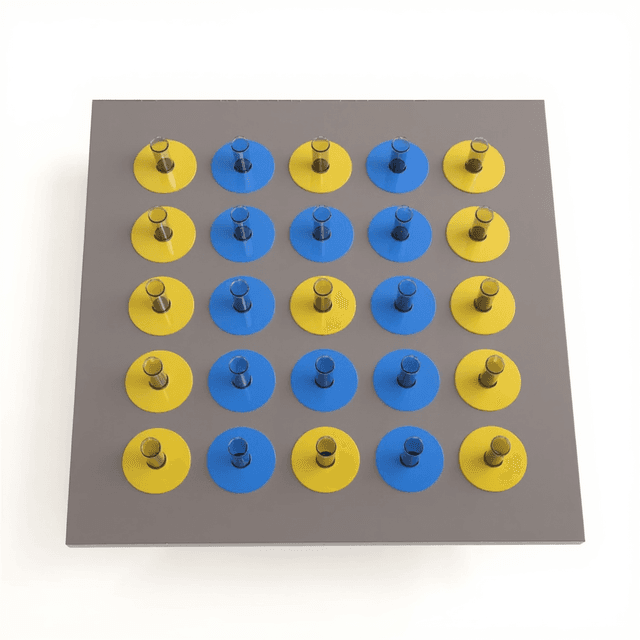
The system includes multiple testing platforms with varying configurations, wooden balls of different sizes, and controlled access mechanisms. Researchers can investigate cognitive processes including imitation learning, task optimization, and behavioral flexibility by presenting bees with ball-moving tasks where they must manipulate objects to access rewards. The modular design accommodates various experimental paradigms while maintaining standardized conditions for reproducible behavioral assessments.
How It Works
The Bee Soccer system operates on principles of operant conditioning combined with observational learning paradigms. Bees are trained to move wooden balls to central targets to access sucrose rewards, with the task complexity adjustable through ball size, platform configuration, and reward placement. The controlled corridor system with sliding doors allows precise timing of bee access to the arena, enabling researchers to control social learning opportunities by allowing naive bees to observe trained demonstrators.
Cognitive flexibility is assessed by measuring how bees modify their approach when presented with different ball configurations or platform designs. The system quantifies learning efficiency, behavioral innovation, and problem-solving strategies through video analysis of ball-manipulation sequences. Multiple platform configurations enable comparative studies of spatial reasoning and motor adaptation.
The bipartite nest design maintains natural colony dynamics while providing experimental control. Researchers can manipulate social context, reward contingencies, and task difficulty to investigate decision-making processes and behavioral optimization in a controlled environment.
Features & Benefits
Nest Box Dimensions
- 40 × 28 × 11cm
Corridor Length
- 25cm
Corridor Cross Section
- 3.5 × 3.5cm
Flight Arena Dimensions
- 60 × 43 × 25cm
Sliding Doors Quantity
- 4
Circular Platform Diameter
- 7cm
Square Platform Dimensions
- 7cm x 7cm
Yellow Half Ball Diameter
- 8.5mm
Center Hole Diameter
- 1mm
Large Wooden Balls Diameter
- 12mm
Large Wooden Balls Quantity
- 8
Small Wooden Balls Diameter
- 8.5mm
Small Wooden Balls Quantity
- 8
Small Ball Holes Quantity
- 6
Small Ball Hole Diameter
- 0.8mm
Full Platform Center Hole Diameter
- 9mm
Walled Platform Diameter
- 14cm
Walled Platform Painted Circle Diameter
- 1.9cm
Lane Wall Height
- 5mm
Lane Convergence Angle
- 120°
Plastic Bumblebee Quantity
- 1
Behavioral Construct
- cognitive flexibility
- social learning
- problem-solving
- motor learning
- spatial cognition
- behavioral innovation
- observational learning
Automation Level
- manual
Material
- Perspex
- Plastic
- Wood
Color
- Blue
- Yellow
Species
- Bees
Research Domain
- Behavioral Pharmacology
- Developmental Biology
- Environmental Monitoring
- Learning and Memory
- Neuroscience
- Social Behavior
Shipping weight
- 21.0 lb
Shipping box
- L: 43.2 cm
- W: 38.0 cm
- H: 27.9 cm
| Feature | This Product | Typical Alternative | Advantage |
|---|---|---|---|
| Arena Dimensions | 60×43×25cm flight arena with integrated corridor system | Smaller isolated testing chambers often limit flight behavior and spatial navigation | Larger arena accommodates natural flight patterns and complex spatial tasks requiring extended movement sequences |
| Colony Integration | 40×28×11cm bipartite nest box connected via controlled corridor | Individual isolation chambers separate from colony housing | Maintains natural social context while enabling controlled individual testing for social learning studies |
| Platform Configurations | Multiple interchangeable platforms (7cm circular, square, 14cm walled) with graduated ball sizes | Single fixed platform configuration with limited task variations | Enables systematic investigation of spatial cognition and task complexity effects on learning |
| Access Control System | Four plastic sliding doors for precise temporal control | Simple gate mechanisms or continuous access designs | Allows controlled demonstration periods essential for observational learning paradigms |
| Ball Manipulation Objects | 16 wooden balls in two sizes (8.5mm and 12mm) with specialized platforms | Limited object variety or non-standardized manipulation items | Standardized objects enable consistent force requirements and systematic difficulty manipulation across experiments |
This system uniquely combines colony housing with controlled individual testing capabilities, enabling social learning studies impossible with isolated chambers. The multiple platform configurations and graduated ball sizes provide systematic experimental control while maintaining natural behavioral contexts.
Practical Tips
Verify sucrose concentration weekly using a refractometer and maintain solution at exactly 30% to ensure consistent motivation.
Why: Concentration variations significantly impact learning rates and task engagement across experimental sessions.
Inspect sliding door mechanisms daily and lubricate with food-safe silicone if movement becomes restricted.
Why: Smooth door operation is critical for precise timing of demonstration and testing phases in social learning protocols.
Mark individual bees with numbered tags and photograph marking patterns to track individual performance across sessions.
Why: Individual identification enables analysis of learning curves and prevents pseudoreplication in statistical analyses.
Record ambient temperature and humidity during each session and control for circadian effects by testing at consistent times.
Why: Environmental variables and circadian rhythms significantly influence bee activity levels and cognitive performance.
If bees show reduced interest in balls, verify that reward wells are not clogged and that sucrose solution remains fresh.
Why: Blocked reward delivery immediately disrupts operant conditioning and invalidates behavioral measurements.
Handle wooden balls with clean forceps rather than bare hands to avoid transferring chemical contaminants that may affect bee behavior.
Why: Chemical residues on manipulation objects can create uncontrolled variables affecting task motivation and performance.
Allow minimum 48-hour acclimation period after colony transfer before beginning any behavioral testing protocols.
Why: Colony stress from relocation significantly impacts individual learning capacity and social interactions.
Standardize ball placement positions using a template to ensure consistent starting conditions across all experimental sessions.
Why: Initial object positioning affects task difficulty and learning trajectory measurements in spatial cognition studies.
Setup Guide
What’s in the Box
- 40×28×11cm bipartite wooden nest box
- 25cm Perspex corridor with 3.5×3.5cm cross-section
- 60×43×25cm flight arena
- Four plastic sliding doors
- 7cm diameter circular platform
- 7cm×7cm square platform
- 14cm diameter walled platform with painted circle
- 8 large wooden balls (12mm diameter)
- 8 small wooden balls (8.5mm diameter)
- Yellow half ball (8.5mm diameter)
- Plastic bumblebee model
- Assembly hardware and connectors
- User manual and protocol guide (typical)
Warranty
ConductScience provides a one-year manufacturer warranty covering defects in materials and workmanship. Technical support includes setup guidance and experimental protocol consultation.
Compliance
What colony size is optimal for this testing system?
The nest box accommodates small to medium bumblebee colonies (50-200 individuals). Larger colonies may require modified ventilation and multiple feeding stations.
How do you maintain consistent motivation across test sessions?
Control feeding schedules to maintain 80-85% free-feeding weight and use 30% sucrose solution as reward. Monitor individual bee marking to track performance across sessions.
Can the system accommodate different ball weights or textures?
The provided wooden balls are standardized for consistent manipulation forces. Alternative materials require validation of bee handling capacity and motivation effects.
What video recording setup is recommended for behavioral analysis?
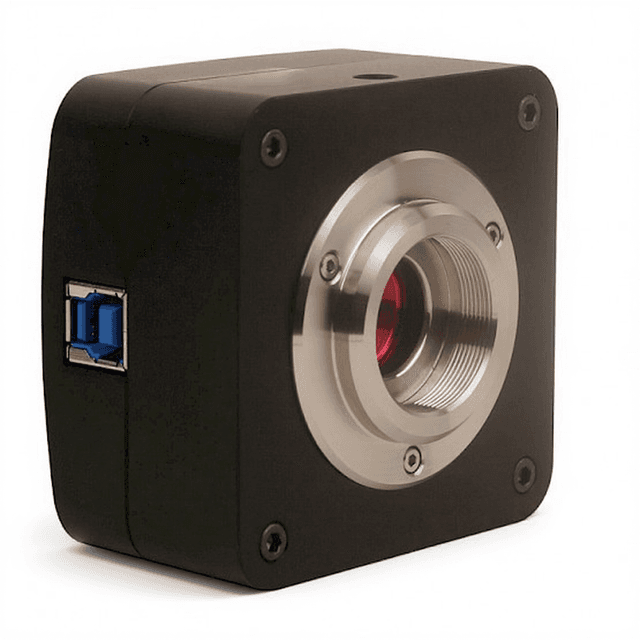
Overhead recording at minimum 30fps with macro lens capability to capture ball manipulation details. Side-view cameras may be added for 3D behavioral reconstruction.
How frequently should the system be cleaned between colonies?
Deep clean all surfaces with 70% ethanol between different colonies. Daily maintenance includes sucrose solution replacement and debris removal from corridors.
What environmental controls are critical for consistent results?
Maintain temperature at 25-28°C, humidity 50-70%, and consistent lighting conditions. Minimize vibrations and electromagnetic interference that may affect bee navigation.
How does this compare to simpler ball-rolling paradigms?
This system enables social learning studies impossible with isolated testing chambers, allowing investigation of demonstration effects and cultural transmission in problem-solving.
Have a question about this product?
Have a question? Just ask.
Send it over and we'll email you a personalized answer — no call, no scheduling.
Prefer to talk it through?
Accessories
Enhance your setup with compatible accessories

Frequently Bought Together