Plantar Test Hargreave’s Apparatus
Precision thermal nociception testing system with infrared radiant heat source for quantitative assessment of paw withdrawal latency in rodent pain research studies.
| monitor | LCD, Touch-screen, Yes |
| power_range | 0W-100W |
| power_adjustment | 1W stepwise |
| power_percentage_range | 5-100% |
| maximum_illumination_time | 0.01-16s |
| simultaneous_subjects | 3-6 rodents |

The Plantar Test Hargreave's Apparatus is a precision thermal nociception testing system designed for quantitative assessment of pain sensitivity in rodents. This system employs a focused infrared radiant heat source to deliver controlled thermal stimuli to the plantar surface of the hind paw, measuring paw withdrawal latency as the primary endpoint for thermal pain threshold determination.
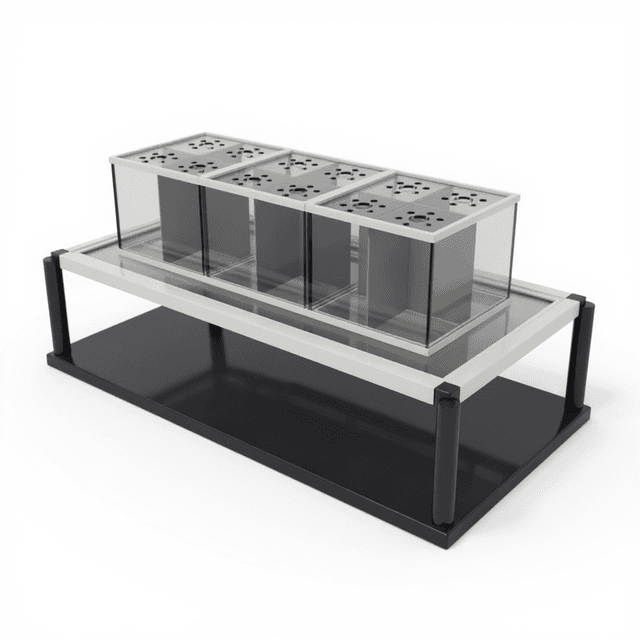
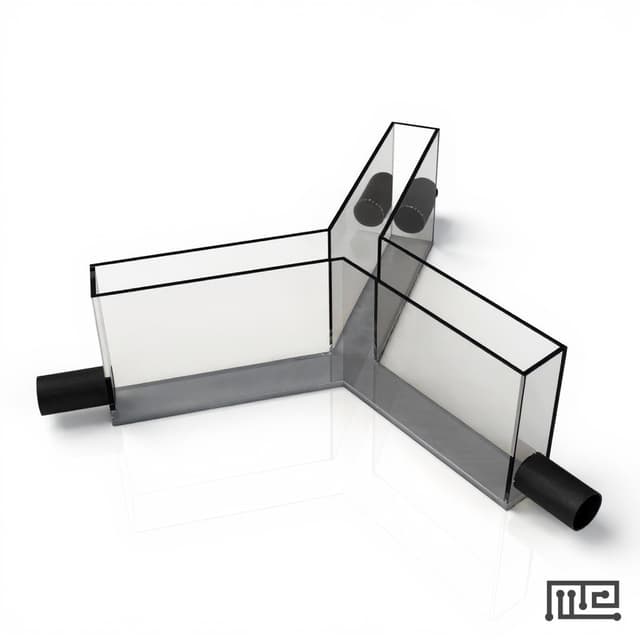
The apparatus features a movable infrared light source with power adjustment from 0W to 100W in 1W increments, providing precise control over thermal stimulus intensity. The system accommodates 3-6 rodents simultaneously in individual acrylic enclosures, with configurable compartments for mice (4 per unit) or rats (2 per unit). Maximum illumination time is adjustable from 0.01 to 16 seconds with automatic cutoff capabilities. Data collection is managed through an integrated touchscreen LCD interface with intradevice storage for experimental parameters and results.
How It Works
The Hargreaves plantar test operates on the principle of radiant heat-induced nociceptor activation through focused infrared illumination. The infrared light source generates thermal energy that penetrates the plantar skin surface, activating temperature-sensitive nociceptors (primarily TRPV1 channels) in the peripheral nerve terminals. This thermal stimulus triggers action potential propagation through primary afferent fibers to the spinal dorsal horn, initiating the withdrawal reflex arc.
The system measures the latency between stimulus onset and the characteristic paw withdrawal response, providing a quantitative metric of thermal pain sensitivity. The infrared wavelength penetrates tissue to activate deep nociceptors while avoiding superficial tissue damage through precise temporal control. Power adjustment from 0W to 100W allows standardization of stimulus intensity across experiments, while the maximum 16-second cutoff prevents tissue damage in analgesic conditions.
Simultaneous testing capability reduces experimental variability by controlling for environmental factors and circadian influences across multiple subjects. The touchscreen interface records withdrawal latencies automatically, eliminating observer bias in endpoint determination and ensuring reproducible data collection protocols.
Features & Benefits
monitor
- LCD
- Touch-screen
- Yes
power_range
- 0W-100W
power_adjustment
- 1W stepwise
power_percentage_range
- 5-100%
maximum_illumination_time
- 0.01-16s
simultaneous_subjects
- 3-6 rodents
touch_screen
- Yes
data_storage
- Intradevice data storage
light_source
- Infrared light
mouse_enclosure_dimensions
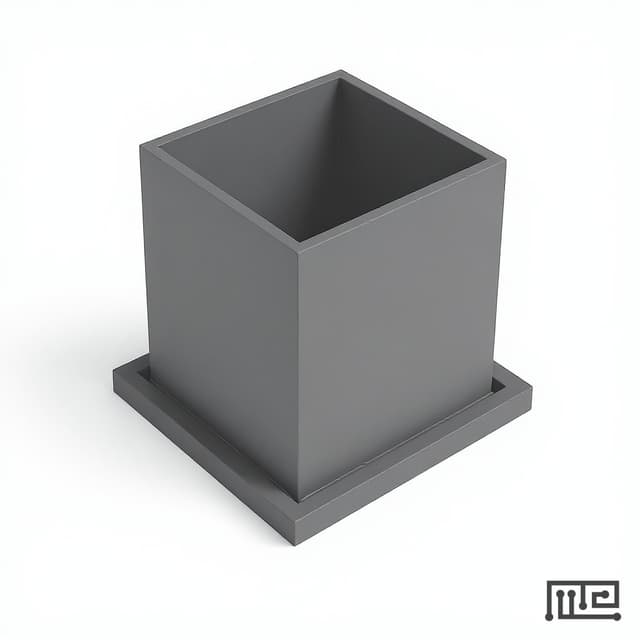
- 10 x 10 cm with height of 15 cm
test_duration_limit
- 35 seconds
measurement_parameters
- ['Paw withdrawal latency', 'Average reaction time']
inter_trial_interval
- minimum 5 minutes
typical_cutoff_time
- 20 to 35 seconds
Behavioral Construct
- thermal nociception
- pain sensitivity
- withdrawal reflex
- sensory processing
Automation Level
- semi-automated
Power/Voltage
- 0W-100W
- 50W
- AC 220V±5%
- adjustment 1W stepwise 5-100%
Material
- glass
Species
- Mouse
- Rat
Display Type
- LCD
Weight
- 3.5kg
Dimensions
- 62 cm x 21 cm x 20.2 cm
Research Domain
- Addiction Research
- Behavioral Pharmacology
- Neurodegeneration
- Neuroscience
- Pain Research
- Toxicology
Weight
- 21.0 kg
Dimensions
- L: 43.2 mm
- W: 38.0 mm
- H: 27.9 mm
Comparison Guide
| Feature | This Product | Typical Alternative | Advantage |
|---|---|---|---|
| Power Range Control | 0W-100W with 1W stepwise adjustment (5-100% range) | Many entry-level systems offer limited power ranges with coarser adjustment increments | Fine power control enables precise stimulus intensity standardization across different experimental protocols and pain sensitivity levels. |
| Simultaneous Testing Capacity | 3-6 rodents with configurable enclosures | Single-position systems require sequential testing of individual animals | Parallel testing reduces experimental duration and minimizes environmental variability effects on pain threshold measurements. |
| Temporal Resolution | Maximum illumination time adjustable 0.01-16 seconds | Basic systems often have fixed cutoff times or limited temporal precision | Precise temporal control accommodates both hyperalgesic and analgesic conditions while preventing tissue damage. |
| Interface System | Touch-screen LCD with intradevice data storage | Manual control systems require external data recording and parameter adjustment | Integrated interface eliminates manual data recording errors and provides immediate parameter adjustment during experiments. |
| Species Compatibility | Configurable enclosures for both mice (4 compartments) and rats (2 compartments) | Species-specific systems require separate equipment for different rodent types | Versatile enclosure design supports multiple species within the same experimental setup, reducing equipment costs and space requirements. |
This system provides comprehensive thermal nociception testing capabilities with precise stimulus control, automated data collection, and simultaneous multi-subject testing capacity. The combination of fine power adjustment resolution and integrated touchscreen interface offers enhanced experimental standardization compared to entry-level alternatives.
Practical Tips
Verify infrared source power output monthly using a calibrated thermal power meter to ensure consistent stimulus delivery across experiments.
Why: Power output can drift over time, affecting stimulus intensity and compromising data reproducibility between experimental sessions.
Clean acrylic enclosures with 70% ethanol between subjects and inspect for scratches that could affect infrared transmission.
Why: Surface contamination or damage can alter heat transfer characteristics and introduce variability in thermal stimulus delivery.
Standardize room temperature at 22-24°C and allow 30-minute equilibration before testing to minimize baseline thermal sensitivity variations.
Why: Ambient temperature directly affects baseline paw temperature and nociceptor sensitivity, influencing withdrawal latency measurements.
Record baseline withdrawal latencies for each subject before experimental manipulation to establish individual pain sensitivity profiles.
Why: Individual variation in thermal sensitivity requires within-subject comparisons for accurate assessment of treatment effects.
If withdrawal responses appear inconsistent, verify infrared source positioning and check for paw contact with enclosure glass bottom.
Why: Improper paw positioning or source alignment can result in uneven heat distribution and variable stimulus intensity delivery.
Set maximum cutoff times to 20-35 seconds to prevent tissue damage while accommodating analgesic treatment effects.
Why: Prolonged thermal exposure can cause tissue damage in animals with compromised pain responses due to analgesic treatments or pathological conditions.
Conduct habituation sessions with enclosure placement but no thermal stimulation to reduce stress-related confounding variables.
Why: Novel environment stress can alter pain sensitivity and withdrawal responses, masking true treatment effects in behavioral studies.
Setup Guide
What’s in the Box
- Controller unit with touch-screen monitor
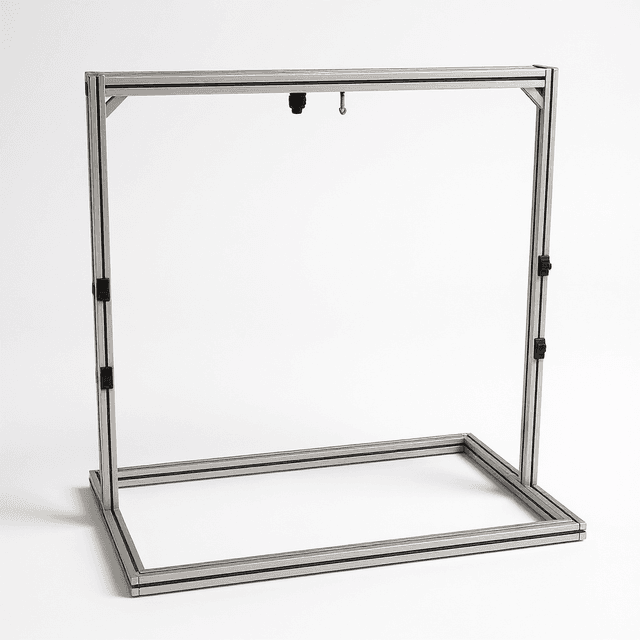
- Movable infrared radiant heat source
- Acrylic animal enclosures (configurable for mice or rats)
- Power cable for AC 220V connection
- User manual and protocol documentation
- Calibration certificate (typical)
- Software for data management (typical)
Warranty
ConductScience provides a standard 1-year manufacturer warranty covering defects in materials and workmanship, with technical support for setup, calibration, and troubleshooting throughout the warranty period.
Compliance
What is the optimal power setting for baseline thermal pain threshold measurements?
Power settings typically range from 15-25% (15-25W) for baseline measurements, but specific intensity should be determined through pilot studies to achieve withdrawal latencies of 8-12 seconds in control animals.
How does this system compare to hot plate methods for thermal nociception testing?
The Hargreaves method provides more precise temporal and spatial control compared to hot plate tests, with focused radiant heat allowing measurement of localized thermal sensitivity without requiring animal handling during testing.
What is the recommended inter-trial interval to prevent sensitization?
Minimum 5-minute intervals between trials on the same paw are recommended to prevent thermal sensitization, with many protocols using 10-15 minute intervals for optimal reproducibility.
Can the system accommodate different enclosure configurations for various experimental designs?
Yes, the system supports 1-3 acrylic enclosure units, each containing 4 compartments for mice or 2 compartments for rats, allowing flexibility in group sizes and experimental throughput.
How is data exported from the intradevice storage system?
Consult product datasheet for specific data export formats and connectivity options available through the touchscreen interface system.
What calibration procedures are required for consistent results?
Regular calibration of infrared source power output and positioning alignment is essential, with verification of actual temperature delivery recommended using thermal measurement devices.
Is the system suitable for chronic pain model studies?
Yes, the precise stimulus control and automated data collection make it well-suited for longitudinal studies tracking thermal sensitivity changes in inflammatory, neuropathic, and chronic pain models.
Have a question about this product?
Frequently Bought Together