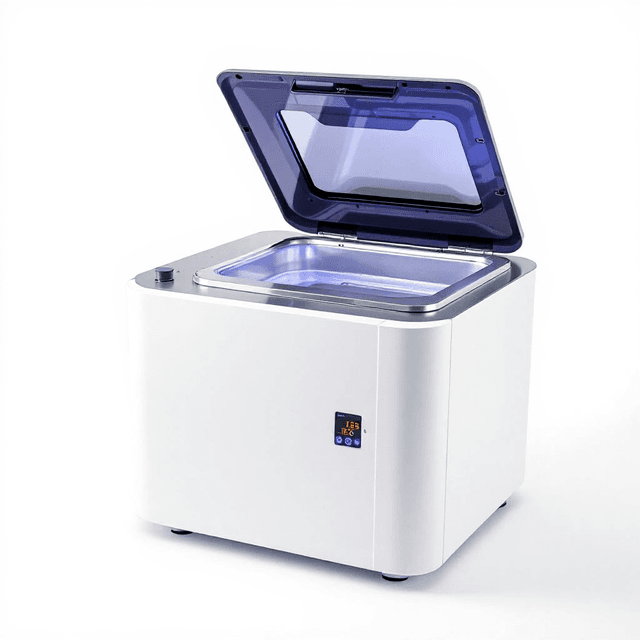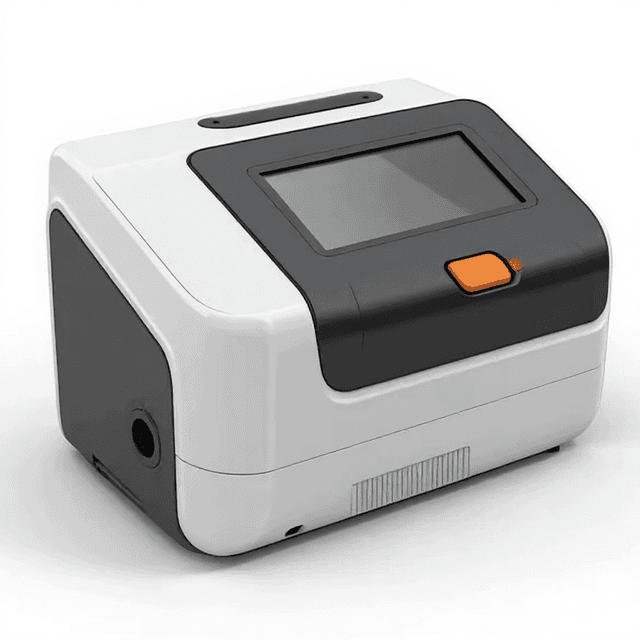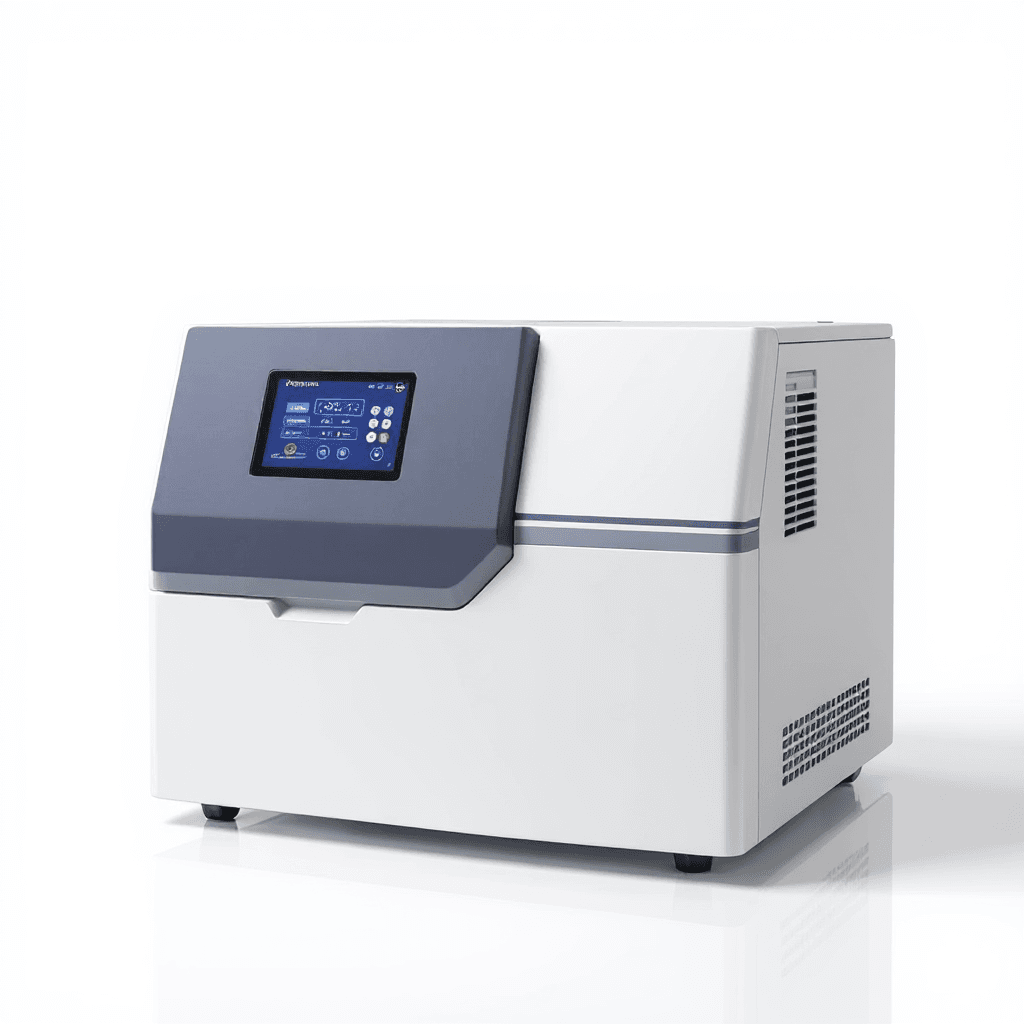
Recirculating Chiller
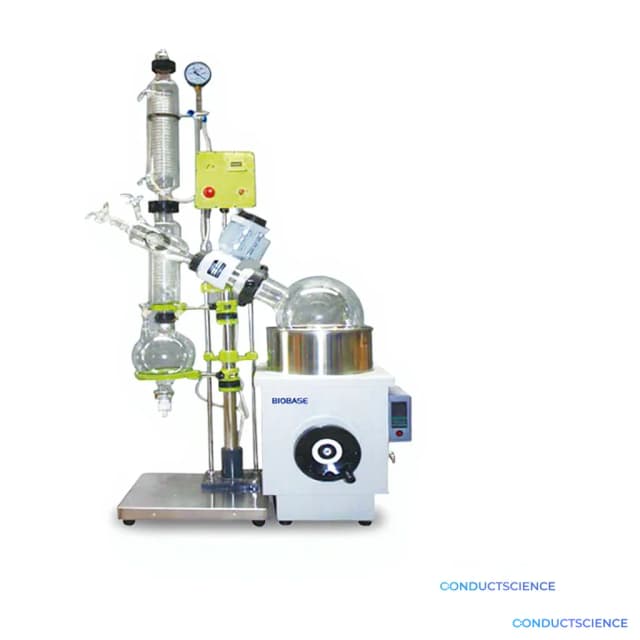
Benchtop recirculating chiller providing stable, temperature-controlled cooling for rotary evaporators, spectrophotometers, and reaction vessels with digital temperature control and low-noise operation.
| Automation Level | semi-automated |
The Recirculating Chiller provides stable, temperature-controlled cooling for laboratory instruments requiring precise thermal management. This benchtop cooling unit maintains consistent coolant temperatures through closed-loop circulation, supporting optimal performance of rotary evaporators, spectrophotometers, reaction vessels, and other temperature-sensitive analytical equipment.
The system integrates a low-noise compressor with digital temperature control and built-in circulation pump, enabling both internal reservoir cooling and external instrument circulation. The unit supports continuous operation in analytical and synthetic chemistry workflows where temperature stability directly impacts measurement precision and reaction reproducibility.
How It Works
The recirculating chiller operates through a closed-loop refrigeration cycle combined with fluid circulation. A compressor-based cooling system reduces the temperature of an internal coolant reservoir, while a built-in circulation pump maintains continuous flow through external instruments or internal pathways.
Digital temperature control monitors coolant temperature through integrated sensors and modulates compressor operation to maintain setpoint stability. The circulation pump creates consistent flow rates that ensure uniform heat transfer from connected instruments back to the chilled reservoir.
Heat removal occurs through a condenser system that dissipates thermal energy from the refrigeration cycle. The unit can operate in internal circulation mode for self-contained cooling or external circulation mode where coolant flows through connected tubing to remote instruments and returns for re-cooling.
Features & Benefits
Automation Level
- semi-automated
Research Domain
- Analytical Chemistry
- Environmental Monitoring
- Food Science
- Industrial Hygiene
- Materials Science
- Pharmaceutical QC
Weight
- 25.0 lbs
Dimensions
- L: 42.0 in
- W: 43.6 in
- H: 38.0 in
Comparison Guide
| Feature | This Product | Typical Alternative | Advantage |
|---|---|---|---|
| Temperature Control Method | Digital temperature control with integrated display | Basic models often use mechanical thermostats with limited precision | Digital control provides more precise setpoint maintenance and real-time temperature monitoring for critical analytical work. |
| Circulation System | Built-in circulation pump with internal/external modes | Entry-level units may require external pumps or offer limited circulation options | Integrated pump eliminates additional equipment requirements and simplifies installation in existing laboratory setups. |
| Noise Level | Low-noise compressor operation | Standard laboratory chillers often have higher noise levels | Reduced acoustic interference enables placement near sensitive analytical instruments without affecting measurement precision. |
| Form Factor | Benchtop design | Larger units may require floor mounting or dedicated installation space | Compact footprint integrates into existing laboratory bench space without requiring facility modifications. |
| Display Interface | Digital temperature display | Basic models may have analog gauges or no temperature readout | Digital display provides precise temperature readings for documentation and process monitoring requirements. |
This recirculating chiller combines digital temperature control with integrated circulation pump in a benchtop form factor, offering precise thermal management for laboratory instruments. The low-noise operation and dual circulation modes provide flexibility for various analytical applications requiring stable temperature control.
Practical Tips
Verify temperature accuracy using a calibrated thermometer in the coolant reservoir after allowing 30 minutes stabilization at setpoint.
Why: Temperature accuracy directly affects analytical instrument performance and measurement reproducibility.
Replace coolant every 3-6 months or when discoloration occurs, and clean reservoir with mild detergent to prevent bacterial growth and scale buildup.
Why: Clean coolant maintains heat transfer efficiency and prevents contamination of connected analytical instruments.
Allow chiller to reach thermal equilibrium before starting critical analytical procedures, especially after temperature setpoint changes.
Why: Temperature stability ensures consistent instrument baseline and reduces measurement uncertainty during analysis.
Check tubing connections and circulation pump operation if connected instruments show poor temperature stability or slow cooling response.
Why: Restricted flow or air bubbles in circulation lines reduce heat transfer efficiency and temperature control performance.
Ensure adequate ventilation around condenser coils and avoid blocking air intake grilles to prevent compressor overheating.
Why: Proper airflow maintains cooling system efficiency and prevents thermal damage to internal components.
Monitor coolant level regularly during extended operation periods and maintain proper fill levels to ensure consistent circulation.
Why: Low coolant levels can cause pump cavitation and temperature instability that affects analytical measurement precision.
Use distilled or deionized water as coolant to minimize scale formation and corrosion in circulation systems.
Why: Pure water prevents mineral deposits that can restrict flow and reduce heat transfer in both chiller and connected instruments.
Setup Guide
What’s in the Box
- Recirculating chiller main unit
- Power cord
- User manual and operation guide
- Connection tubing set (typical)
- Quick-connect fittings (typical)
- Coolant level indicator instructions (typical)
Warranty
ConductScience provides a standard one-year manufacturer warranty covering parts and labor, with technical support available for installation guidance and troubleshooting assistance throughout the warranty period.
Compliance
What coolant types are compatible with the internal reservoir and circulation system?
The system typically accepts distilled water, ethylene glycol mixtures, and laboratory-grade coolants. Consult product datasheet for specific compatibility and mixing ratios, especially when connecting to instruments with material compatibility requirements.
How does temperature stability compare during extended operation periods?
Digital temperature control maintains setpoint stability through automated compressor cycling. Actual temperature deviation specifications and recovery time after thermal load changes should be verified from technical documentation.
Can the unit simultaneously cool multiple instruments with different temperature requirements?
The system provides single-temperature coolant circulation. Multiple instruments can share the same coolant loop if they operate at compatible temperatures, but individual temperature zones require separate chiller units.
What maintenance procedures are required for continuous operation reliability?
Regular maintenance includes coolant level monitoring, periodic reservoir cleaning, and condenser air filter inspection. Specific maintenance intervals and procedures are detailed in the user manual.
How does the circulation pump flow rate affect cooling performance with different instruments?
Flow rate determines heat transfer efficiency between connected instruments and the chiller. Consult product specifications for flow rate range and verify compatibility with instrument cooling requirements and tubing restrictions.
What are the power requirements and heat dissipation considerations for laboratory installation?
Power consumption and heat output specifications should be confirmed from technical documentation for proper electrical circuit sizing and laboratory ventilation planning.
Is the unit suitable for continuous 24/7 operation in analytical laboratory environments?
The system is designed for laboratory use with low-noise operation characteristics. Specific duty cycle ratings and continuous operation specifications should be verified from manufacturer documentation.
Have a question about this product?
Accessories
Enhance your setup with compatible accessories
Upgrade Options