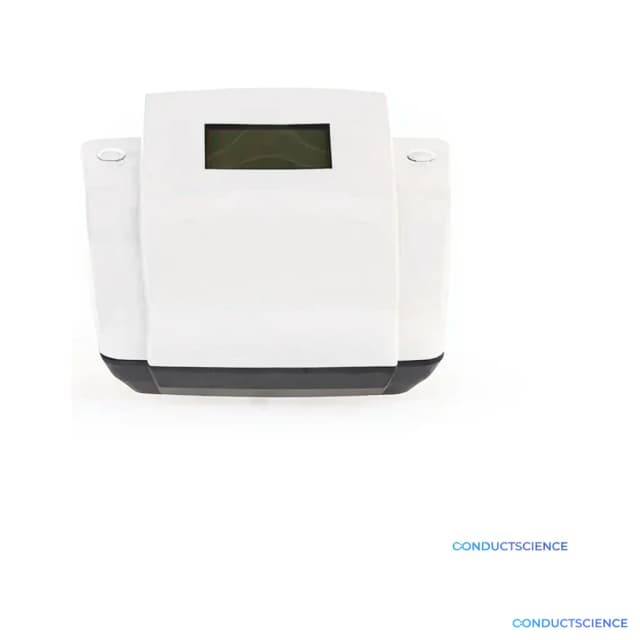
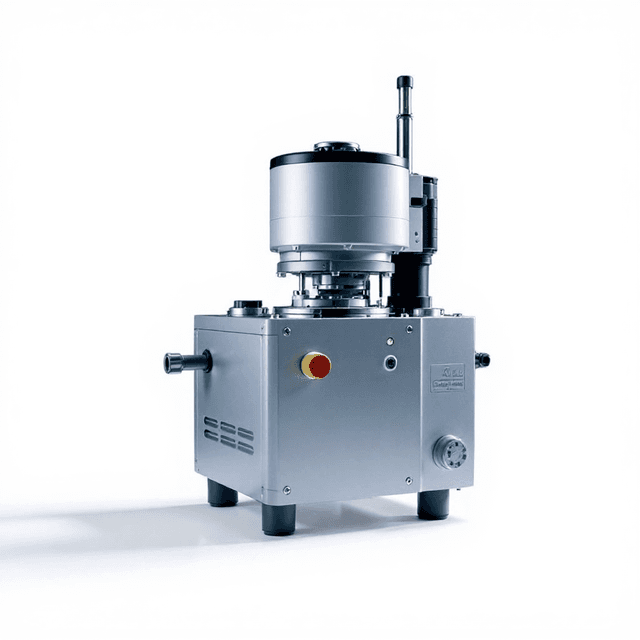
Scattered Light Turbidity Meter
Benchtop turbidity meter measuring suspended particles in water samples from 0-200 NTU using 90-degree scattered light detection with ±2.5% accuracy.
| the determination principles | 90 ° scattering light |
| measurement range | 0ï½ 200NTU |
| the minimum value | 0.1NTU |
| the basic error | ± 2.5%F.S |
| repetitive | ⤠1.5%F.S |
| zero drift | ⤠0.2NTU |

The Scattered Light Turbidity Meter (CS-LH-NTU007) quantifies suspended particulate matter in water and transparent liquids using 90-degree scattered light detection principles. This benchtop instrument measures turbidity from 0 to 200 NTU with 0.1 NTU resolution, providing researchers with precise characterization of particle concentrations in aqueous samples.
The instrument operates on the fundamental principle that suspended particles scatter incident light proportionally to their concentration and size distribution. With measurement accuracy of ±2.5% full scale and repeatability within 1.5% full scale, this turbidimeter supports quantitative analysis across environmental monitoring, water treatment evaluation, and quality control applications requiring standardized turbidity assessment.
How It Works
The turbidity meter employs 90-degree nephelometric detection, where a stable light source illuminates the sample cell and a photodetector positioned at 90 degrees to the incident beam measures scattered light intensity. Suspended particles in the sample scatter light according to Rayleigh and Mie scattering principles, with scatter intensity directly proportional to particle concentration within the measurement range.
The instrument's optical system maintains consistent illumination geometry while minimizing interference from transmitted and reflected light. Digital signal processing converts the scattered light signal to turbidity units (NTU), with internal calibration algorithms ensuring measurement accuracy across the 0-200 NTU range. Temperature compensation and zero drift control (≤0.2 NTU) maintain measurement stability during extended operation periods.
Features & Benefits
the determination principles
- 90 ° scattering light
measurement range
- 0ï½ 200NTU
the minimum value
- 0.1NTU
the basic error
- ± 2.5%F.S
repetitive
- ⤠1.5%F.S
zero drift
- ⤠0.2NTU
the power fluctuations
- ± 0.5%F.S
the environment temperature
- the use of 5ï½ 35 â, -20ï½ 55 âstorage
the relative humidity
- ⤠80%RH
Automation Level
- manual
Brand
- ConductScience
Power/Voltage
- 220V/50HZ5W
Research Domain
- Analytical Chemistry
- Environmental Monitoring
- Food Science
- Industrial Hygiene
- Microbiology
- Pharmaceutical QC
Weight
- 0.26 kg
Dimensions
- L: 8.8 mm
- W: 7.3 mm
- H: 5.9 mm
Comparison Guide
| Feature | This Product | Typical Alternative | Advantage |
|---|---|---|---|
| Detection Method | 90-degree scattered light detection | Entry-level models may use transmission methods with higher color interference | Scattered light detection provides better accuracy for low-turbidity samples and reduces color interference effects. |
| Measurement Range | 0-200 NTU with 0.1 NTU resolution | Basic instruments often have narrower ranges requiring multiple instruments | Single instrument covers applications from ultra-pure water to moderately turbid environmental samples. |
| Measurement Accuracy | ±2.5% full scale with ≤1.5% repeatability | Lower-cost models typically offer ±5% accuracy with higher repeatability variation | Precise measurements enable regulatory compliance and reliable quality control documentation. |
| Zero Stability | ≤0.2 NTU zero drift | Basic instruments may have higher drift requiring frequent recalibration | Low drift maintains measurement accuracy during extended analysis sessions without constant recalibration. |
This turbidity meter combines 90-degree scattered light detection with 0-200 NTU range and ±2.5% accuracy for comprehensive water quality analysis. The 0.1 NTU resolution and low zero drift support both routine monitoring and precision applications requiring reliable quantitative data.
Practical Tips
Perform calibration using standards that bracket your expected sample range rather than using only full-scale standards.
Why: Interpolation accuracy is better when calibration points surround the measurement range of interest.
Replace sample cells when optical surfaces show scratches or permanent staining that cannot be removed with standard cleaning.
Why: Scratched or stained cells introduce measurement artifacts and reduce accuracy across all turbidity levels.
Allow the instrument to warm up for 30 minutes before calibration and maintain consistent room temperature during measurement sessions.
Why: Optical component thermal stability directly affects measurement precision and drift performance.
Record multiple readings per sample and calculate standard deviation to assess measurement precision and identify outliers.
Why: Statistical analysis of replicate measurements provides confidence intervals and improves data reliability for reporting.
If readings drift during measurement, check for air bubbles in the sample cell and verify the sample cell is properly seated.
Why: Air bubbles and improper positioning cause light scattering artifacts that appear as measurement instability.
Handle sample cells by the sides rather than optical surfaces and use appropriate PPE when measuring unknown samples.
Why: Fingerprints on optical surfaces affect light transmission while unknown samples may contain hazardous materials.
Setup Guide
What’s in the Box
- Turbidity meter main unit
- Power adapter and cord
- Sample cells (typical)
- Calibration standards (typical)
- User manual and documentation
- Calibration certificate (typical)
Warranty
ConductScience provides a standard one-year manufacturer warranty covering defects in materials and workmanship, with technical support available for instrument operation and maintenance guidance.
Compliance
What calibration standards are required for accurate turbidity measurement?
Use certified formazin or polymer-based turbidity standards traceable to EPA or ISO references. Calibrate at multiple points across your measurement range, typically at 0, 20, 100, and 200 NTU for full-range applications.
How often should I recalibrate the instrument during routine use?
Perform zero and span checks at the beginning of each analysis session. Full calibration is recommended monthly or when drift exceeds acceptance criteria, typically ±5% of certified standard values.
What sample preparation steps are critical for accurate measurements?
Ensure samples are at room temperature, bubble-free, and well-mixed. Clean sample cells with lint-free materials and rinse with sample before measurement. Avoid fingerprints on optical surfaces.
Can this instrument measure samples with high organic content or color?
The 90-degree detection method minimizes color interference compared to transmission methods, but highly colored or fluorescent samples may still affect readings. Consider sample dilution or alternative measurement techniques for such samples.
What is the typical measurement time per sample?
Allow 30-60 seconds for reading stabilization after sample insertion. Total measurement time including sample handling is typically 2-3 minutes per sample for routine analysis.
How does temperature affect turbidity measurements?
Temperature changes can affect particle size distribution and light scattering properties. Maintain samples at consistent temperature and allow thermal equilibration before measurement for best reproducibility.
What maintenance procedures ensure long-term measurement accuracy?
Clean optical components monthly with appropriate solvents, replace sample cells when scratched, and verify calibration using certified standards. Store the instrument in a dust-free environment when not in use.
Have a question about this product?
Accessories
Enhance your setup with compatible accessories
Upgrade Options