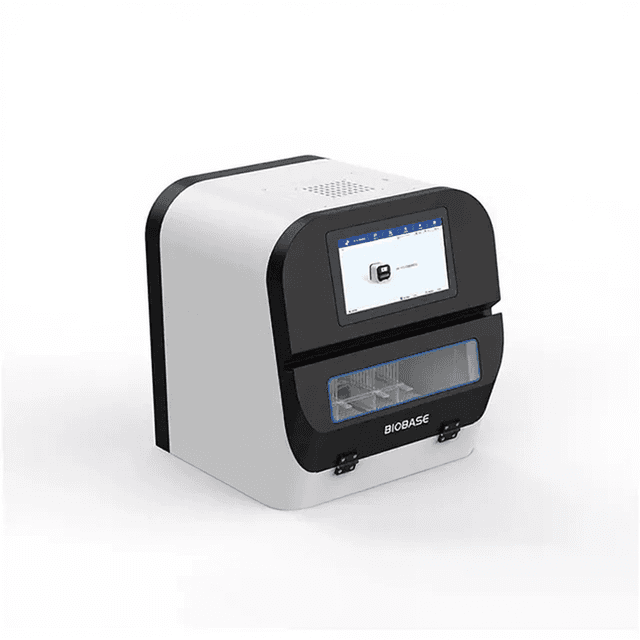
Semi-Automatic Kjeldahl Nitrogen Analyzer(Kjeldahl Distiller)
Semi-automatic Kjeldahl nitrogen analyzer with touch screen control, 0.1-240 mg N measurement range, and ±0.5% reproducibility for protein and nitrogen determination workflows.
| Automation Level | semi-automated |
| Measure Range | 0.1mg~240mgN |
| Reproducibility | ±0.5% |
| Recovery Ratio | 99~101% |
| Analysis Time | 3~5min/sample(Cooling water temperature is 18℃) |
| Distillation Time | 10~9990s, adjustable |

The Semi-Automatic Kjeldahl Nitrogen Analyzer represents a modern approach to classical nitrogen determination, combining traditional Kjeldahl methodology with contemporary automation and control features. This benchtop distillation unit handles nitrogen quantification across a measurement range of 0.1-240 mg N with ±0.5% reproducibility and 99-101% recovery ratios, making it suitable for routine analytical workflows requiring reliable nitrogen content determination.
The instrument features a 4-inch color touch screen interface and programmable distillation cycles (10-9990 seconds), enabling standardized processing of both solid samples up to 6g and liquid samples up to 16ml. Analysis cycles complete in 3-5 minutes per sample under standard cooling conditions, with automatic shutdown functionality and integrated reagent handling system including three reagent buckets and waste collection.
How It Works
The Kjeldahl method operates through a three-stage process: digestion, distillation, and titration. During digestion (performed separately), organic nitrogen is converted to ammonium sulfate through concentrated sulfuric acid treatment at elevated temperatures. The digested sample is then transferred to this analyzer for the distillation phase.
In the distillation stage, the analyzer adds sodium hydroxide to the digested sample, converting ammonium ions to ammonia gas. Steam distillation carries the ammonia into a receiving solution containing boric acid, where it is trapped as ammonium borate. The programmable distillation time (10-9990 seconds) ensures complete ammonia recovery while the integrated cooling system maintains optimal condensation efficiency.
The final nitrogen concentration is determined by titrating the receiving solution, with the total nitrogen content calculated based on the ammonia recovered. The 99-101% recovery ratio indicates the efficiency of the ammonia capture and distillation process across the instrument's 0.1-240 mg N measurement range.
Features & Benefits
Automation Level
- semi-automated
Measure Range
- 0.1mg~240mgN
Reproducibility
- ±0.5%
Recovery Ratio
- 99~101%
Analysis Time
- 3~5min/sample(Cooling water temperature is 18℃)
Distillation Time
- 10~9990s, adjustable
Sample Amount
- Solid≤6g; Liquid≤16ml
Automatic Shutdown Time
- 60 minutes
Water Consumption
- 1.2~3L/min
Consumption
- 2000W
Standard Accessories
- Reagent buckets*3, Waste bucket*1, Reagent pipelines*5, Cooling water pipes*2
External Size(W*D*H)
- 360*550*700mm
Brand
- ConductScience
Research Domain
- Analytical Chemistry
- Environmental Monitoring
- Food Science
- Materials Science
- Pharmaceutical QC
Display Type
- 4-inch color touch screen
Power/Voltage
- AC220V±10%, 50/60Hz
Weight
- 23kg
Weight
- 23.0 kg
Dimensions
- L: 70.0 mm
- W: 36.0 mm
- H: 55.0 mm
Comparison Guide
| Feature | This Product | Typical Alternative | Advantage |
|---|---|---|---|
| User Interface | 4-inch color touch screen with programmable parameters | Basic LCD displays or manual controls on entry-level models | Intuitive operation reduces training time and enables complex method programming for diverse sample types |
| Distillation Time Control | Programmable from 10-9990 seconds for method optimization | Fixed timing or limited adjustment range in basic units | Enables precise method development and optimization for different sample matrices and nitrogen concentrations |
| Analysis Speed | 3-5 minutes per sample at 18°C cooling water | Varies by model, often 5-10 minutes for manual systems | Higher throughput capability supports routine quality control and research workflows |
| Sample Capacity Range | 0.1-240 mg N measurement range accommodating diverse sample types | Narrower ranges or single-point calibration in basic models | Single instrument handles both trace analysis and high-concentration samples without method changes |
| Recovery Performance | 99-101% recovery ratio with ±0.5% reproducibility | Varies by model, often wider tolerance ranges | Consistent accuracy supports regulatory compliance and quality assurance requirements |
| Automation Features | Integrated reagent handling with automatic shutdown after 60 minutes | Manual reagent addition and timing in basic systems | Reduces operator variability and improves safety through standardized reagent delivery |
This analyzer combines automated reagent handling and programmable control with traditional Kjeldahl reliability, offering precise nitrogen determination across a wide measurement range. The touch screen interface and integrated safety features support both routine quality control and research applications requiring method flexibility.
Practical Tips
Verify system performance using certified reference materials with known nitrogen content before processing unknown samples.
Why: Ensures the ±0.5% reproducibility specification is maintained and validates the 99-101% recovery ratio for accurate results.
Clean the distillation chamber and condenser regularly with dilute acid solution to prevent residue buildup.
Why: Residue accumulation can affect heat transfer efficiency and compromise the 3-5 minute analysis time performance.
Maintain consistent cooling water temperature at 18°C for optimal analysis time and reproducibility.
Why: Temperature variations affect condensation efficiency and can extend analysis time beyond the specified 3-5 minute range.
Check reagent pipeline connections if recovery ratios fall outside the 99-101% specification range.
Why: Improper reagent delivery is the most common cause of reduced ammonia recovery efficiency.
Run blank distillations between sample batches to monitor baseline stability and reagent contamination.
Why: Blank monitoring helps identify contamination sources that could compromise the 0.1 mg N lower detection limit.
Ensure adequate ventilation around the unit and verify the automatic shutdown function operates correctly.
Why: Proper ventilation prevents ammonia accumulation while automatic shutdown prevents overheating during extended operation.
Optimize distillation time parameters for each sample matrix using the 10-9990 second programmable range.
Why: Matrix-specific timing ensures complete ammonia recovery while minimizing analysis time and reagent consumption.
Monitor water consumption rates to ensure the 1.2-3 L/min flow requirement is maintained consistently.
Why: Inadequate cooling water flow reduces condensation efficiency and can affect the accuracy of nitrogen recovery.
Setup Guide
What’s in the Box
- Semi-Automatic Kjeldahl Nitrogen Analyzer main unit
- Reagent buckets (3 units)
- Waste bucket (1 unit)
- Reagent pipelines (5 units)
- Cooling water pipes (2 units)
- Power cord (typical)
- User manual and documentation (typical)
- Calibration certificate (typical)
Warranty
ConductScience provides a standard one-year manufacturer warranty covering defects in materials and workmanship, with technical support available for method development and troubleshooting assistance.
Compliance
What sample preparation is required before using this analyzer?
Samples must be digested separately using concentrated sulfuric acid and catalyst before distillation. The analyzer handles the distillation and ammonia capture phases of the Kjeldahl method.
How do I optimize distillation time for different sample types?
The programmable distillation time (10-9990 seconds) should be optimized based on sample matrix and nitrogen content. Start with manufacturer recommendations and adjust based on recovery efficiency testing.
What reagents are required for operation?
Standard Kjeldahl reagents including sodium hydroxide solution (typically 40-50%), boric acid solution (typically 4%), and distilled water for steam generation. Consult product datasheet for specific concentrations.
Can this analyzer handle both liquid and solid samples?
Yes, the system accommodates solid samples up to 6g and liquid samples up to 16ml after appropriate digestion preprocessing.
What cooling water requirements are necessary?
The system requires cooling water flow of 1.2-3 L/min. Analysis time of 3-5 minutes is based on 18°C cooling water temperature; higher temperatures may extend analysis time.
How does this compare to manual Kjeldahl distillation?
The semi-automatic system provides programmable distillation cycles, integrated reagent handling, and touch screen control while maintaining the traditional Kjeldahl methodology principles.
What maintenance is required?
Regular cleaning of the distillation chamber, reagent line maintenance, and periodic calibration verification using certified reference materials to maintain the ±0.5% reproducibility specification.
Have a question about this product?
Upgrade Options