Stereotaxic Arm Upgrade
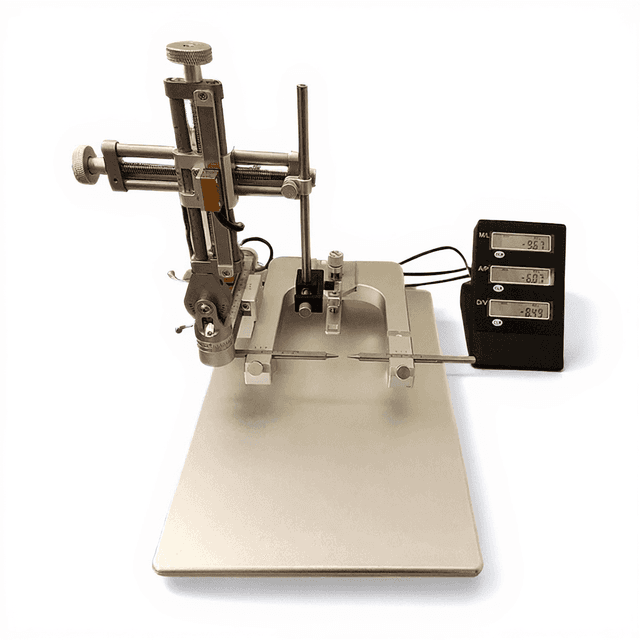
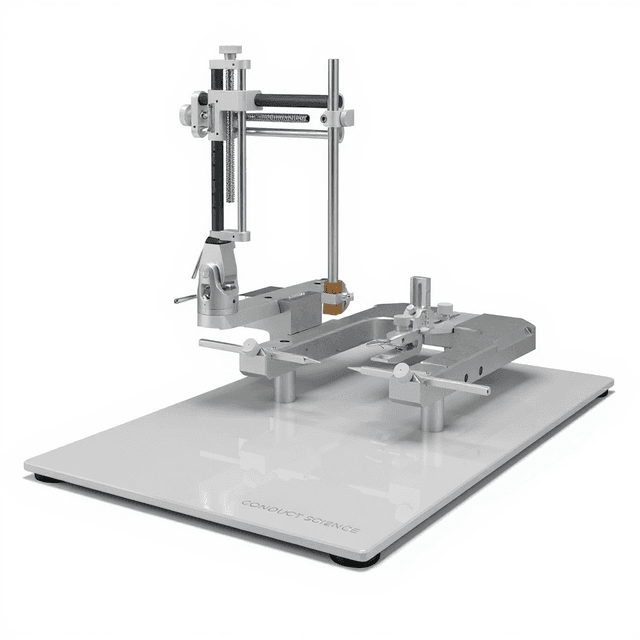
Standard Stereotaxic Instruments is the basic equipment of neuroscience research(100 micron resolution) .. The “U”-shaped frame design ensures stability.
| Automation Level | manual |
| Brand | RWD |
| Species | Gerbil, Hamster, Rabbit, Mouse, Rat, Guinea pig |

Standard Stereotaxic Instruments is the basic equipment of neuroscience research(100 micron resolution) . The “U”-shaped frame design ensures stability. Replace the rat and mouse adapter to realize the positioning of the brain area of the rat and the mouse.
2. Working distance in each dimension is 80 mm with precise alignment to 0.1mm resolution.
7. Extended base plate (400mm x 255mm) is applicable for a variety of animal sizes.
8. Unique anti-clockwise UP mark engraved in the knob prevents incorrect operation.
9. Vertical lock and fixing knob are separated to ensure accurate function at any angle.
10. To ensure a precise designed lateral rotation operating space, the distance between knob and the U-shaped frame is 28mm.
*Indicates that other specifications can be selected, which can be viewed from the product catalog of RWD.
: 9, 19-20/F, Building 7A, 9F Building 7D,
Key Features
- Accessories (Fiber-optic Cannulas, optical fiber, etc.)
- Double-lead screw design, more stable and accurate operation
- Adaptors of rats, mice, birds, cats and other different animal are optional
- Ding X B, Wang X X, Xia D H, et al. Impaired meningeal lymphatic drainage in patients with idiopathic Parkinson’s disease[J]. Nature Medicine, 2021, 27(3): 411-418.
- Zhou W, Ye C, Wang H, et al. Sound induces analgesia through corticothalamic circuits[J]. Science, 2022, 377(6602): 198-204.
Specifications
| Category | Model |
|---|---|
| Stereotaxic host (without accessories) | 68801 |
| 68802 | Standard Stereotaxic Instrument, Dual M |
| Required accessories (optional)* | 68055 |
| 68030 | Mouse/Neonatal Rat Adaptor |
| 68057 | Mouse Anesthesia Adaptor |
| 68021 | Rat Adaptor |
| 68053 | Rat Anesthesia Adaptor |
| 68301 | Rat 18° Ear Bars |
| 68306 | Mouse 60° Ear Bars |
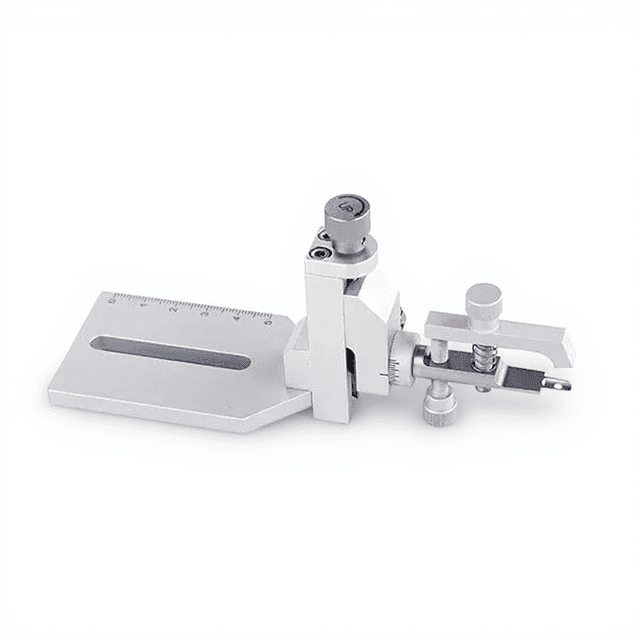
| 68201 | Standard Probe Holder-Corner, clamping range: 0.3-1.5mm. |
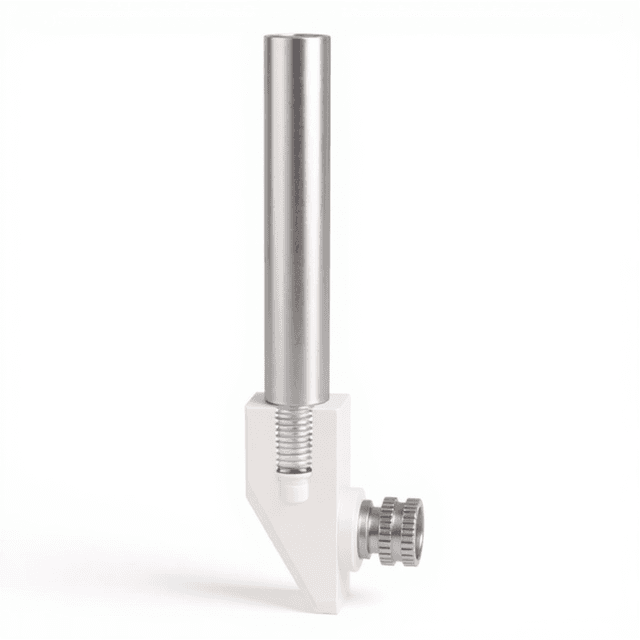
| 68217 | Cannula Holder, clamping diameter: 3.5mm. |
| 68205 | Cannula Holder, clamping diameter: 3.5mm. |
| 68214 | Ceramic Ferrule Holder, clamping diameter: 1.25mm. |
| 68215 | Ceramic Ferrule Holder, clamping diameter: 2.5mm. |
How It Works
Stereotaxic positioning operates on the principle of three-dimensional coordinate navigation using standardized brain atlases as reference frameworks. The system establishes a fixed spatial relationship between anatomical landmarks (typically bregma and lambda sutures) and target brain regions through precise mechanical positioning. The U-shaped frame provides a rigid reference structure while dual-lead screws translate rotational input into linear displacement with 100-micron resolution.
The double-lead screw mechanism ensures mechanical stability by eliminating backlash and providing consistent positioning repeatability. Coordinate targeting relies on anterior-posterior (AP), medial-lateral (ML), and dorsal-ventral (DV) measurements relative to established skull landmarks. The separated vertical lock and fixing knob system allows angle adjustments while maintaining positional accuracy throughout surgical procedures.
Animal-specific adapters ensure proper head restraint and orientation, critical for maintaining coordinate system alignment during procedures. The 28mm spacing between control knobs and frame structure provides adequate clearance for precise manipulator operation while preventing mechanical interference during complex surgical approaches.
Features & Benefits
Automation Level
- manual
Brand
- RWD
Research Domain
- Anxiety and Depression
- Behavioral Pharmacology
- Learning and Memory
- Motor Function
- Neurodegeneration
- Neuroscience
- Pain Research
Species
- Gerbil
- Hamster
- Rabbit
- Mouse
- Rat
- Guinea pig
Weight
- 8.27 kg
Dimensions
- L: 34.0 mm
- W: 39.0 mm
- H: 33.0 mm
Comparison Guide
| Feature | This Product | Typical Alternative | Advantage |
|---|---|---|---|
| Positioning Resolution | 100-micron resolution across all three axes | Entry-level systems often provide 50-200 micron resolution with less mechanical precision | Higher resolution enables targeting of smaller brain nuclei and improved coordinate reproducibility for precise experimental protocols. |
| Lead Screw Design | Double-lead screw mechanism for enhanced stability | Single-lead screw systems are common in basic stereotaxic frames | Eliminates mechanical backlash and provides more consistent positioning repeatability during delicate procedures. |
| Base Plate Dimensions | Extended 400mm x 255mm base plate | Compact systems typically offer smaller platforms with limited animal size accommodation | Accommodates broader range of animal models from neonatal mice to adult rats within single system configuration. |
| Frame Structure | U-shaped frame design for mechanical stability | Single-post or cantilever designs are common in budget systems | Provides superior structural rigidity and reduces vibration during extended surgical procedures requiring sustained precision. |
| Working Distance | 80mm operational range per axis | Basic systems may offer reduced working distances with limited positioning range | Enables complex multi-site targeting and varied surgical approaches within single experimental session. |
| Directional Indicators | Anti-clockwise UP markings engraved on control knobs | Many systems rely on user orientation without clear directional references | Prevents common positioning errors and improves procedural consistency across different operators. |
This stereotaxic system combines high-resolution positioning with enhanced mechanical stability through its double-lead screw design and U-shaped frame structure. The extended base plate and generous working distances accommodate diverse experimental requirements while maintaining coordinate precision essential for reproducible neuroscience research.
Practical Tips
Verify positioning accuracy using precision gauge blocks or calibration standards before each experimental session.
Why: Environmental factors and mechanical wear can affect coordinate accuracy over time, requiring regular verification for reliable results.
Lubricate lead screw mechanisms monthly with appropriate precision lubricants to maintain smooth operation.
Why: Proper lubrication prevents mechanical binding and ensures consistent positioning resolution throughout extended use periods.
Allow animals to equilibrate at stable anesthetic depth before initiating coordinate positioning procedures.
Why: Animal movement during positioning can compromise coordinate accuracy and lead to targeting errors in subsequent procedures.
Check adapter alignment and skull positioning if coordinate targets appear inconsistent across animals.
Why: Improper animal positioning relative to stereotaxic landmarks is the most common source of targeting variability.
Record actual coordinate positions achieved during procedures rather than relying solely on intended target coordinates.
Why: Documentation of actual positions enables post-hoc analysis of targeting accuracy and identification of systematic errors.
Ensure all mechanical locks are properly engaged before beginning surgical procedures to prevent inadvertent movement.
Why: Unexpected coordinate changes during procedures can cause tissue damage and compromise experimental outcomes.
Use consistent approach angles and insertion speeds across experimental sessions to minimize tissue displacement effects.
Why: Standardized insertion parameters reduce variability in final electrode or injection sites relative to intended coordinates.
Inspect adapter mounting surfaces regularly for wear or damage that could affect coordinate system alignment.
Why: Worn adapter components can introduce systematic positioning errors that compromise targeting accuracy across all procedures.
Setup Guide
What’s in the Box
- Stereotaxic frame with U-shaped design
- Double-lead screw positioning mechanisms
- Extended base plate (400mm x 255mm)
- Coordinate scale markings
- Installation hardware
- Operation manual
- Animal adapter (specify model separately)
- Calibration verification tools (typical)
Warranty
ConductScience provides a one-year manufacturer warranty covering mechanical components and positioning accuracy specifications, with technical support for calibration and operational guidance.
Compliance
References
Background reading relevant to this product:
What is the positioning accuracy and repeatability of the double-lead screw mechanism?
The system provides 100-micron resolution with the double-lead screw design eliminating mechanical backlash for consistent positioning repeatability. Actual repeatability specifications should be verified through calibration procedures.
How does the U-shaped frame design affect mechanical stability during long procedures?
The U-shaped frame provides superior structural rigidity compared to single-post designs, reducing vibration and mechanical drift during extended surgical procedures requiring sustained precision.
What animal size range is compatible with the extended base plate dimensions?
The 400mm x 255mm base plate accommodates animals from neonatal mice through adult rats, with specific adapter requirements for each species to maintain coordinate system alignment.
Can the system accommodate angled injection approaches for complex targeting?
Yes, the separated vertical lock and fixing knob design allows precise angle adjustments while maintaining coordinate accuracy, with 28mm clearance providing manipulation space.
What coordinate references are used for brain atlas alignment?
Standard stereotaxic coordinates reference bregma and lambda sutures as anatomical landmarks, with anterior-posterior, medial-lateral, and dorsal-ventral measurements for three-dimensional targeting.
How does the anti-clockwise UP marking system prevent operational errors?
The engraved directional markings provide visual confirmation of movement direction during coordinate positioning, preventing common errors in spatial orientation during procedures.
What maintenance procedures are required to maintain positioning accuracy?
Regular calibration verification using precision standards, lubrication of lead screw mechanisms, and inspection of adapter alignment components to ensure continued accuracy.
Are additional accessories required for specific experimental applications?
Yes, applications may require specific animal adapters, electrode holders, microinjection systems, or anesthesia delivery components depending on experimental protocols.
Have a question about this product?
Accessories
Enhance your setup with compatible accessories
Frequently Bought Together