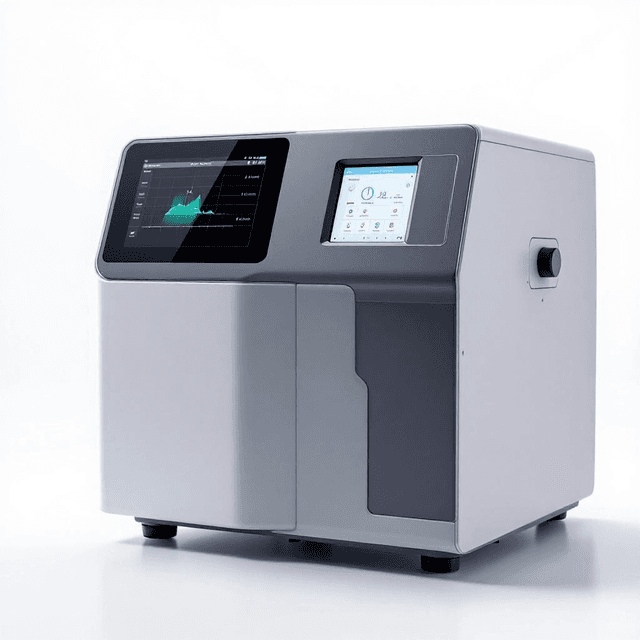
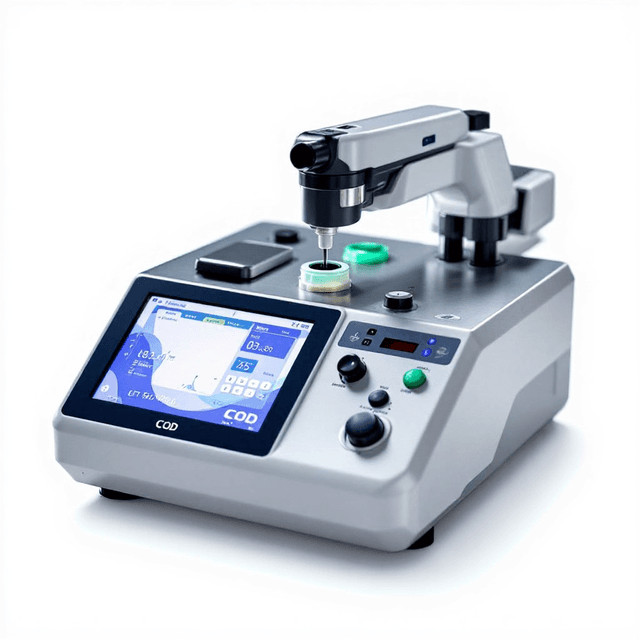
Waste Water Detection Meter For Total Nitrogen Test
Portable battery-powered meter for quantitative total nitrogen measurement in industrial wastewater samples, enabling field analysis without external power requirements.
| Model | LH-D62 |
| Automation Level | semi-automated |
| Brand | ConductScience |

The Waste Water Detection Meter for Total Nitrogen Test (Model LH-D62) is a portable analytical instrument designed for quantitative measurement of total nitrogen content in industrial wastewater samples. This battery-powered field meter enables on-site nitrogen analysis in environments where laboratory access or electrical power is unavailable, supporting environmental monitoring and wastewater treatment compliance workflows.
The instrument provides direct nitrogen concentration measurements using colorimetric detection principles, with results displayed on an integrated digital interface. The compact design (90×70×125mm) and extended battery life (>30 hours continuous operation) make it suitable for field sampling campaigns, effluent monitoring programs, and routine wastewater quality assessments at industrial facilities.
How It Works
The LH-D62 employs colorimetric analysis for total nitrogen determination in aqueous samples. The measurement principle involves chemical conversion of nitrogen-containing compounds to a colored complex that absorbs light at a specific wavelength. Sample preparation typically includes oxidation steps to convert organic nitrogen and ammonia to nitrate, followed by reduction to nitrite for colorimetric detection.
The instrument incorporates photodiode-based optical detection to measure absorbance changes proportional to nitrogen concentration. Internal calibration algorithms convert optical signals to nitrogen concentration values, which are displayed digitally. The portable design integrates sample handling, reagent mixing, optical measurement, and data processing in a single handheld unit.
Battery power enables field operation independent of electrical infrastructure, while the compact optical system provides measurement precision suitable for regulatory monitoring applications. Sample volumes are typically small (consult product datasheet for specific requirements), minimizing sample collection and handling requirements.
Features & Benefits
Model
- LH-D62
Automation Level
- semi-automated
Brand
- ConductScience
Research Domain
- Analytical Chemistry
- Environmental Monitoring
- Food Science
- Industrial Hygiene
- Microbiology
Weight
- 0.37 kg
Dimensions
- L: 4.92 mm
- W: 3.54 mm
- H: 2.76 mm
Comparison Guide
| Feature | This Product | Typical Alternative | Advantage |
|---|---|---|---|
| Power Source | 1.5V battery operation with >30 hour life | Many field meters require frequent battery replacement or external power | Extended operation reduces interruptions during multi-day sampling campaigns |
| Size and Portability | Compact 90×70×125mm handheld design | Laboratory analyzers are bench-mounted and non-portable | Single-operator field deployment eliminates sample transport logistics and preservation requirements |
| Detection Method | Colorimetric analysis with digital display | Test strips provide qualitative results while spectrophotometers require laboratory setup | Provides quantitative measurements with immediate digital readout for regulatory documentation |
| Sample Matrix | Optimized for industrial wastewater analysis | General-purpose analyzers may not account for industrial matrix effects | Calibrated specifically for nitrogen ranges and interferences common in industrial effluent samples |
The LH-D62 provides field-portable quantitative nitrogen analysis with extended battery operation and compact design. The colorimetric detection system offers laboratory-quality measurements in a handheld format optimized for industrial wastewater matrices.
Practical Tips
Perform zero calibration with distilled water before each measurement session and verify with certified standard solutions.
Why: Drift compensation ensures measurement accuracy over extended field operations.
Clean sample chamber thoroughly between measurements using distilled water and lint-free wipes.
Why: Prevents cross-contamination between samples that could affect nitrogen concentration accuracy.
Collect samples in clean containers and analyze within recommended holding times to minimize nitrogen compound degradation.
Why: Sample integrity directly affects measurement accuracy and regulatory compliance.
Record sample temperature, collection time, and any visible sample characteristics alongside nitrogen measurements.
Why: Documentation supports data interpretation and troubleshooting of unusual results.
If measurements appear inconsistent, check battery voltage and recalibrate with fresh standard solutions.
Why: Low battery power can affect optical system performance and measurement stability.
Handle reagents according to safety data sheets and dispose of waste samples following environmental regulations.
Why: Chemical reagents may be hazardous and wastewater samples may contain unknown contaminants.
Setup Guide
What’s in the Box
- LH-D62 total nitrogen meter
- Battery compartment with 1.5V batteries (typical)
- Sample vials and reagents (typical)
- Operating manual with calibration procedures
- Calibration standard solutions (typical)
- Protective carrying case (typical)
Warranty
ConductScience provides standard 1-year manufacturer warranty covering defects in materials and workmanship, with technical support for calibration procedures and troubleshooting assistance.
Compliance
What is the measurement range and detection limit for total nitrogen analysis?
Specific measurement range and detection limit specifications should be confirmed from the product datasheet, as these parameters depend on the optical system design and calibration standards used.
What sample volume is required for each measurement?
Sample volume requirements depend on the instrument's sample chamber design and measurement protocol - consult the operating manual for specific volume specifications.
How frequently should the instrument be calibrated for accurate results?
Calibration frequency depends on measurement accuracy requirements and sample matrix effects. Daily calibration verification is recommended for regulatory monitoring applications.
Can the meter analyze samples with high suspended solids content?
Colorimetric detection may be affected by turbidity and suspended solids. Sample filtration or dilution may be required for accurate measurements in high-solids matrices.
What is the measurement precision and accuracy for replicate analyses?
Precision and accuracy specifications are provided in the product datasheet and depend on nitrogen concentration range and sample matrix characteristics.
How does temperature affect measurement accuracy?
Operating temperature range and temperature compensation features should be verified from technical specifications, as colorimetric methods can be temperature-sensitive.
What data storage and transfer capabilities are available?
Data management features vary by model - consult product specifications for information on measurement storage, data transfer options, and connectivity features.
Have a question about this product?
Accessories
Enhance your setup with compatible accessories