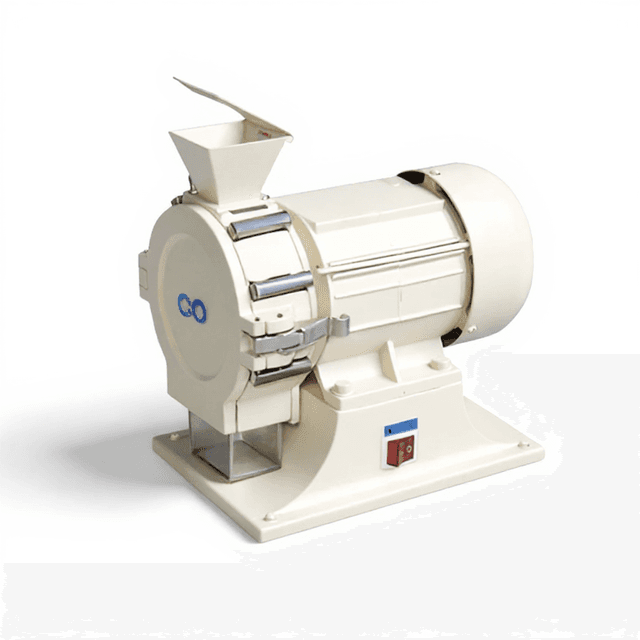
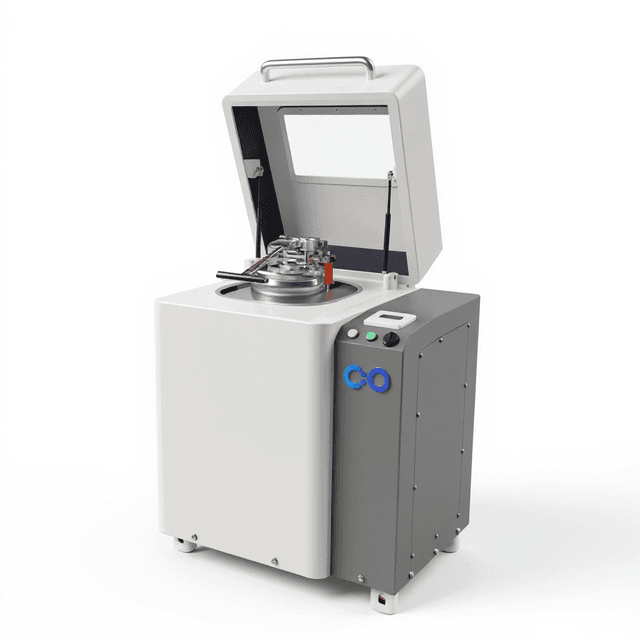
High-speed Universal Disintegrator
High-speed universal disintegrator for crushing hard and fibrous materials.
Four models (HSD-80 to HSD-400A); up to 26,000 rpm; 40–200 mesh output; 50–400 g per batch. Used in chemical, metallurgical, food, and construction industries.

Louise Corscadden, PhD
Director of Science · ConductScience
Ask Louise about High-speed Universal Disintegrator fit, setup, configuration, or quote prep.
Already working with us? Sign in to connect this with My Scientist.
Key Specifications
Full details →- Model fit
- 4 selectable configurations
- SKU family
- CS-958317
- Shipping box
- 3149.61 x 1574.8 x 27.0 cm
- Ordering
- Online checkout and quote request available
- Category
- Solid Processing
- Build notes
- Confirm accessories, station layout, and support needs before purchase
This high-speed universal disintegrator crushes hard and difficult-to-process
materials through relative motion between movable and fixed tooth disks, applying
impact, friction, and material-to-material compression forces simultaneously. Four
model sizes handle batches from 50 g (compact benchtop) to 400 g, all achieving
40–200 mesh output fineness. Applications span chemical, metallurgical, food, and
construction industries.
Technical Specifications
| Parameter | HSD-80 | HSD-100 | HSD-200 | HSD-400A |
|---|---|---|---|---|
| Speed | 10,000 rpm | 26,000 rpm | 26,000 rpm | 26,000 rpm |
| Grinding Room (mm) | Ø80×40 | Ø100×40 | Ø125×56 | Ø150×80 |
| Output Fineness | 40–200 mesh | |||
| Input Capacity (max) | 50 g | 100 g | 200 g | 400 g |
| Power Consumption | 200 W | 800 W | 800 W | 1,000 W |
| Power Supply | AC 220 V, 50/60 Hz | |||
| Dimensions (W×D×H) | Ø110×210H | Ø160×320H | Ø160×360H | 230×190×420 mm |
| Net Weight | 1.4 kg | 3 kg | 3 kg | 9.3 kg |
| Gross Weight | 1.7 kg | 3.5 kg | 3.5 kg | 10 kg |
How It Works
The High-speed Universal Disintegrator operates through high-velocity impact and shear forces generated by a rotating blade system within an enclosed grinding chamber. The sample material is subjected to repeated collisions with high-speed rotating elements, creating fracture propagation along grain boundaries and crystal planes. The grinding mechanism combines impact forces from the rotating assembly with shear forces generated by the material's interaction with the chamber walls.
Particle size reduction occurs through a combination of compression, impact, and attrition forces. The high rotational speeds (up to 26,000 rpm) create sufficient kinetic energy to overcome the cohesive forces within solid materials, progressively reducing particle size until the desired mesh fineness is achieved. The enclosed chamber design prevents sample loss while allowing for controlled atmosphere processing when required.
Features & Benefits
Automation Level
- semi-automated
Research Domain
- Analytical Chemistry
- Environmental Monitoring
- Food Science
- Materials Science
- Microbiology
- Pharmaceutical QC
Shipping weight
- 3.09 lb
Shipping box
- L: 3149.61 cm
- W: 1574.8 cm
- H: 27.0 cm
| Feature | This Product | Typical Alternative | Advantage |
|---|---|---|---|
| Processing Capacity Range | 50-400g capacity across four models | Many units offer single fixed capacity | Allows laboratories to select optimal batch size for their specific sample volumes and throughput requirements |
| Maximum Operating Speed | Up to 26,000 rpm on three models | Entry-level models often operate at lower speeds | Higher speeds enable faster processing times and more efficient particle size reduction |
| Grinding Chamber Dimensions | Chambers from Ø80×40mm to Ø150×80mm | Limited chamber size options in most product lines | Optimized chamber geometry for different sample volumes improves grinding efficiency and uniformity |
| Power Consumption Scaling | 200W to 1000W matched to processing capacity | Often oversized motors regardless of sample capacity | Energy-efficient operation with motor power appropriately matched to grinding requirements |
| Particle Size Achievement | 40-200 mesh fineness across all models | Varies by model with limited consistency | Consistent particle size capabilities regardless of selected capacity model |
This disintegrator series provides scalable processing capacity with consistent performance characteristics across four model sizes. The combination of high-speed operation and appropriately sized grinding chambers offers efficient sample processing with uniform particle size reduction capabilities.
| Model | SKU | Listed price | Status | Shipping box |
|---|---|---|---|---|
| BIO-HSD-400A | CS-958317 | $175.00 | Available | 3149.61 x 1574.8 x 27.0 cm |
| BIO-HSD-200 | CS-958317 | $175.00 | Available | 3149.61 x 1574.8 x 27.0 cm |
| BIO-HSD-100 | CS-958317 | $175.00 | Available | 3149.61 x 1574.8 x 27.0 cm |
| BIO-HSD-80 | CS-958317 | $175.00 | Available | 3149.61 x 1574.8 x 27.0 cm |
Practical Tips
Verify particle size output using standard test sieves periodically to ensure consistent grinding performance.
Why: Blade wear and chamber condition changes over time can affect particle size distribution
Clean grinding chamber thoroughly between different sample types to prevent cross-contamination.
Why: Residual material from previous samples can affect analytical results and introduce bias
Pre-dry samples when possible to improve grinding efficiency and achieve more uniform particle size.
Why: Moisture content can cause material clumping and reduce grinding effectiveness
If grinding efficiency decreases, inspect rotor blades for wear and replace when edges become rounded.
Why: Sharp blade edges are essential for effective particle size reduction through shear forces
Process replicate samples to assess grinding reproducibility and establish processing time protocols.
Why: Consistent processing parameters ensure reproducible particle size distribution for analytical accuracy
Allow rotor to reach complete stop before opening chamber and always wear appropriate respiratory protection.
Why: Moving parts present injury risk and fine particle generation requires dust exposure control
Load samples in center of grinding chamber to ensure even distribution of grinding forces.
Why: Proper sample positioning maximizes grinding efficiency and prevents uneven particle size distribution
Setup Guide
What’s in the Box
- High-speed disintegrator main unit
- Grinding chamber assembly
- Rotor blade system
- Power cord
- User manual and operating instructions
- Sample collection tools (typical)
- Chamber cleaning brushes (typical)
Warranty
ConductScience provides a standard one-year manufacturer warranty covering defects in materials and workmanship, with technical support for operational guidance and troubleshooting assistance.
Compliance
What particle size consistency can be achieved across different sample types?
All models achieve 40-200 mesh fineness, with actual particle size distribution depending on sample hardness, processing time, and material properties. Brittle materials typically achieve more uniform size reduction than fibrous samples.
How do I select the appropriate model for my sample volumes?
Choose based on maximum batch size: BIO-HSD-80 for ≤50g samples, BIO-HSD-100 for ≤100g, BIO-HSD-200 for ≤200g, or BIO-HSD-400A for ≤400g. Consider daily throughput requirements when selecting capacity.
What maintenance is required for consistent performance?
Regular cleaning of grinding chamber and rotor assembly after each use, periodic inspection of blade wear, and lubrication of bearing assemblies according to manufacturer schedule. Replace worn components promptly to maintain grinding efficiency.
Can the equipment process heat-sensitive materials?
Processing generates frictional heat during high-speed operation. For heat-sensitive samples, use shorter grinding intervals with cooling periods, or consider dry ice addition for cryogenic grinding applications.
What sample types are not suitable for this disintegrator?
Avoid processing wet, sticky, or oil-rich materials that may clog the grinding chamber. Extremely hard materials like metals or ceramics may cause excessive blade wear and require specialized grinding media.
How does processing time affect particle size distribution?
Longer processing times generally achieve finer particle sizes but may lead to over-grinding and heat generation. Optimize processing duration through trial runs to achieve desired mesh size without sample degradation.
What safety considerations apply during operation?
Ensure proper chamber closure before operation, use appropriate personal protective equipment for dust exposure, and allow rotor to completely stop before opening chamber. Never exceed recommended sample load capacity.
Have a question about this product?
Have a question? Just ask.
Send it over and we'll email you a personalized answer — no call, no scheduling.
Prefer to talk it through?
Accessories
Enhance your setup with compatible accessories