Vibration Mill
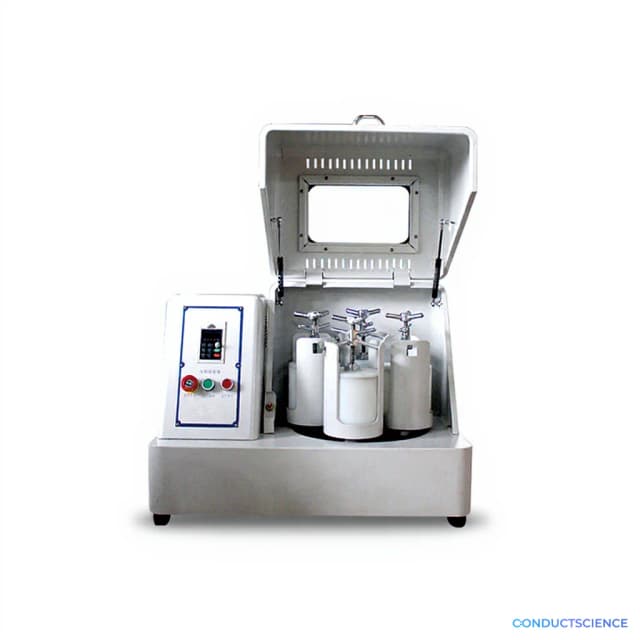
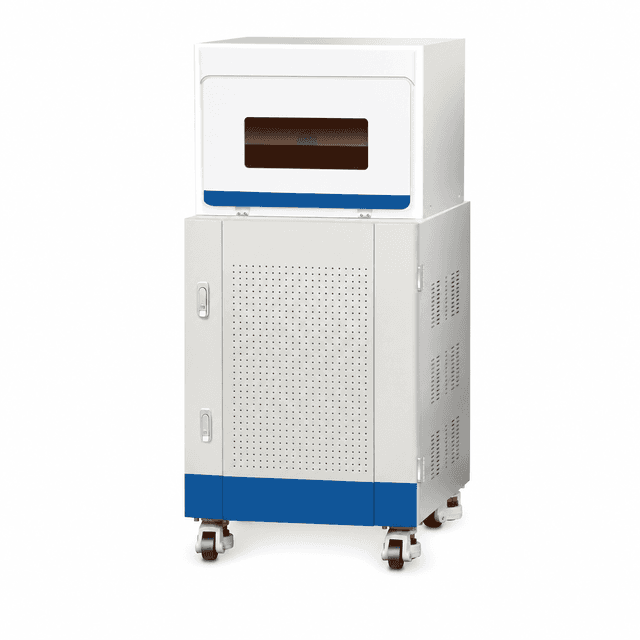
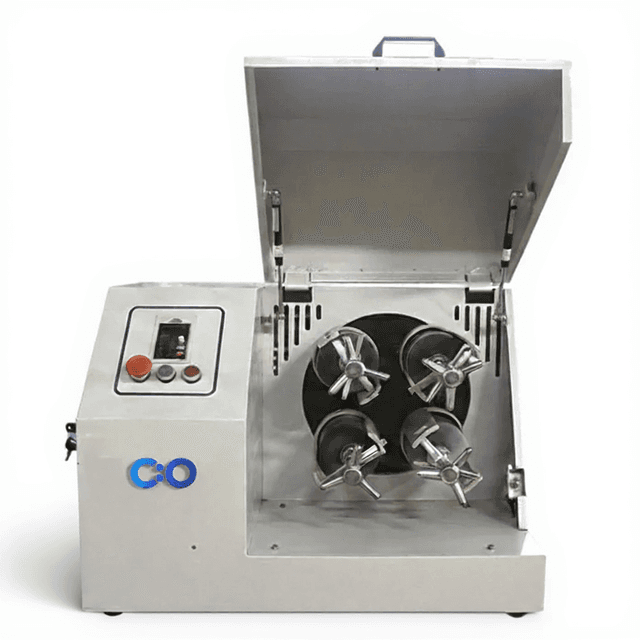
Vibration mill with tungsten carbide disc grinding for high-efficiency pulverization to ≤0.074 mm.
Single disc seat; quick-clamp clamping; 100 mL capacity (1–50 g); 60–180 s grinding cycles; cover-open safety shutoff. Optional disc materials include high-chromium steel, agate, and zirconia.

Louise Corscadden, PhD
Director of Science · ConductScience
Ask Louise about Vibration Mill fit, setup, configuration, or quote prep.
Already working with us? Sign in to connect this with My Scientist.
Key Specifications
Full details →- Model fit
- Configured during quote
- SKU family
- BIO-BK-VBM01
- Shipping box
- 42.0 x 43.6 x 38.0 cm
- Ordering
- Online checkout and quote request available
- Category
- Solid Processing
- Build notes
- Confirm accessories, station layout, and support needs before purchase
This vibration mill delivers high grinding efficiency through horizontal impact
force transmitted via a 1480 rpm (or 960 rpm) rotating disc. Quick-clamp clamping
provides fast changeover between runs, and an integrated cover-open safety shutoff
prevents operation with the grinding chamber open. The standard tungsten carbide disc
grinds samples of 1–50 g to ≤0.074 mm in 60–180 seconds. Optional disc materials
— high-chromium steel, agate, zirconia, corundum, and high-manganese steel — allow
the system to be matched to the hardness and contamination-sensitivity of the sample.
Four fixed and sliding support feet, plus integrated pulleys, provide stable bench
placement and easy repositioning.
Technical Specifications
| Parameter | BK-VBM01 |
|---|---|
| Grinding Disc Speed | 1,480 rpm (1.5 kW) or 960 rpm (1.1 kW) |
| Disc Material (standard) | Tungsten carbide |
| Optional Disc Materials | High-chromium steel, agate, zirconia, corundum, high-manganese steel |
| Disc Specification | 100 mL capacity |
| Sample Capacity | 1–50 g |
| Max Feed Particle Size | ≤8 mm |
| Final Particle Size | ≤0.074 mm |
| Grinding Time | 60–180 s |
| Grinding Disc Seat | Single |
| Clamping | Quick-clamp |
| Motor Protection | Phase-loss and overcurrent protection |
| Safety | Cover-open shutoff |
| Power Supply | AC 380 V ±5%, 50 Hz, three-phase |
| External Dimensions (W×D×H) | 680 × 620 × 915 mm |
| Net Weight | 160 kg |
| Gross Weight | 185 kg |
How It Works
The vibration mill operates through high-frequency mechanical oscillation at 1480 rpm, generating intense grinding forces through tungsten carbide discs in horizontal motion. The sample and grinding media undergo rapid acceleration and deceleration cycles, creating impact and shear forces that fracture material particles. The horizontal grinding force direction ensures efficient energy transfer while preventing material compaction.
Sample size reduction occurs through multiple mechanisms including impact fracturing, attrition grinding, and shear stress. The 60-180 second grinding cycles provide controlled processing time, while the single-disc configuration maintains sample integrity. Digital timing control allows precise cycle duration for reproducible results across different material types.
Optional grinding disc materials (high chromium steel, agate, zirconia, corundum) enable material-specific protocols, with disc selection based on sample hardness, contamination sensitivity, and target particle size requirements.
Features & Benefits
Grinding Force Direction
- horizontal
Mobility
- equipped with pulleys for easy movement
Clamping Mechanism
- fast pressing device
Control Interface
- comfortable control buttons
Automation Level
- semi-automated
Research Domain
- Analytical Chemistry
- Environmental Monitoring
- Food Science
- Materials Science
- Microbiology
- Pharmaceutical QC
Shipping weight
- 68.34 lb
Shipping box
- L: 42.0 cm
- W: 43.6 cm
- H: 38.0 cm
| Feature | This Product | Typical Alternative | Advantage |
|---|---|---|---|
| Grinding Speed | 1480 rpm high-frequency operation | Entry-level models often operate at lower frequencies | Higher frequency operation achieves faster size reduction and shorter processing cycles for improved laboratory throughput. |
| Sample Capacity Range | 1-50g sample volume capacity | Many models have fixed capacity ranges | Flexible capacity accommodates both small research samples and larger preparation batches within a single instrument. |
| Grinding Disc Options | Multiple disc materials including tungsten carbide, high chromium steel, agate, zirconia, corundum | Basic models typically include only standard steel discs | Material-specific disc selection prevents contamination and optimizes grinding efficiency for different sample types. |
| Timing Control | Digital timing control with 60-180 second range | Manual timing or basic analog controls | Precise digital control ensures reproducible grinding cycles and enables protocol standardization across different operators. |
| Mobility Features | Equipped with mobile casters for laboratory repositioning | Most benchtop mills have fixed positioning | Laboratory flexibility allows shared instrument access and optimal workspace utilization in multi-user environments. |
| Safety Systems | Motor protection systems and safety interlocks | Basic models may have limited safety features | Comprehensive safety systems protect both equipment and operator while ensuring reliable long-term operation. |
The BIO-BK-VBM01 combines high-frequency operation at 1480 rpm with flexible sample capacity and multiple grinding disc options. Digital timing control and comprehensive safety systems support reproducible results and reliable operation in demanding laboratory environments.
Practical Tips
Establish baseline grinding times for your specific materials by testing small sample batches at different cycle durations.
Why: Material-specific calibration ensures consistent particle size results across different sample types and batches.
Clean grinding vessels and discs thoroughly between samples using appropriate solvents for your application.
Why: Prevents cross-contamination and maintains grinding efficiency by removing residual material buildup.
Pre-crush large samples to approximately 8mm feed size before grinding to ensure uniform processing.
Why: Consistent feed size maximizes grinding efficiency and reduces wear on tungsten carbide discs.
If grinding efficiency decreases, inspect discs for wear patterns and check clamping mechanism tightness.
Why: Worn discs or loose clamping reduces grinding force transfer and compromises particle size consistency.
Document grinding parameters (disc type, sample mass, time) for each material to establish reproducible protocols.
Why: Standardized parameters enable consistent results across different operators and sample batches.
Always verify complete motor stop and engage safety interlocks before opening grinding vessels.
Why: Residual rotation can cause sample spillage or injury during vessel handling and sample recovery.
Select grinding disc material based on sample hardness and contamination sensitivity requirements.
Why: Proper disc selection optimizes grinding efficiency while preventing sample contamination from disc wear.
Regularly inspect mobile casters and clean debris from wheel mechanisms to maintain positioning capability.
Why: Clean casters ensure smooth laboratory repositioning and prevent damage to flooring surfaces.
Setup Guide
What’s in the Box
- BIO-BK-VBM01 vibration mill main unit
- Tungsten carbide grinding disc set
- 100ml grinding vessel
- Fast pressing device clamping system
- Power cord and electrical connections
- User manual and operating instructions
- Safety documentation and compliance certificates
- Mobile caster wheels (typical)
Warranty
ConductScience provides a standard one-year manufacturer warranty covering defects in materials and workmanship, with technical support for operational guidance and troubleshooting assistance.
Compliance
References
Background reading relevant to this product:
What particle size range can this mill achieve and how does grinding time affect final particle distribution?
The mill processes samples from 8mm feed size down to ≤0.074mm particles. Grinding time ranges from 60-180 seconds, with longer cycles generally producing finer particles, though optimal duration depends on material hardness and brittleness.
How do I select the appropriate grinding disc material for my sample type?
Tungsten carbide (standard) suits most applications. Use high chromium steel for hard materials, agate for contamination-sensitive samples, zirconia for trace metal analysis, and corundum for abrasive materials. Consult product datasheet for specific material compatibility.
What is the maximum sample throughput and how does batch size affect grinding efficiency?
Sample capacity ranges from 1-50g per batch in 100ml vessels. Smaller batches (1-10g) typically achieve more uniform size reduction, while larger batches may require longer grinding times or multiple cycles for equivalent results.
How does this compare to planetary ball mills or other size reduction methods?
Vibration mills offer faster processing cycles (60-180 seconds vs several hours) but with single-disc configuration versus multiple grinding stations. Best for rapid sample prep rather than ultra-fine grinding applications.
What maintenance is required and how often should grinding discs be replaced?
Regular cleaning between samples prevents cross-contamination. Grinding disc replacement frequency depends on material abrasiveness and usage intensity. Inspect discs for wear patterns and replace when grinding efficiency decreases.
Can this mill handle wet grinding or only dry materials?
The mill is designed for dry grinding applications. Consult product datasheet for specific guidance on sample moisture content limitations and vessel sealing capabilities.
What safety considerations apply during operation and sample handling?
Safety interlocks prevent operation with improper vessel installation. Motor protection systems guard against overload. Always verify complete stop before opening vessels and use appropriate PPE when handling processed samples.
How do I achieve reproducible results across different sample batches?
Maintain consistent sample mass, grinding time, and disc selection. Digital timing control ensures precise cycle duration. Document parameters for each material type to establish standardized protocols.
Have a question about this product?
Have a question? Just ask.
Send it over and we'll email you a personalized answer — no call, no scheduling.
Prefer to talk it through?
Accessories
Enhance your setup with compatible accessories
Frequently Bought Together