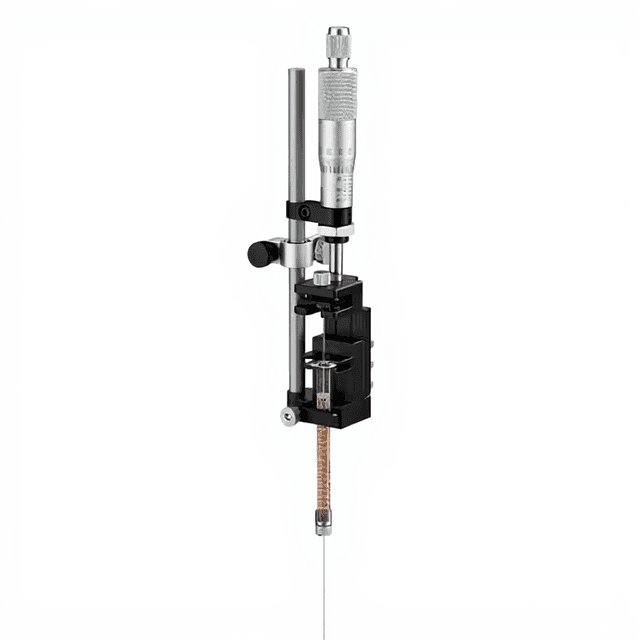
Advanced 3D Stereotaxic System
Advanced stereotaxic system with three-dimensional positioning, 0.01mm accuracy, and rolling rail transmission for precise brain targeting in neuroscience research.

Louise Corscadden, PhD
Director of Science · ConductScience
Ask Louise about Advanced 3D Stereotaxic System fit, setup, configuration, or quote prep.
Already working with us? Sign in to connect this with My Scientist.
Key Specifications
Full details →- Model fit
- Hamster, Mouse, Rat, Guinea pig
- SKU family
- CS-A3D-ORISA100/CS-A3D-ORISA100D
- Shipping box
- 30.0 x 25.0 x 25.0 cm
- Ordering
- Online checkout and quote request available
- Category
- Stereotaxic Complete Systems
- Build notes
- Confirm accessories, station layout, and support needs before purchase
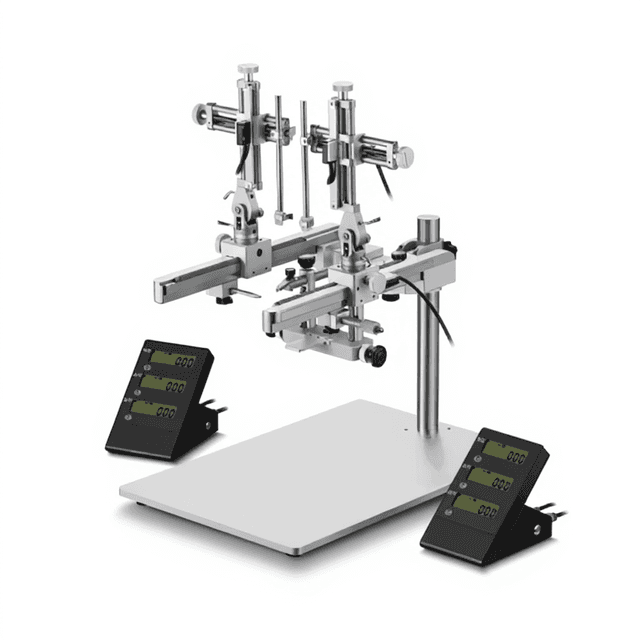
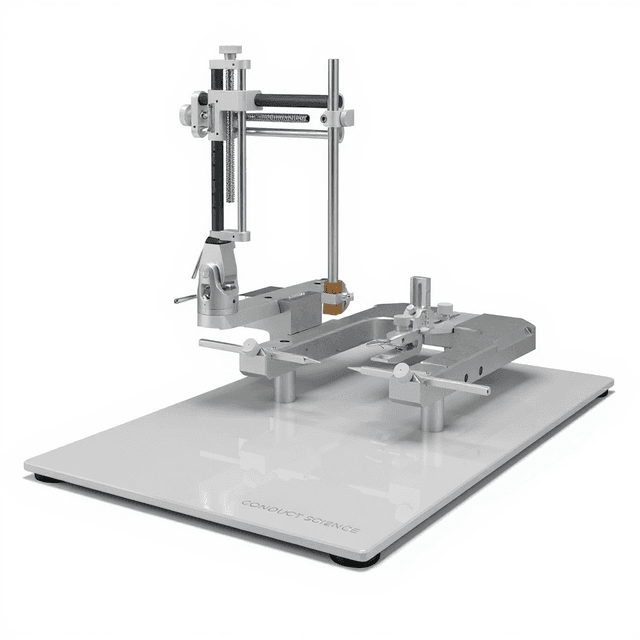
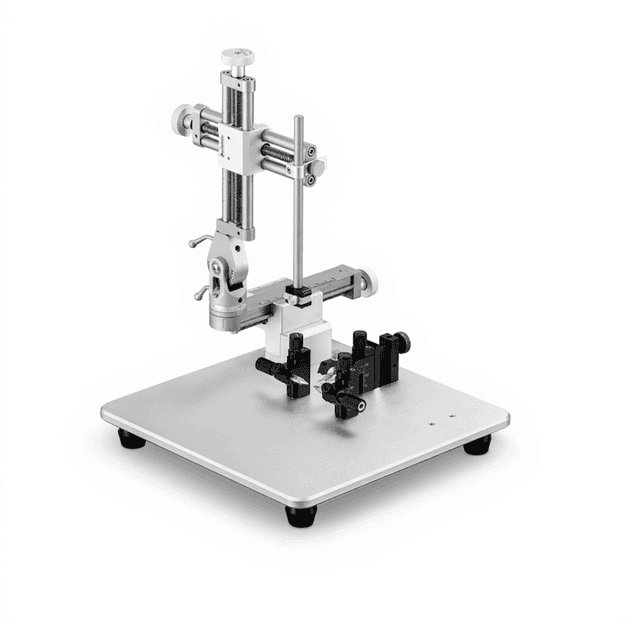
The Advanced 3D Stereotaxic System represents a next-generation approach to precise brain targeting for neuroscience research. This system employs a novel X, Y, Z axis three-dimensional positioning method where the X and Y two-dimensional platform secures the animal's head while allowing coordinated movement through screw drive transmission combined with rolling rail technology. The design provides enhanced stability and extended service life compared to traditional friction-based systems.
The system features 180° left and right Z-axis rotation capability and maintains accuracy to 0.01mm in the digital display version or 0.1mm in the basic version. The wide operating space above the animal, with only the Z-axis occupying overhead space, facilitates coordinated use of additional instruments including clamps, injection pumps, and cranial drills. Head positioning is achieved through replaceable ear bars, nose pressure plates, and incisor buckles to accommodate different animal sizes and species.
How It Works
The Advanced 3D Stereotaxic System operates on a three-dimensional coordinate positioning principle that allows precise navigation to specific brain structures. The system uses established stereotaxic coordinates from brain atlases to target anatomical locations with sub-millimeter accuracy. The X and Y axes control medial-lateral and anterior-posterior positioning through a two-dimensional platform that moves the secured animal head, while the Z axis provides dorsal-ventral positioning through vertical manipulation of attached instruments.
The core innovation lies in the screw drive transmission combined with rolling rail technology, similar to train wheel mechanics. This design reduces metal-to-metal friction compared to traditional sliding mechanisms, resulting in smoother movement and reduced wear. The rolling contact maintains consistent positioning accuracy over extended use periods while minimizing mechanical backlash.
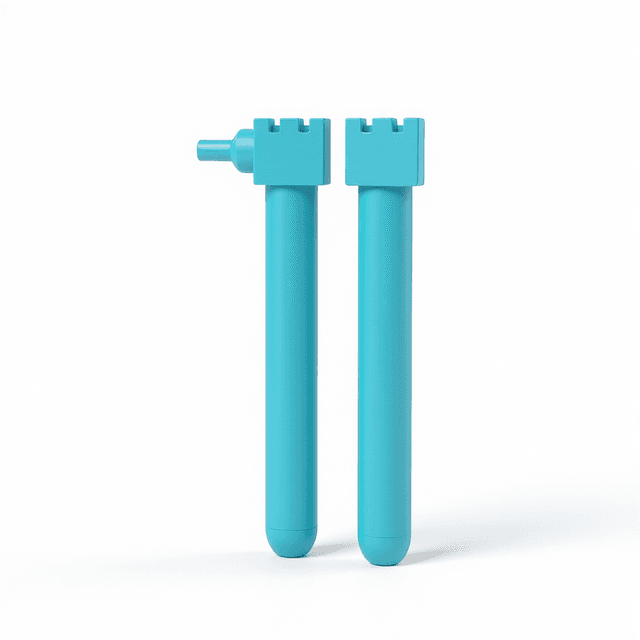
Animal positioning is achieved through adjustable head restraint components including ear bars for lateral stabilization, nose pressure plates for anterior restraint, and incisor buckles for securing the lower jaw. These components are interchangeable to accommodate different animal sizes and species. The Z-axis accepts various attachments including injection cannulae, electrode holders, and surgical instruments, with 180° rotational capability for optimal approach angles.
Features & Benefits
Axis Movement
- X, Y, Z axis three-dimensional mobile positioning
Z Axis Rotation
- 180° left and right
Transmission Principle
- screw drive combined with rolling rail
Head Fixing Components
- ear bar, nose pressure and incisor buckle (replaceable for different animals)
Z Axis Compatible Attachments
- clamps, injection pumps, and cranial drills
Automation Level
- manual
Accuracy
- 0.01MM (digital display version) or 0.1MM (basic version)
Display Type
- Digital
Research Domain
- Addiction Research
- Anxiety and Depression
- Behavioral Pharmacology
- Learning and Memory
- Motor Function
- Neurodegeneration
- Neuroscience
Species
- Hamster
- Mouse
- Rat
- Guinea pig
Shipping weight
- 17.64 lb
Shipping box
- L: 30.0 cm
- W: 25.0 cm
- H: 25.0 cm
| Feature | This Product | Typical Alternative | Advantage |
|---|---|---|---|
| Positioning Accuracy | 0.01mm (digital version) or 0.1mm (basic version) | Standard models typically offer 0.1mm accuracy | Sub-millimeter precision enables targeting of small brain nuclei and improved experimental reproducibility. |
| Transmission System | Screw drive combined with rolling rail technology | Most systems use traditional sliding mechanisms | Reduced friction and wear ensures consistent accuracy and extended instrument lifespan. |
| Z-Axis Rotation | 180° left and right rotation capability | Many systems offer limited or no rotational adjustment | Optimal approach angles for complex procedures and access to difficult brain regions. |
| Operating Space | Wide space with only Z-axis overhead | Conventional designs often have restricted access | Unrestricted space facilitates use of additional instruments and manual procedures. |
| Animal Accommodation | Replaceable head restraint components for multiple species | Fixed components limit species compatibility | Versatile system accommodates different research models without additional equipment. |
This Advanced 3D Stereotaxic System offers enhanced precision through sub-millimeter accuracy and rolling rail technology, combined with greater operational flexibility through wide workspace design and rotational Z-axis capability. The replaceable restraint components and instrument compatibility support diverse neuroscience applications across multiple animal models.
| Model | SKU | Listed price | Status | Shipping box |
|---|---|---|---|---|
| Digital | CS-A3D-ORISA100D | $7,936.99 | Available | 30.0 x 25.0 x 25.0 cm |
| Manual | CS-A3D-ORISA100 | $7,936.99 | Available | 30.0 x 25.0 x 25.0 cm |
Practical Tips
Verify system zero points and coordinate accuracy using known anatomical landmarks before each experimental session.
Why: Ensures positioning accuracy and experimental reproducibility across procedures.
Clean the rolling rail mechanisms regularly with appropriate solvents to remove biological debris and maintain smooth operation.
Why: Prevents buildup that could affect positioning accuracy and system longevity.
Allow anesthetized animals to reach stable body temperature before beginning coordinate positioning to ensure consistent anatomical alignment.
Why: Temperature changes can affect tissue dimensions and alter stereotaxic coordinate accuracy.
If positioning becomes inconsistent, check for loose mounting hardware and verify that ear bars are properly seated and secured.
Why: Mechanical play in the system components directly affects positioning precision.
Always secure the animal completely before beginning axis movement and maintain clear workspace around moving components.
Why: Prevents injury to the animal and damage to surgical instruments during positioning.
Document actual coordinates reached for each target site rather than relying solely on atlas coordinates due to individual anatomical variation.
Why: Improves experimental accuracy and enables better data interpretation across animals.
Use the 180° Z-axis rotation to approach brain targets from optimal angles that minimize tissue damage and improve access.
Why: Proper approach angles reduce surgical trauma and improve success rates for implantations.
Setup Guide
What’s in the Box
- Advanced 3D stereotaxic frame (typical)
- X, Y, Z axis positioning mechanisms (typical)
- Digital display unit (digital version) (typical)
- Ear bar set for standard laboratory animals (typical)
- Nose pressure plate (typical)
- Incisor buckle assembly (typical)
- Z-axis mounting hardware (typical)
- Calibration tools (typical)
- User manual and coordinate reference guide (typical)
Warranty
ConductScience provides a standard one-year manufacturer warranty covering defects in materials and workmanship, with technical support for setup, calibration, and troubleshooting assistance.
Compliance
What is the positioning accuracy difference between the basic and digital display versions?
The basic version provides 0.1mm accuracy while the digital display version offers 0.01mm accuracy, making the digital version suitable for applications requiring sub-millimeter precision such as targeting small brain nuclei.
How does the rolling rail transmission system improve performance over traditional designs?
The screw drive combined with rolling rail technology reduces metal-to-metal friction compared to sliding mechanisms, resulting in smoother movement, reduced wear, and maintained accuracy over extended use periods.
What animal species can be accommodated with the replaceable head restraint components?
The system includes replaceable ear bars, nose pressure plates, and incisor buckles that can accommodate mice, rats, guinea pigs, and hamsters through appropriate component selection and adjustment.
What types of instruments can be mounted on the Z-axis?
The Z-axis accepts various attachments including clamps, injection pumps, cranial drills, electrode holders, and cannulae systems, with 180° rotational capability for optimal positioning.
How much operating space is available around the animal during procedures?
The design provides wide operating space with only the Z-axis occupying overhead area, allowing unrestricted access for coordinated use of additional instruments and manual surgical procedures.
What maintenance is required to preserve positioning accuracy?
Regular calibration checks, cleaning of the rolling rail mechanisms, and verification of component alignment help maintain the specified accuracy over the instrument's service life.
Can the system be used for both acute and chronic implantation procedures?
Yes, the precise positioning and stable platform design accommodate both acute experimental procedures and chronic implantation of cannulae, electrodes, or other devices requiring long-term placement accuracy.
Have a question about this product?
Have a question? Just ask.
Send it over and we'll email you a personalized answer — no call, no scheduling.
Prefer to talk it through?
Accessories
Enhance your setup with compatible accessories
Frequently Bought Together
Upgrade Options