Behavioral Tracking for Sea Slug
Aplysia californica
ConductVision delivers automated tracking of Aplysia gill withdrawal reflexes, sensitization, habituation, and feeding behavior. Quantify the Nobel Prize-winning learning paradigms in Aplysia californica.

Why Sea Slug in Behavioral Research
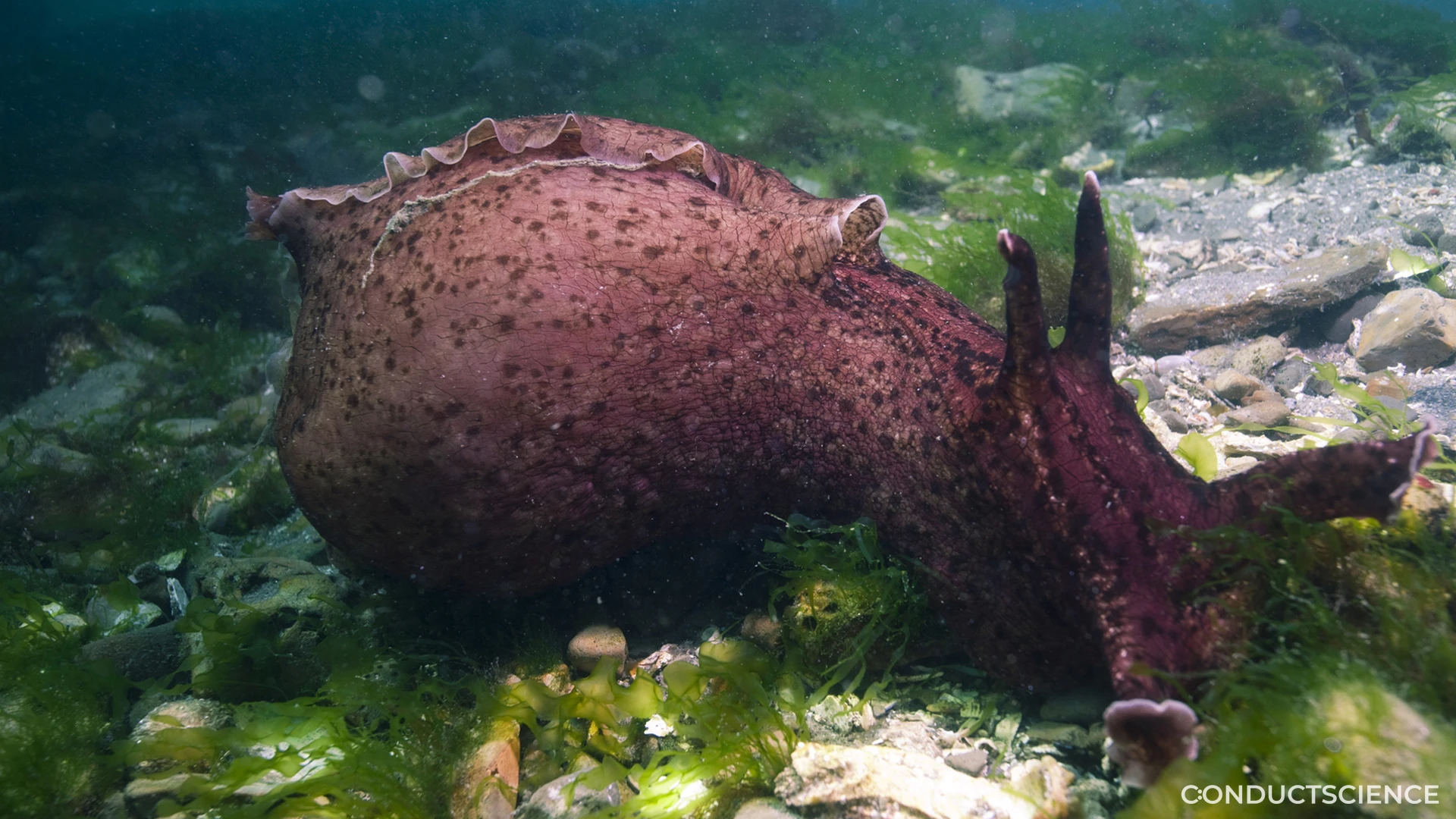
Aplysia californica is the organism that defined our molecular understanding of learning and memory, earning Eric Kandel the Nobel Prize. The gill and siphon withdrawal reflexes remain the most thoroughly characterized behavioral paradigms in neuroscience, with habituation, sensitization, and classical conditioning mapped to specific synapses and molecular cascades. Their large, identifiable neurons make them irreplaceable for connecting behavioral output to cellular mechanisms.
Kandel ER. (2001). The molecular biology of memory storage: a dialogue between genes and synapses. Science, 294(5544), 1030-1038. PMID: 11691980
Kandel ER. (2009). The biology of memory: a forty-year perspective. J Neurosci, 29(41), 12748-12756. PMID: 19828785
What We Measure in Sea Slug
Validated assays with quantitative parameter tracking for Aplysia californica.
The gill withdrawal reflex is the canonical preparation for studying synaptic plasticity. Withdrawal duration, sensitization magnitude, habituation rate, and dishabituation provide precise readouts of non-associative and associative learning at identified synapses.
| Parameter | Unit | Description |
|---|---|---|
| Withdrawal duration | s | Gill retraction time |
| Sensitization magnitude | % increase | Enhanced response after noxious stimulus |
| Habituation rate | slope | Response decrement across stimuli |
| Dishabituation recovery | % | Response restoration |
Kandel ER. (2001). The molecular biology of memory storage: a dialogue between genes and synapses. Science, 294(5544), 1030-1038. PMID: 11691980
The siphon withdrawal reflex complements gill withdrawal as a behavioral readout for learning studies. Withdrawal amplitude, response latency, and classical conditioning effects measure synaptic plasticity at identified neural circuits.
| Parameter | Unit | Description |
|---|---|---|
| Withdrawal amplitude | mm | Retraction distance |
| Response latency | ms | Initiation time |
| Classical conditioning | % change | CS-US pairing effect |
Kandel ER. (2001). The molecular biology of memory storage: a dialogue between genes and synapses. Science, 294(5544), 1030-1038. PMID: 11691980
Aplysia enables precise time-course studies of non-associative learning. Short-term and long-term forms of both sensitization and habituation have been mapped to distinct molecular cascades, from kinase signaling to gene expression.
| Parameter | Unit | Description |
|---|---|---|
| Short-term sensitization | minutes | 1 shock → minutes-long enhancement |
| Long-term sensitization | days | 4-5 shocks → days-long enhancement |
| Short-term habituation | minutes | 10 stimuli → minutes-long decrement |
| Long-term habituation | weeks | 4 days training → weeks-long decrement |
Kandel ER. (2009). The biology of memory: a forty-year perspective. J Neurosci, 29(41), 12748-12756. PMID: 19828785
Ink release is a graded defensive response in Aplysia. Release threshold, volume, and latency provide measures of defensive motivation and threat assessment.
| Parameter | Unit | Description |
|---|---|---|
| Ink release threshold | stimulus intensity | Minimum trigger |
| Ink volume | µl | Amount released |
| Release latency | s | Time from threat to inking |
Kandel ER. (2001). The molecular biology of memory storage: a dialogue between genes and synapses. Science, 294(5544), 1030-1038. PMID: 11691980
The feeding motor program generates rhythmic biting movements that can be conditioned. Bite frequency, ingestion efficiency, and appetitive conditioning provide measures of consummatory behavior and associative learning.
| Parameter | Unit | Description |
|---|---|---|
| Bite frequency | bites/min | Consummatory rate |
| Bite-swallow ratio | ratio | Ingestion efficiency |
| Appetitive conditioning | % change | Learned food preference |
Kupfermann I. (1974). Feeding behavior in Aplysia: a simple system for the study of motivation. Behav Biol, 10(1), 1-26. PMID: 4590727
ConductScience Hardware for Sea Slug Research
Gill Withdrawal Recording System
Reflex measurement
Siphon Stimulation Apparatus
Withdrawal response testing
Seawater Flow-Through Chamber
Aplysia maintenance and testing
Ink Collection System
Defensive behavior quantification
Feeding Behavior Arena
Consummatory response tracking
Citations & Further Reading
- Kandel ER. (2001). The molecular biology of memory storage: a dialogue between genes and synapses. Science, 294(5544), 1030-1038. PMID: 11691980
- Kandel ER. (2009). The biology of memory: a forty-year perspective. J Neurosci, 29(41), 12748-12756. PMID: 19828785
- Kupfermann I. (1974). Feeding behavior in Aplysia: a simple system for the study of motivation. Behav Biol, 10(1), 1-26. PMID: 4590727
Other Model Systems
Discuss Your Aplysia Research
Tell us about your models, assays, and experimental goals — we’ll show you how ConductVision fits your workflow.