Primary Assay — Sea Slug
Siphon Withdrawal Reflex
Aplysia californica
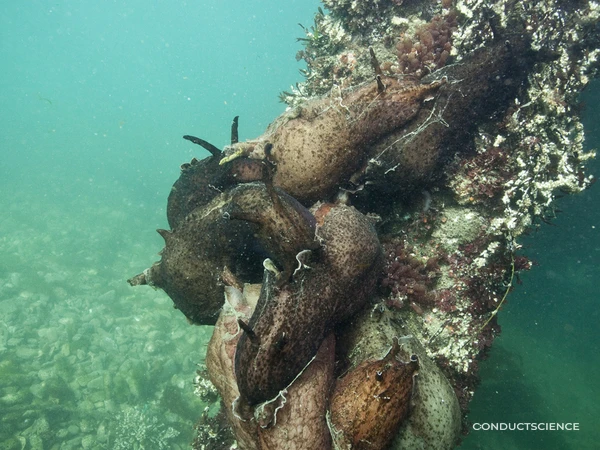
The siphon withdrawal reflex complements gill withdrawal as a behavioral readout for learning studies. Withdrawal amplitude, response latency, and classical conditioning effects measure synaptic plasticity at identified neural circuits.

Quantitative Output
Measured Parameters
Every parameter is automatically tracked frame-by-frame in the ConductVision pipeline for Aplysia californica.
| Parameter | Unit | Description |
|---|---|---|
| Withdrawal amplitude | mm | Retraction distance |
| Response latency | ms | Initiation time |
| Classical conditioning | % change | CS-US pairing effect |
References
Citations for Siphon Withdrawal Reflex
- Kandel ER. (2001). The molecular biology of memory storage: a dialogue between genes and synapses. Science, 294(5544), 1030-1038. PMID: 11691980
Compatible Equipment
Hardware for Sea Slug Research
Gill Withdrawal Recording System
Reflex measurement
Siphon Stimulation Apparatus
Withdrawal response testing
Seawater Flow-Through Chamber
Aplysia maintenance and testing
Ink Collection System
Defensive behavior quantification
Feeding Behavior Arena
Consummatory response tracking
Related Assays
Other Sea Slug Primary Assays
01
Gill Withdrawal Reflex (Nobel Prize work)
Aplysia californica
The gill withdrawal reflex is the canonical preparation for studying synaptic plasticity. Withdrawal duration, sensitiza…
01
Sensitization / Habituation Paradigms
Aplysia californica
Aplysia enables precise time-course studies of non-associative learning. Short-term and long-term forms of both sensitiz…
01
Ink Release (Defensive)
Aplysia californica
Ink release is a graded defensive response in Aplysia. Release threshold, volume, and latency provide measures of defens…
Run Siphon Withdrawal Reflex on ConductVision
Our team will configure the protocol, camera rig, and analysis pipeline for your sea slug facility.