Behavioral Tracking for Ferret
Mustela putorius furo
Visual cortex development, gyrencephalic neuroanatomy, and respiratory disease in Mustela putorius furo. ConductVision delivers automated tracking and quantitative parameter extraction across the full assay catalog below.
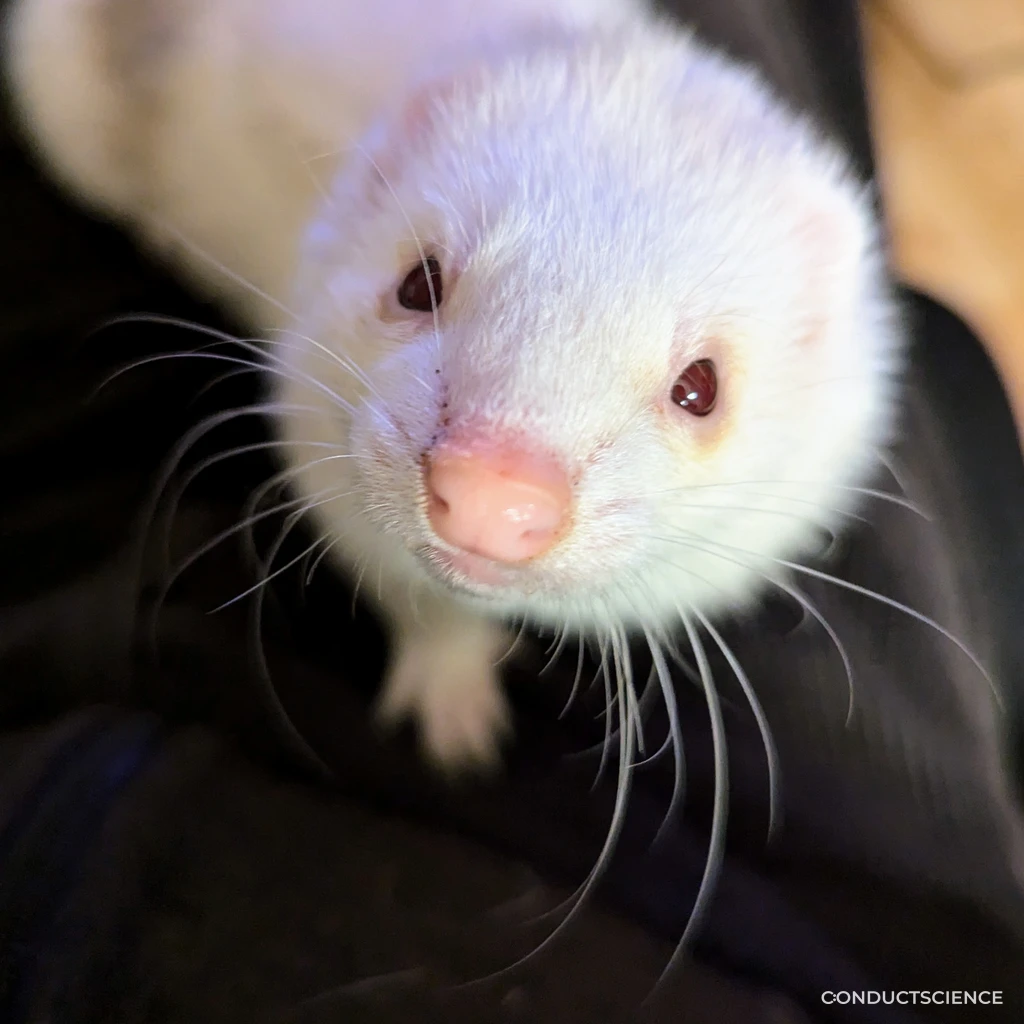
Why Ferret in Behavioral Research
The ferret is the principal carnivore model for visual cortex development, gyrencephalic brain organization, and respiratory infection. Its postnatal cortical development and human-like airway physiology make it indispensable for systems neuroscience and translational virology.
Chapman B, Stryker MP. (1993). Development of orientation selectivity in ferret visual cortex and effects of deprivation. J Neurosci, 13(12), 5251-5262. PMID: 8254372
Belser JA, Katz JM, Tumpey TM. (2011). The ferret as a model organism to study influenza A virus infection. Dis Model Mech, 4(5), 575-579. PMID: 21810904
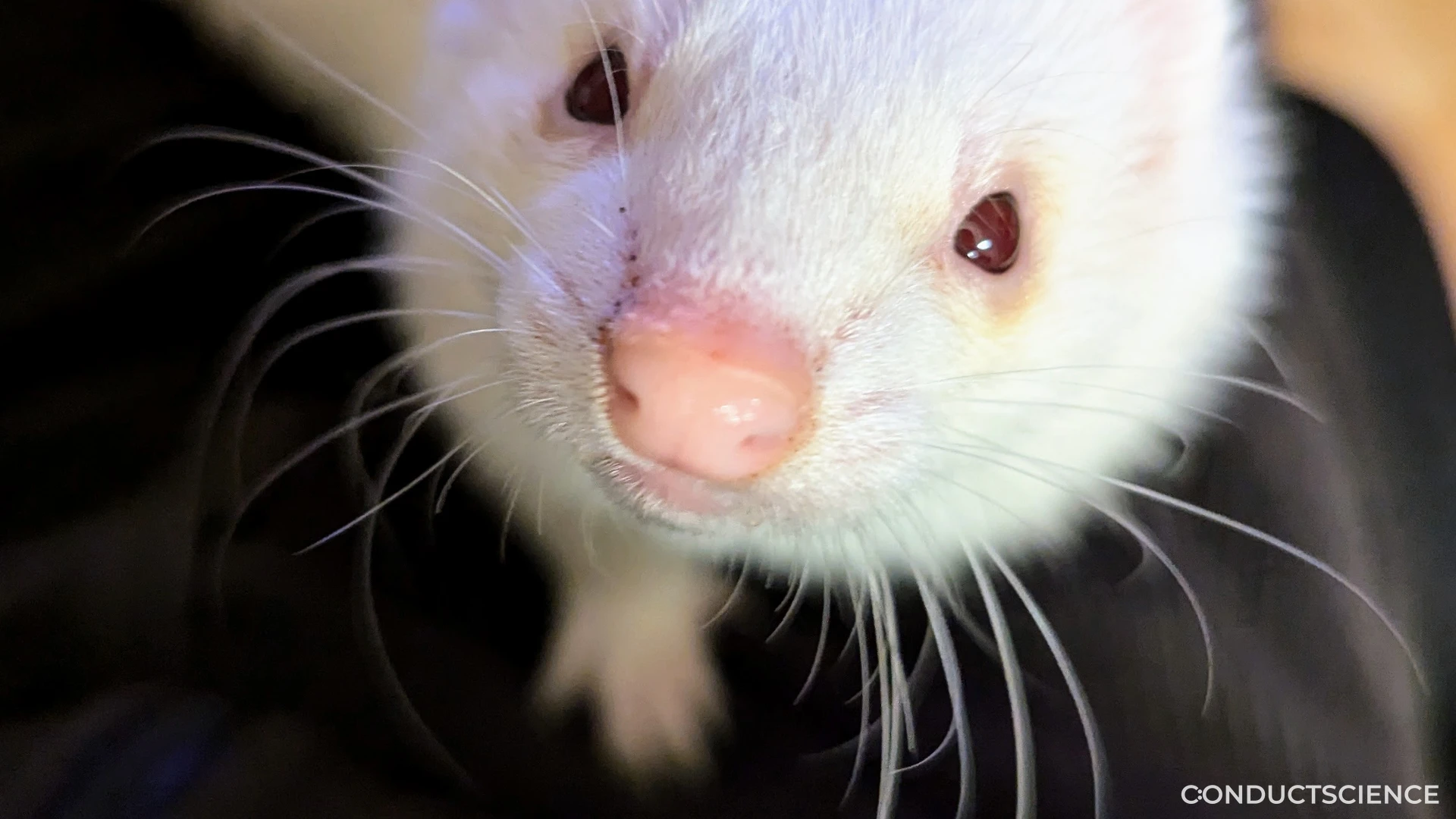
What We Measure in Ferret
Validated assays with quantitative parameter tracking for Mustela putorius furo.
Ferrets are a classical model for orientation maps and ocular dominance plasticity. Behavioral acuity and physiological tuning develop postnatally and are sensitive to monocular deprivation.
| Parameter | Unit | Description |
|---|---|---|
| Behavioral acuity | cyc/deg | Highest discriminable grating |
| Orientation tuning width | deg | Half-width at half-max |
| Ocular dominance index | index | Binocular balance |
| Visual evoked response | µV | Cortical signal amplitude |
Chapman B, Stryker MP. (1993). PMID: 8254372
Ferrets are exploratory carnivores with high baseline activity, freezing under stress, and curiosity for novel objects. Open-field metrics index general state and welfare.
| Parameter | Unit | Description |
|---|---|---|
| Distance traveled | m | Locomotion |
| Rearing events | count | Vertical exploration |
| Freezing duration | s | Immobility |
| Object contact time | s | Novel-object exploration |
Hartman EE, Brodbelt DC, Church DB. (2002). Behavioural assessment of welfare in laboratory ferrets. Lab Anim, 36(2), 225-235.
Juvenile ferrets engage in vigorous play, including chase, wrestle, and "weasel-war-dance" hops. Play bouts and partner choice index social development.
| Parameter | Unit | Description |
|---|---|---|
| Play bouts | count/h | Social engagement |
| Partner preference | index | Selectivity |
| Aggressive bites | count | Agonistic component |
| Vocalization (dook) | calls/min | Excitement signal |
Stockman ER, et al. (1996). Social play in ferrets. Anim Behav, 51, 1219-1225.
Ferrets perform skilled reaches with the forepaw to manipulate small objects, supporting comparative carnivore motor research.
| Parameter | Unit | Description |
|---|---|---|
| Reach success | % | Object retrieval |
| Reach time | ms | Movement duration |
| Pronation/supination | deg | Wrist rotation |
| Bimanual events | % | Two-paw use |
Iwaniuk AN, Whishaw IQ. (1999). How skilled are the skilled limb movements of the raccoon? Behav Brain Res, 99(1), 35-44. PMID: 10512570
Ferrets locate hidden food using olfaction. Search latency and path tortuosity quantify odor-guided behavior, complementary to rodent olfactometry.
| Parameter | Unit | Description |
|---|---|---|
| Search latency | s | Time to locate target |
| Path tortuosity | index | Search efficiency |
| Sniff bout rate | bouts/min | Sampling effort |
| Discrimination accuracy | % | Target vs distractor |
Apfelbach R. (1986). Imprinting on prey odours in ferrets. Behav Processes, 13(1-2), 17-27.
More Behavioral Tests for Ferret
Vocal Repertoire (Dook, Hiss, Chitter)
Predatory Strike (Live Prey)
Key Parameters: Strike latency, kill bite
Apfelbach R. (1973). Z Tierpsychol, 32, 270-280.
Working Memory (Delayed Response)
Key Parameters: Response accuracy at delays
Casey CA, Bingman VP. (1992). Behav Neurosci, 106, 1015-1024.
Influenza Behavioral Phenotype
Key Parameters: Sneeze rate, activity decline
Belser JA, et al. (2011). PMID: 21810904
Ocular Dominance Plasticity
Key Parameters: Shift after monocular deprivation
Issa NP, et al. (1999). PMID: 10485888
ConductScience Hardware for Ferret Research
Ferret Housing with Enrichment
Long-term welfare-focused housing
Visual Stimulus Arena (Gratings)
Acuity and orientation testing
ECoG / EEG System (Carnivore-Sized)
Cortical recording
Ferret Olfactometer
Odor-guided behavior
Play Arena with Multi-Cam
Social development analysis
Citations & Further Reading
- Chapman B, Stryker MP. (1993). Development of orientation selectivity in ferret visual cortex and effects of deprivation. J Neurosci, 13(12), 5251-5262. PMID: 8254372
- Belser JA, Katz JM, Tumpey TM. (2011). The ferret as a model organism to study influenza A virus infection. Dis Model Mech, 4(5), 575-579. PMID: 21810904
- Chapman B, Stryker MP. (1993). PMID: 8254372
- Hartman EE, Brodbelt DC, Church DB. (2002). Behavioural assessment of welfare in laboratory ferrets. Lab Anim, 36(2), 225-235.
- Stockman ER, et al. (1996). Social play in ferrets. Anim Behav, 51, 1219-1225.
- Iwaniuk AN, Whishaw IQ. (1999). How skilled are the skilled limb movements of the raccoon? Behav Brain Res, 99(1), 35-44. PMID: 10512570
- Apfelbach R. (1986). Imprinting on prey odours in ferrets. Behav Processes, 13(1-2), 17-27.
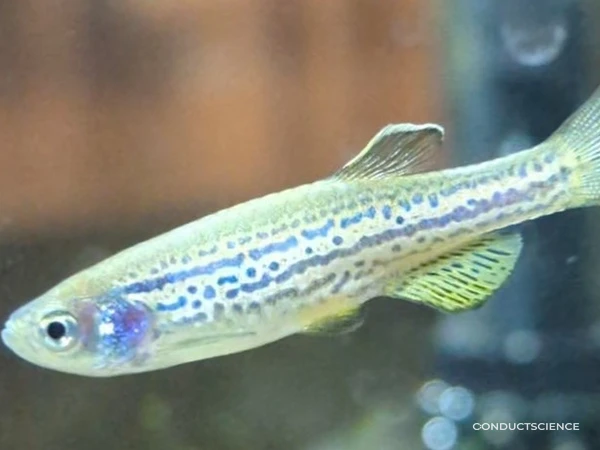
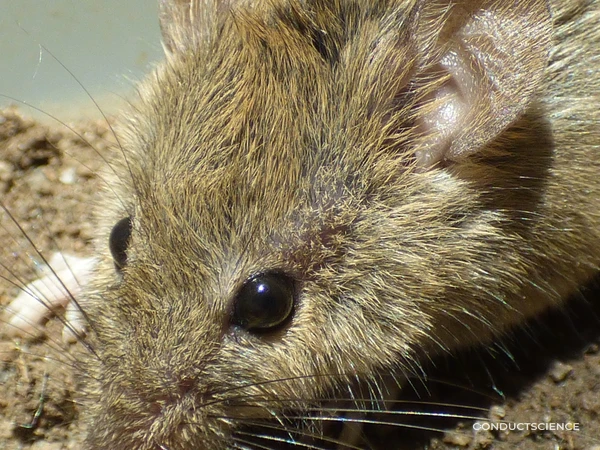
Other Model Systems
Discuss Your Ferret Research
Tell us about your models, assays, and experimental goals — we’ll show you how ConductVision fits your workflow.