Behavioral Tracking for Common Marmoset
Callithrix jacchus
Vocal communication, social behavior, and primate neuroscience in Callithrix jacchus. ConductVision delivers automated tracking and quantitative parameter extraction across the full assay catalog below.
Why Common Marmoset in Behavioral Research
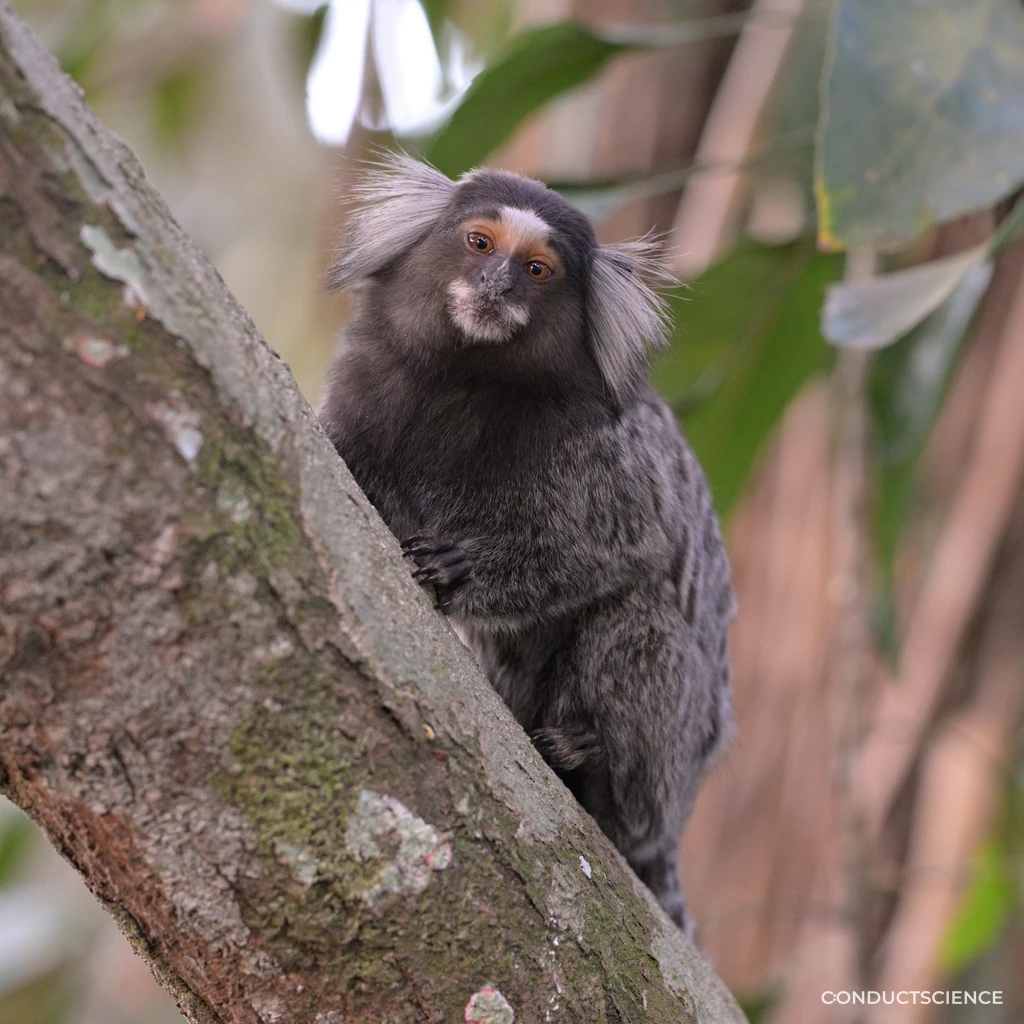
The common marmoset is a small New World primate increasingly used in neuroscience for its tractable size, rich vocal repertoire, family group structure, and amenability to genetic engineering. It bridges the gap between rodent and macaque models for systems neuroscience and social behavior research.
Miller CT, et al. (2016). Marmosets: a neuroscientific model of human social behavior. Neuron, 90(2), 219-233. PMID: 27100195
Mitchell JF, Leopold DA. (2015). The marmoset monkey as a model for visual neuroscience. Neurosci Res, 93, 20-46. PMID: 25683292
What We Measure in Common Marmoset
Validated assays with quantitative parameter tracking for Callithrix jacchus.
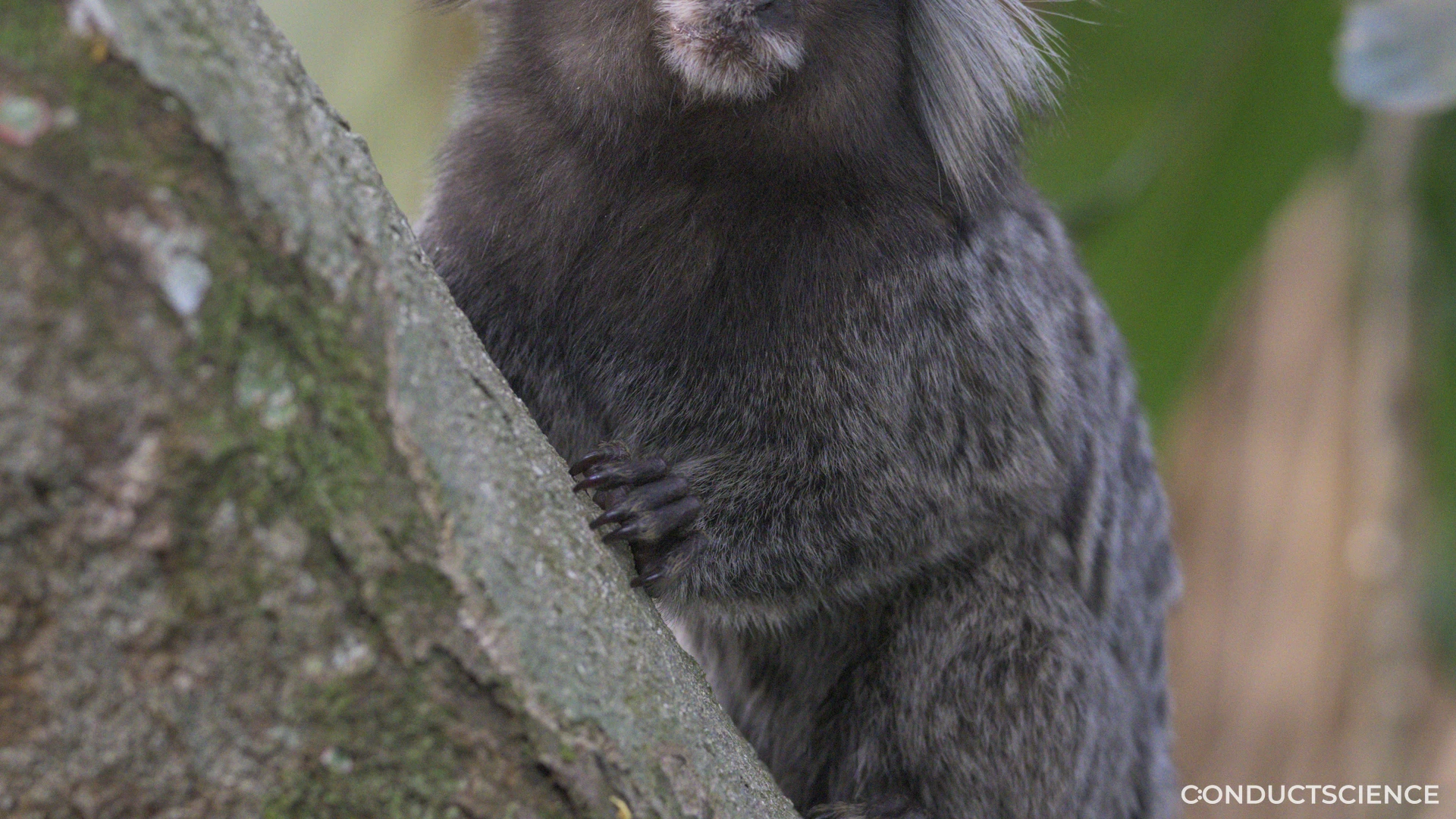
Marmosets produce a structured vocal repertoire, with phee calls used for long-distance contact and conversational antiphonal calling. Call rate, antiphonal latency, and call-type usage reveal turn-taking and social bonds.
| Parameter | Unit | Description |
|---|---|---|
| Phee call rate | calls/min | Long-distance contact |
| Antiphonal latency | s | Response timing |
| Call type usage | distribution | Phee, trill, twitter ratios |
| Social context | categorical | Solo, dyad, group |
Miller CT, et al. (2010). Vocal turn-taking in the common marmoset. J Acoust Soc Am, 128(3), 1374-1386. PMID: 20815473
Marmosets live in cooperatively breeding family groups with infant carrying, allogrooming, and food sharing. These behaviors index social cognition and parental care biology.
| Parameter | Unit | Description |
|---|---|---|
| Allogrooming bouts | events/h | Affiliative social contact |
| Infant carrying time | min/h | Cooperative care |
| Food sharing events | count/day | Prosocial behavior |
| Aggression rate | events/h | Within-group conflict |
Burkart JM, van Schaik CP. (2010). Cognitive consequences of cooperative breeding in primates? Anim Cogn, 13(1), 1-19. PMID: 19629551
Marmosets perform reaching tasks for systems motor neuroscience. Reach trajectory, grip choice, and bimanual coordination map onto motor cortex and corticospinal organization.
| Parameter | Unit | Description |
|---|---|---|
| Reach time | ms | Movement duration |
| Grip type | categorical | Power vs precision |
| Bimanual coordination | phase | Inter-limb timing |
| Success rate | % | Object retrieval accuracy |
Walker JD, et al. (2020). Dexterous reaching and grasping in marmosets. Nat Methods, 17(12), 1177-1186.
Marmosets perform reversal learning and set-shifting tasks that probe prefrontal-mediated cognitive flexibility, with translational relevance for OCD and schizophrenia models.
| Parameter | Unit | Description |
|---|---|---|
| Reversal trials to criterion | count | Flexibility |
| Perseverative errors | count | Inability to update |
| Set-shift cost | trials | Extra-dimensional shift |
| Win-stay/lose-shift | ratio | Strategy adoption |
Dias R, et al. (1996). Dissociation in prefrontal cortex of affective and attentional shifts. Nature, 380(6569), 69-72. PMID: 8598908
Head-fixed and freely-viewing marmosets perform attention and saccade tasks. Saccade kinematics and fixation patterns enable systems studies of cortical visual processing.
| Parameter | Unit | Description |
|---|---|---|
| Saccade latency | ms | Cue to saccade onset |
| Fixation duration | ms | Stable gaze periods |
| Target detection | % | Hit rate |
| Free-viewing scan rate | Hz | Saccades per second |
Mitchell JF, et al. (2014). Active vision in marmosets: a model system for visual neuroscience. J Neurosci, 34(4), 1183-1194. PMID: 24453311
More Behavioral Tests for Common Marmoset
Gaze Following
Key Parameters: Look-direction concordance, latency
Burkart JM, Heschl A. (2007). Anim Behav, 73(6), 1043-1057.
Predator Mobbing / Alarm Calls
Key Parameters: Call rate, response to model snake
Bezerra BM, et al. (2009). PMID: 18831006
Novel Object Exploration
Key Parameters: Approach latency, contact time
Yamamoto ME, et al. (2009). Primates, 50(2), 137-141.
Mate Choice / Pair Formation
Key Parameters: Affiliation behaviors, time at nest
Schaffner CM, French JA. (1997). Anim Behav, 53(3), 595-607.
Touchscreen Discrimination
Key Parameters: Choice accuracy, RT
Spinelli S, et al. (2004). Behav Brain Res, 150(1-2), 257-262. PMID: 15110017
ConductScience Hardware for Common Marmoset Research
Marmoset Family Enclosure
Naturalistic housing for group studies
Multichannel Vocal Recording Array
Acoustic communication research
Touchscreen Cognitive Panel
Cognitive testing in home cage
Eye-Tracking System (Head-Free)
Active vision and attention
Infant Carrying / Activity Tracker
Parental care quantification
Citations & Further Reading
- Miller CT, et al. (2016). Marmosets: a neuroscientific model of human social behavior. Neuron, 90(2), 219-233. PMID: 27100195
- Mitchell JF, Leopold DA. (2015). The marmoset monkey as a model for visual neuroscience. Neurosci Res, 93, 20-46. PMID: 25683292
- Miller CT, et al. (2010). Vocal turn-taking in the common marmoset. J Acoust Soc Am, 128(3), 1374-1386. PMID: 20815473
- Burkart JM, van Schaik CP. (2010). Cognitive consequences of cooperative breeding in primates? Anim Cogn, 13(1), 1-19. PMID: 19629551
- Walker JD, et al. (2020). Dexterous reaching and grasping in marmosets. Nat Methods, 17(12), 1177-1186.
- Dias R, et al. (1996). Dissociation in prefrontal cortex of affective and attentional shifts. Nature, 380(6569), 69-72. PMID: 8598908
- Mitchell JF, et al. (2014). Active vision in marmosets: a model system for visual neuroscience. J Neurosci, 34(4), 1183-1194. PMID: 24453311
Other Model Systems
Discuss Your Marmoset Research
Tell us about your models, assays, and experimental goals — we’ll show you how ConductVision fits your workflow.