Behavioral Tracking for Purple Sea Urchin
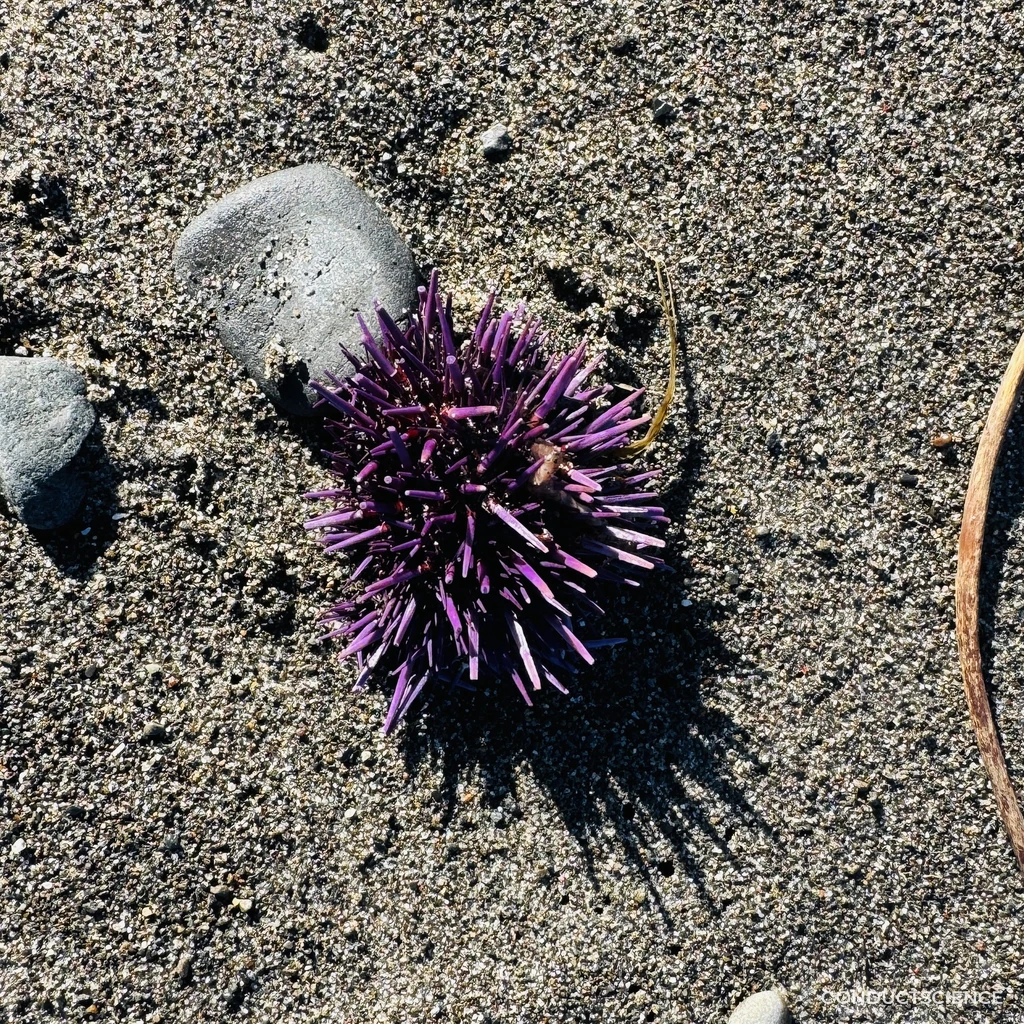
Strongylocentrotus purpuratus
Locomotion, embryogenesis, and developmental biology in Strongylocentrotus purpuratus. ConductVision delivers automated tracking and quantitative parameter extraction across the full assay catalog below.
Why Purple Sea Urchin in Behavioral Research
The purple sea urchin is a foundational developmental and behavioral model with optically transparent embryos, well-mapped gene regulatory networks, and a distributed nervous system. Adult locomotion, righting, and shadow response assays support sensorimotor and toxicology research.
Sea Urchin Genome Sequencing Consortium. (2006). The genome of the sea urchin Strongylocentrotus purpuratus. Science, 314(5801), 941-952. PMID: 17095691
Davidson EH, et al. (2002). A genomic regulatory network for development. Science, 295(5560), 1669-1678. PMID: 11872831
What We Measure in Purple Sea Urchin
Validated assays with quantitative parameter tracking for Strongylocentrotus purpuratus.
Inverted urchins re-attach via tube feet and right themselves through coordinated podia and spine action. Righting latency is a robust integrative motor assay used in toxicology.
| Parameter | Unit | Description |
|---|---|---|
| Righting latency | s | Time from inversion to upright |
| Righting success | % | Within standard window |
| Tube-foot attachment latency | s | First substrate attachment |
| Spine-walking events | count | Aboral surface motion |
Domenici P, et al. (2017). Fast and slow escape responses of the sea urchin Strongylocentrotus purpuratus. Mar Biol, 164, 81.
Urchins crawl on hundreds of tube feet. Crawl speed and direction quantify integrative motor output and respond to neuromodulators.
| Parameter | Unit | Description |
|---|---|---|
| Crawl speed | mm/min | Translational velocity |
| Path tortuosity | index | Straightness ratio |
| Tube-foot extension | mm | Podia stretch |
| Net displacement | mm/h | Long-duration travel |
Sigvardt KA. (1989). Behavioral arousal in sea urchins: spine and tube-foot coordination. Biol Bull, 176(2), 141-147.
Touching spines elicits coordinated bending toward the stimulus. Reflex amplitude and habituation index the radial nerve net.
| Parameter | Unit | Description |
|---|---|---|
| Spine deflection angle | deg | Reflex magnitude |
| Latency to bend | ms | Reflex speed |
| Habituation rate | trials | Decline with repeated stim |
| Recovery time | s | Inter-trial interval for full response |
Bullock TH. (1965). Structure and Function in the Nervous Systems of Invertebrates. WH Freeman.
A passing shadow elicits spine erection and tube-foot retraction, an antipredator reflex mediated by photoreceptors distributed across the body wall.
| Parameter | Unit | Description |
|---|---|---|
| Spine erection latency | ms | Shadow to response |
| Spine erection magnitude | % | Fraction of spines responding |
| Habituation across trials | rate | Reflex decline |
| Cross-modal interaction | index | Shadow + touch |
Yerramilli D, Johnsen S. (2010). Spatial vision in the purple sea urchin Strongylocentrotus purpuratus. J Exp Biol, 213, 249-255. PMID: 20038657
Pluteus larvae swim using ciliated bands and exhibit phototaxis and gravitaxis. Swim speed, turning rate, and vertical distribution quantify larval behavior.
| Parameter | Unit | Description |
|---|---|---|
| Swim speed | µm/s | Larval velocity |
| Turning rate | deg/s | Heading change |
| Vertical distribution | % | Surface vs bottom |
| Phototactic index | ratio | Light-zone occupancy |
Pennington JT, Emlet RB. (1986). Ontogenetic and diel vertical migration of a planktonic echinoid larva. J Exp Mar Biol Ecol, 104, 69-95.
More Behavioral Tests for Purple Sea Urchin
Feeding (Aristotle’s Lantern)
Key Parameters: Bite rate, feeding duration
Lawrence JM. (2007). Edible Sea Urchins.
Settlement / Metamorphosis
Key Parameters: Larval-substrate choice, settlement rate
Cameron RA, Hinegardner RT. (1974). Biol Bull, 146, 335-342.
Ocean Acidification Response
Key Parameters: Locomotion, righting at low pH
Stumpp M, et al. (2011). PMID: 21978175
Aggregation
Embryonic Cell-Lineage Tracking
Key Parameters: Cleavage timing, morphometric stages
Davidson EH, et al. (2002). PMID: 11872831
ConductScience Hardware for Purple Sea Urchin Research
Aquarium Behavioral Chamber (Marine)
Adult urchin assays
Larval Tracking Plate (Microscopy)
Pluteus swimming analysis
Shadow Stimulus Arena
Photic reflex testing
Righting-Test Platform
Standardized motor assay
Multi-Channel pH/Temperature Logger
Toxicology and OA studies
Citations & Further Reading
- Sea Urchin Genome Sequencing Consortium. (2006). The genome of the sea urchin Strongylocentrotus purpuratus. Science, 314(5801), 941-952. PMID: 17095691
- Davidson EH, et al. (2002). A genomic regulatory network for development. Science, 295(5560), 1669-1678. PMID: 11872831
- Domenici P, et al. (2017). Fast and slow escape responses of the sea urchin Strongylocentrotus purpuratus. Mar Biol, 164, 81.
- Sigvardt KA. (1989). Behavioral arousal in sea urchins: spine and tube-foot coordination. Biol Bull, 176(2), 141-147.
- Bullock TH. (1965). Structure and Function in the Nervous Systems of Invertebrates. WH Freeman.
- Yerramilli D, Johnsen S. (2010). Spatial vision in the purple sea urchin Strongylocentrotus purpuratus. J Exp Biol, 213, 249-255. PMID: 20038657
- Pennington JT, Emlet RB. (1986). Ontogenetic and diel vertical migration of a planktonic echinoid larva. J Exp Mar Biol Ecol, 104, 69-95.
Other Model Systems
Discuss Your Sea Urchin Research
Tell us about your models, assays, and experimental goals — we’ll show you how ConductVision fits your workflow.