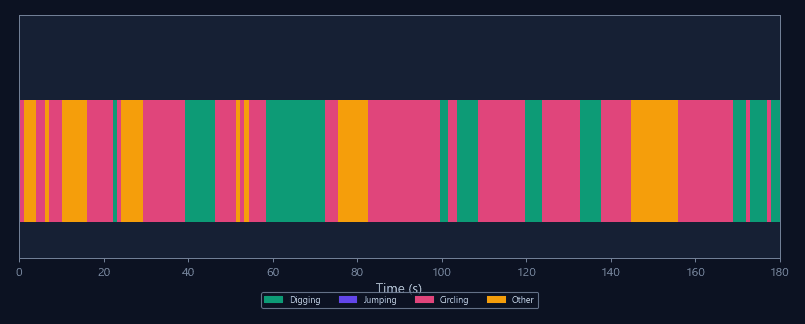
Custom behavior labels per frame
Your user-defined behavior categories applied frame-by-frame with confidence scores. Same CSV format as built-in classifiers.
CSV
Train classifiers on your own behavioral data
When pretrained models do not capture your lab-specific behaviors, train custom classifiers on your own annotated sessions and validate against held-out data.
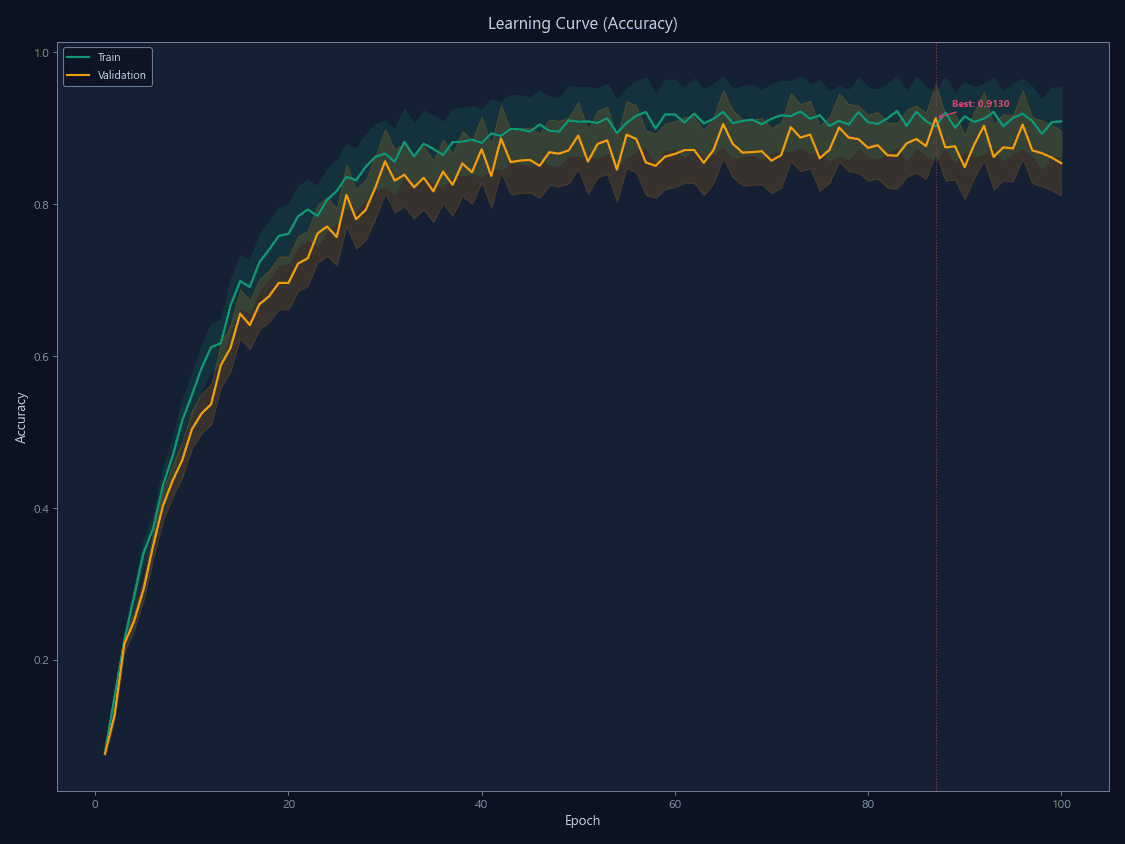
Every lab has unique behavioral categories — specific grooming subtypes, custom task-related behaviors, or species-specific actions that general-purpose classifiers do not recognize.
Annotate behavior in a subset of sessions, train a custom classifier, and validate on held-out data. Once accuracy is verified, apply the classifier to your full dataset.
Your user-defined behavior categories applied frame-by-frame with confidence scores. Same CSV format as built-in classifiers.
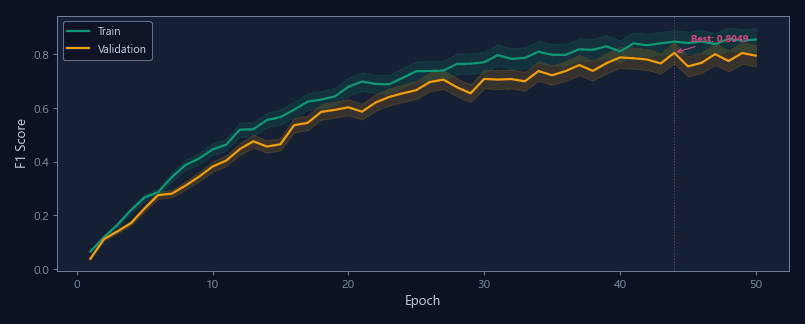
Accuracy, precision, and recall per behavior class on held-out validation data. Confusion matrix included.
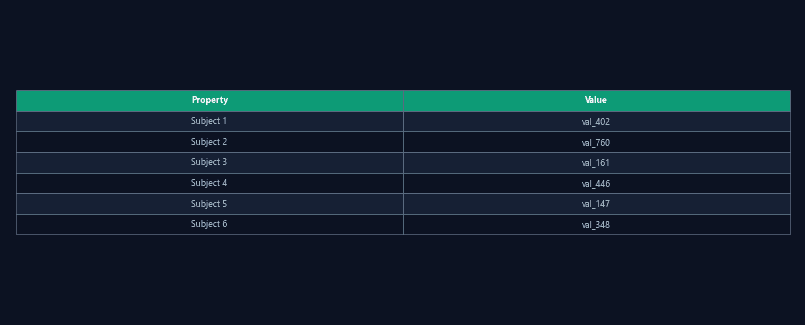
Trained model weights saved for reuse across sessions, computers, and collaborators. Version-controlled with training metadata.
Define your own behavioral categories — tail rattling, specific grooming subtypes, task-specific actions — and train classifiers that score them automatically.
Train on annotated examples of rare behaviors (seizures, stereotypies, specific social events) and scan entire datasets automatically.
Fine-tune detection and pose models for species not covered by pretrained models — custom arthropods, fish species, or non-standard rodent strains.
Export trained classifiers and share with collaborators to ensure consistent scoring across sites in multi-center studies.
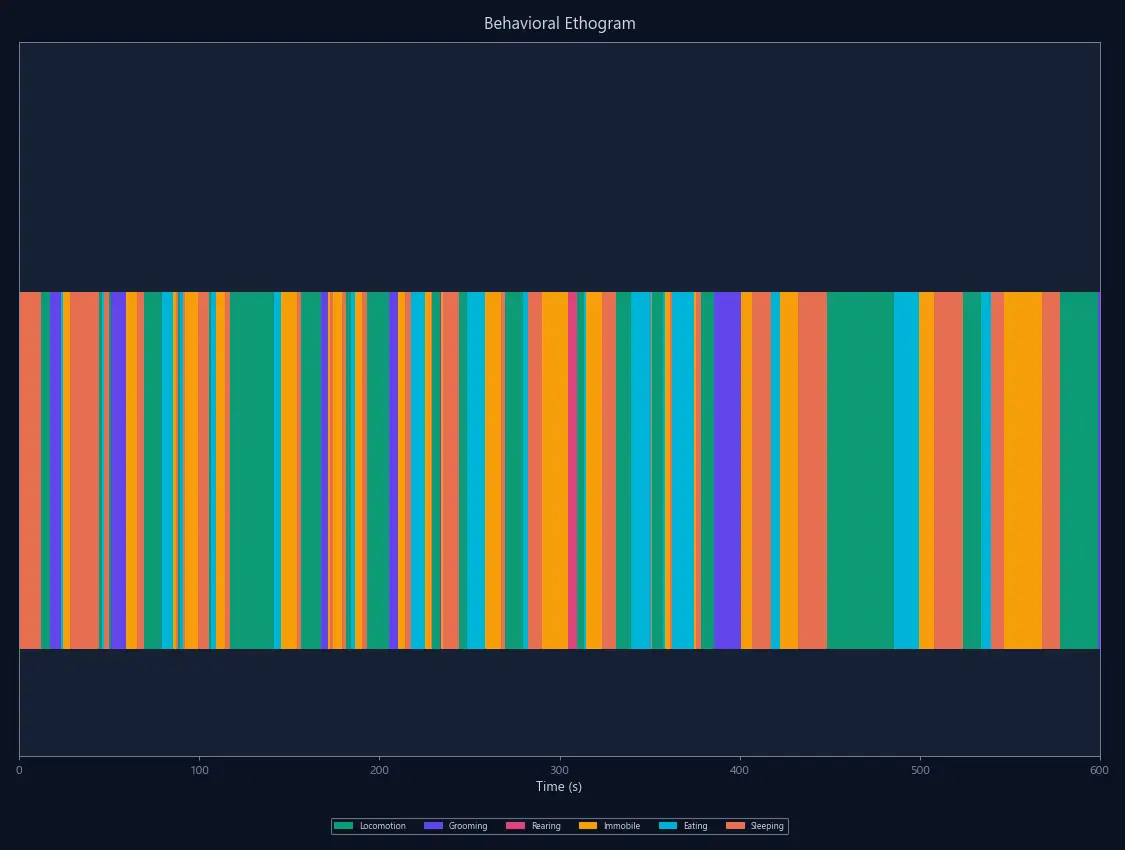
ML-powered frame-level behavioral classification with temporal smoothing and custom classifier training.
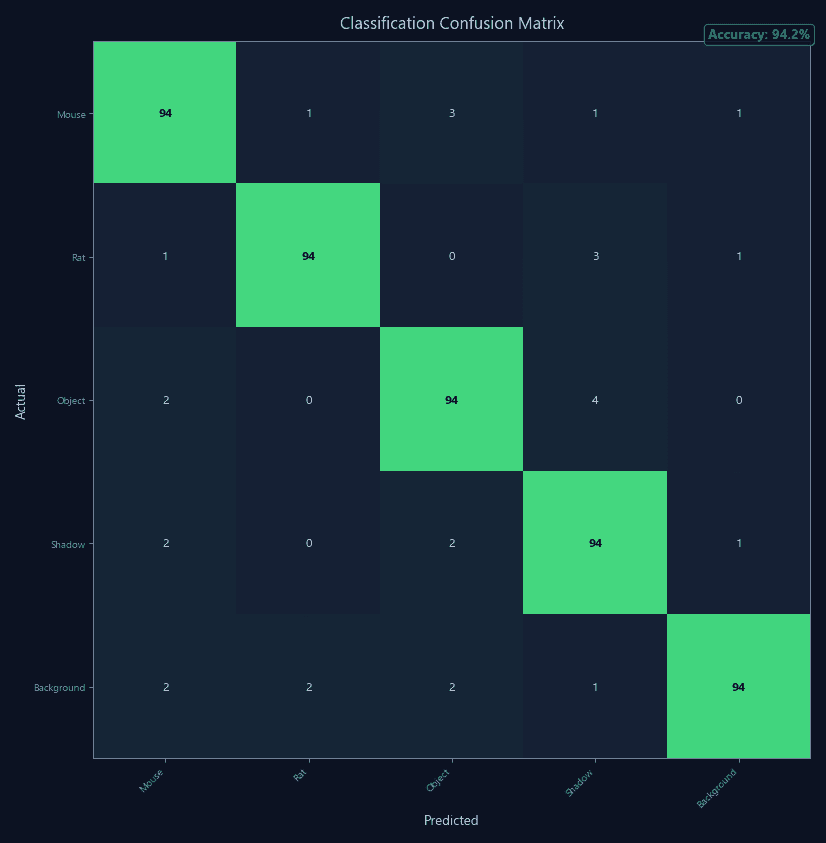
Per-paradigm accuracy benchmarks with published precision, recall, and mAP scores across all 24 supported tests.
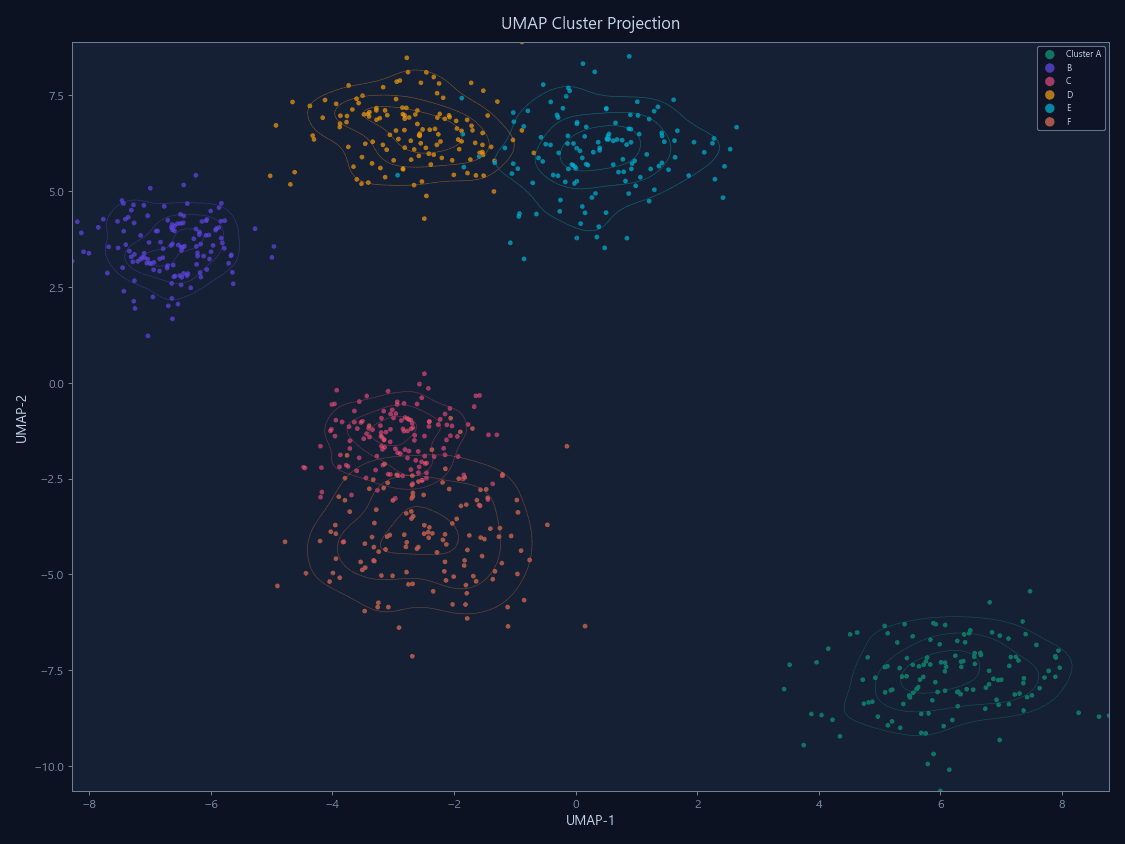
Unsupervised behavioral clustering reveals structure without predefined ethograms — UMAP visualization and novel behavior flagging.
Download the trial, annotate a few sessions, and build a custom classifier for your specific ethogram.