Orofacial motion analysis for swallowing and eating research
Support SLP and swallowing research with visible orofacial movement measures paired with clinical instruments and expert review.
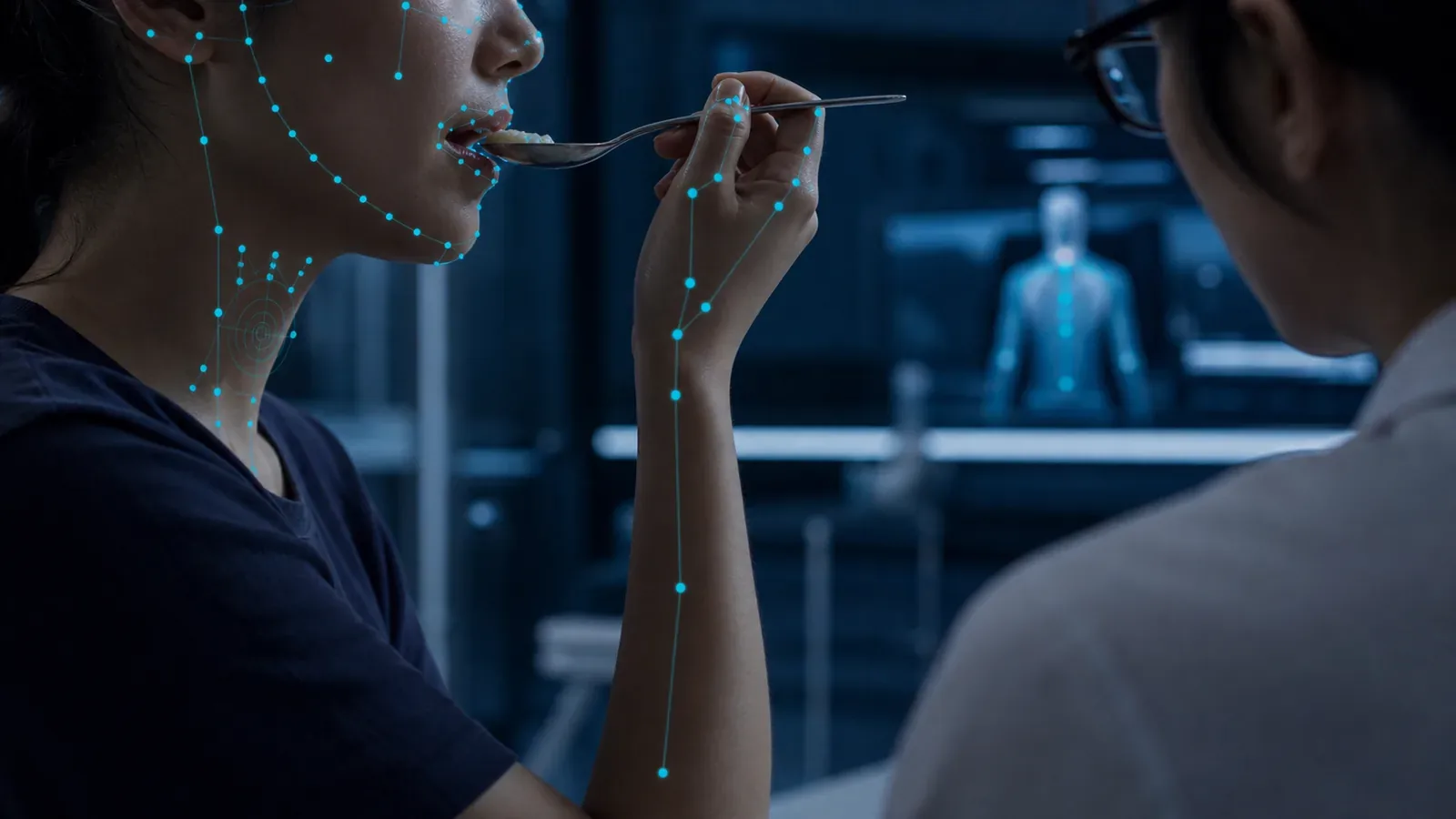
What the camera can measure
These outputs are designed for study comparison, rater review, and statistical analysis. They are not diagnostic claims.
Jaw motion proxy
lower face and jaw landmark displacement
Lip closure timing
mouth landmark closure and opening events
Repetition consistency
cycle duration and movement amplitude across repeated tasks
Review clip
time-bounded segment flagged for rater review
Build the task around your protocol
ConductVision works best when the task, camera setup, annotations, and export fields are defined before the first participant visit.
Task presets
- lip movement
- jaw opening
- speech-like syllable task
- approved eating or swallowing observation
Researcher annotations
- bolus or task type if applicable
- SLP rater note
- safety stop
- instrument pairing
- privacy flag
Export fields
- jaw motion proxy
- lip movement timing
- task event timestamps
- review clips
Camera setup
Consented close or three-quarter face view with task materials visible only as allowed by the protocol.
Metrics, video signals, and comparators
What is established
Swallowing, speech, and orofacial motor studies often combine expert observation, instrumental measures, and task-specific ratings.
What ConductVision quantifies
ConductVision measures visible face and jaw motion where video is appropriate and consented.
What still needs validation
Dysphagia assessment, aspiration risk, and clinical recommendations require approved instruments and qualified clinicians.
Reviewable data for analysis teams
Exports are built for study notebooks, statistical analysis, and rater review. The video remains available for audit when the protocol allows it.
Scientific context for the task family
These links point to the measurement areas researchers commonly use when validating a protocol.
Research-use measurement note
ConductVision outputs are research-use measurements unless a customer has completed their own clinical validation, regulatory review, and intended-use controls. The study team remains responsible for consent, privacy, camera calibration, rater review, and clinical interpretation.
Adjacent human movement pages
Facial affect and mental health research
Measure facial expression dynamics, speaking-task affect, blunted expression proxies, and review flags.
Open pageStroke rehabilitation
Track reaching, trunk compensation, gait asymmetry, and repetition quality across recovery visits.
Open pagePhysical therapy outcomes
Measure range of motion, exercise form, repetition quality, task timing, and visit-to-visit progress.
Open pageTelemedicine movement assessment
Guide home video capture, quality checks, task review, and exportable movement measures.
Open pageBring eating, swallowing, and orofacial motion into a real study protocol
Share the task, participant population, camera constraints, and outcomes you need to compare. We will help map what can be measured and what needs validation.