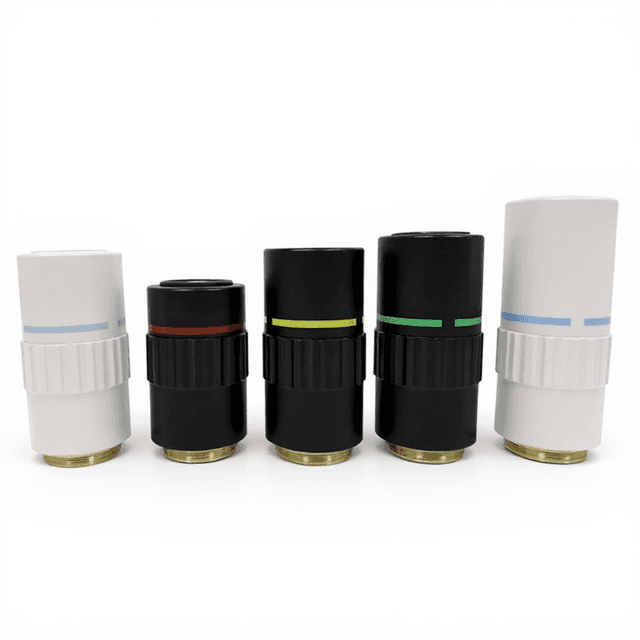
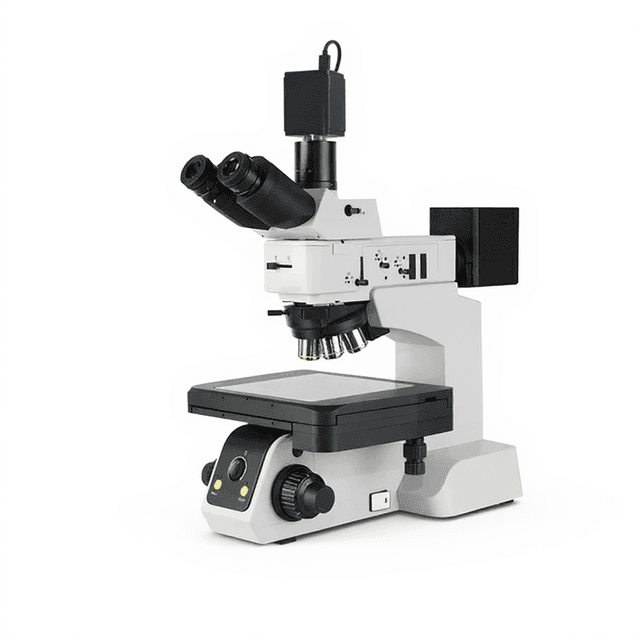
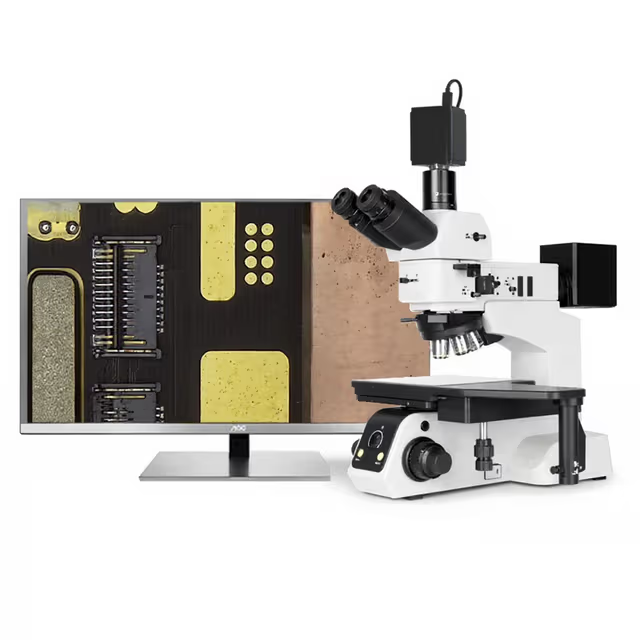
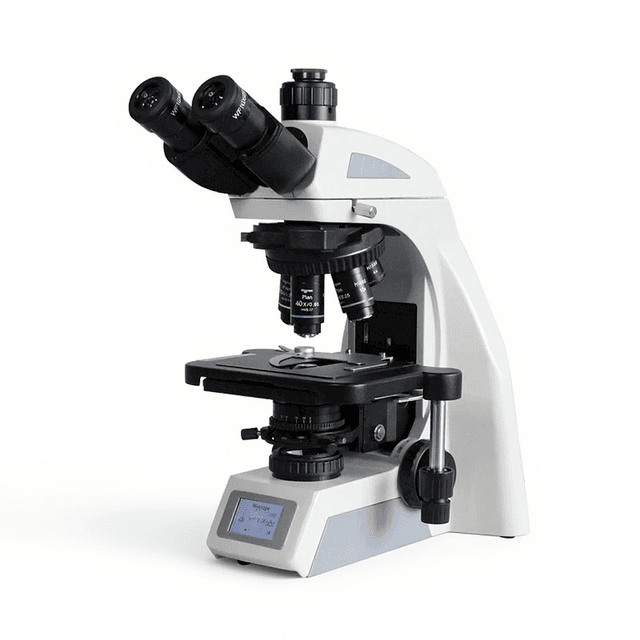
195mm Achromatic Biological Microscope Objective lens for Biological Microscope with RMS 20.2mm Interface & Integrated Parfocal Ring
4x achromatic biological microscope objective lens with 0.10 NA, 17.35mm working distance, and RMS 20.2mm interface for routine microscopy applications.
| Product Type | Objective Lens |
| Application | Clinical Research, Life Science |
| Skill Level | Entry Level |
| Objective Type | Biological, Finite (195mm), Plan Achromatic |
| Brand | ConductScience |

This 195mm achromatic biological microscope objective lens features a 4x magnification with 0.10 numerical aperture and 17.35mm working distance, designed for routine biological microscopy applications. The objective incorporates achromatic correction to minimize chromatic aberration across the visible spectrum, providing adequate color correction for basic biological specimens. With a standard RMS 20.2mm thread interface and integrated parfocal ring, this objective maintains focus when switching between magnifications in a parfocal microscope system.
The 160mm tube length specification ensures compatibility with finite tube length microscope systems commonly found in educational and routine laboratory settings. The 0.17mm cover glass thickness specification optimizes performance for standard #1.5 coverslips, while the 35.5mm length provides appropriate clearance for specimen manipulation. This objective serves as a foundational component for biological microscopy workflows requiring low-magnification observation of cellular and tissue specimens.
How It Works
This achromatic objective lens operates on the principle of compound lens correction, using multiple glass elements with different dispersion properties to reduce chromatic aberration. The achromatic design typically combines crown and flint glass elements to bring two wavelengths (usually red and blue) to the same focal point, significantly improving color fidelity compared to simple single-element lenses. The 0.10 numerical aperture determines the light-gathering ability and theoretical resolution limit of approximately 2.75 micrometers at 550nm wavelength.
The parfocal ring ensures that when this objective is used in a parfocal microscope system, specimens remain approximately in focus when switching between different magnifications. This is achieved through precise mechanical positioning that maintains consistent focal relationships. The RMS threading system provides secure mounting and accurate optical alignment within the microscope's revolving nosepiece.
Light collection efficiency is governed by the numerical aperture, which represents the sine of the half-angle of the maximum cone of light that can enter or exit the lens, multiplied by the refractive index of the medium. The 17.35mm working distance provides adequate clearance for specimen manipulation and accommodates standard microscope slides with coverslips.
Features & Benefits
Product Type
- Objective Lens
Application
- Clinical Research
- Life Science
Skill Level
- Entry Level
Objective Type
- Biological
- Finite (195mm)
- Plan Achromatic
Brand
- ConductScience
Research Domain
- Cell Biology
- Clinical Diagnostics
- Developmental Biology
- Histopathology
- Materials Science
- Microbiology
Weight
- 1.9 kg
Dimensions
- L: 4.9 mm
- W: 6.6 mm
- H: 6.6 mm
Comparison Guide
| Feature | This Product | Typical Alternative | Advantage |
|---|---|---|---|
| Chromatic Correction | Achromatic correction for two wavelengths | Entry-level objectives often provide single-element or minimal correction | Reduces color fringing and improves image contrast for more accurate specimen documentation. |
| Working Distance | 17.35mm working distance | Standard 4x objectives typically offer 15-20mm working distance | Provides adequate clearance for specimen manipulation while maintaining appropriate magnification. |
| Numerical Aperture | 0.10 NA | Entry-level 4x objectives may offer lower NA values | Optimizes light gathering and resolution for low-magnification biological applications. |
| Parfocal Design | Integrated parfocal ring | Some budget objectives lack parfocal capability | Enables efficient multi-magnification workflows without constant refocusing. |
| Interface Compatibility | Standard RMS 20.2mm threading | Most objectives use RMS threading with slight variations | Ensures broad compatibility with existing microscope systems and easy replacement. |
This objective combines achromatic correction with standard 4x specifications, providing reliable performance for routine biological microscopy. The integrated parfocal capability and standard RMS interface ensure compatibility with most laboratory microscope systems.
Practical Tips
Always use #1.5 (0.17mm) coverslips for optimal image quality, as the objective correction is specifically designed for this thickness.
Why: Deviations from the specified cover glass thickness introduce spherical aberration that degrades resolution and contrast.
Clean lens surfaces only when necessary using appropriate lens cleaning solutions and lint-free tissues, working from center outward in a spiral pattern.
Why: Excessive cleaning can damage lens coatings, while improper technique can introduce scratches that permanently degrade optical performance.
Verify parfocal alignment periodically using a test specimen, adjusting the parfocal ring as needed to maintain focus consistency across objectives.
Why: Mechanical wear and temperature changes can affect parfocal relationships, impacting workflow efficiency during multi-magnification observations.
If image quality appears poor, first verify tube length compatibility (160mm) and check that illumination is properly centered and adjusted for 4x magnification.
Why: Incorrect tube length causes spherical aberration, while improper illumination creates uneven field illumination and reduced contrast.
Allow the objective to reach thermal equilibrium with the microscope system before critical observations, especially after temperature changes.
Why: Temperature differences can cause focus drift and alter optical performance, affecting measurement accuracy and image stability.
Avoid directly contacting lens surfaces and always use protective caps when the objective is not mounted to prevent contamination and mechanical damage.
Why: Fingerprints and dust can permanently degrade optical performance, while physical damage to lens surfaces cannot be repaired.
Setup Guide
What’s in the Box
- 195mm achromatic biological microscope objective lens
- Protective lens caps (front and rear) (typical)
- User manual and specifications sheet (typical)
Warranty
ConductScience provides a standard one-year manufacturer warranty covering defects in materials and workmanship. Technical support includes guidance on proper installation, alignment, and performance optimization.
Compliance
References
Background reading relevant to this product:
What is the theoretical resolution limit of this 0.10 NA objective?
The theoretical resolution limit is approximately 2.75 micrometers at 550nm wavelength, calculated using the Rayleigh criterion (λ/2NA). This resolution is appropriate for cellular-level observation but insufficient for subcellular detail.
Can this objective be used with coverslip thicknesses other than 0.17mm?
While optimized for 0.17mm (#1.5) coverslips, the objective will function with slight variations, though image quality may be reduced. Significant deviations from 0.17mm will introduce spherical aberration.
Is this objective compatible with infinite tube length microscopes?
No, this objective is designed for 160mm finite tube length systems. Use with infinite tube length microscopes will result in improper correction and degraded image quality.
What is the field of view diameter with standard 10x eyepieces?
The field of view diameter depends on the eyepiece field number, but typically ranges from 4-5mm with standard 10x eyepieces, providing adequate coverage for specimen scanning.
How should the parfocal ring be adjusted?
Focus on a specimen with a higher magnification objective, then switch to this 4x objective and adjust the parfocal ring until the specimen is in focus. Repeat iteratively with other objectives in the system.
What maintenance is required for this objective?
Keep lens surfaces clean using appropriate lens cleaning solutions and tissues. Avoid touching glass surfaces directly and store with protective caps when not in use to prevent contamination and damage.
Can this objective be used for fluorescence microscopy?
While physically compatible, achromatic objectives are not optimized for fluorescence applications. Consider apochromatic or plan fluorite objectives for fluorescence work to minimize chromatic aberration across emission spectra.
Have a question about this product?
Accessories
Enhance your setup with compatible accessories
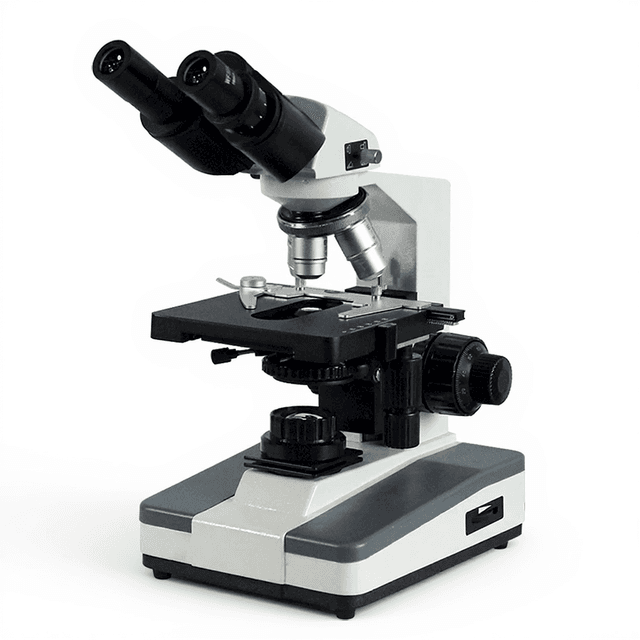
Frequently Bought Together
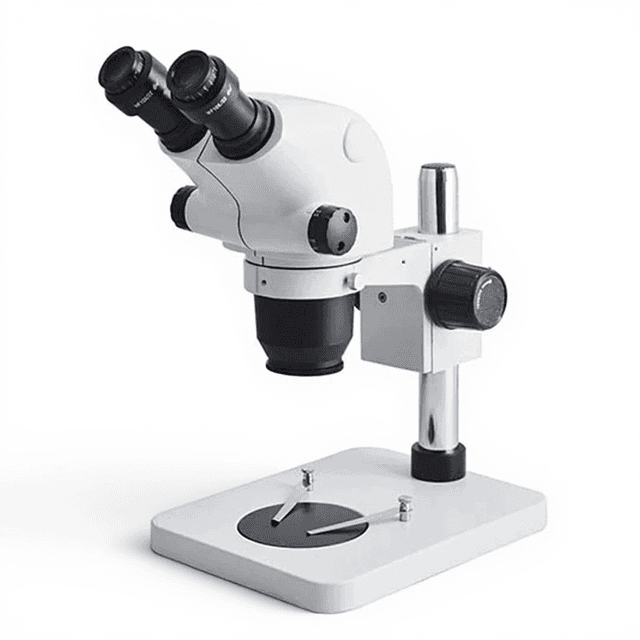
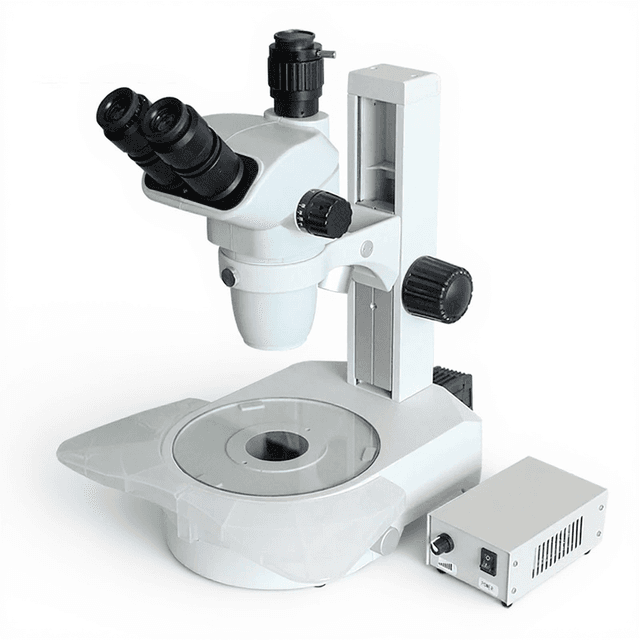
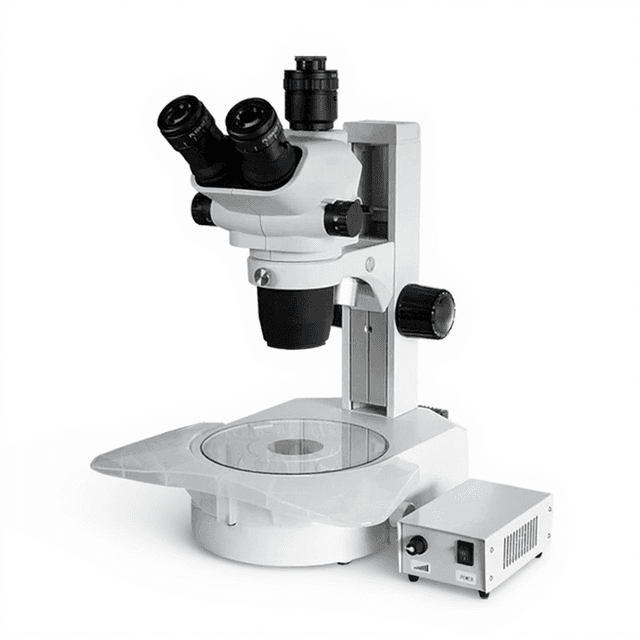
Upgrade Options

Related Products