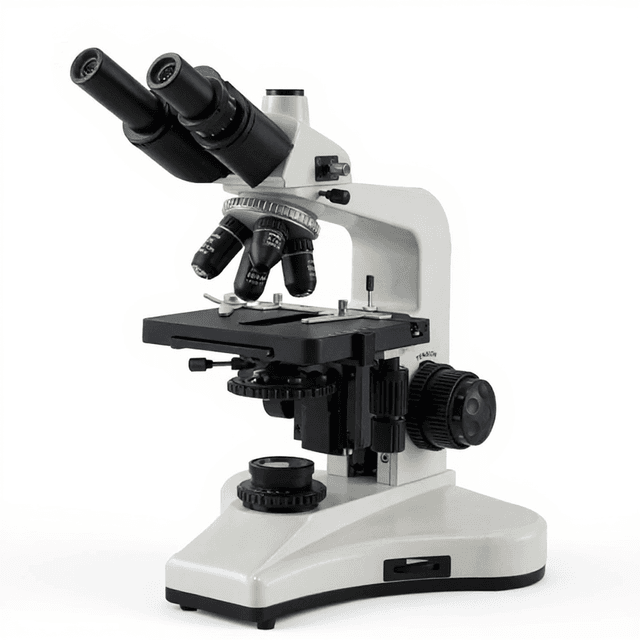
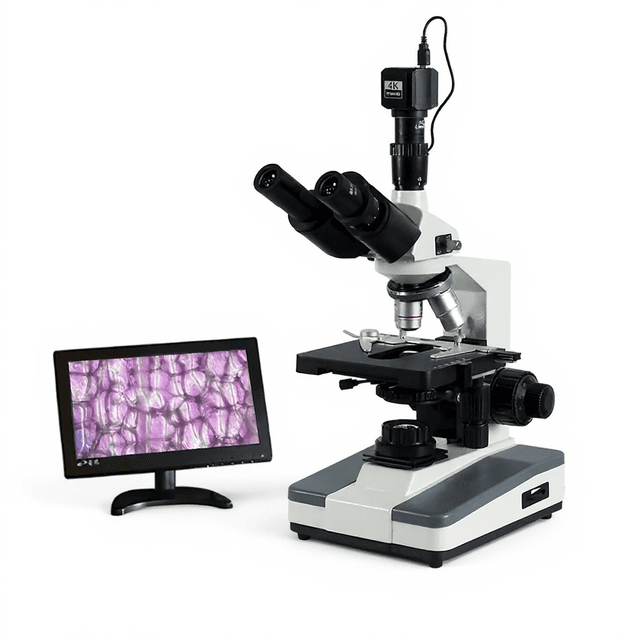
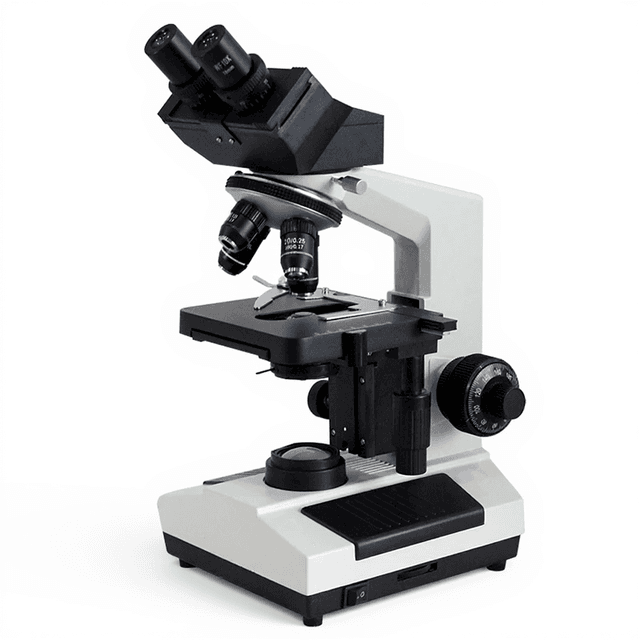
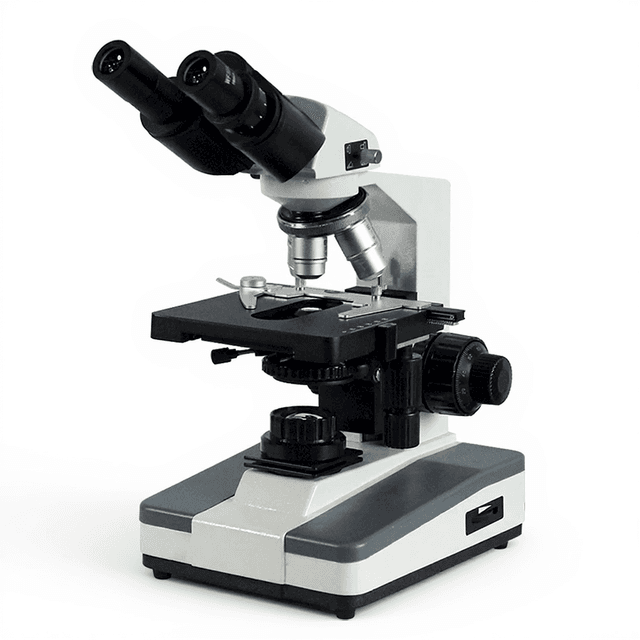
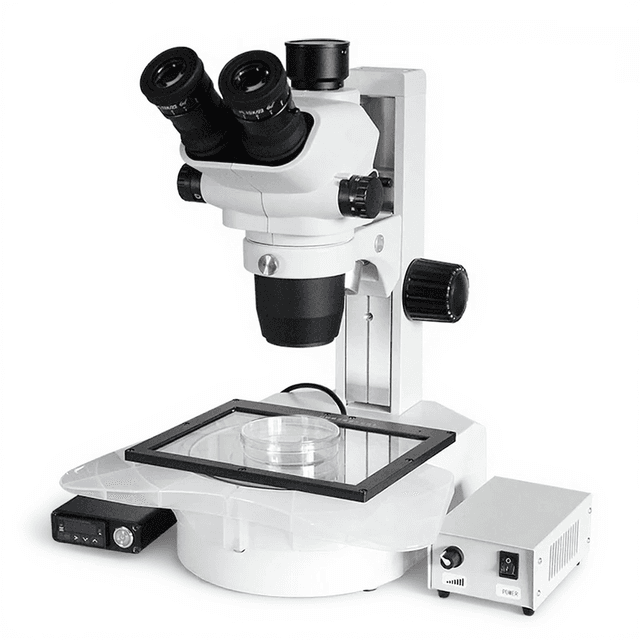
High Grade Digital Dissecting Laboratory Stereo Microscope Track Microscope Stand With Transmitted Light
Trinocular stereo microscope with 6.7X-90X magnification range, 105mm working distance, and integrated transmitted/reflected LED illumination for detailed specimen examination and documentation.

Louise Corscadden, PhD
Director of Science · ConductScience
Ask Louise about High Grade Digital Dissecting Laboratory Stereo Microscope Track Microscope Stand With Transmitted Light fit, setup, configuration, or quote prep.
Already working with us? Sign in to connect this with My Scientist.
Key Specifications
Full details →- Model fit
- Configured during quote
- SKU family
- MCX-0035
- Shipping box
- 4.9 x 6.6 x 6.6 cm
- Ordering
- Online checkout and quote request available
- Category
- Microscopy
- Build notes
- Confirm accessories, station layout, and support needs before purchase
The High Grade Digital Dissecting Laboratory Stereo Microscope delivers precision optical performance for detailed specimen examination across multiple magnification ranges. This trinocular stereo microscope features a zoom objective system (0.67X-4.5X with 1:6.7 ratio) paired with WF10X eyepieces, providing total magnification from 6.7X to 90X. The 105mm working distance accommodates various specimen sizes while maintaining comfortable manipulation access.
The integrated track stand system incorporates both transmitted and reflected LED illumination with adjustable brightness control, complemented by a 6V 20W halogen lamp option. The trinocular head design enables simultaneous binocular observation and camera documentation through the dedicated photo port. The 300mm vertical track height provides extensive focusing range, while the frosted glass work plate (Φ180x6mm) ensures uniform specimen illumination for consistent imaging results.
How It Works
The stereo microscope operates on the principle of dual-path optical magnification, where separate objective lenses create slightly offset images that combine to produce three-dimensional depth perception. The zoom objective system (0.67X-4.5X ratio 1:6.7) provides continuous magnification adjustment without changing optical components, maintaining parfocal alignment throughout the zoom range. Light from the specimen passes through the objective lenses, intermediate optics, and WF10X eyepieces to deliver total magnification from 6.7X to 90X.
The dual illumination system employs both transmitted and reflected light sources to optimize specimen contrast. Transmitted illumination passes light through transparent or translucent specimens from below, while reflected illumination directs light onto the specimen surface from above. The LED light sources (3W) provide consistent color temperature and brightness control, while the optional 6V 20W halogen lamp offers alternative illumination characteristics. The 360° rotating mirror system enables oblique illumination angles for enhanced surface detail visualization.
The trinocular head configuration incorporates a beam-splitting mechanism that directs light to both eyepieces and the photo port simultaneously. This design maintains full optical performance for visual observation while enabling concurrent photography or camera documentation without compromising image brightness or resolution.
Features & Benefits
Automation Level
- manual
Product Type
- Microscope
Microscope Type
- Stereo / Dissecting
Application
- Assembly & Rework
- Laboratory Research
- Sample Preparation
Skill Level
- Entry Level
Brand
- ConductScience
Research Domain
- Analytical Chemistry
- Cell Biology
- Developmental Biology
- Food Science
- Histopathology
- Materials Science
Shipping weight
- 6.5 lb
Shipping box
- L: 4.9 cm
- W: 6.6 cm
- H: 6.6 cm
| Feature | This Product | Typical Alternative | Advantage |
|---|---|---|---|
| Magnification Range | 6.7X-90X with 1:6.7 zoom ratio | Entry-level models typically offer 10X-40X with limited zoom capability | Extended range enables detailed examination of fine structures and broader specimen overview within a single instrument. |
| Head Configuration | Trinocular with built-in beam splitter and photo port | Basic models offer binocular viewing only without documentation capability | Simultaneous observation and photography eliminates the need for separate camera systems or viewing interruption. |
| Working Distance | 105mm working distance | Standard models typically provide 65-85mm working space | Greater clearance accommodates manipulation tools and larger specimens without optical interference. |
| Illumination System | Dual LED (3W) and halogen (6V 20W) with independent controls | Single illumination source with basic intensity control | Versatile lighting options optimize contrast for different specimen types and examination requirements. |
| Track Height | 300mm vertical travel range | Standard post stands offer 150-200mm adjustment range | Extended focusing capability accommodates thick specimens and tall culture vessels for comprehensive examination. |
| Mirror System | 360° rotating mirror with oblique illumination capability | Fixed mirrors with limited angular adjustment | Variable incident angles enhance surface detail visualization and texture analysis for material characterization. |
This microscope combines extended magnification range with trinocular documentation capability and versatile illumination options. The 300mm track system and 105mm working distance provide flexibility for various specimen types and experimental setups.
Practical Tips
Calibrate eyepiece micrometers at each magnification setting using a certified stage micrometer to ensure measurement accuracy across the zoom range.
Why: Magnification changes affect the relationship between eyepiece graduations and actual specimen dimensions.
Clean the frosted glass work plate regularly with ethanol and lint-free wipes to maintain uniform light transmission for consistent illumination.
Why: Contamination on the work plate creates uneven illumination that degrades image quality and contrast.
Balance transmitted and reflected illumination intensity to optimize contrast for different specimen characteristics and avoid glare or shadowing artifacts.
Why: Proper light balance enhances fine detail visibility and prevents optical artifacts that can obscure important specimen features.
If focusing becomes difficult across the zoom range, check parfocal alignment by focusing at one magnification and verifying sharpness throughout the zoom.
Why: Parfocal misalignment requires constant refocusing and indicates optical system problems that affect examination efficiency.
When documenting specimens, use consistent illumination settings and magnification to ensure reproducible image capture for quantitative analysis.
Why: Standardized imaging conditions enable accurate comparison between specimens and support quantitative morphometric measurements.
Allow halogen lamps to cool completely before handling and avoid touching bulbs with bare hands to prevent premature failure.
Why: Halogen lamps generate significant heat and are sensitive to oil contamination from skin contact that reduces lamp lifespan.
Adjust the 360° rotating mirror position based on specimen surface characteristics to enhance texture visibility and eliminate reflection artifacts.
Why: Optimal mirror positioning maximizes surface detail contrast while minimizing specular reflections that obscure specimen features.
Verify interpupillary distance adjustment (52-76mm) for each user to ensure comfortable viewing and prevent eye strain during extended examination sessions.
Why: Proper interpupillary alignment maintains optical performance and reduces user fatigue during lengthy microscopy sessions.
Setup Guide
What’s in the Box
- Stereo microscope with trinocular head
- Track stand with vertical focusing mechanism
- WF10X eyepieces (pair)
- Frosted glass work plate (Φ180x6mm)
- LED illumination system (3W)
- 6V 20W halogen lamp
- Power cord and adapter
- 360° rotating mirror assembly
- Both-side armrest stage
- User manual and documentation (typical)
- Dust covers (typical)
Warranty
ConductScience provides a standard one-year manufacturer warranty covering defects in materials and workmanship, with technical support for optical alignment and illumination system troubleshooting.
Compliance
References
Background reading relevant to this product:
What camera mounting options are available for the trinocular port?
The trinocular port accommodates standard C-mount cameras. Consult product datasheet for specific adapter requirements and compatible camera specifications.
Can I install measuring reticles or micrometers in the eyepieces?
Yes, the WF10X eyepieces are designed with micrometer installation capability. Calibration against a stage micrometer is required for accurate measurements at each magnification.
How does the parfocal alignment perform across the zoom range?
The zoom objective system maintains parfocal alignment throughout the 1:6.7 ratio range, requiring minimal refocusing when changing magnification between 6.7X and 90X.
What is the optimal illumination setup for transmitted versus reflected light applications?
Use transmitted illumination for transparent specimens and cells, reflected illumination for opaque materials and surfaces. The dual system allows simultaneous use with independent brightness control for optimal contrast.
Are there limitations on specimen thickness with the 105mm working distance?
The 105mm working distance accommodates specimens and containers up to approximately 80-90mm height while maintaining full optical performance and manipulation access.
How does the halogen lamp compare to LED illumination for different applications?
LED provides consistent color temperature and longer life, while the 6V 20W halogen offers higher intensity for applications requiring maximum brightness or specific spectral characteristics.
Can the microscope accommodate polarization filters or other optical accessories?
The system supports various optical accessories. Consult product datasheet for specific filter mounting options and compatibility with the existing optical path.
What maintenance is required for the track focusing mechanism?
Regular cleaning of the track guides and periodic lubrication maintain smooth operation. The 300mm travel range requires proper alignment to prevent binding or drift.
Have a question about this product?
Have a question? Just ask.
Send it over and we'll email you a personalized answer — no call, no scheduling.
Prefer to talk it through?
Accessories
Enhance your setup with compatible accessories
Frequently Bought Together
Upgrade Options
Related Products