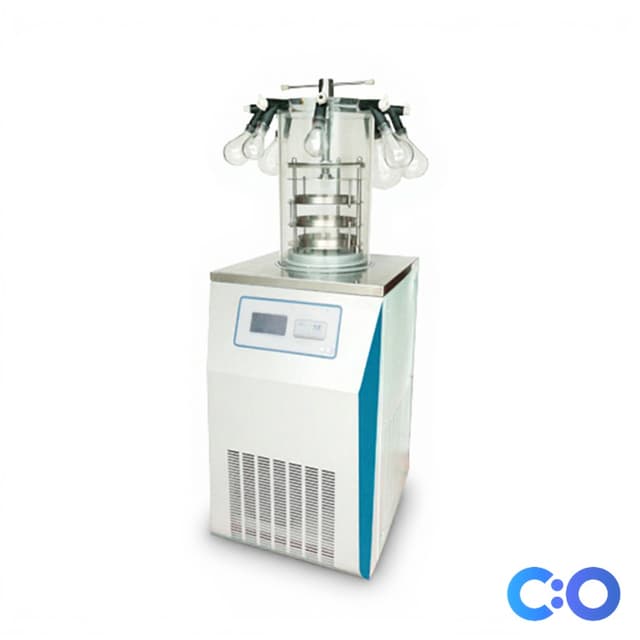
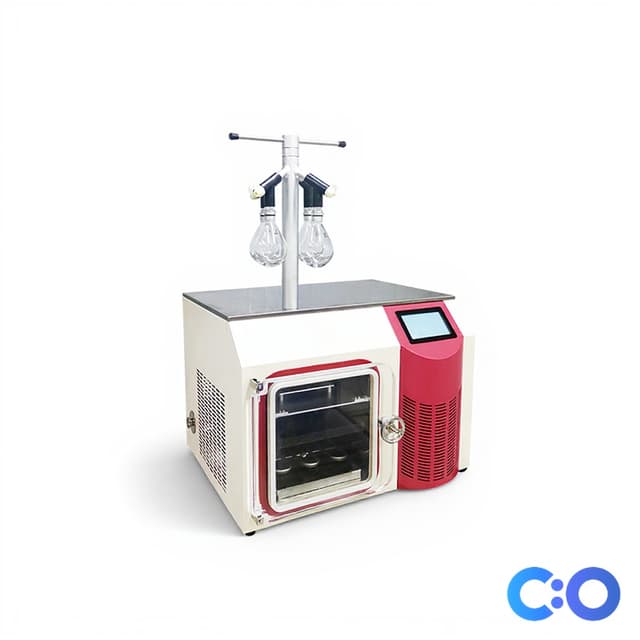
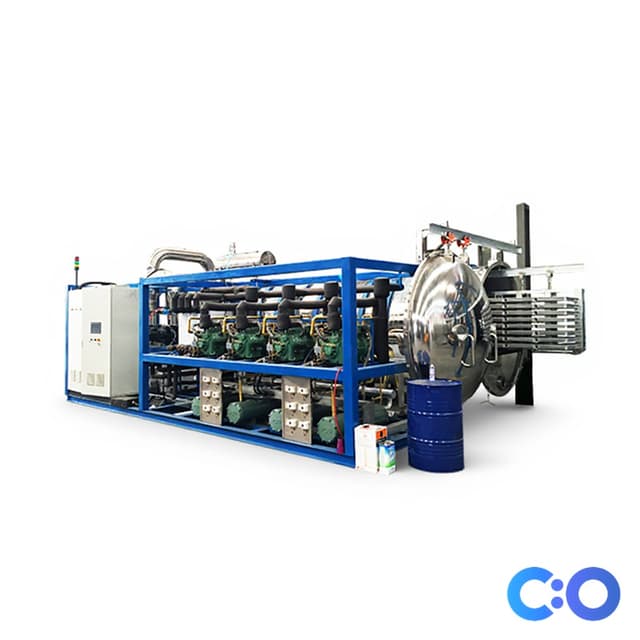
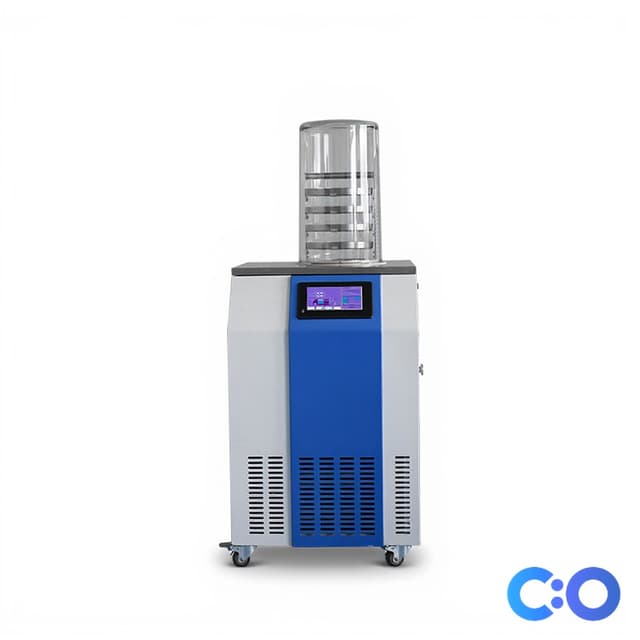
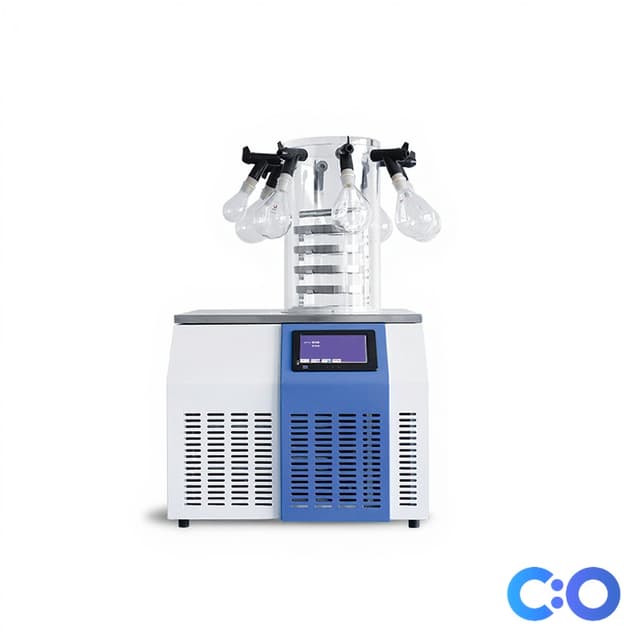
60℃ -80℃ Vacuum Lyophilizer Freeze Dryer Machine
Laboratory freeze dryer operating from 60℃ to -80℃ for preservation of biological samples and pharmaceutical compounds through vacuum sublimation.
| Automation Level | semi-automated |
The 60℃ -80℃ Vacuum Lyophilizer Freeze Dryer Machine is a laboratory-grade freeze drying system designed for preservation of biological samples, pharmaceutical compounds, and sensitive materials through sublimation. This system operates across a temperature range from 60℃ to -80℃, enabling processing of thermolabile compounds while maintaining structural integrity and biological activity. The vacuum lyophilization process removes water content through direct transition from ice to vapor, bypassing the liquid phase to minimize thermal damage and preserve sample morphology.
The system features robust construction with dimensions of 92.0 cm length, 48.0 cm width, and 62.0 cm height, providing substantial processing capacity for research applications. The temperature control range allows for optimization of sublimation conditions based on sample requirements, while the vacuum system ensures efficient moisture removal. This freeze dryer is suitable for processing vaccines, proteins, enzymes, tissue samples, bacterial cultures, and pharmaceutical formulations requiring long-term storage stability.
How It Works
Freeze drying operates through the principle of sublimation, where frozen water transitions directly from solid ice to water vapor without passing through the liquid phase. The process begins with freezing the sample to temperatures below the eutectic point, typically -40℃ to -80℃, ensuring all free water forms ice crystals. The vacuum system then reduces chamber pressure below the triple point of water (4.58 torr), creating conditions where ice can only exist as solid or vapor.
Primary drying removes approximately 95% of water content through sublimation of ice crystals, while secondary drying eliminates bound water molecules at elevated temperatures up to 60℃. The condenser maintains temperatures below -80℃ to capture sublimated water vapor, preventing contamination of the vacuum pump. Temperature control throughout the cycle prevents sample collapse or melting while optimizing sublimation rates.
The vacuum system maintains pressures typically between 10⁻³ to 10⁻¹ torr during processing, with precise control enabling optimization for different sample types. Heat transfer occurs through conduction from heated shelves or radiation, with careful temperature ramping to prevent sample damage while maintaining efficient water removal rates.
Features & Benefits
Automation Level
- semi-automated
Research Domain
- Cell Biology
- Food Science
- Immunology
- Materials Science
- Microbiology
- Pharmaceutical QC
Weight
- 128.2 kg
Dimensions
- L: 36.22 mm
- W: 24.41 mm
- H: 18.9 mm
Comparison Guide
| Feature | This Product | Typical Alternative | Advantage |
|---|---|---|---|
| Temperature Range | 60℃ to -80℃ operation | Entry-level models often limited to -40℃ minimum temperatures | Enables processing of samples requiring ultra-low freezing temperatures and optimized secondary drying conditions. |
| Chamber Dimensions | 92cm x 48cm x 62cm processing chamber | Benchtop models typically offer smaller chambers with limited batch capacity | Allows simultaneous processing of multiple samples or large volume materials for improved research productivity. |
| Construction | Robust laboratory-grade construction | Varies by manufacturer and price point | Provides reliable operation under demanding research conditions with consistent long-term performance. |
| Application Range | Suitable for biologics, pharmaceuticals, and materials processing | Some models specialized for specific sample types only | Offers versatility for diverse research applications within a single instrument platform. |
This freeze dryer combines wide temperature range capability with substantial processing capacity, making it suitable for diverse research applications. The system balances throughput with precision temperature control for reliable sample preservation across multiple scientific disciplines.
Practical Tips
Verify temperature sensors quarterly using certified reference thermometers to ensure accurate process control.
Why: Temperature accuracy directly affects sublimation rates and final product quality.
Change vacuum pump oil regularly and monitor for contamination from sample vapors or condenser leaks.
Why: Clean oil maintains vacuum performance and extends pump life while preventing cross-contamination.
Pre-freeze samples to -40℃ or below before loading to ensure complete ice formation and optimal sublimation.
Why: Incomplete freezing can cause sample collapse or uneven drying during the vacuum cycle.
Monitor pressure rise rates during primary drying to detect sublimation completion and transition to secondary drying.
Why: Pressure changes indicate sublimation progress and help optimize cycle timing for complete water removal.
Record chamber pressure, shelf temperature, and condenser temperature throughout each cycle for process documentation.
Why: Complete process records enable troubleshooting and validation of consistent drying conditions.
Allow condenser to warm gradually to room temperature before cleaning to prevent thermal shock damage.
Why: Rapid temperature changes can crack condenser surfaces or damage refrigeration components.
Use appropriate container fill depths (typically 1-2cm maximum) to ensure efficient vapor removal pathways.
Why: Excessive fill depth creates resistance to vapor flow and increases drying times.
Clean condenser surfaces regularly to remove ice buildup and maintain efficient heat transfer.
Why: Ice accumulation reduces condenser efficiency and can affect vacuum performance over time.
Setup Guide
What’s in the Box
- Main freeze dryer unit (typical)
- Vacuum pump system (typical)
- Sample containers and trays (typical)
- Temperature and pressure monitoring system (typical)
- User manual and operating procedures (typical)
- Power cables and electrical connections (typical)
- Initial maintenance kit (typical)
Warranty
ConductScience provides a comprehensive 1-year manufacturer warranty covering all system components and technical support for installation, operation, and maintenance procedures.
Compliance
What is the maximum sample volume that can be processed in a single cycle?
Sample volume depends on container configuration within the 92cm x 48cm x 62cm chamber. Consult product datasheet for specific shelf loading capacity and recommended fill depths for optimal sublimation rates.
How long does a typical freeze drying cycle require?
Cycle time varies from 12-72 hours depending on sample volume, initial moisture content, and final moisture requirements. Primary drying typically represents 80% of total cycle time.
What vacuum levels can the system achieve and maintain?
The system maintains vacuum levels appropriate for sublimation conditions. Consult product datasheet for specific pump capacity and ultimate vacuum specifications.
Can the system handle organic solvents or only aqueous solutions?
While designed primarily for aqueous systems, the system may accommodate certain organic solvents. Consult chemical compatibility guidelines and consider condenser temperature requirements for specific solvents.
What maintenance schedule is recommended?
Regular maintenance includes vacuum pump oil changes, condenser cleaning, and temperature calibration verification. Consult user manual for specific intervals based on usage frequency.
How does this compare to spray drying for sample preservation?
Freeze drying maintains sample structure better than spray drying but requires longer processing times. Freeze drying is preferred for heat-sensitive biologics, while spray drying offers higher throughput for stable compounds.
What data logging capabilities are available?
Temperature and pressure monitoring systems are included. Consult product specifications for data export formats and logging intervals available.
Can samples be processed in different container types simultaneously?
Yes, various container types can be accommodated simultaneously provided they fit within the chamber dimensions and allow adequate vapor flow paths.
Have a question about this product?