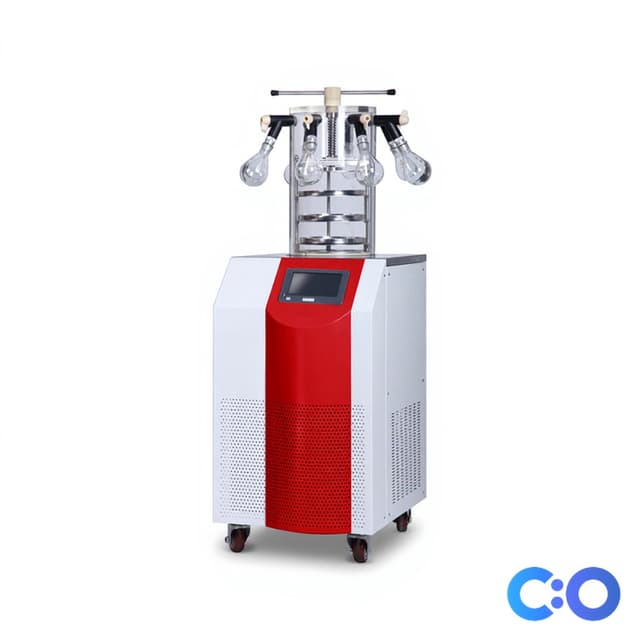
Food Freeze Dryer
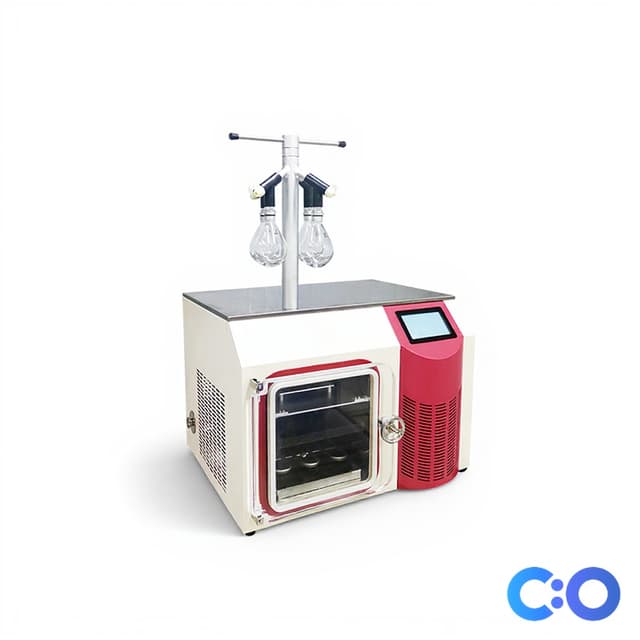
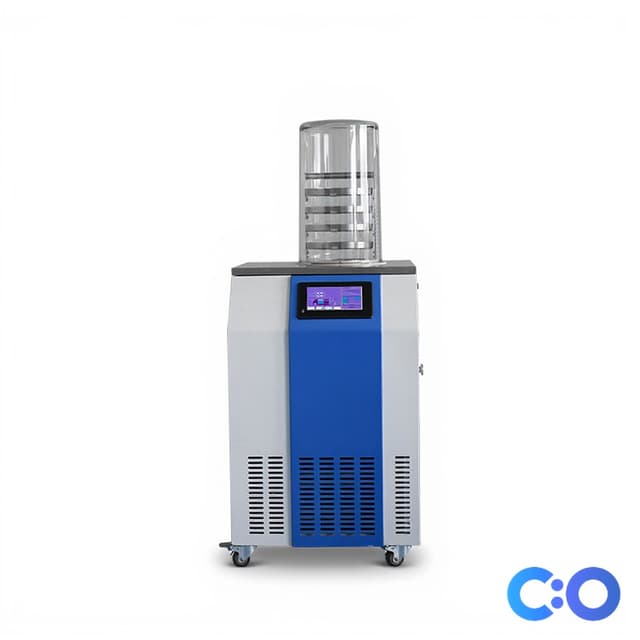
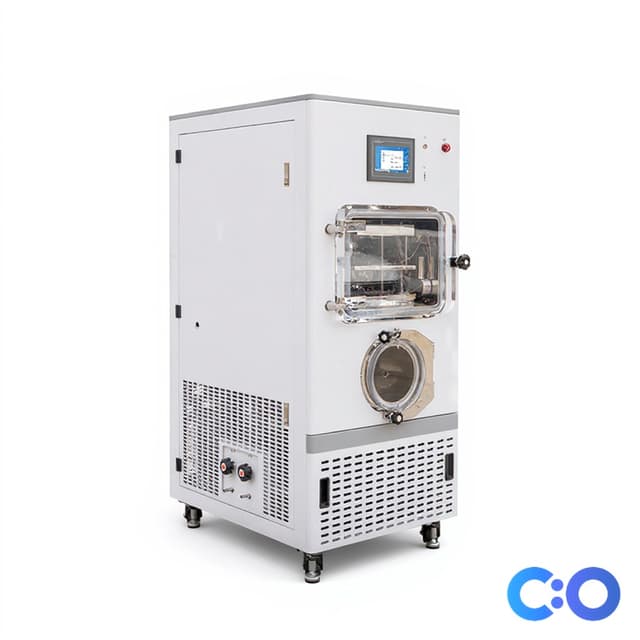
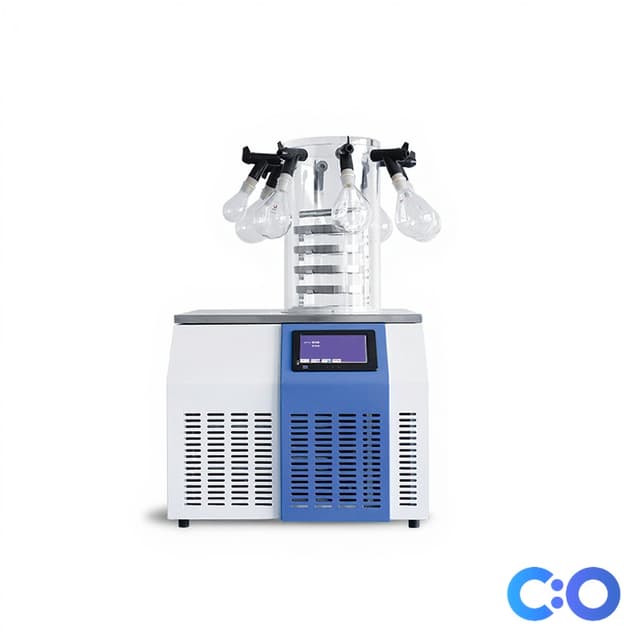
Laboratory freeze dryer with vacuum levels ≤10 Pa and cold trap temperatures ≤-55°C for lyophilization of food samples and biological materials.

Louise Corscadden, PhD
Director of Science · ConductScience
Ask Louise about Food Freeze Dryer fit, setup, configuration, or quote prep.
Already working with us? Sign in to connect this with My Scientist.
Key Specifications
Full details →- Model fit
- Configured during quote
- SKU family
- BIO-0120
- Shipping box
- 42.0 x 43.6 x 38.0 cm
- Ordering
- Online checkout and quote request available
- Category
- Freeze Dryers
- Build notes
- Confirm accessories, station layout, and support needs before purchase
The Food Freeze Dryer is a laboratory-grade lyophilization system designed for preservation of food samples, biological materials, and pharmaceutical preparations through controlled sublimation. This system combines precise temperature control with deep vacuum technology to remove moisture while maintaining structural integrity of heat-sensitive compounds.
Available in multiple configurations ranging from 5.1 m² to 200 m² freeze drying area, the system accommodates research applications from small-scale analytical samples to pilot production batches. The unit achieves vacuum levels ≤10 Pa and cold trap temperatures ≤-55°C, providing optimal conditions for efficient moisture removal across diverse sample matrices.
How It Works
Freeze drying operates through controlled sublimation, where frozen water transitions directly from solid to vapor phase under reduced pressure. The process begins by freezing the sample below its eutectic point, typically -40°C or lower, to ensure all free water is converted to ice crystals.
The vacuum system reduces chamber pressure to ≤10 Pa, creating conditions where ice sublimates at temperatures well below normal atmospheric conditions. The cold trap, maintained at ≤-55°C, captures sublimated water vapor to prevent redeposition on the sample and maintain vacuum integrity.
Controlled shelf heating from -40°C to +90°C provides energy for sublimation while preventing sample melting. This temperature gradient drives moisture migration from the frozen matrix to the cold trap, resulting in a dry product with preserved structure and biological activity.
Features & Benefits
Automation Level
- semi-automated
BK-FFD10
- BK-FFD20
BK-FFD30
- BK-FFD50
BK-FFD100
- BK-FFD200
Freeze Drying Area
- 5.1m2
10.2m2
- 21m2
30.3m2
- 50m2
100m2
- 200m2
Vacuum Level
- ≤10Pa
Cold Trap Temperature
- ≤-55℃
Maximum ice capacity(kg/B)
- 80
160
- 320
480
- 800
1600
- 3200
Shelf Temperature Range(℃)
- -40~+90
Brand
- ConductScience
Research Domain
- Analytical Chemistry
- Clinical Diagnostics
- Food Science
- Materials Science
- Microbiology
- Pharmaceutical QC
Shipping weight
- 176.37 lb
Shipping box
- L: 42.0 cm
- W: 43.6 cm
- H: 38.0 cm
| Feature | This Product | Typical Alternative | Advantage |
|---|---|---|---|
| Vacuum Performance | ≤10 Pa vacuum capability | Entry-level units often achieve only 50-100 Pa | Lower pressure enables more efficient sublimation and prevents product collapse during primary drying |
| Cold Trap Temperature | ≤-55°C cold trap operation | Basic systems may operate at -40 to -45°C | Lower trap temperature improves water vapor capture efficiency and maintains vacuum integrity |
| Chamber Size Options | 5.1 m² to 200 m² freeze drying area | Limited size options in compact systems | Multiple configurations allow matching system capacity to specific throughput requirements |
| Ice Capacity Range | 80 kg to 3200 kg ice handling | Small units typically handle 10-50 kg | Higher ice capacity supports longer processing cycles without defrost interruptions |
| Shelf Temperature Control | -40°C to +90°C temperature range | Limited heating capability in basic models | Wide temperature range enables optimized energy input for diverse sample types and secondary drying phases |
The Food Freeze Dryer offers high vacuum performance and precise temperature control across multiple scale configurations. The system's ≤10 Pa vacuum capability and ≤-55°C cold trap temperature provide optimal conditions for efficient lyophilization of diverse sample matrices.
Practical Tips
Verify temperature sensors using calibrated thermocouples placed directly on shelf surfaces and within representative sample containers.
Why: Accurate temperature measurement ensures proper energy input control and prevents sample overheating during sublimation.
Defrost cold trap completely between cycles and inspect for ice buildup that could reduce vapor capture efficiency.
Why: Ice accumulation reduces effective trap surface area and can compromise vacuum performance during subsequent cycles.
Load samples uniformly across shelf area and maintain consistent container fill depths for even drying rates.
Why: Uniform loading prevents hot spots and ensures consistent moisture removal across the entire batch.
Monitor shelf-to-product temperature differential during primary drying to identify potential product collapse or case hardening.
Why: Large temperature differences indicate poor heat transfer and may signal the need for lower shelf temperatures or reduced pressure.
Record vacuum level, shelf temperature, and cold trap temperature at regular intervals throughout the cycle for process documentation.
Why: Comprehensive data logging supports cycle optimization and provides evidence of controlled processing conditions for validation.
Ensure adequate ventilation around vacuum pump and allow proper warm-up time before achieving full vacuum specifications.
Why: Proper pump operation and ventilation prevent overheating and ensure consistent vacuum performance throughout extended cycles.
Pre-freeze samples to consistent temperatures before loading to minimize cycle-to-cycle variation in drying times.
Why: Uniform initial freezing conditions result in consistent ice crystal structure and predictable sublimation rates.
Check vacuum pump oil level and condition regularly, especially when processing samples with volatile components.
Why: Clean oil maintains pump efficiency and prevents contamination of subsequent batches with residual vapors.
Setup Guide
What’s in the Box
- Freeze dryer main unit (typical)
- Vacuum pump system (typical)
- Temperature control module (typical)
- Sample shelves and trays (typical)
- Vacuum gauge and pressure sensors (typical)
- Power cables and connections (typical)
- Operation manual and documentation (typical)
- Initial calibration certificate (typical)
Warranty
ConductScience provides standard one-year manufacturer warranty covering defects in materials and workmanship, with technical support for installation and operation guidance.
Compliance
What sample preparation is required before freeze drying?
Samples should be pre-frozen below their eutectic point, typically -40°C or lower, and placed in containers that allow vapor escape. Liquid samples may require shell-freezing against container walls for efficient sublimation.
How is cycle development approached for new sample types?
Start with conservative parameters: primary drying at shelf temperatures 10-20°C below sample collapse temperature, then optimize based on residual moisture analysis and cycle time requirements.
What maintenance is required for consistent vacuum performance?
Regular vacuum pump oil changes, cold trap defrosting between cycles, and periodic leak checking of vacuum lines and chamber seals are essential for maintaining ≤10 Pa performance.
Can the system handle organic solvents or only aqueous solutions?
Consult product datasheet for solvent compatibility. Cold trap temperature and vacuum pump specifications determine suitability for organic solvent removal applications.
What determines the appropriate chamber size selection?
Consider sample volume, container size, required batch frequency, and available floor space. Larger chambers provide economies of scale but require longer pump-down times.
How is residual moisture monitored during processing?
Process monitoring typically involves temperature differential analysis between shelf and product, with endpoint determination based on stable temperature profiles and vacuum level maintenance.
What documentation is provided for process validation?
Temperature and pressure data logging capabilities support validation protocols, with calibration certificates typically provided for critical sensors and control systems.
Have a question about this product?
Have a question? Just ask.
Send it over and we'll email you a personalized answer — no call, no scheduling.
Prefer to talk it through?
Upgrade Options