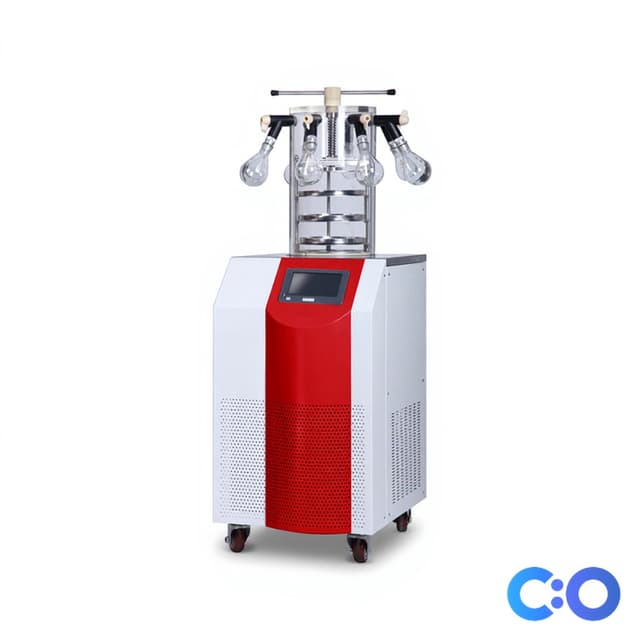
Laboratory Freeze Dryer, <2% Residual Moisture, Compact Design
Laboratory-scale freeze drying system for preservation of biological samples and heat-sensitive materials through sublimation under vacuum conditions.

Louise Corscadden, PhD
Director of Science · ConductScience
Ask Louise about Laboratory Freeze Dryer, <2% Residual Moisture, Compact Design fit, setup, configuration, or quote prep.
Already working with us? Sign in to connect this with My Scientist.
Key Specifications
Full details →- Model fit
- 2 selectable configurations
- SKU family
- Assigned during quote
- Shipping box
- 56.0 x 41.0 x 41.0 cm
- Ordering
- Online checkout and quote request available
- Category
- Freeze Dryers
- Build notes
- Confirm accessories, station layout, and support needs before purchase
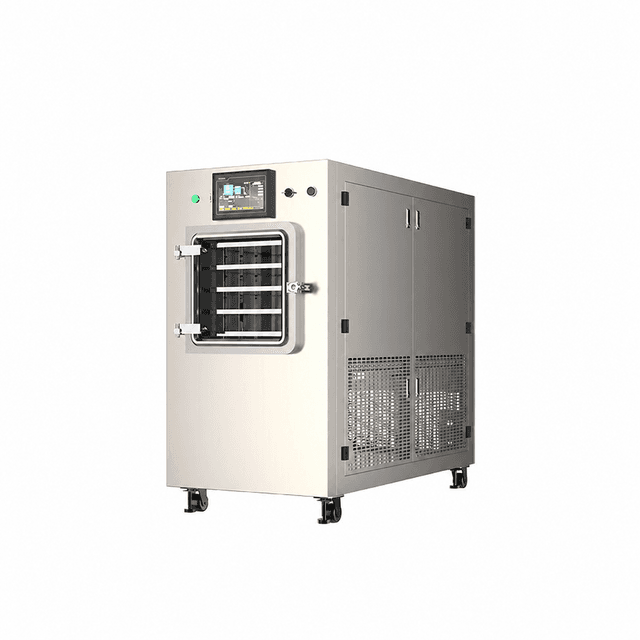
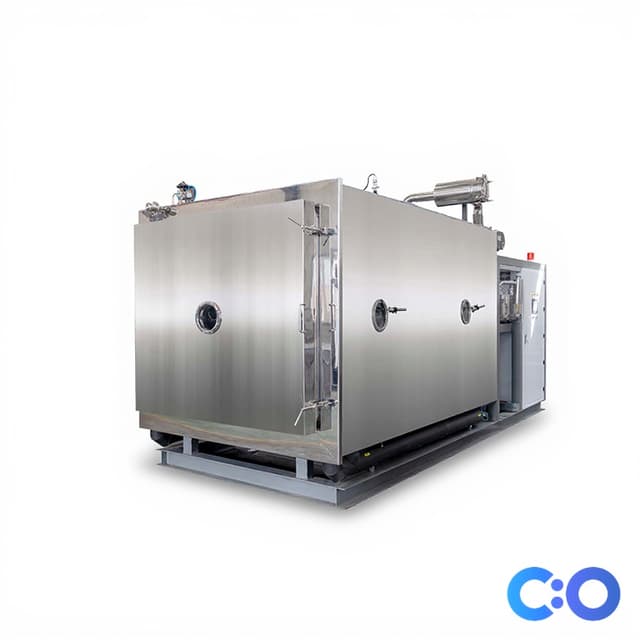
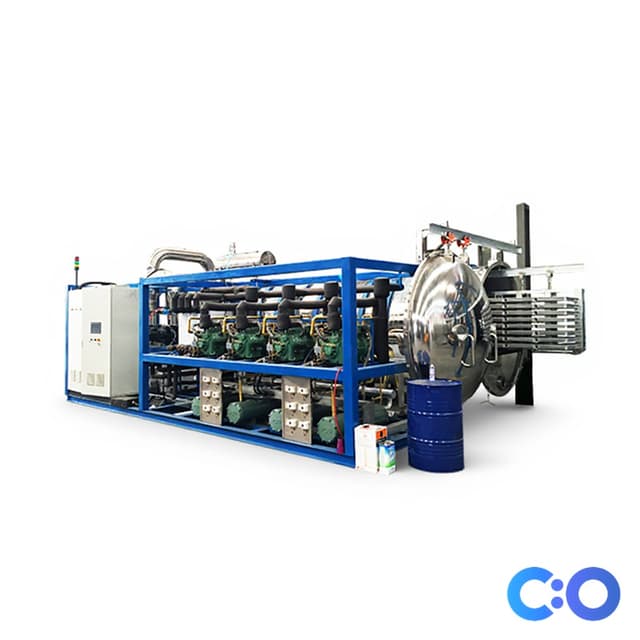
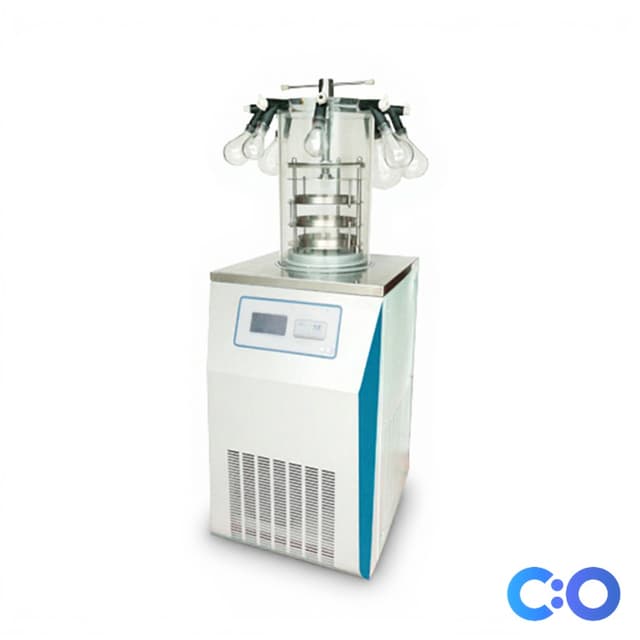
The Pilot Freeze Dryer is a laboratory-scale freeze drying system designed for the preservation of biological samples, pharmaceuticals, and other heat-sensitive materials through sublimation. This benchtop unit provides researchers with the capability to remove moisture from frozen samples while maintaining their structural integrity and biological activity. The system operates by freezing samples to temperatures below their eutectic point, then applying vacuum conditions to allow direct sublimation of ice crystals to vapor phase.
With compact dimensions of 56 × 41 × 41 cm and a 600 kg shipping weight, this freeze dryer is suitable for research laboratories requiring moderate throughput sample processing. The system is commonly employed in applications requiring long-term sample preservation, preparation of stable reference materials, and processing of biologics that would be degraded by conventional heat-based drying methods.
How It Works
Freeze drying operates through a three-phase process beginning with sample freezing to temperatures typically below -40°C to ensure complete crystallization of water content. The frozen sample is then placed under high vacuum conditions, typically 0.1 to 0.01 mBar, which lowers the vapor pressure and allows ice crystals to sublimate directly from solid to gas phase without passing through liquid state.
During the primary drying phase, approximately 95% of water content is removed through sublimation, with the process controlled by maintaining appropriate shelf temperature and vacuum levels. Secondary drying removes remaining bound water through desorption at slightly elevated temperatures. The vacuum system continuously removes sublimated vapor, preventing redeposition on samples and maintaining optimal drying conditions throughout the cycle.
Features & Benefits
Shipping weight
- 600.0 lb
Shipping box
- L: 56.0 cm
- W: 41.0 cm
- H: 41.0 cm
| Feature | This Product | Typical Alternative | Advantage |
|---|---|---|---|
| System Size | 56 × 41 × 41 cm benchtop footprint | Entry-level units often require larger floor space or have smaller sample capacity | Provides optimal balance of sample capacity and laboratory space utilization for research applications. |
| Construction Weight | 600 kg total system weight | Lighter units may have reduced vacuum pump capacity or smaller refrigeration systems | Substantial construction indicates robust refrigeration and vacuum components for reliable operation. |
| Sample Processing | Multiple shelf configuration with programmable control | Basic models may offer fixed temperature settings or limited shelf arrangements | Enables optimization of drying parameters for diverse sample types and research applications. |
| System Integration | Integrated refrigeration and vacuum systems | Some units require separate vacuum pumps or external cooling | Simplifies installation and operation while ensuring component compatibility and performance. |
The Pilot Freeze Dryer offers benchtop-scale sample processing with integrated refrigeration and vacuum systems in a compact laboratory footprint. The substantial construction and programmable controls support diverse research applications requiring preservation of heat-sensitive materials.
| Model | SKU | Listed price | Status | Shipping box |
|---|---|---|---|---|
| 47×33×32cm | BIO-0958 | $2,975.00 | Available | 56.0 x 41.0 x 41.0 cm |
| Compact | BIO-0117 | $2,975.00 | Available | 56.0 x 41.0 x 41.0 cm |
Practical Tips
Pre-freeze samples uniformly to ensure consistent sublimation rates across all materials in the batch.
Why: Uniform freezing prevents some samples from completing drying while others remain partially hydrated.
Clean chamber and shelves between different sample types to prevent cross-contamination.
Why: Residual materials from previous runs can affect product purity and analytical results.
Verify temperature sensors and vacuum gauges regularly using certified reference standards.
Why: Accurate monitoring ensures process conditions meet requirements for reproducible results.
Document all process parameters including time, temperature, and vacuum levels for each batch.
Why: Process documentation enables troubleshooting and supports method validation requirements.
Monitor for ice buildup in vacuum lines which can reduce system performance during operation.
Why: Ice accumulation restricts vapor flow and can lead to incomplete drying or extended cycle times.
Allow chamber to fully return to atmospheric pressure before opening to prevent vacuum-related hazards.
Why: Opening under vacuum can cause rapid decompression and potential injury from chamber components.
Setup Guide
What’s in the Box
- Pilot freeze dryer main unit (typical)
- Sample shelves and trays (typical)
- Vacuum pump and connections (typical)
- Temperature monitoring system (typical)
- User manual and operation guide (typical)
- Installation hardware (typical)
Warranty
ConductScience provides a standard one-year manufacturer warranty covering defects in materials and workmanship, with technical support for installation and operational guidance.
Compliance
What sample volumes and container types are compatible with this freeze dryer?
Sample capacity and compatible containers depend on shelf configuration - consult product datasheet for specific volume limits and recommended container materials that withstand vacuum and temperature conditions.
What temperature range and vacuum levels does the system achieve?
Operating temperature and vacuum specifications vary by model configuration - refer to technical specifications for minimum temperature capability and ultimate vacuum performance.
How long do typical drying cycles require for different sample types?
Cycle times depend on sample thickness, initial moisture content, and material characteristics, typically ranging from 12-48 hours for complete moisture removal.
What maintenance procedures are required for optimal performance?
Regular maintenance includes vacuum pump servicing, refrigeration system checks, and chamber cleaning between samples to prevent cross-contamination.
Can the system handle samples containing organic solvents?
Solvent compatibility depends on vacuum pump type and system design - consult manufacturer specifications for approved solvents and vapor handling capabilities.
What utilities are required for installation and operation?
Installation requires appropriate electrical supply for refrigeration and vacuum systems, plus adequate ventilation for heat dissipation during operation.
How is process reproducibility ensured between batches?
Reproducibility requires consistent sample preparation, standardized loading procedures, and documented temperature/time parameters for each material type processed.
Have a question about this product?
Have a question? Just ask.
Send it over and we'll email you a personalized answer — no call, no scheduling.
Prefer to talk it through?
Accessories
Enhance your setup with compatible accessories