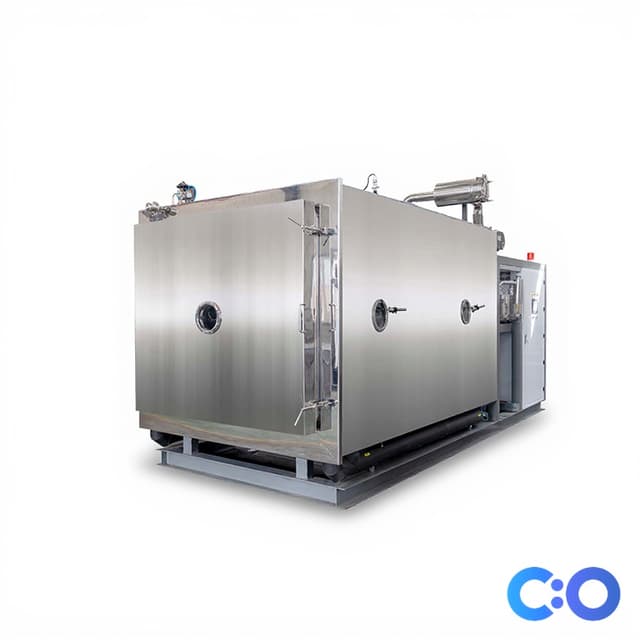
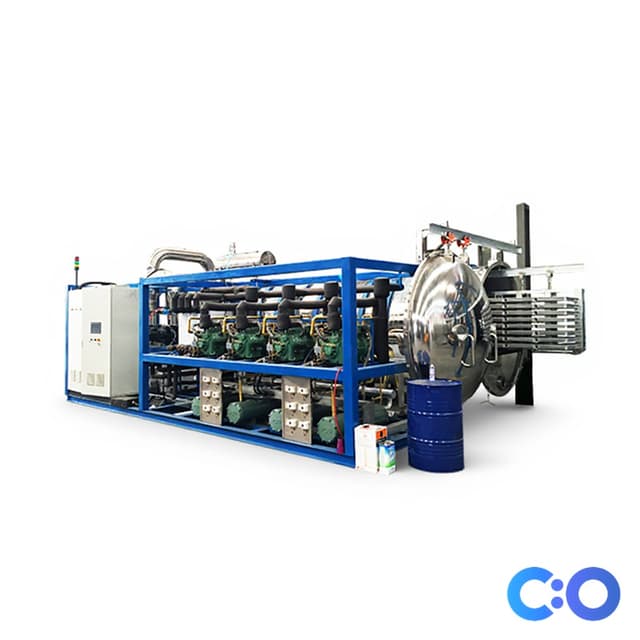
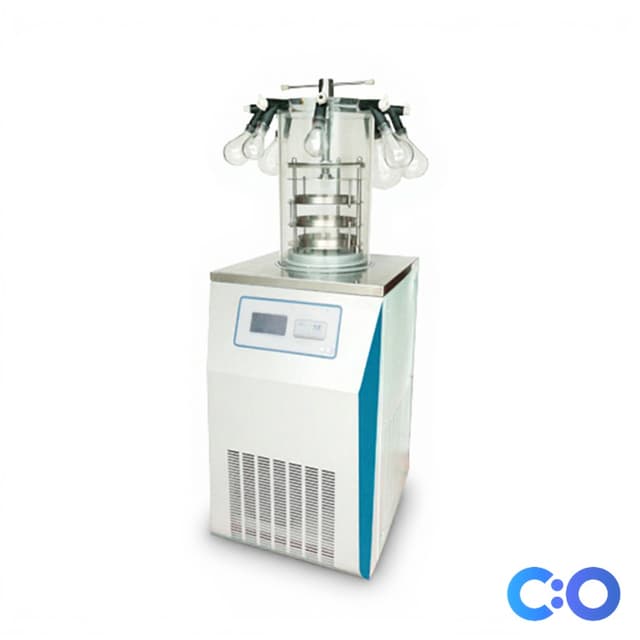
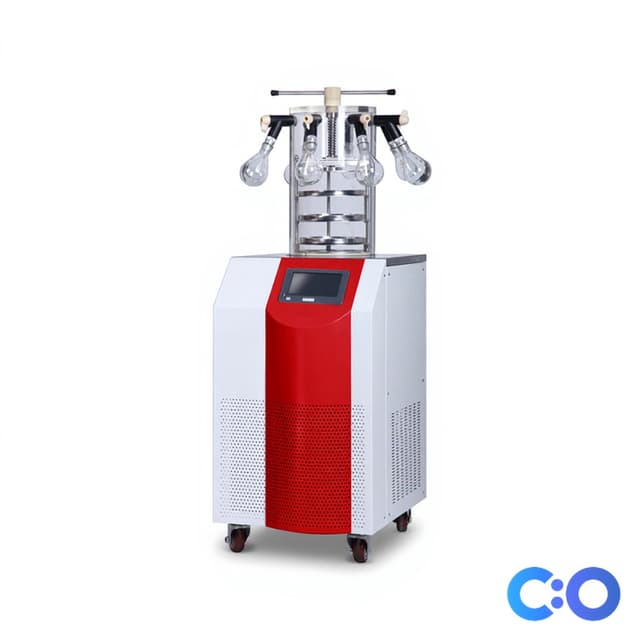
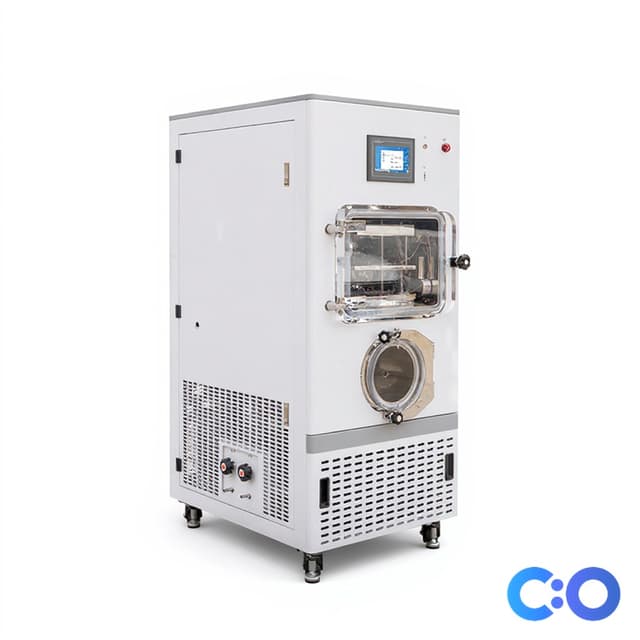
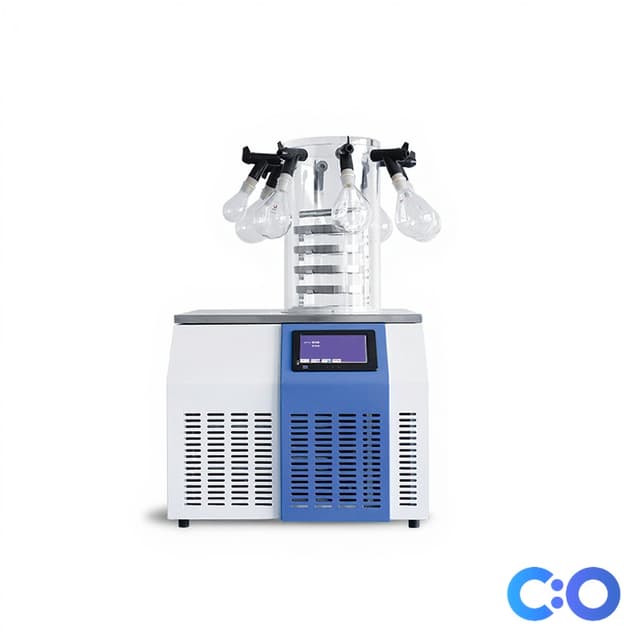
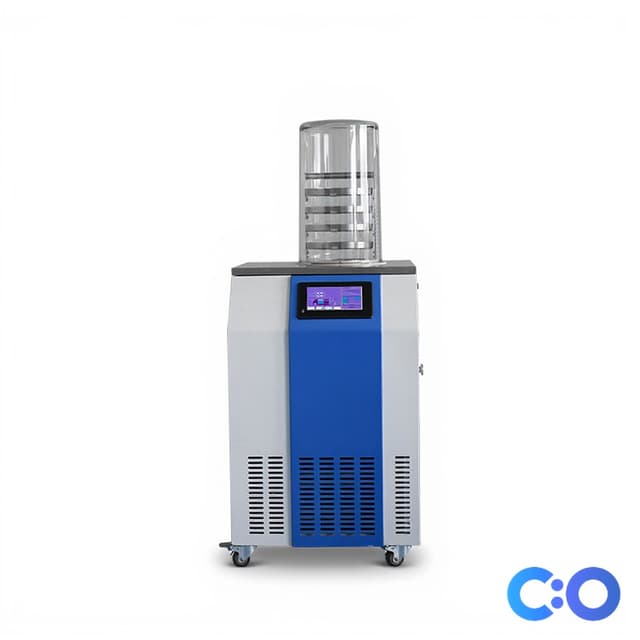
Tabletop Pilot Freeze Dryer
Compact benchtop freeze dryer with 40L drying chamber, -88°C cold trap, and 4-port manifold for small-scale lyophilization of biological and chemical samples.

Louise Corscadden, PhD
Director of Science · ConductScience
Ask Louise about Tabletop Pilot Freeze Dryer fit, setup, configuration, or quote prep.
Already working with us? Sign in to connect this with My Scientist.
Key Specifications
Full details →- Model fit
- Configured during quote
- SKU family
- BIO-0121
- Shipping box
- 15.0 x 27.0 x 40.0 cm
- Ordering
- Online checkout and quote request available
- Category
- Freeze Dryers
- Build notes
- 3000ml
The Tabletop Pilot Freeze Dryer is a compact lyophilization system designed for small-scale research applications requiring precise moisture removal from biological and chemical samples. This benchtop unit features a standard drying chamber with 40L capacity and achieves cold trap temperatures down to -88°C with vacuum levels reaching ≤0.1Pa for efficient sublimation processes.
The system incorporates a 4-port manifold with stoppering chamber capability, enabling simultaneous processing of multiple vial-based samples. With shelf temperature control ranging from -60°C to +70°C and ±1°C temperature uniformity, this freeze dryer supports controlled primary and secondary drying phases essential for preserving thermolabile compounds, proteins, and other moisture-sensitive materials in pharmaceutical, biotechnology, and analytical chemistry applications.
How It Works
Freeze drying operates through sublimation, where frozen water transitions directly from solid to vapor phase under reduced pressure conditions. The sample is first frozen below its eutectic temperature, then placed under high vacuum while controlled heat is applied to drive sublimation of ice crystals without passing through the liquid phase.
This system creates the necessary conditions through a three-stage process: freezing at temperatures down to -60°C, primary drying under vacuum ≤0.1Pa where most ice sublimates, and secondary drying at elevated shelf temperatures up to 70°C to remove residual bound moisture. The cold trap at -88°C captures sublimed water vapor, preventing it from reaching the vacuum pump and maintaining system performance.
The 4-port manifold allows simultaneous processing of multiple samples while the stoppering chamber enables sealed vial closure under vacuum, preventing moisture reabsorption during storage.
Features & Benefits
Automation Level
- semi-automated
BK-FD10EP
- BK-FD10ET
Type
- Standard chamber
4 port manifold
- Stoppering chamber
Cold Trap Temp.
- -88℃
Shelf Temp.
- -60~+70℃
Temp. Uniformity
- ±1℃
Vacuum Degree
- ≤0.1Pa
Cold Trap Volume
- 11L
Freezer Drying Area
- 0.1m2
Condensing Capacity
- 3kg/h
Qty. Of Shelf
- 1
Drying Chamber Size
- 40L
Material Loading Capacity
- 3000ml
Total Qty. of Vial
- Φ22mm
Brand
- ConductScience
Research Domain
- Analytical Chemistry
- Cell Biology
- Food Science
- Materials Science
- Microbiology
- Pharmaceutical QC
Shipping weight
- 180.0 lb
Shipping box
- L: 15.0 cm
- W: 27.0 cm
- H: 40.0 cm
| Feature | This Product | Typical Alternative | Advantage |
|---|---|---|---|
| Cold Trap Temperature | -88°C | Entry-level models often achieve -50°C to -70°C | Lower temperatures improve vapor capture efficiency and maintain deeper vacuum levels throughout extended cycles. |
| Vacuum Performance | ≤0.1Pa | Basic units may achieve 1-10Pa vacuum levels | Deep vacuum conditions enable sublimation at lower temperatures, preserving thermolabile compounds more effectively. |
| Temperature Control Range | -60°C to +70°C with ±1°C uniformity | Limited temperature range or wider uniformity tolerances | Full cycle control from freezing through secondary drying with consistent conditions across sample positions. |
| Processing Flexibility | 4-port manifold with stoppering chamber plus 40L main chamber | Single processing mode only | Accommodates both vial-based samples requiring sealed storage and larger bulk materials in single system. |
| Condensing Capacity | 3kg/h | Lower capacity in compact units | Handles higher moisture loads without compromising vacuum performance or extending cycle times significantly. |
| Drying Area | 0.1m² with 3000ml capacity | Smaller chamber volumes in benchtop models | Increased sample throughput while maintaining compact laboratory footprint for pilot-scale applications. |
This system combines research-grade performance specifications with benchtop convenience. The -88°C cold trap and ≤0.1Pa vacuum capability deliver conditions typically found in larger production systems, while the dual processing modes (manifold and chamber) provide experimental flexibility for diverse sample types.
Practical Tips
Pre-freeze samples to at least 10°C below their eutectic temperature before beginning vacuum drying to prevent melting during initial evacuation.
Why: Ensures complete ice crystal formation and prevents sample collapse during primary drying.
Verify temperature uniformity across shelf positions using calibrated thermocouples placed in sample containers filled with water.
Why: The ±1°C specification must be confirmed under loaded conditions to ensure consistent drying across all samples.
Clean the cold trap after each use and inspect for ice buildup that could reduce the 11L effective volume.
Why: Maintains the 3kg/h condensing capacity and prevents ice from blocking vapor flow paths.
Monitor vacuum levels throughout the cycle, as pressure rise indicates either system leaks or incomplete primary drying.
Why: Vacuum degradation compromises sublimation efficiency and can lead to sample melting or incomplete moisture removal.
If samples foam or bubble during evacuation, reduce vacuum pump speed or add a controlled leak to slow pressure reduction.
Why: Prevents sample loss from vigorous degassing while maintaining effective moisture removal conditions.
Allow cold trap to warm to room temperature before cleaning to prevent thermal shock to glass components.
Why: Rapid temperature changes can crack cold trap glassware and compromise system vacuum integrity.
Use the stoppering chamber feature for samples requiring long-term storage to prevent moisture reabsorption from ambient air.
Why: Vacuum sealing maintains low moisture content achieved during lyophilization, preserving sample stability.
Change vacuum pump oil regularly and monitor oil color for signs of water contamination from incomplete cold trapping.
Why: Clean oil maintains the ≤0.1Pa vacuum specification essential for efficient sublimation processes.
Setup Guide
What’s in the Box
- Tabletop freeze dryer main unit
- 4-port manifold assembly
- Stoppering chamber components
- Power cables and electrical connections
- Vacuum pump and oil reservoir
- User manual and operating procedures
- Basic maintenance kit (typical)
- Temperature monitoring accessories (typical)
Warranty
ConductScience provides a standard one-year manufacturer warranty covering parts and labor for this freeze drying system. Technical support includes installation guidance, operational training, and troubleshooting assistance throughout the warranty period.
Compliance
What is the typical drying time for protein solutions?
Drying time depends on sample volume, concentration, and container geometry. Typical protein solutions (1-5 mL) require 12-24 hours for complete lyophilization, with primary drying representing 80-90% of total cycle time.
Can this system handle organic solvents?
The system is designed primarily for aqueous solutions. Organic solvents may damage seals and affect vacuum pump performance - consult product datasheet for specific solvent compatibility information.
How do I determine optimal shelf temperature for my samples?
Begin with shelf temperatures 5-10°C above the sample's eutectic temperature during primary drying, then increase to 20-40°C for secondary drying. The ±1°C uniformity ensures consistent conditions across all sample positions.
What maintenance is required for the vacuum system?
Regular vacuum pump oil changes, cold trap cleaning, and seal inspection are essential. Monitor vacuum levels daily and service when performance drops below ≤0.1Pa specification.
Can I process heat-sensitive biologics safely?
Yes, the controlled sublimation process avoids liquid-phase temperatures that could denature proteins or degrade thermolabile compounds. The -60°C minimum shelf temperature accommodates extremely heat-sensitive materials.
How does the 4-port manifold compare to chamber drying?
The manifold allows individual vial processing with vacuum stoppering capability, ideal for pharmaceutical samples requiring sealed storage. Chamber drying accommodates larger containers but requires manual sealing post-process.
What data output is available for process monitoring?
Consult product datasheet for specific data logging and output capabilities. Temperature and pressure monitoring are standard features for process documentation.
Is the condensing capacity sufficient for high water-content samples?
The 3kg/h condensing capacity handles most laboratory-scale applications. For samples exceeding this rate, extend primary drying time or reduce batch size to maintain optimal performance.
Have a question about this product?
Have a question? Just ask.
Send it over and we'll email you a personalized answer — no call, no scheduling.
Prefer to talk it through?
Upgrade Options