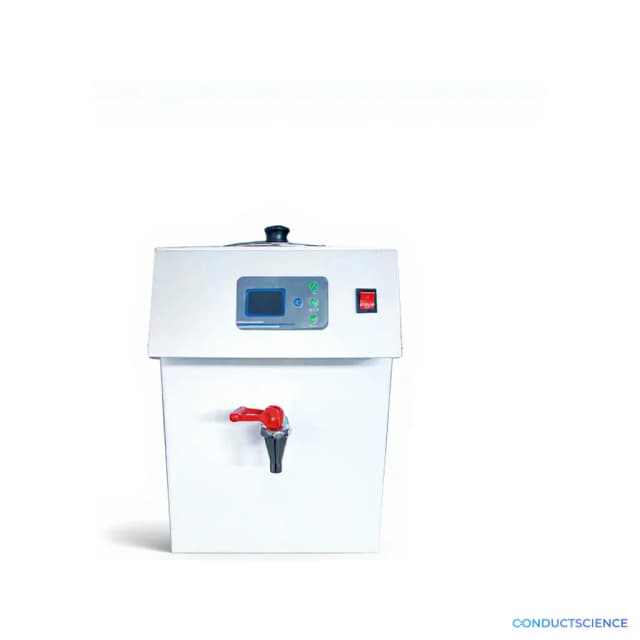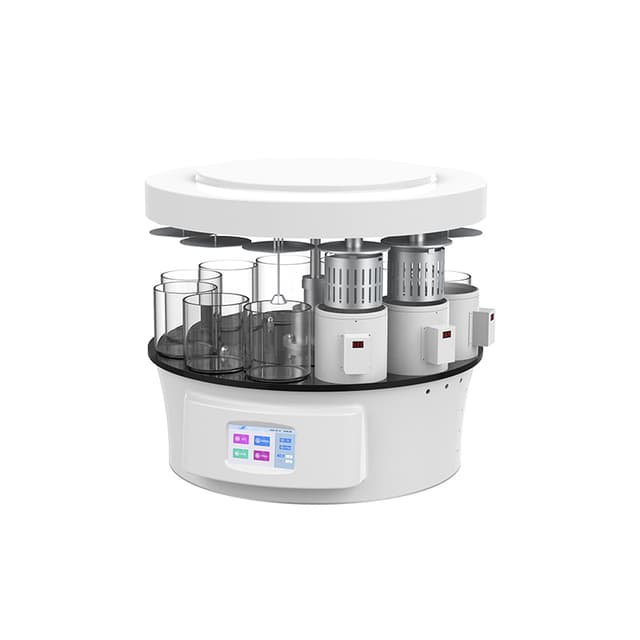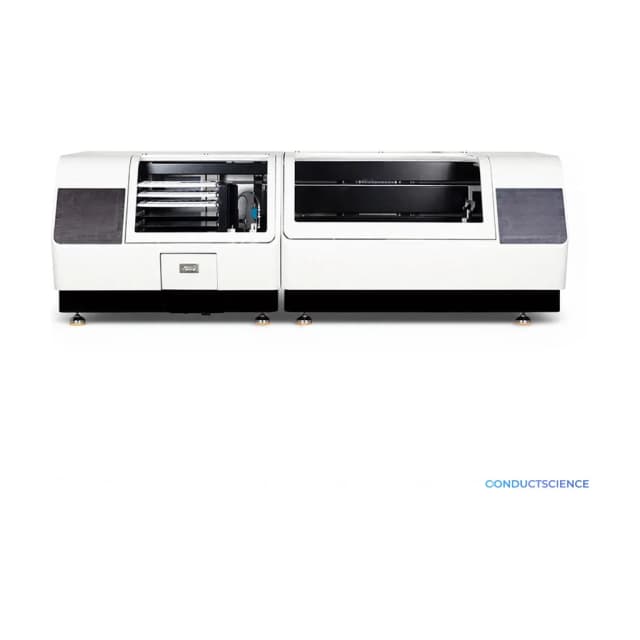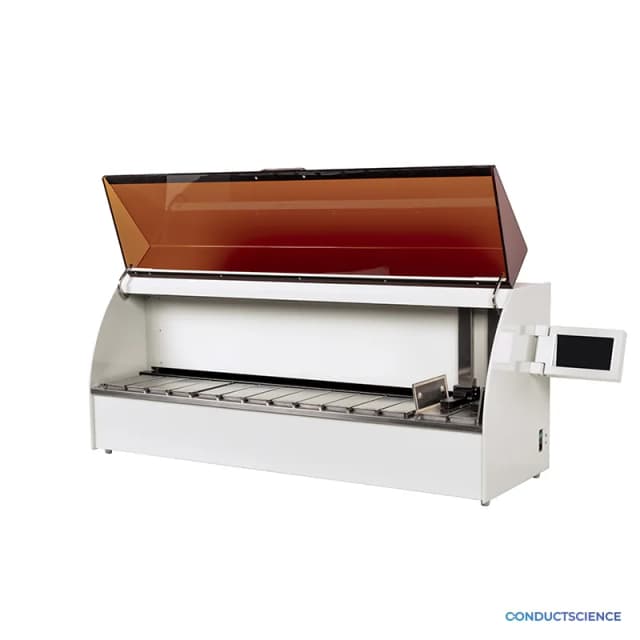
Automated Slide Stainer
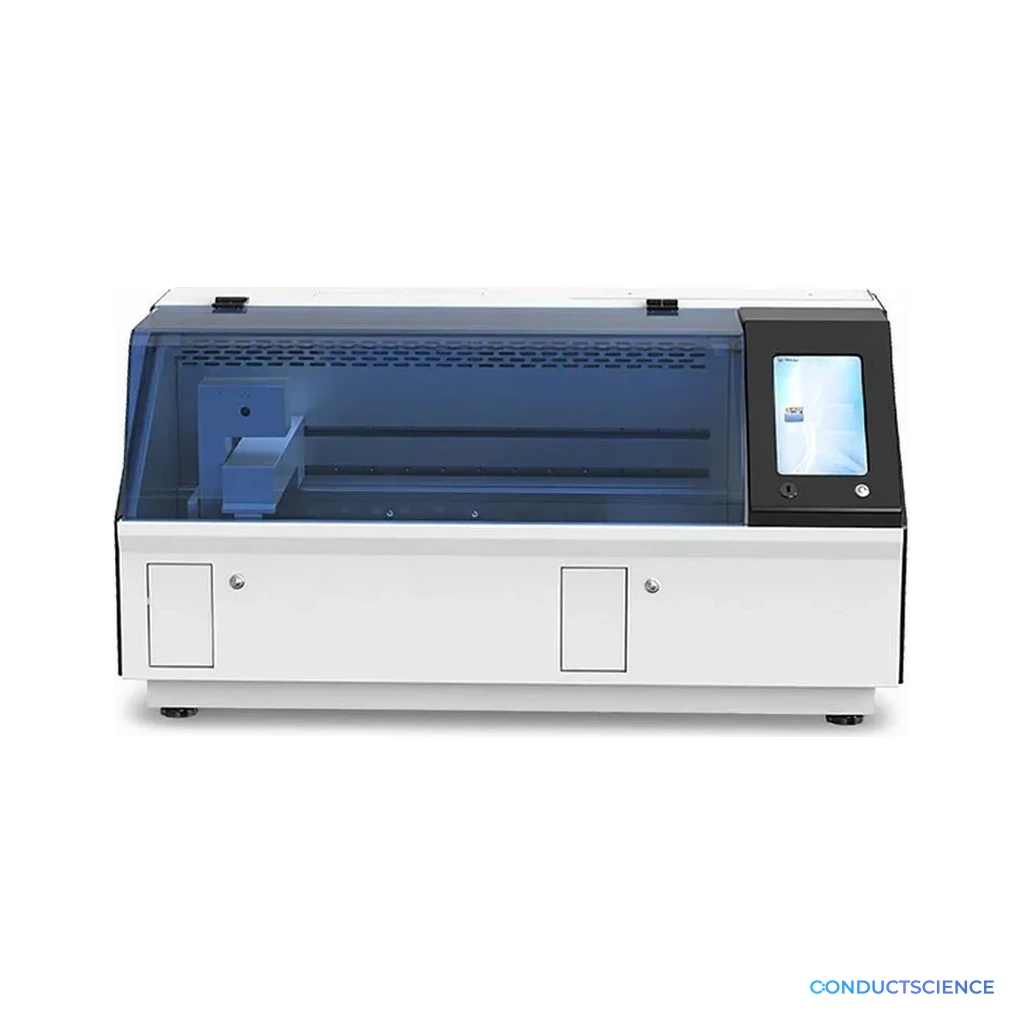
Automated tissue staining system with 26 processing stations, accommodating up to 450 slides per run with programmable protocols and integrated oven chamber for histopathology workflows.

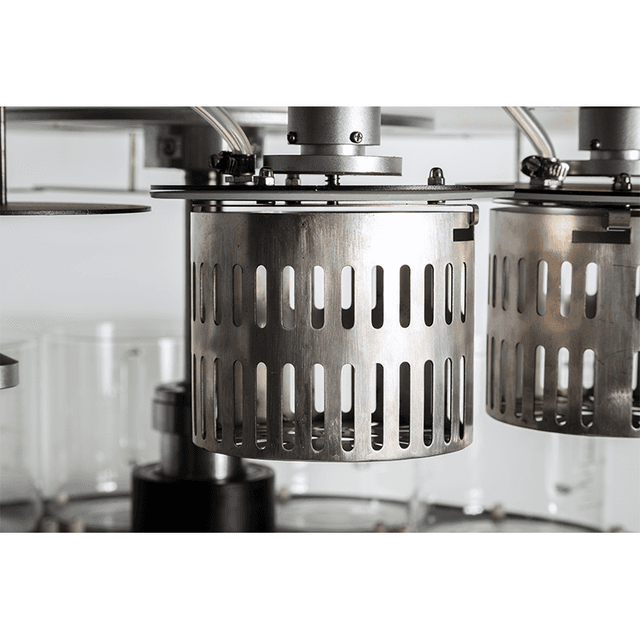
The Automated Tissue Stainer (BIO-0571) is a high-throughput histology processing system designed for consistent, reproducible staining of tissue sections in research and diagnostic laboratories. This automated platform features 26 processing stations including 19 reagent stations, 4 washing stations, and 1 oven chamber with temperature control from room temperature to 70°C. The system accommodates up to 15 staining racks simultaneously, with each rack holding 30 slides, enabling processing of up to 450 slides per run.
Built for laboratory environments requiring standardized staining protocols, this instrument provides programmable processing with storage for 15 different staining programs. Individual processing steps can be timed from 0 to 59 minutes 59 seconds per cup, allowing precise control over reagent exposure times. The system operates at noise levels ≤60dB(A) and consumes 400W of power, making it suitable for continuous operation in shared laboratory spaces.
How It Works
The automated tissue stainer operates through sequential immersion of slide-mounted tissue sections in predetermined reagent solutions following programmed protocols. Staining racks containing tissue slides are automatically transferred between 26 processing stations via a robotic transport system. Each of the 19 reagent stations holds 380ml of staining solution, allowing extended operation without reagent replenishment.
The system controls exposure time at each station from 0 to 59 minutes 59 seconds, enabling precise optimization of staining kinetics for different tissue types and antibodies. Four dedicated washing stations remove excess reagents between staining steps, while the integrated oven chamber provides controlled temperature conditions up to 70°C for antigen retrieval or accelerated reactions. The automated process eliminates manual handling variability and ensures reproducible staining results across large sample batches.
Temperature control within the oven chamber maintains uniform heating conditions essential for consistent antigen retrieval protocols. The system's programmable memory stores up to 15 different staining protocols, allowing rapid switching between routine H&E staining, special stains, and immunohistochemical procedures without manual reconfiguration.
Features & Benefits
Model
- Automated Slide Stainer
Weight
- 110.0 kg
Dimensions
- L: 60.0 mm
- W: 120.0 mm
- H: 64.0 mm
Comparison Guide
| Feature | This Product | Typical Alternative | Advantage |
|---|---|---|---|
| Processing Stations | 26 stations (19 reagent + 4 washing + 1 oven) | Entry-level models often offer 10-15 total stations | More stations enable complex multi-step protocols with dedicated reagent positions, reducing cross-contamination risk |
| Slide Capacity | Up to 450 slides (15 racks × 30 slides) | Compact systems typically process 100-200 slides per run | Higher capacity reduces processing frequency and increases laboratory efficiency for high-volume operations |
| Temperature Control | Integrated oven chamber (RT-70°C) | Many automated stainers lack integrated heating capabilities | Built-in temperature control enables antigen retrieval and temperature-dependent reactions without separate equipment |
| Program Storage | 15 stored programs | Basic systems often store 5-8 protocols | Greater program storage allows laboratories to maintain more diverse staining protocols without reprogramming |
| Cup Capacity | 380ml per reagent cup | Smaller systems may use 200-300ml cups | Larger volume reduces refilling frequency during extended processing runs and batch operations |
| Timing Precision | Programmable timing 0-59min59s per station | Some systems limit timing increments to minutes only | Second-level timing precision enables fine optimization of staining kinetics for different antibodies and protocols |
This system combines high-throughput capacity with comprehensive protocol flexibility through its 26-station configuration and integrated temperature control. The 450-slide capacity and 15-program storage make it well-suited for laboratories requiring diverse staining protocols and high daily throughput.
Practical Tips
Verify temperature accuracy of the oven chamber using an independent thermometer before processing temperature-sensitive protocols.
Why: Accurate temperature control is critical for consistent antigen retrieval and enzymatic reactions.
Clean all reagent cups and washing stations daily with appropriate solvents to prevent reagent carryover between protocols.
Why: Cross-contamination between reagents can affect staining quality and produce false results.
Load slides consistently within racks and ensure proper slide orientation to maintain uniform reagent exposure across all positions.
Why: Inconsistent slide positioning can result in uneven staining intensity across the batch.
If staining intensity varies between racks, check that all staining racks move freely through all stations without obstruction.
Why: Mechanical binding can cause incomplete immersion or shortened exposure times for affected racks.
Include positive and negative control slides in each run to verify staining protocol performance and reagent activity.
Why: Controls enable detection of reagent degradation or protocol deviations that could compromise results.
Allow the system to reach thermal equilibrium before starting temperature-dependent protocols to ensure consistent heating.
Why: Temperature stability is essential for reproducible antigen retrieval and enzymatic reaction kinetics.
Monitor reagent levels in cups before starting long protocols to prevent incomplete processing due to insufficient volume.
Why: Running out of reagent mid-protocol can result in partial staining and unusable slides.
Ensure proper ventilation connections are secure when processing volatile reagents or using xylene-based clearing agents.
Why: Adequate ventilation protects laboratory personnel from hazardous vapor exposure during automated processing.
Setup Guide
What’s in the Box
- Automated tissue stainer main unit
- 19 reagent cups
- 4 washing cups
- 10 staining racks (30-slide capacity each)
- Inlet pipe assembly
- 4-meter PVC water supply line
- Ventilation connection hardware
- Power cord and electrical connections
- User manual and installation guide (typical)
- Software and programming documentation (typical)
Warranty
ConductScience provides a standard 1-year manufacturer warranty covering parts and labor for the automated tissue stainer, with technical support for installation, programming, and troubleshooting assistance.
Compliance
References
Background reading relevant to this product:
What types of staining protocols can be programmed into the system?
The system stores up to 15 different programs and can accommodate routine H&E staining, special stains, and immunohistochemical protocols. Each program can specify reagent sequence, timing (0-59min59s per station), and temperature parameters for the oven chamber.
How does the temperature control work for antigen retrieval procedures?
The integrated oven chamber provides programmable temperature control from room temperature to 70°C. This enables automated antigen retrieval protocols and temperature-dependent enzymatic reactions as part of the staining sequence.
What is the maximum slide processing capacity per run?
The system accommodates up to 15 staining racks, with each rack holding 30 slides, for a maximum capacity of 450 slides per processing run. This high throughput is suitable for large-scale histology operations.
How often do the reagent cups need to be refilled?
Each of the 19 reagent stations holds 380ml of solution, providing sufficient volume for multiple processing cycles. Refilling frequency depends on the number of slides processed and specific reagent consumption per protocol.
Can the system handle both paraffin-embedded and frozen tissue sections?
The system is designed for slide-mounted tissue sections and can process both paraffin-embedded and frozen sections. Protocol programming should account for the specific fixation and processing requirements of each tissue type.
What data output or documentation capabilities does the system provide?
Consult the product datasheet for specific data logging and documentation features. The programmable memory suggests protocol tracking capabilities, but detailed reporting functions should be verified.
How does this compare to manual staining methods in terms of consistency?
Automated processing eliminates manual timing variability and ensures reproducible reagent exposure times across all slides. The system maintains consistent temperature control and standardized washing procedures, reducing batch-to-batch variation common in manual methods.
What maintenance procedures are required for optimal performance?
Regular cleaning of reagent cups and washing stations is essential to prevent cross-contamination. The transport mechanism and oven chamber should be maintained according to manufacturer specifications to ensure reliable operation.
Have a question about this product?