Bee Reward Expectations Apparatus
Specialized behavioral apparatus for investigating reward expectations and foraging decision-making in honeybees using artificial flower patches with controlled visual cues and sucrose reward delivery.
| arena_size | 28 cm × 28 cm |
| upper_plate_thickness | 0.2 cm |
| lower_plate_thickness | 0.7 cm |
| number_of_holes | 24 |
| hole_diameter | 1 cm |
| eppendorf_tube_depth | 4 cm |

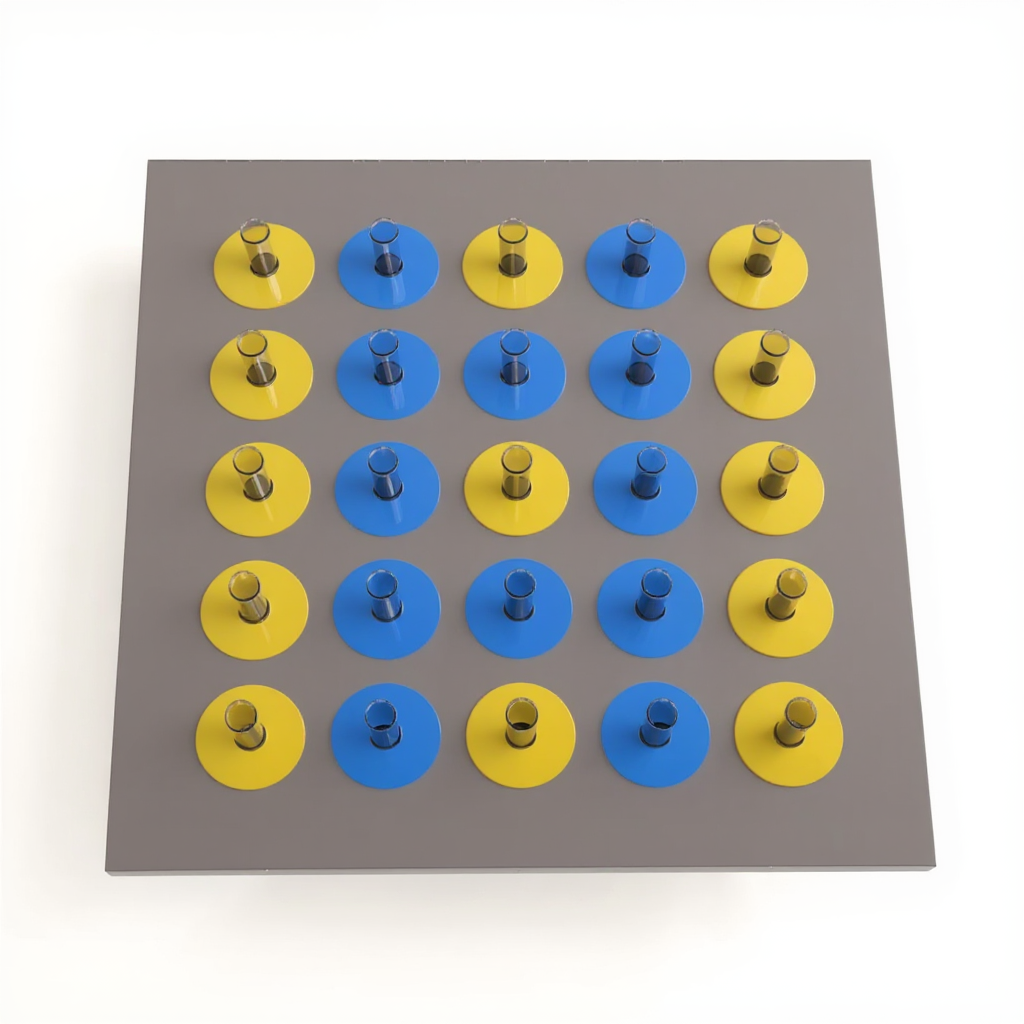
The Bee Reward Expectations Apparatus (BREA) is a specialized behavioral testing system designed to investigate reward prediction and foraging decision-making in honeybees (Apis mellifera carnica). The apparatus consists of a 28 cm × 28 cm foraging arena with two superposed acrylic plates containing 24 holes arranged in an artificial flower patch configuration. This system enables researchers to study cognitive processes in invertebrates, specifically examining how bees form expectations about rewards and modify their foraging behavior based on visual cues and previous experiences.
The apparatus features distinct visual markers (24 colored circles in blue and yellow, 3.8 cm diameter) that serve as artificial flowers, with 480 eppendorf tubes providing controlled reward delivery at 4 cm depth. The dual-plate design allows for precise control of access to reward sources while maintaining natural foraging conditions. This experimental paradigm addresses the knowledge gap in invertebrate cognition research, providing insights into complex cognitive abilities previously thought to be exclusive to larger-brained vertebrates.
How It Works
The BREA operates on principles of operant conditioning and visual discrimination learning. Honeybees are trained to associate specific visual cues (colored circles) with reward availability through repeated exposure to sucrose solutions. The dual-plate configuration creates controlled access points where bees must make foraging decisions based on learned associations between visual markers and reward probability.
The apparatus exploits natural foraging behaviors while providing experimental control over reward contingencies. Bees approach the artificial flower patch and encounter 24 potential foraging sites, each marked with distinct visual cues. The eppendorf tube system allows precise control of reward delivery, with tubes protruding 1.8 cm above the lower plate to simulate natural flower depth. Behavioral responses are recorded as bees demonstrate preference patterns, approach latencies, and decision-making strategies based on their reward expectations.
Data collection focuses on measuring behavioral indicators of expectation formation, including choice preferences, foraging persistence, and adaptation to changing reward schedules. This paradigm enables quantitative assessment of cognitive flexibility and learning dynamics in a controlled laboratory setting while maintaining ethologically relevant foraging contexts.
Features & Benefits
arena_size
- 28 cm × 28 cm
upper_plate_thickness
- 0.2 cm
lower_plate_thickness
- 0.7 cm
number_of_holes
- 24
hole_diameter
- 1 cm
eppendorf_tube_depth
- 4 cm
tube_protrusion_height
- 1.8 cm
colored_circles_count
- 24 (12 blue, 12 yellow)
colored_circles_diameter
- 3.8 cm
sucrose_solution_concentration
- 50% w/w
distance_from_hive
- 145 meters
plate_configuration
- two overlapping plates
Behavioral Construct
- reward expectation
- foraging behavior
- visual discrimination learning
- operant conditioning
- decision-making
- associative learning
- cognitive flexibility
Automation Level
- manual
Material
- Acrylic
Color
- Blue
- gray
- opaque
- Transparent
- Yellow
Species
- Apis mellifera carnica
- Honeybees
Dimensions
- 28 cm x 28 cm
Research Domain
- Behavioral Pharmacology
- Developmental Biology
- Environmental Monitoring
- Learning and Memory
- Neuroscience
Weight
- 21.0 kg
Dimensions
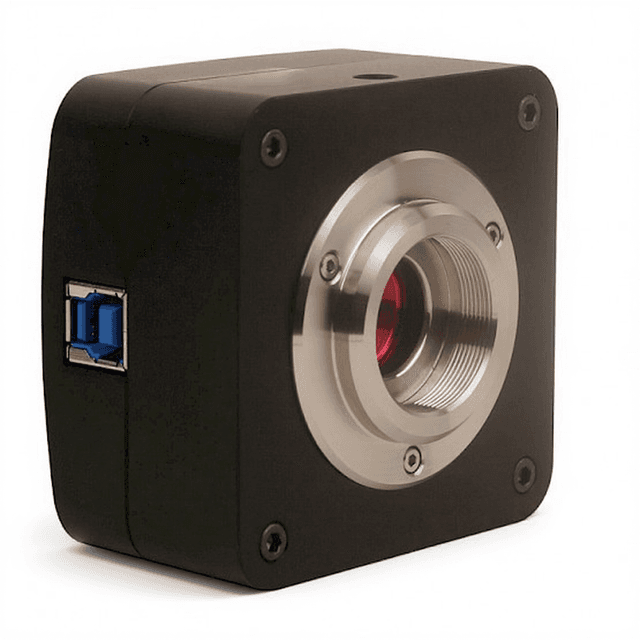
- L: 43.2 mm
- W: 38.0 mm
- H: 27.9 mm
Comparison Guide
| Feature | This Product | Typical Alternative | Advantage |
|---|---|---|---|
| Foraging Arena Size | 28 cm × 28 cm standardized arena | Smaller chambers often provide limited foraging space | Larger arena allows natural flight patterns and multiple simultaneous foraging decisions, improving ecological validity of behavioral data. |
| Visual Cue System | 24 colored circles (3.8 cm diameter) in dual colors | Simple binary choice systems with limited cue variety | Multiple visual cues enable complex discrimination learning studies and investigation of cognitive flexibility across different reward probabilities. |
| Reward Delivery System | 480 eppendorf tubes with 4 cm depth and precise positioning | Basic feeding stations with limited control options | High-density reward delivery system allows fine-scale manipulation of reward distribution and investigation of spatial foraging strategies. |
| Access Control Design | Dual-plate system with 24 precisely positioned 1 cm holes | Single-surface designs with limited access control | Two-plate configuration provides enhanced experimental control over bee access while maintaining structural integrity during extended testing sessions. |
| Construction Materials | Acrylic construction with transparent upper plate and grey lower plate | Opaque materials limiting behavioral observation | Transparent design enables continuous behavioral monitoring and video recording without environmental interference or bee disturbance. |
The BREA provides comprehensive experimental control through its dual-plate design, extensive visual cue system, and high-density reward delivery configuration. The apparatus balances experimental precision with ethological relevance, offering researchers a standardized platform for investigating complex cognitive processes in invertebrate model systems.
Practical Tips
Standardize sucrose solution concentrations using a refractometer and prepare fresh solutions daily to maintain consistent reward quality.
Why: Consistent reward quality is essential for reliable behavioral responses and prevents confounding variables from degraded or contaminated solutions.
Clean eppendorf tubes and acrylic surfaces with ethanol solution between sessions and replace tubes showing signs of wear or contamination.
Why: Regular cleaning prevents bacterial growth and maintains hygienic conditions that could affect bee health and foraging behavior.
Mark individual bees with paint dots or number tags to enable tracking of individual learning trajectories and behavioral consistency.
Why: Individual identification allows assessment of learning rates and behavioral variation that would be masked in group-level analysis.
If bees avoid the apparatus, gradually introduce them using sugar water trails leading to high-value reward locations before implementing experimental protocols.
Why: Gradual introduction reduces neophobia and establishes positive associations with the apparatus before complex learning paradigms begin.
Record environmental conditions (temperature, humidity, wind speed) and time of day for each session to identify factors affecting bee performance.
Why: Environmental variables significantly influence bee activity levels and learning performance, requiring documentation for proper data interpretation.
Position the apparatus away from high-traffic areas and inform nearby personnel of ongoing bee research to prevent disturbance and ensure safety.
Why: Minimizing human interference maintains natural bee behavior while reducing risk of bee stings and experimental disruption.
Conduct control sessions with equal rewards at all locations to establish baseline foraging patterns before implementing discrimination training.
Why: Baseline behavior assessment allows identification of inherent location preferences that could confound interpretation of learning-based choices.
Use video recording with multiple camera angles to capture complete behavioral sequences and enable detailed post-session analysis.
Why: Video documentation provides permanent records for behavioral scoring reliability and enables detection of subtle behavioral changes missed during live observation.
Setup Guide
What’s in the Box
- Foraging arena assembly (28 cm × 28 cm)
- Upper acrylic plate (0.2 cm thickness, transparent)
- Lower acrylic plate (0.7 cm thickness, grey)
- 480 eppendorf tubes for artificial flower patch
- 24 colored circles (12 blue, 12 yellow, 3.8 cm diameter)
- Assembly hardware and positioning guides
- Protocol documentation and setup instructions
Warranty
ConductScience provides a one-year manufacturer warranty covering materials and workmanship defects, with technical support for experimental setup and protocol optimization.
Compliance
What sucrose concentrations are recommended for reward training protocols?
The standard protocol utilizes 50% w/w sucrose solution, though concentrations can be adjusted based on experimental requirements. Lower concentrations may be used to study motivation thresholds, while higher concentrations can enhance learning rates during initial training phases.
How many bees can be tested simultaneously with this apparatus?
The apparatus accommodates multiple bees foraging simultaneously, with 24 potential foraging sites available. However, individual bee tracking and behavioral analysis typically focus on 1-3 marked individuals per session to ensure accurate data collection.
What environmental conditions are required for optimal bee performance?
Testing should occur during optimal foraging periods (typically mid-morning to early afternoon) with ambient temperatures between 15-25°C and minimal wind. The apparatus should be positioned away from competing natural food sources and high-traffic areas.
How long does initial bee training typically require?
Initial training to establish consistent foraging behavior usually requires 3-5 sessions over several days, with individual learning rates varying. Full establishment of color-reward associations may take 1-2 weeks depending on experimental complexity and individual bee performance.
Can the apparatus be modified for different visual cue experiments?
Yes, the colored circles can be replaced with alternative visual markers, patterns, or shapes to investigate different aspects of visual processing and discrimination learning. The modular design allows customization of cue size, color, and spatial arrangement.
What data parameters should be recorded during behavioral sessions?
Key measurements include choice frequency, approach latency, foraging duration per site, sequence of visits, and persistence at unrewarded locations. Video recording enables detailed analysis of flight patterns, decision points, and behavioral transitions.
How does this apparatus compare to field-based foraging studies?
The BREA provides controlled experimental conditions that eliminate environmental variables while maintaining ethologically relevant foraging contexts. This allows precise manipulation of reward contingencies and visual cues that would be impossible in natural field settings.
Have a question about this product?
Accessories
Enhance your setup with compatible accessories

Frequently Bought Together