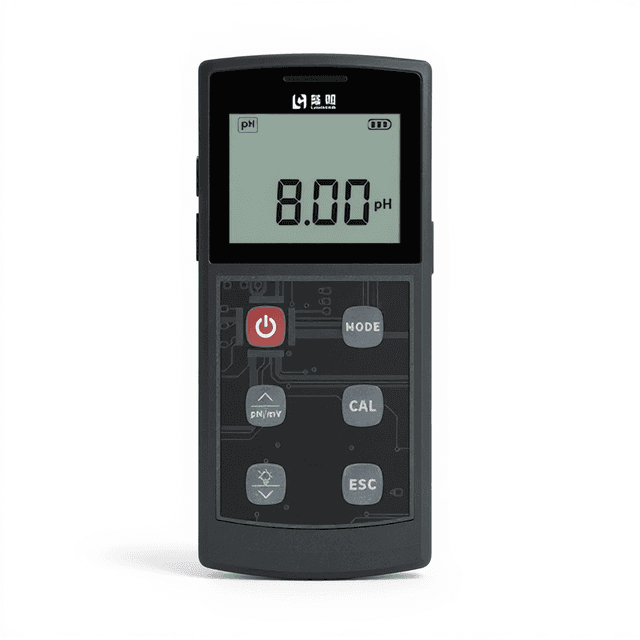
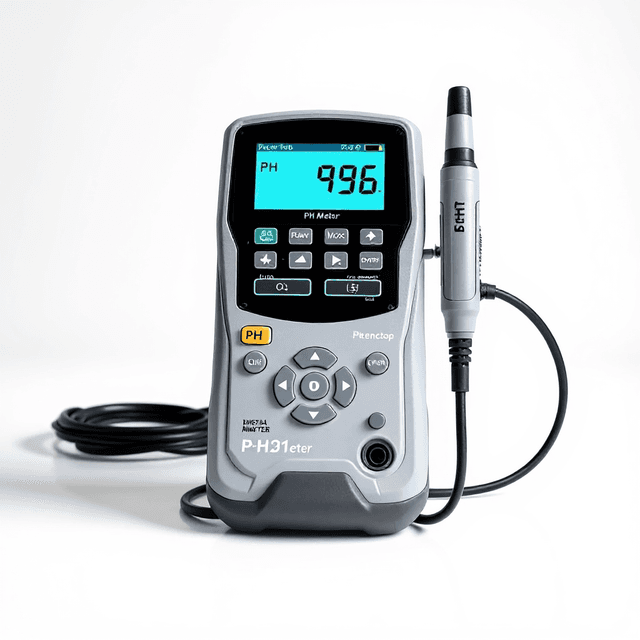
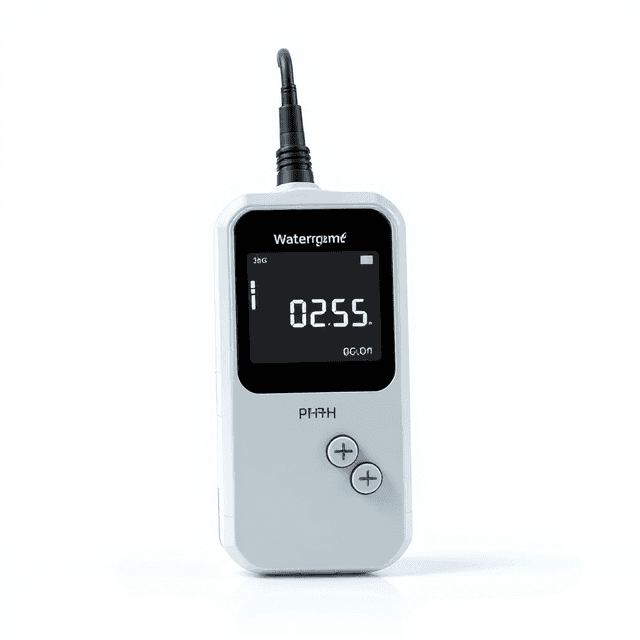
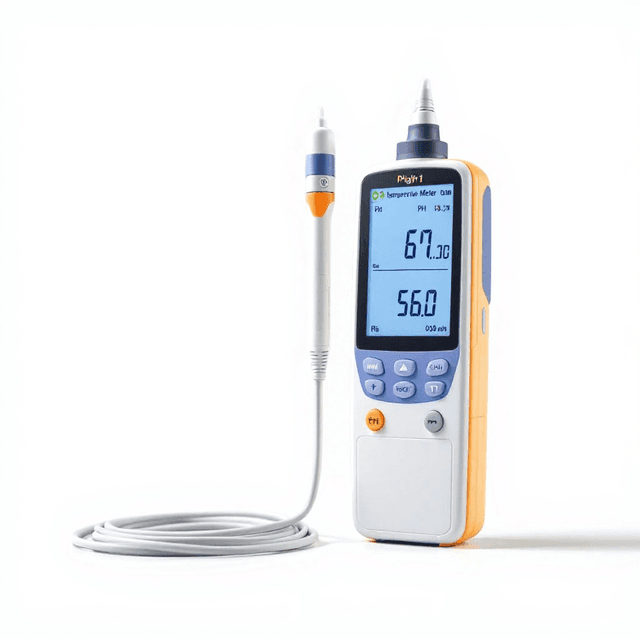
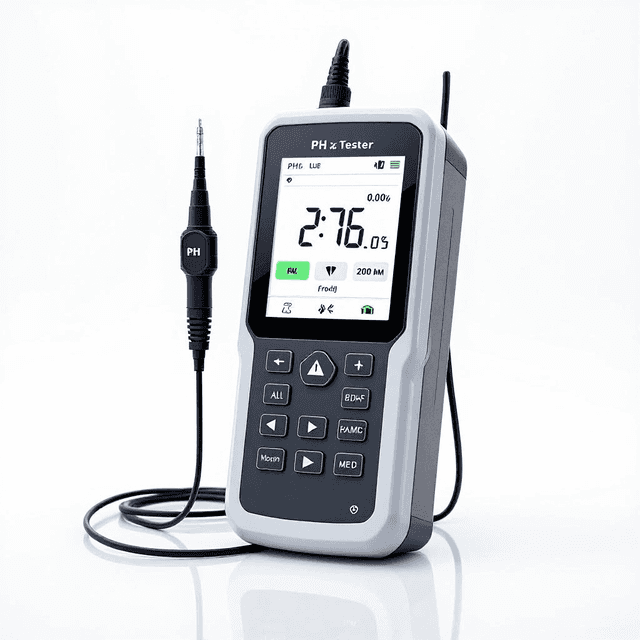
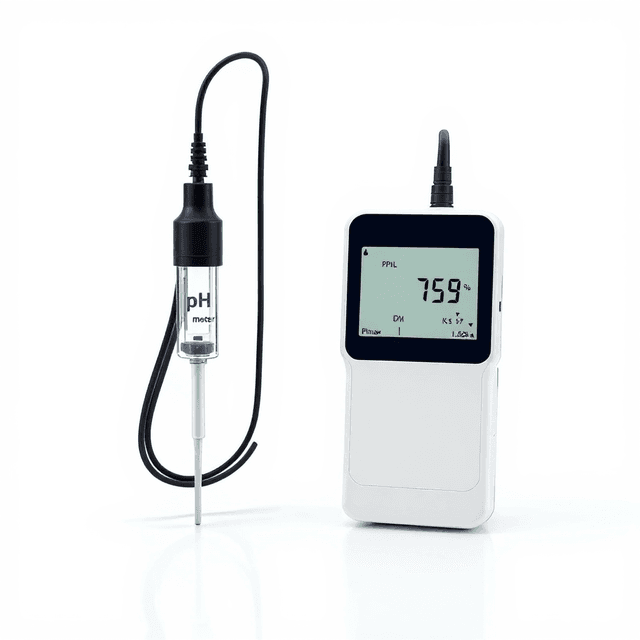
Dual-Range Benchtop pH Meter
Laboratory-grade benchtop pH meter with dual-range measurement (-2.00 to 19.99 pH), automatic calibration, and integrated temperature compensation for precise electrochemical analysis.

Louise Corscadden, PhD
Director of Science · ConductScience
Ask Louise about Dual-Range Benchtop pH Meter fit, setup, configuration, or quote prep.
Already working with us? Sign in to connect this with My Scientist.
Key Specifications
Full details →- Model fit
- Configured during quote
- SKU family
- LH-0004
- Sizing
- 6.5 x 22.0 x 16.0 cm
- Ordering
- Online checkout and quote request available
- Category
- pH Meters
- Build notes
- Confirm accessories, station layout, and support needs before purchase
The Benchtop pH Meter (BIO-0381) is a laboratory-grade instrument designed for precise pH and millivolt measurements in research and analytical environments. This meter provides dual-range pH measurement capabilities from -2.00 to 19.99 pH with automatic 1-3 point calibration functionality. The instrument features integrated temperature compensation across a 0.0-60.0°C range to ensure measurement accuracy under varying thermal conditions.
The compact benchtop design accommodates standard laboratory workflows while providing reliable electrochemical measurements for solution characterization, buffer preparation, and quality control protocols. The meter includes millivolt measurement capability (-1999 to +1999 mV) for direct electrode potential monitoring and temperature measurement up to 80.0°C for comprehensive solution analysis.
How It Works
The pH meter operates through potentiometric measurement using a glass electrode system. The glass electrode contains a pH-sensitive membrane that develops an electrical potential proportional to hydrogen ion activity in the test solution. This potential difference, measured against a stable reference electrode, follows the Nernst equation relationship where a 59.16 mV change corresponds to one pH unit at 25°C.
The instrument incorporates automatic temperature compensation by measuring solution temperature and applying correction factors to account for the temperature dependency of the electrode response. The built-in temperature sensor provides real-time thermal data, allowing the meter to adjust pH readings based on the actual measurement conditions rather than assuming standard temperature.
Calibration involves immersing the electrode in standard buffer solutions of known pH values. The meter automatically recognizes buffer solutions and adjusts the electrode response curve to ensure accurate measurements across the full pH range. The 1-3 point calibration capability allows researchers to optimize accuracy for their specific measurement range and application requirements.
Features & Benefits
Weight
- 1.5 kg
Dimensions
- L: 6.5 mm
- W: 22.0 mm
- H: 16.0 mm
| Feature | This Product | Typical Alternative | Advantage |
|---|---|---|---|
| pH Measurement Range | -2.00 to 19.99 pH | Entry-level models often provide 0-14 pH range | Extended range accommodates strong acids, bases, and specialized chemical systems beyond standard laboratory conditions. |
| Calibration System | Automatic 1-3 point calibration with buffer recognition | Manual calibration procedures with fixed buffer points | Reduces calibration errors and setup time through automated buffer recognition and adjustment. |
| Temperature Compensation | Integrated automatic compensation (0.0-60.0°C) | Manual temperature compensation or limited temperature range | Ensures measurement accuracy across varying thermal conditions without manual correction calculations. |
| Millivolt Capability | -1999 to +1999 mV measurement range | pH-only meters without mV function | Provides additional electrochemical measurement capabilities for redox monitoring and electrode diagnostics. |
| Temperature Monitoring | 0.0-80.0°C measurement capability | Limited temperature display or no temperature measurement | Simultaneous thermal and chemical characterization provides comprehensive solution analysis data. |
This pH meter provides extended measurement ranges and automatic calibration capabilities with integrated temperature compensation. The dual-function design accommodates both pH and millivolt measurements while maintaining compact benchtop footprint for standard laboratory applications.
Practical Tips
Calibrate using buffers that bracket your expected measurement range, and replace buffer solutions monthly or when contamination is suspected.
Why: Fresh buffers and appropriate range selection ensure measurement accuracy and minimize extrapolation errors.
Store electrodes in 3M KCl storage solution and never allow the electrode to dry out completely.
Why: Proper hydration maintains the glass membrane and reference junction, preserving electrode response and extending operational life.
Allow 30-60 seconds for reading stabilization in each sample, particularly with high ionic strength or viscous solutions.
Why: Adequate equilibration time ensures accurate measurements by allowing the electrode to reach steady-state potential.
If readings drift or respond slowly, clean the electrode with dilute HCl (for protein/organic deposits) or mild detergent solution.
Why: Electrode contamination impedes ion exchange and creates measurement artifacts that affect accuracy and response time.
Record temperature alongside pH measurements, as biological and chemical processes are sensitive to both parameters.
Why: Temperature data provides context for pH measurements and supports interpretation of chemical equilibria and reaction kinetics.
Rinse electrodes thoroughly with distilled water when switching between samples of different pH ranges or chemical compositions.
Why: Cross-contamination between samples can introduce measurement errors and potentially create chemical compatibility issues.
Perform 2-point calibration for routine work and 3-point calibration when maximum accuracy is required across the full pH range.
Why: Multi-point calibration compensates for electrode non-linearity and provides better accuracy across wider measurement ranges.
Check calibration slope regularly; values below 85% of theoretical indicate electrode replacement is needed.
Why: Electrode aging reduces sensitivity and measurement reliability, making slope monitoring essential for quality assurance.
Setup Guide
What’s in the Box
- Benchtop pH Meter (main unit)
- pH electrode (typical)
- DC power adapter (9V, 1.0A)
- Electrode holder and stand (typical)
- Calibration buffer solutions (typical)
- User manual and documentation
- Protective electrode cap (typical)
Warranty
ConductScience provides a standard one-year manufacturer warranty covering defects in materials and workmanship, with technical support available for calibration procedures and measurement troubleshooting.
Compliance
What calibration buffers are recommended for routine measurements?
Standard pH 4.01, 7.00, and 10.01 buffers provide optimal calibration coverage. Use 1-point calibration with pH 7.00 for measurements near neutral, 2-point with pH 4.01 and 7.00 for acidic samples, or 3-point calibration across the full range for maximum accuracy.
How does temperature compensation affect measurement accuracy?
The integrated temperature compensation corrects for the temperature coefficient of glass electrodes (approximately 0.003 pH units per °C). This ensures accurate readings across the 0.0-60.0°C compensation range without manual correction factors.
Can this meter measure samples with high ionic strength?
The meter can measure high ionic strength solutions within its pH range, though electrode response may be affected by extreme ionic conditions. Consider using appropriate reference electrodes and more frequent calibration for challenging sample matrices.
What maintenance is required for optimal electrode performance?
Store electrodes in appropriate storage solution (typically 3M KCl), clean with distilled water between samples, and recalibrate regularly. Replace electrodes when response time exceeds 90 seconds or calibration slope falls below acceptable limits.
How accurate are measurements at extreme pH values?
Measurement accuracy depends on electrode condition and calibration quality. At extreme pH values (below 2 or above 12), consider specialized electrodes and more frequent calibration to maintain measurement reliability.
Is the meter suitable for continuous monitoring applications?
The meter is designed for discrete measurements rather than continuous monitoring. For extended measurement periods, ensure electrode stability and consider drift monitoring through periodic calibration checks.
What sample volume is required for accurate measurement?
Minimum sample volume should completely immerse the electrode sensing area and reference junction. Typical requirements are 5-10 mL for standard electrodes, though consult electrode specifications for exact requirements.
Have a question about this product?
Have a question? Just ask.
Send it over and we'll email you a personalized answer — no call, no scheduling.
Prefer to talk it through?
Accessories
Enhance your setup with compatible accessories
Frequently Bought Together