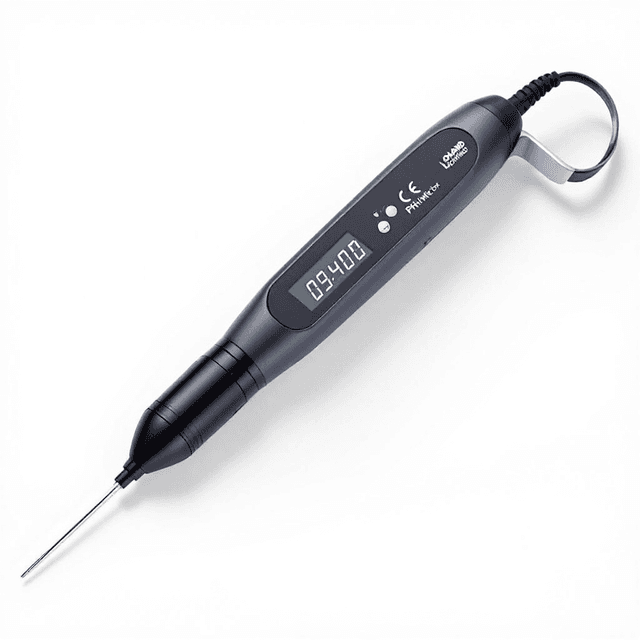
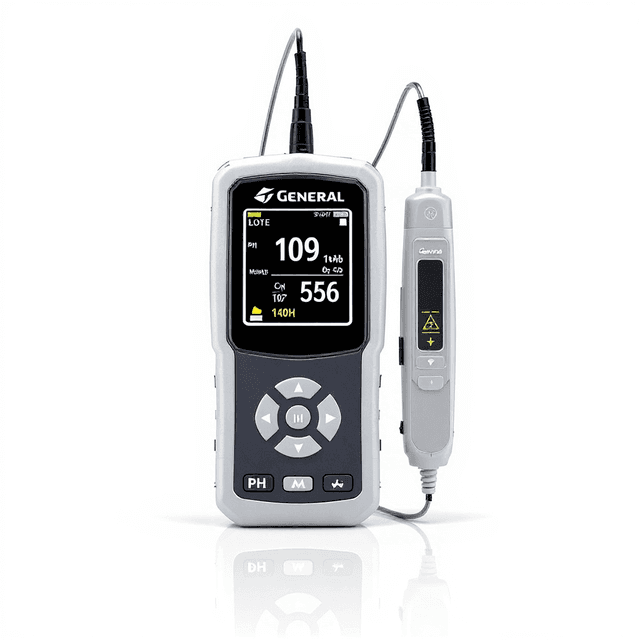
7-Parameter Water Quality Analyzer with Data Logging
Multiparameter benchtop instrument for simultaneous measurement of pH, conductivity, TDS, resistivity, salinity, dissolved oxygen, and temperature in water samples.

Louise Corscadden, PhD
Director of Science · ConductScience
Ask Louise about 7-Parameter Water Quality Analyzer with Data Logging fit, setup, configuration, or quote prep.
Already working with us? Sign in to connect this with My Scientist.
Key Specifications
Full details →- Model fit
- Configured during quote
- SKU family
- LH-0011
- Shipping box
- 6.4 x 20.0 x 17.0 cm
- Ordering
- Online checkout and quote request available
- Category
- pH Meters
- Build notes
- Confirm accessories, station layout, and support needs before purchase
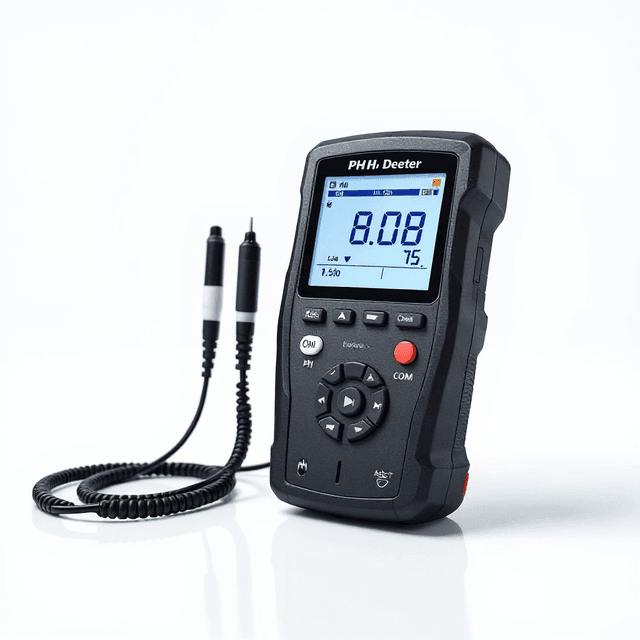
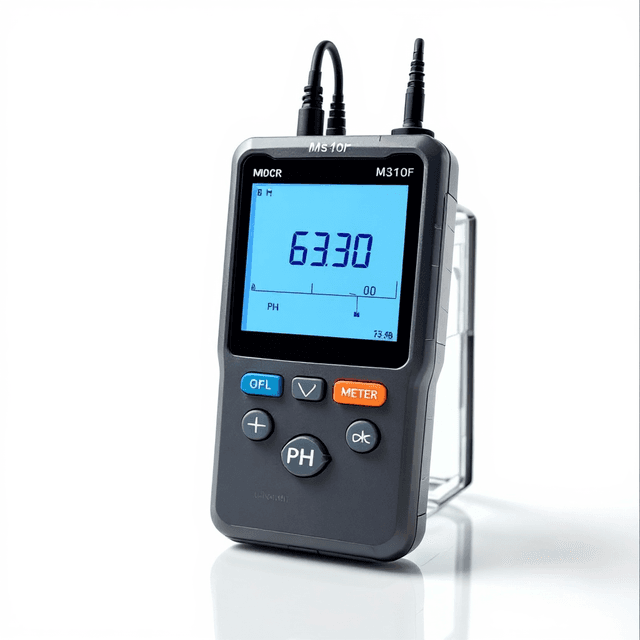
The Benchtop Multiparameter Water Quality Meter is a comprehensive analytical instrument designed for simultaneous measurement of multiple water quality parameters in laboratory and field applications. This benchtop unit provides researchers with the capability to measure pH, conductivity, total dissolved solids (TDS), resistivity, salinity, dissolved oxygen (DO), and temperature from a single sample, streamlining water quality assessment protocols.
The instrument incorporates automatic temperature compensation across a 0-50°C range and barometric pressure compensation from 0-200.0 kPa, ensuring measurement accuracy across varying environmental conditions. With data storage capacity for 450 measurement groups and DC12V power requirements, this meter supports both routine monitoring and extended research campaigns requiring reliable, multi-parameter water quality data.
How It Works
The multiparameter water quality meter employs multiple electrochemical sensors and detection methods to simultaneously measure various water quality parameters. pH measurement utilizes a glass electrode system that responds to hydrogen ion activity through potential difference measurement. Conductivity determination uses a conductometric cell that applies an AC voltage and measures current flow, with automatic temperature compensation correcting for temperature-dependent conductivity changes.
Dissolved oxygen measurement typically employs either polarographic or galvanic sensor technology, where oxygen diffuses through a membrane and undergoes electrochemical reduction at a cathode. The resulting current is proportional to dissolved oxygen concentration. Total dissolved solids (TDS) values are calculated from conductivity measurements using established conversion factors, while resistivity represents the inverse of conductivity. Salinity determination combines conductivity and temperature data using standard oceanographic algorithms.
The instrument's automatic temperature compensation system continuously adjusts readings based on real-time temperature measurements, while barometric pressure compensation accounts for atmospheric pressure variations that affect dissolved gas solubility. Data storage capability allows for 450 measurement groups, enabling batch analysis and temporal monitoring studies.
Features & Benefits
Shipping weight
- 3.0 lb
Shipping box
- L: 6.4 cm
- W: 20.0 cm
- H: 17.0 cm
| Feature | This Product | Typical Alternative | Advantage |
|---|---|---|---|
| Parameter Count | 7 parameters (pH, conductivity, TDS, resistivity, salinity, DO, temperature) | Entry-level models often measure 2-4 parameters simultaneously | Comprehensive water quality profiling from a single sample reduces analysis time and sample volume requirements. |
| Data Storage Capacity | 450 measurement groups | Basic instruments often have limited or no internal storage | Extensive data logging supports temporal studies and batch analysis without immediate data transfer requirements. |
| Temperature Compensation | Automatic compensation across 0-50°C range | Manual compensation or limited temperature ranges in lower-end models | Maintains measurement accuracy across environmental and laboratory temperature variations without user intervention. |
| Pressure Compensation | Automatic barometric compensation 0-200.0 kPa | Often limited or absent in standard instruments | Ensures accurate dissolved oxygen measurements at various altitudes and atmospheric conditions. |
| Salinity Range | Manual salinity compensation 0-45 ppt | Standard instruments may have limited salinity handling capability | Accommodates marine, estuarine, and hypersaline sample analysis with appropriate matrix corrections. |
| Temperature Resolution | 0.1°C resolution with ±0.2°C accuracy | Lower-cost instruments often have 1°C resolution | Precise temperature measurement supports accurate compensation calculations and thermal profiling studies. |
This multiparameter instrument combines comprehensive measurement capabilities with extensive data storage and automatic compensation features. The 7-parameter measurement capacity and 450-group data storage provide efficiency advantages for water quality monitoring applications requiring multiple analytes from single samples.
Practical Tips
Perform multi-point calibration using fresh standard solutions and allow electrodes to equilibrate for at least 2 minutes in each calibration buffer before accepting readings.
Why: Proper electrode equilibration ensures accurate calibration points and extends electrode life.
Store pH electrodes in appropriate storage solution and dissolved oxygen sensors in distilled water when not in use, replacing storage solutions monthly.
Why: Proper storage prevents electrode dehydration and membrane degradation that compromise measurement accuracy.
Rinse all probes with sample solution three times before measurement and ensure sample volume is sufficient to cover all sensor elements simultaneously.
Why: Thorough rinsing eliminates carryover effects and ensures representative measurements from homogeneous samples.
Record temperature, atmospheric pressure, and sample collection conditions alongside measurements to enable proper data interpretation and quality assessment.
Why: Environmental context helps identify measurement anomalies and supports data validation in research applications.
If readings drift or appear unstable, check electrode connections, verify adequate sample stirring, and confirm electrodes are properly conditioned.
Why: Unstable readings often result from poor electrical connections, sample stratification, or inadequate electrode preparation.
Use appropriate personal protective equipment when handling samples and standard solutions, and ensure adequate ventilation when working with chemical standards.
Why: Chemical safety protocols protect personnel and prevent contamination that could affect measurement accuracy.
Verify calibration stability by measuring a mid-range standard solution before and after sample analysis sessions.
Why: Calibration verification detects electrode drift and ensures measurement reliability throughout extended analysis periods.
Allow the instrument to reach thermal equilibrium for 30 minutes after power-up before beginning critical measurements.
Why: Thermal equilibration ensures internal temperature compensation circuits operate at stable conditions for optimal accuracy.
Setup Guide
What’s in the Box
- Benchtop multiparameter water quality meter (typical)
- pH electrode (typical)
- Conductivity probe (typical)
- Dissolved oxygen sensor (typical)
- Temperature probe (typical)
- DC12V power adapter (typical)
- Electrode holders and stands (typical)
- Calibration buffer solutions sample set (typical)
- User manual and software (typical)
- USB data cable (typical)
Warranty
ConductScience provides a standard one-year manufacturer warranty covering defects in materials and workmanship, with comprehensive technical support for calibration, troubleshooting, and method development assistance.
Compliance
What is the measurement accuracy for each water quality parameter?
Temperature accuracy is ±0.2°C with 0.1°C resolution. Specific accuracy specifications for pH, conductivity, TDS, resistivity, salinity, and dissolved oxygen parameters should be confirmed in the detailed product datasheet.
How frequently should the instrument be calibrated?
Calibration frequency depends on usage intensity and accuracy requirements. Generally, pH electrodes require daily calibration for critical applications, conductivity sensors need weekly calibration, and dissolved oxygen sensors should be calibrated before each use or daily in continuous monitoring.
Can the meter handle high-salinity or extreme pH samples?
The instrument includes salinity compensation from 0-45 ppt for marine and hypersaline applications. pH measurement range and extreme condition compatibility should be verified in the technical specifications for specific sample types.
What data output formats are available?
The instrument stores 450 measurement groups internally. Data export formats and connectivity options for transferring stored data to laboratory information management systems should be confirmed in the user manual.
How does automatic compensation affect measurement precision?
Automatic temperature compensation (0-50°C) and barometric pressure compensation (0-200.0 kPa) continuously adjust readings to maintain accuracy across environmental conditions. Manual salinity compensation allows fine-tuning for specific sample matrices.
What maintenance is required for optimal performance?
Regular electrode cleaning, proper storage in recommended solutions, periodic calibration verification, and replacement of consumable components (reference solutions, membranes) according to manufacturer schedules ensure continued measurement accuracy.
Is the instrument suitable for field deployment?
The benchtop design (3.0 kg, DC12V power) can accommodate mobile laboratory applications with appropriate power sources, though primary design is for laboratory bench use rather than handheld field measurements.
How does this compare to single-parameter instruments?
Multiparameter capability reduces sample handling, analysis time, and potential contamination compared to sequential single-parameter measurements, while providing comprehensive water quality profiles from minimal sample volumes.
Have a question about this product?
Have a question? Just ask.
Send it over and we'll email you a personalized answer — no call, no scheduling.
Prefer to talk it through?
Accessories
Enhance your setup with compatible accessories
Frequently Bought Together