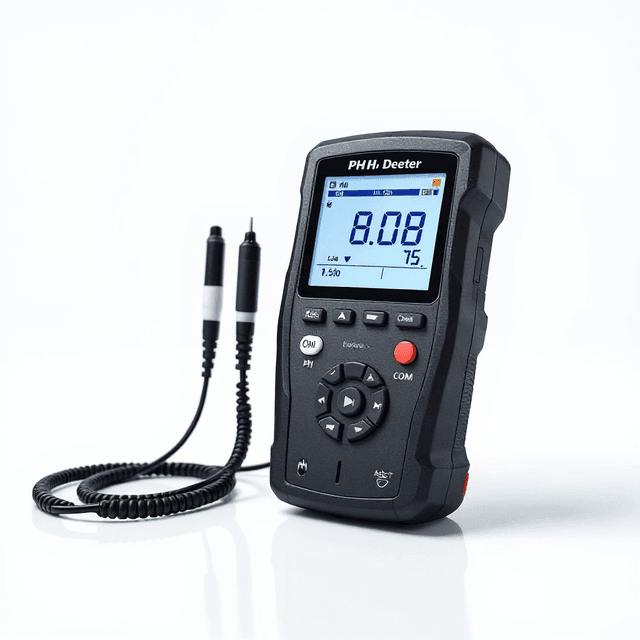
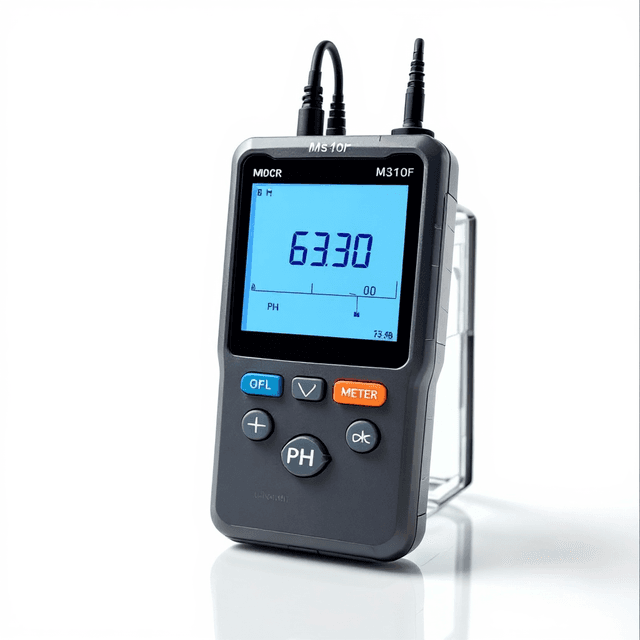
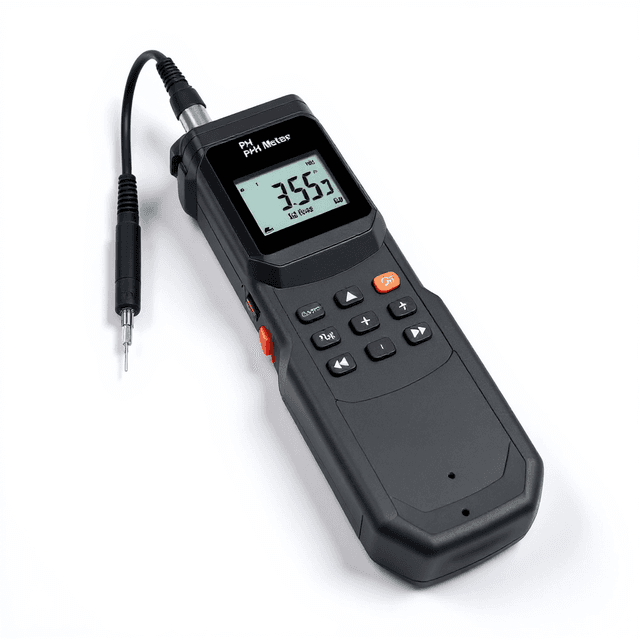
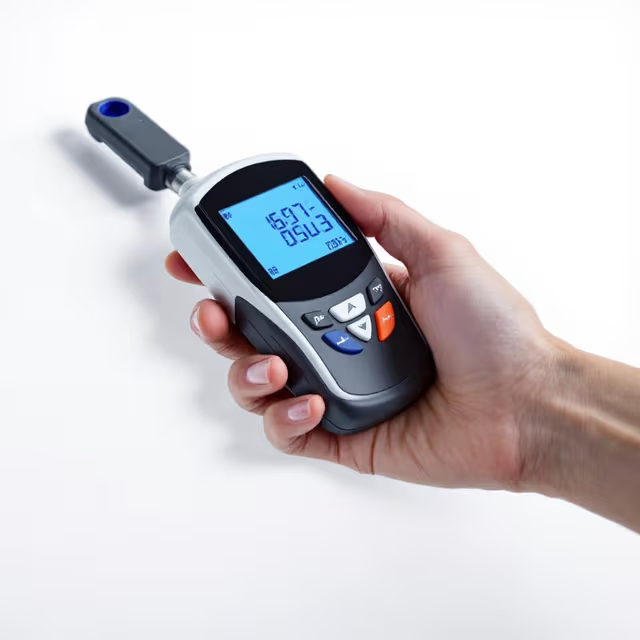
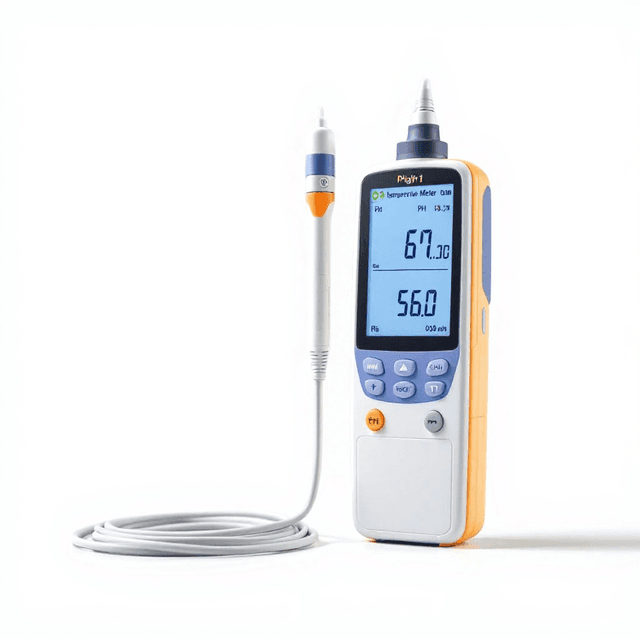
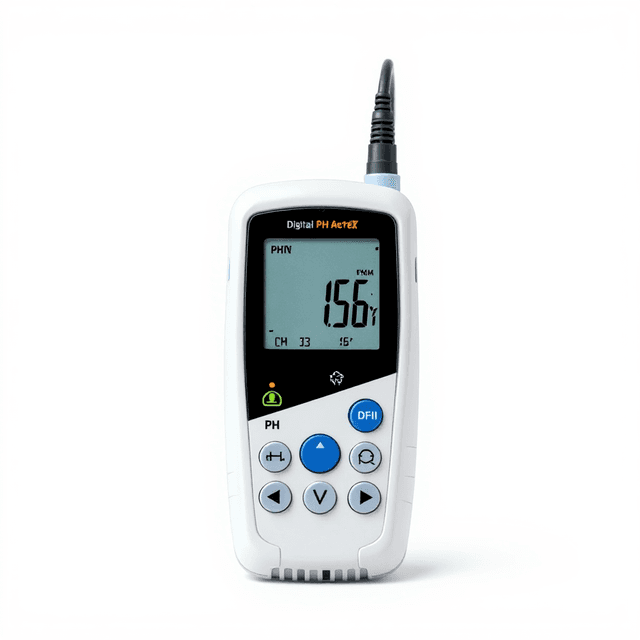
Benchtop Multiparameter Water Quality Meter M300F
Benchtop multiparameter water quality analyzer with integrated pH, ORP, conductivity, resistivity, and optional ISE measurements for comprehensive aqueous sample analysis.

Louise Corscadden, PhD
Director of Science · ConductScience
Ask Louise about Benchtop Multiparameter Water Quality Meter M300F fit, setup, configuration, or quote prep.
Already working with us? Sign in to connect this with My Scientist.
Key Specifications
Full details →- Model fit
- Configured during quote
- SKU family
- BIO-0359
- Shipping box
- 6.8 x 24.2 x 19.5 cm
- Ordering
- Online checkout and quote request available
- Category
- pH Meters
- Build notes
- Confirm accessories, station layout, and support needs before purchase
The Benchtop Multiparameter Water Quality Meter M300F is a comprehensive analytical instrument designed for simultaneous measurement of multiple water quality parameters in research and analytical laboratories. This benchtop system integrates pH, ORP, conductivity, resistivity, and ion-selective electrode (ISE) capabilities with customizable calibration protocols and multiple unit conversions to support diverse analytical requirements.
The instrument features automated standard recognition for conductivity measurements at three reference points (84µS/cm, 1413µS/cm, 12.88mS/cm) with slope limit functionality for quality control. Supporting multiple concentration units (mol/L, mmol/L, g/L, mg/L, µg/L, ppm, ppb) and temperature compensation at 20°C or 25°C reference points, the M300F accommodates various analytical protocols across environmental, pharmaceutical, and analytical chemistry applications.
How It Works
The M300F employs multiple electrochemical measurement principles to simultaneously assess water quality parameters. pH measurement utilizes a glass electrode system that develops a potential difference proportional to hydrogen ion activity, referenced against a stable reference electrode. The ORP (oxidation-reduction potential) measurement uses a platinum electrode to detect electron transfer potential in the solution, indicating the oxidizing or reducing capacity of the sample.
Conductivity measurement applies an AC voltage across platinum electrodes and measures the resulting current flow, which is proportional to the ionic strength of the solution. The instrument automatically compensates for temperature variations using the selected reference temperature (20°C or 25°C). Resistivity values are calculated as the inverse of conductivity measurements. Optional ion-selective electrodes (ISE) utilize ion-specific membrane potentials to determine individual ion concentrations through Nernst equation calculations.
The integrated calibration system recognizes standard conductivity solutions and applies slope correction algorithms to ensure measurement accuracy across the full measurement range. Multi-point calibration protocols for each parameter maintain measurement precision through automated quality control checks.
Features & Benefits
Automation Level
- semi-automated
pH
- Range
Calibration Points
- Air-saturated water or zero point
Standard Customization
- Yes
Standard Recognition
- 84μS/cm, 1413μS/cm, 12.88mS/cm
Slope Limit
- Yes
ORP
- Range
pX
- Range
ISE(Optional)
- Range
Unit
- mol/L, mmol/L, g/L, mg/L, μg/L, ppm, ppb
Conductivity
- Range
Reference Temperature
- 20, 25ºC
Resistivity
- Range
Brand
- ConductScience
Research Domain
- Analytical Chemistry
- Environmental Monitoring
- Food Science
- Industrial Hygiene
- Materials Science
- Pharmaceutical QC
Accuracy
- ±0.2
Shipping weight
- 0.9 lb
Shipping box
- L: 6.8 cm
- W: 24.2 cm
- H: 19.5 cm
| Feature | This Product | Typical Alternative | Advantage |
|---|---|---|---|
| Parameter Measurement Range | pH, ORP, conductivity, resistivity, and optional ISE measurements in single benchtop unit | Many models focus on 2-3 parameters or require separate instruments | Reduces sample volume requirements and provides comprehensive analysis from single measurement setup. |
| Calibration System | Automated standard recognition for three conductivity points (84µS/cm, 1413µS/cm, 12.88mS/cm) with slope validation | Manual calibration protocols often require operator interpretation of calibration quality | Reduces calibration errors and provides automated quality control through slope limit monitoring. |
| Temperature Compensation | Dual reference temperature options (20°C and 25°C) with automatic compensation | Single reference temperature or manual temperature correction | Accommodates different analytical standards and international protocols without manual calculations. |
| Unit Flexibility | Seven concentration units from mol/L to ppb (mol/L, mmol/L, g/L, mg/L, µg/L, ppm, ppb) | Limited unit options requiring manual conversions | Direct reporting in required units eliminates calculation errors and supports diverse analytical protocols. |
| Physical Design | Compact benchtop form factor (24.2 × 19.5 × 6.8 cm) weighing 0.9 kg | Larger instruments or handheld units with limited electrode options | Stable measurement platform with minimal bench space requirements while supporting multiple electrode types. |
The M300F combines multiparameter measurement capability with automated calibration recognition and flexible unit reporting in a compact benchtop design. The dual temperature compensation and slope validation features support analytical protocols requiring high measurement confidence and regulatory compliance documentation.
Practical Tips
Perform pH calibration with buffers bracketing your expected sample pH range rather than using only pH 7 buffer.
Why: Two-point calibration improves accuracy across the measurement range by accounting for electrode slope variations.
Clean conductivity cells weekly with mild detergent solution followed by distilled water rinse to prevent fouling.
Why: Maintaining clean platinum surfaces ensures accurate cell constant and prevents measurement drift over time.
Allow samples to equilibrate to room temperature before measurement to minimize temperature compensation errors.
Why: Large temperature differences between calibration and sample can introduce measurement uncertainties despite automatic compensation.
Replace pH electrode storage solution monthly and ensure the electrode bulb remains submerged during storage.
Why: Fresh storage solution maintains electrode hydration and preserves the reference junction integrity for stable measurements.
Monitor slope values during calibration and replace electrodes when slopes fall outside manufacturer specifications.
Why: The slope limit functionality alerts to electrode degradation before it significantly impacts measurement accuracy.
If conductivity readings are unstable, check for air bubbles in the conductivity cell and ensure proper electrode immersion depth.
Why: Air bubbles interrupt current flow between electrodes, causing erratic readings and measurement errors.
Use appropriate personal protective equipment when handling calibration solutions and unknown samples.
Why: Electrode cleaning solutions and sample matrices may contain hazardous chemicals requiring proper laboratory safety protocols.
Setup Guide
What’s in the Box
- M300F multiparameter water quality meter
- pH electrode with reference junction
- Conductivity cell with platinum electrodes
- Power adapter and cables
- Conductivity calibration standard set (84µS/cm, 1413µS/cm, 12.88mS/cm)
- pH buffer solutions for calibration (typical)
- Electrode storage solutions (typical)
- User manual and quick start guide (typical)
- Calibration certificate (typical)
Warranty
ConductScience provides a standard one-year manufacturer warranty covering defects in materials and workmanship, with technical support for calibration and operational guidance.
Compliance
What calibration frequency is recommended for optimal measurement accuracy?
Daily calibration is recommended for routine use, with pH electrode calibration using fresh buffer solutions and conductivity calibration verified against the three-point standard recognition system. Slope limits provide automated validation of calibration quality.
Can the meter measure samples with high ionic strength or extreme pH values?
Consult product datasheet for specific measurement ranges. The instrument includes slope limit functionality to indicate when measurements exceed validated calibration ranges for each parameter.
How does temperature compensation affect measurement accuracy?
The system provides automatic temperature compensation referenced to either 20°C or 25°C. Select the reference temperature matching your analytical protocol to ensure measurements are corrected for thermal effects on electrode response and solution conductivity.
What maintenance is required for the electrodes?
pH electrodes require daily conditioning in buffer solution and proper storage in electrode storage solution. Conductivity cells need regular cleaning with distilled water and periodic inspection for platinum electrode fouling or damage.
Can the instrument export data to laboratory information management systems?
Consult product datasheet for specific data connectivity and export capabilities. The multiple unit options (mol/L through ppb) support various data reporting format requirements.
How do I verify the ISE measurement capability if ordered?
Optional ISE functionality requires specific ion-selective electrodes for your target analyte. Calibration follows standard addition or direct measurement protocols depending on the ion type and expected concentration range.
What is the typical electrode lifetime with regular use?
pH electrode lifetime varies with sample matrix and usage frequency, typically 6-12 months with proper maintenance. Conductivity cells have longer lifespans but require cleaning protocols to maintain cell constant accuracy.
Have a question about this product?
Have a question? Just ask.
Send it over and we'll email you a personalized answer — no call, no scheduling.
Prefer to talk it through?
Accessories
Enhance your setup with compatible accessories
Frequently Bought Together