pH Level Meter
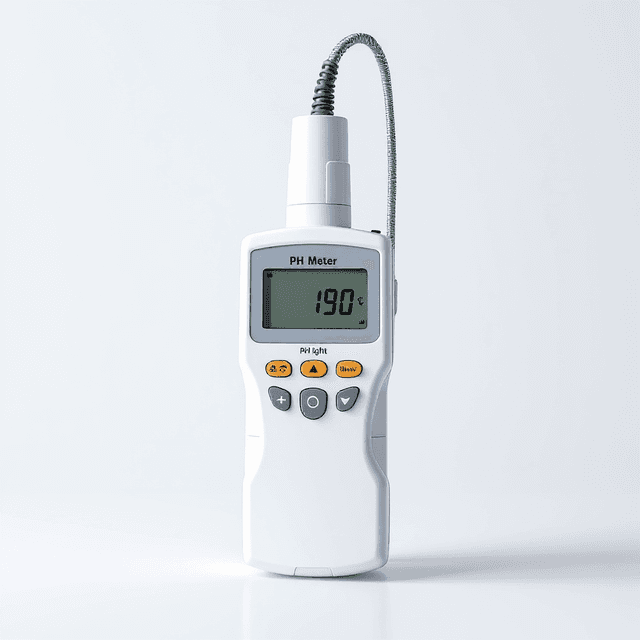
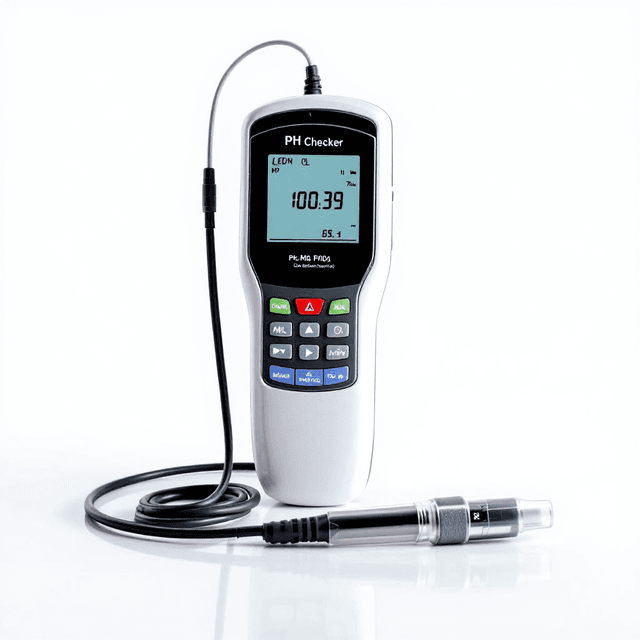
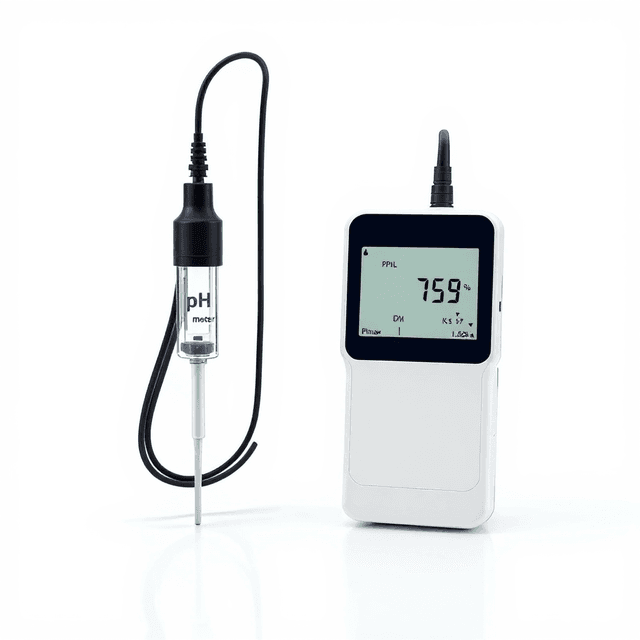
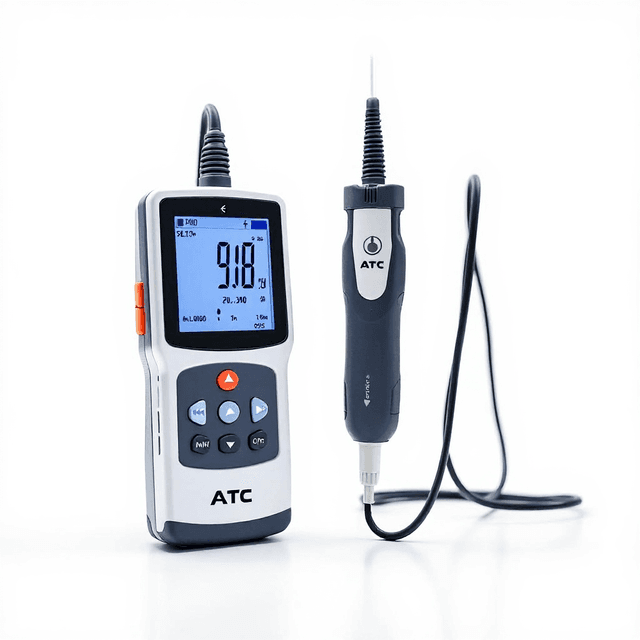
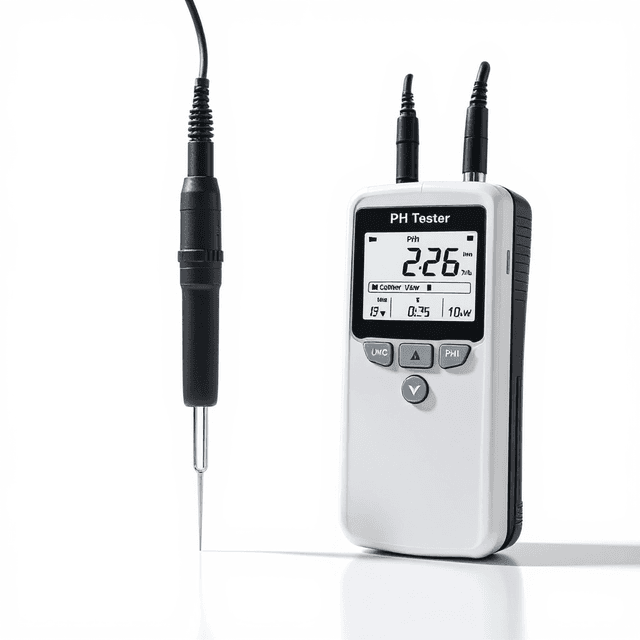
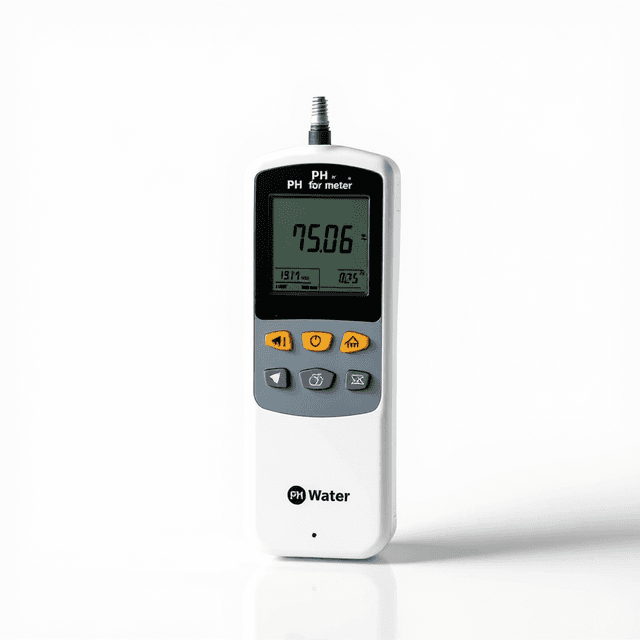
Benchtop pH meter with simultaneous pH, temperature, and ORP measurement capability, featuring automatic calibration and temperature compensation for laboratory analytical applications.

Louise Corscadden, PhD
Director of Science · ConductScience
Ask Louise about pH Level Meter fit, setup, configuration, or quote prep.
Already working with us? Sign in to connect this with My Scientist.
Key Specifications
Full details →- Model fit
- Configured during quote
- SKU family
- CS-LH-PH024
- Shipping box
- 12.2 x 9.84 x 7.36 cm
- Ordering
- Online checkout and quote request available
- Category
- pH Meters
- Build notes
- Confirm accessories, station layout, and support needs before purchase
The pH Level Meter (Model PHS-550) is a benchtop analytical instrument designed for simultaneous measurement of pH, temperature, and oxidation-reduction potential (ORP) in aqueous solutions. This laboratory-grade meter features automatic temperature compensation from 0-100°C and standard automatic calibration protocols for consistent measurement accuracy. The instrument employs a high-impedance input design (≥1×10¹² Ω) with rapid response characteristics and measurement stability suitable for routine analytical applications.
The system integrates a microprocessor-controlled measurement platform with a replaceable combination pH electrode (E201-C) housed in a protective plastic case. Operating across a full pH range of 0.00-14.00 with 0.01 pH resolution and ±0.01 pH accuracy, the meter supports standard laboratory workflows requiring reliable pH determination in research and quality control environments.
How It Works
The pH Level Meter operates using potentiometric measurement principles through a combination glass electrode system. The glass electrode generates a voltage proportional to the hydrogen ion activity in solution, following the Nernst equation relationship where a change of 1 pH unit corresponds to approximately 59.16 mV at 25°C. The high input impedance (≥1×10¹² Ω) minimizes measurement errors by preventing current draw that could alter the electrode potential.
Automatic temperature compensation adjusts readings based on the temperature-dependent response of the glass electrode, accounting for both the theoretical Nernst slope change and the practical electrode behavior across the 0-100°C operating range. The microprocessor controls calibration routines using standard buffer solutions, storing calibration parameters and applying real-time corrections to raw electrode signals.
Simultaneous ORP measurement utilizes a platinum electrode to detect the oxidation-reduction potential of solutions, providing additional analytical capability for samples where redox conditions affect experimental outcomes or sample stability.
Features & Benefits
Measuring range
- pH: 0.00~14.00
Input impedance
- â¥1Ã1012Ω
Temperature compensation
- 0-100°C automatic compensation
Calibration
- PH Meter Standard automatic calibration
Working temperature
- 0~40°C,RHâ¤85%(Without magnetic interference around the mete)
Automation Level
- semi-automated
Brand
- ConductScience
Accuracy
- pH: ±0.01pH
Power/Voltage
- DC9V
Packing list
- E201-C plastic case PH combination electrode
Dimensions
- 310*250*187mm
Research Domain
- Analytical Chemistry
- Cell Biology
- Environmental Monitoring
- Food Science
- Microbiology
- Pharmaceutical QC
Shipping weight
- 14.37 lb
Shipping box
- L: 12.2 cm
- W: 9.84 cm
- H: 7.36 cm
| Feature | This Product | Typical Alternative | Advantage |
|---|---|---|---|
| Measurement Range | 0.00-14.00 pH | Entry-level models often offer narrower ranges or lower resolution | Complete pH scale coverage eliminates range limitations for diverse sample types |
| Accuracy Specification | ±0.01 pH | Basic meters typically offer ±0.1 pH accuracy | Higher precision enables quantitative analytical work requiring strict accuracy requirements |
| Multi-parameter Capability | pH, Temperature, and ORP simultaneous measurement | Many basic meters measure pH only | Comprehensive solution analysis reduces measurement time and provides additional analytical information |
| Temperature Compensation Range | 0-100°C automatic compensation | Limited temperature ranges or manual compensation | Broader operating range accommodates varied sample conditions without manual corrections |
| Input Impedance | ≥1×10¹² Ω | Lower impedance designs may show measurement drift | High impedance minimizes electrode loading and maintains signal integrity for stable readings |
| Calibration Method | Standard automatic calibration | Manual calibration procedures vary by model | Automated calibration reduces operator variability and improves measurement consistency |
This pH meter combines high accuracy specifications with multi-parameter measurement capability and automatic calibration features. The high input impedance design and broad temperature compensation range provide measurement stability across diverse analytical applications.
Practical Tips
Perform calibration verification daily when high accuracy is required, using fresh buffer solutions at room temperature.
Why: Buffer solutions degrade over time and temperature variations affect calibration accuracy.
Store the combination electrode in pH 4 buffer or electrode storage solution, never in distilled water.
Why: Proper storage maintains electrode junction function and prevents glass membrane damage.
Allow samples to equilibrate to room temperature before measurement when possible to minimize temperature compensation errors.
Why: Large temperature differences between calibration and measurement conditions can introduce systematic errors.
If readings drift continuously, check electrode connections and clean the reference junction with appropriate cleaning solutions.
Why: Junction contamination or loose connections are common causes of unstable measurements.
Record calibration parameters and buffer lot numbers for measurement traceability in analytical protocols.
Why: Documentation enables troubleshooting and supports data quality requirements in regulated environments.
Rinse electrodes thoroughly between different sample types, especially when transitioning between strong acids and bases.
Why: Cross-contamination can affect measurement accuracy and potentially damage electrode materials.
Use gentle stirring or swirling motion during measurements to improve electrode response time and measurement precision.
Why: Solution mixing ensures representative sampling and reduces diffusion layer effects at the electrode interface.
Replace calibration buffers monthly or when accuracy checks indicate drift beyond acceptable limits.
Why: Buffer degradation affects calibration quality and measurement accuracy over time.
Setup Guide
What’s in the Box
- pH Level Meter (PHS-550) main unit
- E201-C combination pH electrode in plastic case
- DC 9V power adapter (typical)
- User manual and calibration guide (typical)
- Standard buffer solution packets (typical)
Warranty
ConductScience provides a standard 1-year manufacturer warranty covering defects in materials and workmanship, with technical support available for calibration procedures and troubleshooting assistance.
Compliance
References
Background reading relevant to this product:
What calibration buffers are required for optimal measurement accuracy?
Standard pH buffers at 4.01, 7.00, and 10.01 are recommended for three-point calibration. Fresh buffers should be used, and calibration frequency depends on measurement accuracy requirements and sample matrix complexity.
How does temperature compensation affect measurement accuracy?
The automatic temperature compensation adjusts for both theoretical Nernst equation temperature dependence and practical electrode behavior. This eliminates systematic errors that would otherwise occur when measuring samples at temperatures different from calibration conditions.
What is the expected electrode lifespan and replacement indicators?
Electrode lifespan varies with usage and sample types, typically 6-12 months in routine applications. Replace when calibration becomes unstable, response time increases significantly, or accuracy cannot be maintained within specification.
Can this meter handle samples with high ionic strength or organic solvents?
The high input impedance design handles most aqueous samples effectively. For high ionic strength solutions or samples containing organic solvents, consult product datasheet for compatibility limitations and consider specialized electrodes if needed.
What data output options are available for record keeping?
Consult product datasheet for specific data output capabilities. Many similar instruments offer manual recording of displayed values; digital output options may vary by model configuration.
How does this meter compare to portable pH meters for field applications?
This benchtop model offers higher accuracy and stability than typical portable units, with better temperature compensation and electrode options. However, it requires AC power and laboratory conditions, making it unsuitable for field measurements.
What maintenance procedures are required for optimal performance?
Regular calibration verification, proper electrode storage in appropriate solutions, cleaning of electrode surfaces, and periodic inspection of electrical connections. The electrode junction should be kept moist to maintain proper function.
Can ORP and pH be measured simultaneously in the same sample?
Yes, the instrument can measure pH, temperature, and ORP concurrently using appropriate electrodes. This provides comprehensive solution characterization in a single measurement cycle.
Have a question about this product?
Have a question? Just ask.
Send it over and we'll email you a personalized answer — no call, no scheduling.
Prefer to talk it through?
Accessories
Enhance your setup with compatible accessories