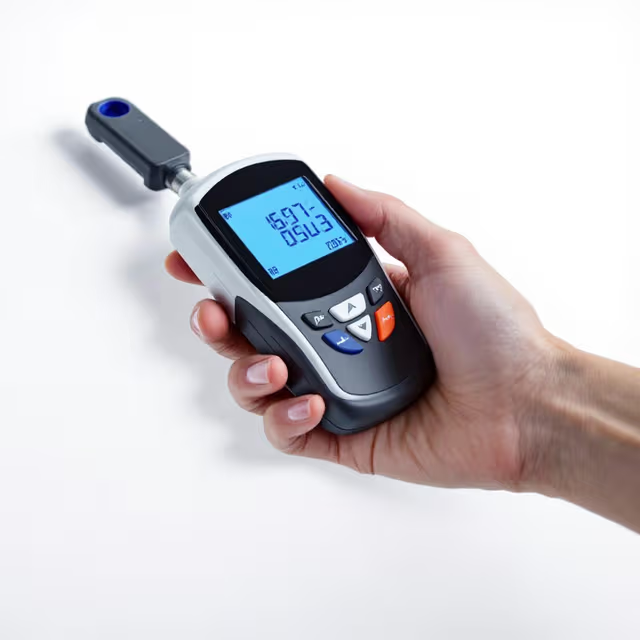
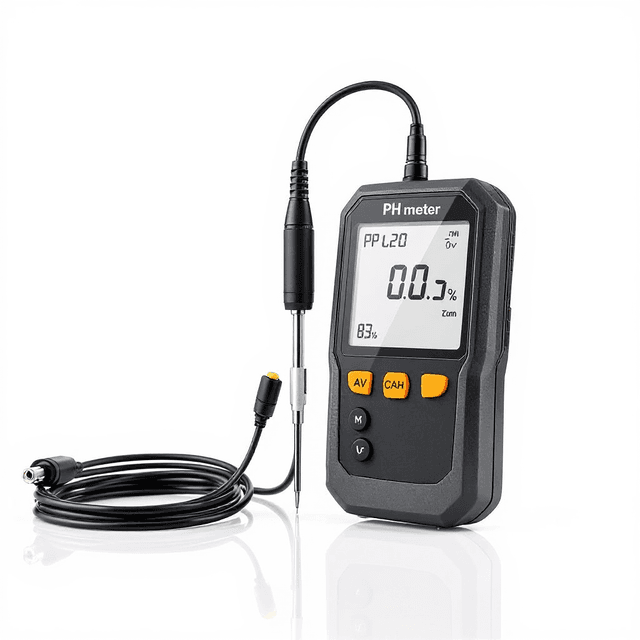
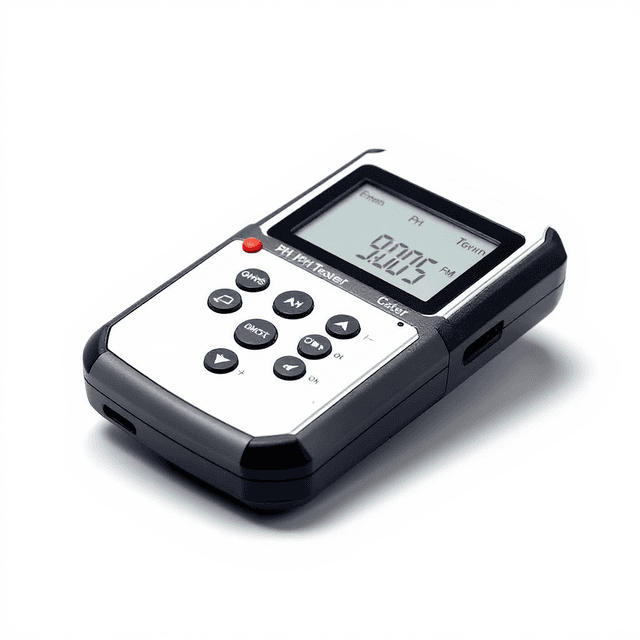
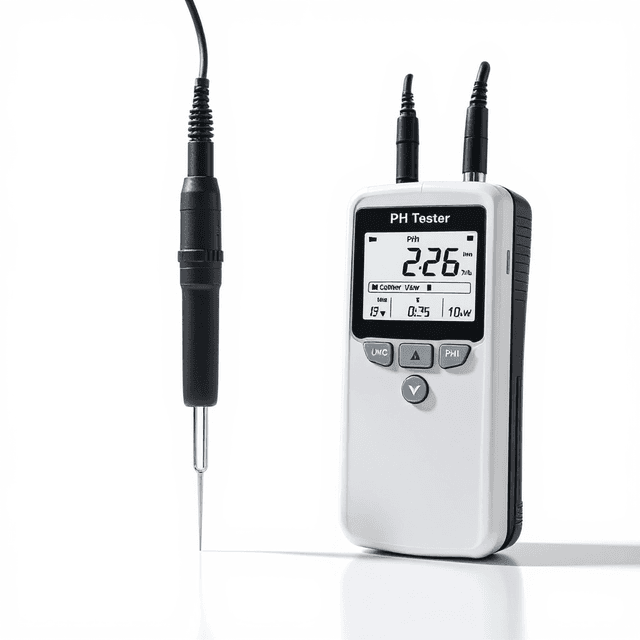
Laboratory Equipment pH Meter
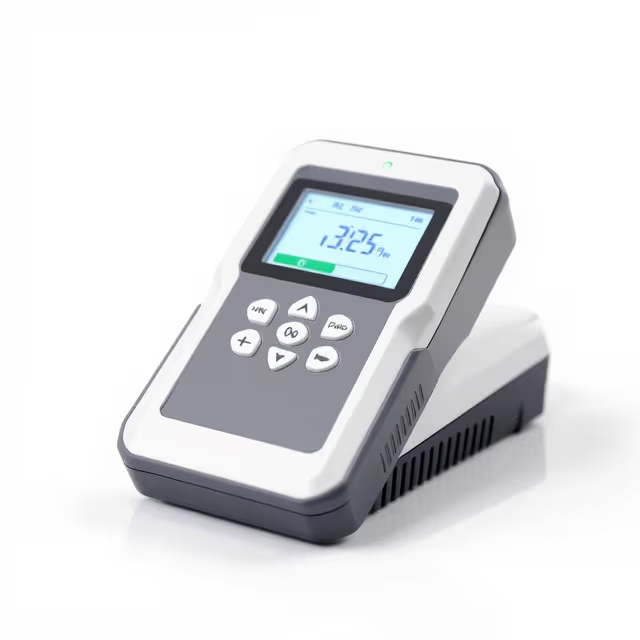
Microprocessor-controlled pH/ORP meter for laboratory measurement of solution acidity and oxidation-reduction potential with temperature compensation from 0-100°C.

Louise Corscadden, PhD
Director of Science · ConductScience
Ask Louise about Laboratory Equipment pH Meter fit, setup, configuration, or quote prep.
Already working with us? Sign in to connect this with My Scientist.
Key Specifications
Full details →- Model fit
- Configured during quote
- SKU family
- CS-LH-ORP-1999
- Shipping box
- 20.0 x 10.0 x 5.0 cm
- Ordering
- Online checkout and quote request available
- Category
- pH Meters
- Build notes
- Confirm accessories, station layout, and support needs before purchase
The Laboratory Equipment pH Meter (Model ORP-1999) is a microprocessor-controlled potentiometric instrument designed for precise measurement of solution acidity (pH) and oxidation-reduction potential (ORP). This laboratory-grade meter provides dual-parameter measurement capabilities with pH determination and ORP measurement across a range of -1999 to +1999 mV, with temperature compensation from 0-100°C.
The instrument utilizes potentiometric measurement principles with selective electrodes to provide quantitative analysis of hydrogen ion activity and redox conditions in aqueous solutions. The microprocessor control system enables stable, reproducible measurements suitable for analytical chemistry protocols requiring precise pH and ORP determination in research and quality control applications.
How It Works
The pH meter operates on potentiometric principles using a glass electrode system that responds to hydrogen ion activity in solution. The glass membrane develops an electrical potential proportional to the logarithm of hydrogen ion concentration, which the microprocessor converts to pH units according to the Nernst equation. Temperature compensation accounts for the theoretical slope variation with temperature.
ORP measurement utilizes a platinum or gold electrode paired with a reference electrode to measure the solution's ability to accept or donate electrons. The potential difference between the measurement and reference electrodes indicates the oxidation-reduction state of the solution, reported in millivolts relative to the reference electrode potential.
The microprocessor system processes the electrode signals, applies temperature corrections, and provides digital display of results. Calibration with standard buffer solutions establishes the electrode response characteristics for accurate pH determination.
Features & Benefits
Model
- ORP-1999
Product name
- Test item
PH meter PHS-550
- PH
Temp
- 0-100â
ORP
- -1999 to +1999mV
Automation Level
- semi-automated
Brand
- ConductScience
Research Domain
- Analytical Chemistry
- Environmental Monitoring
- Food Science
- Materials Science
- Microbiology
- Pharmaceutical QC
Shipping weight
- 0.3 lb
Shipping box
- L: 20.0 cm
- W: 10.0 cm
- H: 5.0 cm
| Feature | This Product | Typical Alternative | Advantage |
|---|---|---|---|
| Parameter Measurement | Dual pH and ORP measurement capability | Many entry-level models offer only pH measurement | Enables comprehensive solution characterization without requiring separate instruments for redox analysis. |
| ORP Measurement Range | -1999 to +1999 mV range | Standard models typically offer narrower ORP ranges | Covers the full spectrum of laboratory oxidation-reduction conditions from highly reducing to highly oxidizing samples. |
| Temperature Compensation | 0-100°C automatic temperature compensation | Basic models often have limited temperature ranges | Ensures accurate measurements across all common laboratory temperatures without manual corrections. |
| Control System | Microprocessor-controlled measurement processing | Entry-level meters may use analog processing | Provides stable signal processing and digital accuracy for consistent analytical results. |
The ORP-1999 provides dual-parameter measurement capability with microprocessor control and wide measurement ranges. The combination of pH and ORP measurement in a single instrument, along with comprehensive temperature compensation, offers efficiency advantages for laboratories requiring both acidity and redox characterization.
Practical Tips
Perform multi-point calibration using at least two buffer solutions that bracket your expected measurement range.
Why: This ensures accuracy across your specific pH range and accounts for electrode slope variations.
Store pH electrodes in appropriate storage solutions when not in use and replace electrode fill solutions regularly.
Why: Proper electrode hydration and clean reference solutions are essential for stable, accurate measurements.
Allow samples to reach thermal equilibrium with the measurement environment before taking readings.
Why: Temperature affects both the electrode response and the sample pH, making thermal equilibration critical for accuracy.
If readings are unstable, check electrode connections and ensure electrodes are properly conditioned and clean.
Why: Poor connections or contaminated electrodes are the most common causes of measurement instability.
Record temperature alongside pH and ORP measurements for complete documentation of measurement conditions.
Why: Temperature documentation enables proper data interpretation and method validation in analytical protocols.
Rinse electrodes thoroughly between measurements, especially when measuring solutions with different pH ranges.
Why: Cross-contamination between samples can cause measurement errors and electrode damage.
Setup Guide
What’s in the Box
- pH/ORP Meter Main Unit
- pH Electrode (typical)
- ORP Electrode (typical)
- Temperature Probe (typical)
- Power Adapter (typical)
- Electrode Storage Solutions (typical)
- Calibration Buffer Set (typical)
- User Manual (typical)
- Calibration Certificate (typical)
Warranty
ConductScience provides a standard one-year manufacturer warranty covering defects in materials and workmanship, with technical support available for instrument operation and calibration procedures.
Compliance
References
Background reading relevant to this product:
What is the measurement accuracy and resolution for both pH and ORP parameters?
Consult the product datasheet for specific accuracy and resolution specifications, as these critical performance parameters vary by model and are not provided in the basic product information.
How frequently does this meter require calibration for analytical work?
Calibration frequency depends on measurement requirements and electrode drift characteristics. For analytical applications, daily calibration with certified buffers is recommended, with more frequent calibration for critical measurements.
What types of electrodes are compatible with this meter?
The meter is designed for standard pH and ORP electrodes with BNC or similar connectors. Consult the technical specifications for specific electrode compatibility and input impedance requirements.
Can this instrument store and export measurement data?
Data logging and export capabilities are not specified in the product information. Consult the product datasheet for details on data storage, memory capacity, and connectivity options.
What is the typical electrode lifetime with this system?
Electrode lifetime depends on usage conditions, sample types, and maintenance practices. Glass pH electrodes typically last 6-12 months with proper care, while ORP electrodes may last longer depending on the measurement environment.
How does this compare to benchtop meters for precision applications?
This laboratory equipment meter provides microprocessor control and dual-parameter capability suitable for analytical work. Performance comparison with specific benchtop models requires detailed specification review.
Have a question about this product?
Have a question? Just ask.
Send it over and we'll email you a personalized answer — no call, no scheduling.
Prefer to talk it through?
Accessories
Enhance your setup with compatible accessories
Frequently Bought Together