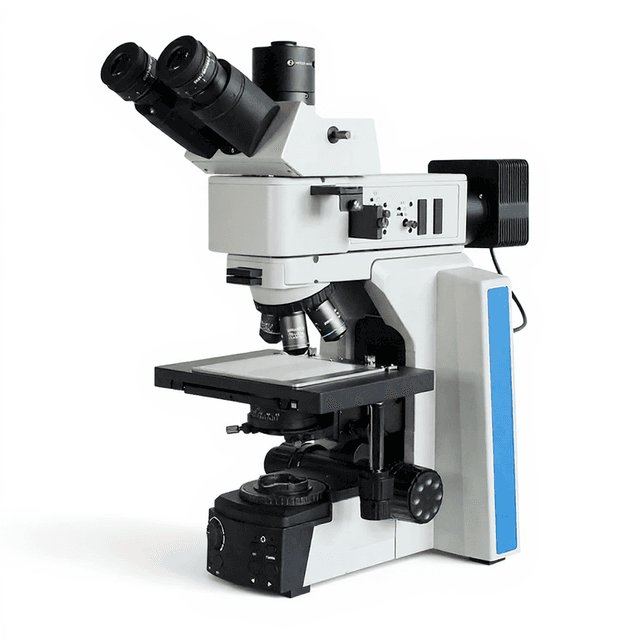
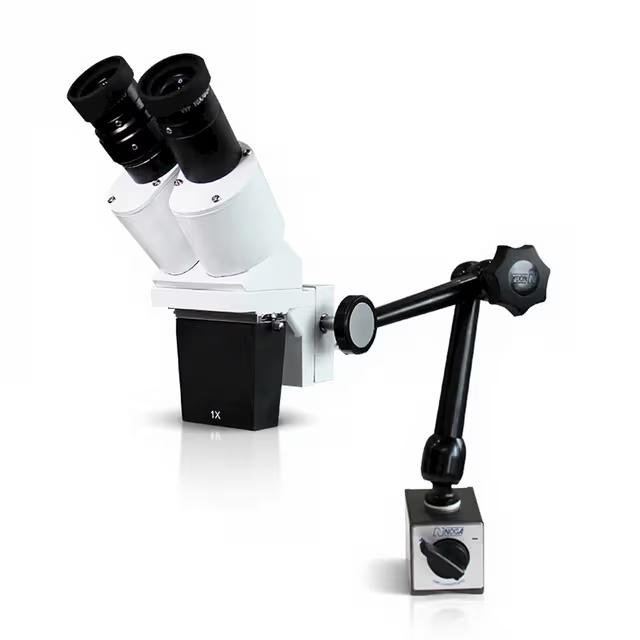
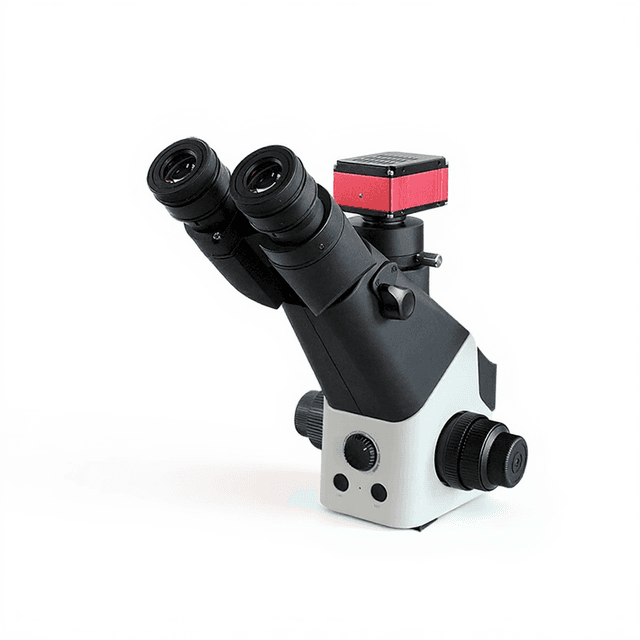
Biological Microscope — Binocular, LED Illumination
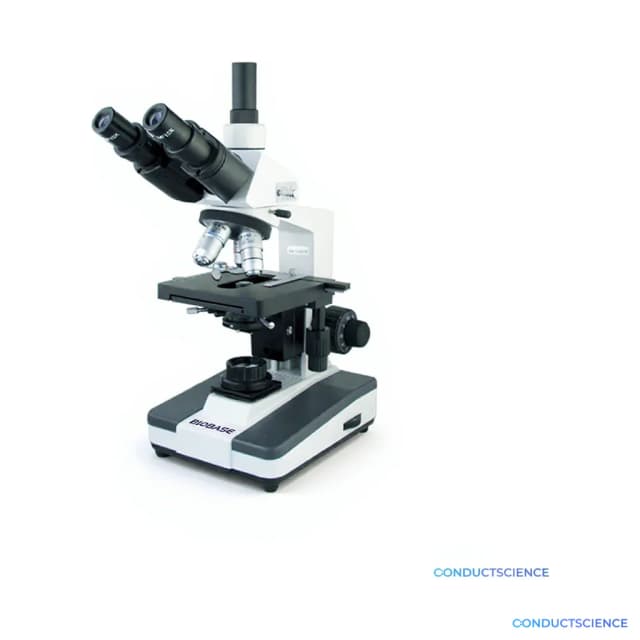
Compound biological microscope with binocular head, dual eyepieces, mechanical stage, and LED illumination for routine cellular and tissue examination in research laboratories.

Louise Corscadden, PhD
Director of Science · ConductScience
Ask Louise about Biological Microscope — Binocular, LED Illumination fit, setup, configuration, or quote prep.
Already working with us? Sign in to connect this with My Scientist.
Key Specifications
Full details →- Model fit
- Configured during quote
- SKU family
- BIO-0511
- Shipping box
- 23.5 x 43.5 x 33.0 cm
- Ordering
- Online checkout and quote request available
- Category
- Microscopy
- Build notes
- Confirm accessories, station layout, and support needs before purchase
The ConductScience Biological Microscope (BIO-0511) is a compound light microscope designed for routine biological observations and cellular analysis in research and educational environments. The system features a compensation-free binocular head inclined at 30° with 360° rotation capability, providing ergonomic viewing for extended observation sessions. The microscope incorporates dual eyepiece options (10X/18mm and 16X/11mm) paired with coaxial coarse and fine focusing mechanisms offering 15mm range with 0.002mm fine division precision.
The instrument is equipped with an Abbe NA1.25 condenser system including iris diaphragm and filter assembly for optimal illumination control. A mechanical stage measuring 130×130mm with 70×30mm movement range and 0.1mm vernier precision enables systematic specimen examination. LED illumination with adjustable brightness and included yellow and green filters supports various contrast techniques for enhanced specimen visualization across diverse biological applications.
How It Works
The biological microscope operates on the principle of compound magnification using multiple lens systems to achieve high-resolution imaging of biological specimens. Light from the LED source passes through the specimen and is collected by the objective lens, which forms a magnified real image. This primary image is further magnified by the eyepiece lenses, creating the final virtual image observed by the user.
The Abbe condenser system concentrates and focuses illumination onto the specimen plane, with the iris diaphragm controlling numerical aperture to optimize contrast and resolution. The NA1.25 condenser provides sufficient numerical aperture for high-resolution observations when paired with appropriate objectives. The coaxial focusing mechanism enables precise specimen positioning through both coarse and fine adjustments, with the fine focus providing 0.002mm incremental control for critical focusing applications.
The compensation-free binocular design eliminates optical path differences between the two eyepieces, ensuring uniform image quality for both eyes and reducing eyestrain during extended observations. The 30° inclination angle provides ergonomic viewing while the 360° rotation capability allows optimal positioning for multiple users.
Features & Benefits
Automation Level
- manual
View Head
- Compensation free binocular head, Inclined at 30°, 360° rotatable, Interpupillary 55~75mm
Eyepiece
- P10X/18mm, P16X/11mm
Focusing
- Coaxial Coarse&Fine Adjustable System, Range 15mm, Fine Division 0.002mm
Stage
- Mechanical Stage 130*130mm, Moving Range 70*30mm, Vernier 0.1mm
Condenser
- Abbe NA1.25 condenser with Iris Diaphragm&Filter
Illumination
- LED lamp, brightness adjustable
Filter
- Yellow, green
Package Size
- 435*330*235mm
Brand
- ConductScience
Research Domain
- Cell Biology
- Developmental Biology
- Histopathology
- Microbiology
- Neuroscience
Power/Voltage
- AC85~240V, 50/60Hz
Weight
- 5.5kg
Shipping weight
- 5.5 lb
Shipping box
- L: 23.5 cm
- W: 43.5 cm
- H: 33.0 cm
| Feature | This Product | Typical Alternative | Advantage |
|---|---|---|---|
| Eyepiece Options | Dual eyepiece set (P10X/18mm and P16X/11mm) | Single magnification eyepieces or limited selection | Allows researchers to optimize field of view and magnification for different specimen types without purchasing additional eyepieces |
| Stage Design | Mechanical stage 130×130mm with 70×30mm movement range and 0.1mm vernier | Fixed stages or mechanical stages without precision scaling | Enables systematic specimen scanning and coordinate documentation for reproducible field selection in research applications |
| Condenser System | Abbe NA1.25 condenser with iris diaphragm and filter | Simple condensers with lower numerical aperture | Provides enhanced resolution capability and contrast control for detailed cellular examination and imaging applications |
| Head Design | Compensation-free binocular head, 30° inclined, 360° rotatable | Fixed angle heads or heads with optical path differences | Reduces eyestrain during extended observations while accommodating multiple users without image quality degradation |
| Focusing Precision | Coaxial coarse and fine focus with 0.002mm fine division | Separate focus controls or lower precision systems | Enables single-handed operation with critical focusing precision required for high-magnification research applications |
| Illumination Control | LED illumination with adjustable brightness plus yellow and green filters | Fixed intensity illumination or limited filter options | Provides consistent illumination with contrast enhancement options for various staining techniques and specimen types |
This microscope configuration provides comprehensive features for biological research including dual eyepiece magnifications, precision mechanical stage with vernier scaling, and high numerical aperture condenser optics. The compensation-free binocular design with coaxial focusing offers enhanced usability for extended research sessions compared to basic microscopy systems.
Practical Tips
Verify stage vernier accuracy using a stage micrometer before beginning quantitative measurements or coordinate-dependent studies.
Why: Ensures measurement precision for morphometric analysis and reproducible field positioning in research protocols.
Clean condenser and eyepiece optics weekly with appropriate lens cleaning materials to maintain image quality.
Why: Optical contamination directly impacts contrast and resolution, potentially affecting data quality in imaging applications.
Adjust iris diaphragm to 70-80% of objective numerical aperture for optimal balance between resolution and contrast.
Why: Proper condenser aperture matching maximizes both resolution capability and specimen contrast for detailed observations.
Use coarse focus only when objective is well above specimen, then complete focusing with fine adjustment to prevent slide damage.
Why: Protects valuable specimens and objectives from mechanical damage while ensuring precise focusing for critical observations.
Allow LED illumination to stabilize for 5-10 minutes before critical imaging or photometric measurements.
Why: LED output can vary slightly during warm-up period, potentially affecting quantitative measurements or color balance.
If one eyepiece appears dimmer, check for dust on condenser iris diaphragm or uneven illumination field alignment.
Why: Binocular brightness differences often indicate illumination system misalignment rather than eyepiece problems.
Use appropriate eye protection when working with specimens containing potentially hazardous materials or bright illumination.
Why: Protects vision during extended observation sessions and when examining specimens that may pose biological or chemical risks.
Store microscope with lowest magnification objective in position and stage lowered to prevent accidental objective contact.
Why: Reduces risk of objective damage from inadvertent focusing during transport or storage of the instrument.
Setup Guide
What’s in the Box
- Biological microscope with binocular head
- P10X/18mm eyepiece pair
- P16X/11mm eyepiece pair
- Yellow filter
- Green filter
- AC power cord
- User manual and documentation
- Dust cover (typical)
- Cleaning materials (typical)
Warranty
ConductScience provides a standard one-year manufacturer warranty covering defects in materials and workmanship, with technical support available for operational questions and troubleshooting assistance.
Compliance
What objective lenses are compatible with this microscope system?
The Abbe NA1.25 condenser system supports standard infinity-corrected objectives. Consult product datasheet for specific objective specifications and mounting requirements.
How do I achieve optimal contrast for unstained biological specimens?
Adjust the iris diaphragm to approximately 2/3 closed position and use appropriate filters (yellow for enhanced contrast, green for reduced glare) while optimizing LED brightness for the specimen type.
What is the maximum specimen thickness this stage can accommodate?
The 15mm focusing range allows examination of standard microscope slides plus additional specimen thickness. Consult product datasheet for exact clearance specifications.
Can this microscope be used for fluorescence applications?
This model provides brightfield illumination only. Fluorescence applications require specialized filter cubes and mercury or LED fluorescence illumination systems not included with this configuration.
How do I calibrate the vernier scale on the mechanical stage?
The 0.1mm vernier scale is factory calibrated. For applications requiring higher precision, use a stage micrometer to verify scale accuracy and establish correction factors if needed.
What maintenance is required for the LED illumination system?
LED illumination requires minimal maintenance due to long operating life. Keep illumination optics clean and verify uniform illumination field periodically for optimal performance.
Can I connect a camera system to this microscope?
Camera attachment requires appropriate mounting hardware for the specific camera system. Consult camera manufacturer specifications for compatibility with binocular head configurations.
How does this compare to other entry-level biological microscopes?
This model provides both 10X and 16X eyepieces, mechanical stage with vernier scaling, and Abbe condenser system, which may offer enhanced functionality compared to basic models with fixed stages or simple condensers.
Have a question about this product?
Have a question? Just ask.
Send it over and we'll email you a personalized answer — no call, no scheduling.
Prefer to talk it through?
Accessories
Enhance your setup with compatible accessories
Replacement Parts & Consumables
Frequently Bought Together
Upgrade Options
Related Products