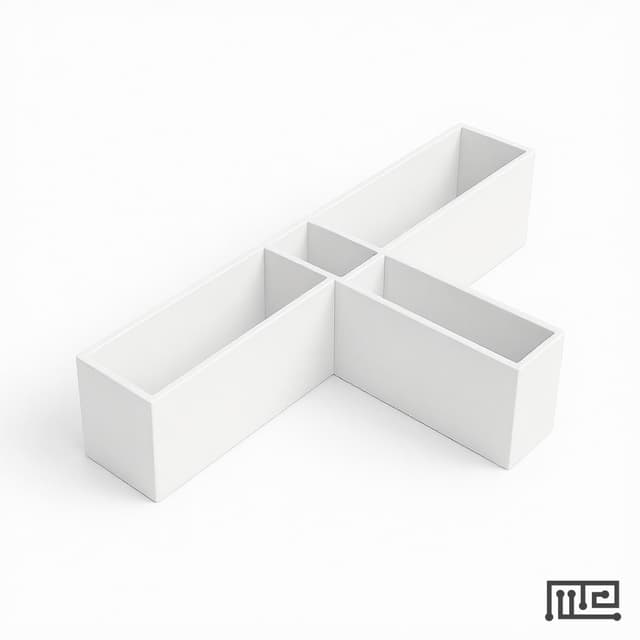
Blue Petrels Y-Maze
Three-arm behavioral maze for assessing spatial learning, working memory, and spontaneous alternation behavior in laboratory rodents.

Louise Corscadden, PhD
Director of Science · ConductScience
Ask Louise about Blue Petrels Y-Maze fit, setup, configuration, or quote prep.
Already working with us? Sign in to connect this with My Scientist.
Key Specifications
Full details →- Model fit
- Mouse, Rat
- SKU family
- CS-958199
- Shipping box
- 65.0 x 36.0 x 27.0 cm
- Ordering
- Online checkout and quote request available
- Category
- Behavioral Mazes
- Build notes
- Confirm accessories, station layout, and support needs before purchase
The Blue Petrels Y-Maze is a specialized behavioral testing apparatus designed for spatial learning and memory assessment in laboratory rodents. This three-arm maze configuration enables researchers to evaluate spontaneous alternation behavior, spatial working memory, and exploratory preferences through controlled experimental protocols. The Y-shaped design provides a simple yet effective framework for measuring cognitive function without extensive training requirements.
The apparatus supports a range of behavioral paradigms including spontaneous alternation tasks, forced alternation protocols, and spatial memory assessments. Its standardized configuration ensures reproducible results across studies while accommodating various experimental designs common in neuroscience and behavioral pharmacology research.
How It Works
The Y-maze operates on the principle of spontaneous alternation, a natural behavioral tendency in rodents to explore novel environments and avoid recently visited locations. This innate behavior reflects spatial working memory function, as animals must remember which arms they have previously explored to demonstrate efficient alternation patterns. The three-arm configuration provides equal-length pathways that eliminate spatial bias while allowing for systematic evaluation of exploration patterns.
During testing, rodents are placed in the central hub and allowed to freely explore the three arms over a defined time period. Researchers record arm entries and calculate alternation percentages, where perfect alternation (100%) indicates optimal spatial working memory function. The maze design enables assessment of both spontaneous exploration behavior and more structured memory tasks through various protocol modifications.
Features & Benefits
Behavioral Construct
- spatial working memory
- spontaneous alternation
- exploratory behavior
- spatial cognition
Automation Level
- manual
Research Domain
- Aging Research
- Anxiety and Depression
- Behavioral Pharmacology
- Learning and Memory
- Neurodegeneration
- Neuroscience
Species
- Mouse
- Rat
Compatible Tracking Software
- ConductVision
Shipping weight
- 6.06 lb
Shipping box
- L: 65.0 cm
- W: 36.0 cm
- H: 27.0 cm
| Feature | This Product | Typical Alternative | Advantage |
|---|---|---|---|
| Arm Configuration | Three-arm Y-shaped design | Eight-arm radial mazes are common but more complex | Simpler design reduces testing complexity while maintaining spatial assessment capabilities |
| Testing Protocol | Spontaneous alternation without training | Some mazes require extensive training periods | Enables rapid assessment without lengthy habituation or training phases |
| Data Collection | Compatible with video tracking systems | Manual scoring methods vary in accuracy | Supports automated analysis for improved objectivity and throughput |
| Stress Level | Dry maze environment | Water mazes introduce swimming stress | Evaluates spatial cognition without confounding stress responses from forced swimming |
The Blue Petrels Y-Maze provides straightforward spatial memory assessment through spontaneous alternation behavior without requiring training protocols. Its three-arm design balances simplicity with effective cognitive evaluation capabilities.
Practical Tips
Allow animals to acclimate to the testing room for 30-60 minutes before maze exposure to minimize stress-related effects on behavior.
Why: Environmental stress can suppress natural exploration behavior and reduce alternation rates.
Record both arm entries and time spent in each arm to capture comprehensive behavioral patterns beyond simple alternation counts.
Why: Additional parameters provide context for alternation behavior and help identify potential confounding factors.
Inspect maze joints and surfaces regularly for wear that could create texture differences between arms.
Why: Uneven surfaces can introduce tactile cues that bias exploration patterns and compromise spatial assessment.
Establish consistent lighting levels and eliminate asymmetric visual cues that could influence arm preference.
Why: Environmental asymmetries can override spatial working memory and produce biased exploration patterns.
If animals show persistent arm preference, verify maze positioning and check for subtle environmental biases like air currents or sounds.
Why: Systematic arm preferences often indicate environmental confounds rather than true spatial memory deficits.
Ensure maze walls are sufficiently high to prevent jumping while allowing easy subject retrieval if needed.
Why: Appropriate containment maintains testing integrity while ensuring researcher and animal safety.
Setup Guide
What’s in the Box
- Y-maze main structure (typical)
- Assembly hardware (typical)
- User manual with standard protocols (typical)
- Cleaning and maintenance guide (typical)
Warranty
ConductScience provides a standard one-year manufacturer warranty covering defects in materials and workmanship. Technical support is available for setup assistance and protocol optimization.
Compliance
References
Background reading relevant to this product:
What is the optimal trial duration for spontaneous alternation testing?
Standard protocols typically use 5-8 minute sessions, though duration should be optimized based on species, strain, and specific research objectives. Longer sessions may introduce confounding factors from habituation or fatigue.
How do you calculate alternation percentage from Y-maze data?
Alternation percentage equals the number of triads containing three different arm choices divided by the total possible triads (total arm entries minus 2), multiplied by 100. Perfect alternation approaches 100%.
What constitutes a valid arm entry for data analysis?
An arm entry typically requires all four paws or the entire body to cross into the arm. Consistent entry criteria should be established and maintained throughout the study to ensure reliable data collection.
How should the maze be cleaned between subjects?
Clean all surfaces with 70% ethanol or appropriate disinfectant between subjects to eliminate odor cues. Allow complete drying before introducing the next animal to prevent olfactory bias.
Can the Y-maze be used for forced alternation protocols?
Yes, the maze can accommodate forced alternation paradigms by temporarily blocking arms during training phases, though this requires additional blocking materials not included with the basic apparatus.
What factors can influence spontaneous alternation behavior?
Age, strain, stress level, prior handling, environmental factors, and time of day can all affect alternation rates. Control these variables carefully and consider them during data interpretation.
Is video tracking necessary for Y-maze experiments?
While manual observation is possible, video tracking provides more accurate and objective data collection, reduces observer bias, and enables detailed analysis of movement patterns and timing.
How does Y-maze testing compare to Morris water maze for spatial memory assessment?
Y-maze testing evaluates spatial working memory through spontaneous behavior without training requirements, while Morris water maze assesses spatial reference memory through learned navigation to a hidden platform location.
Have a question about this product?
Have a question? Just ask.
Send it over and we'll email you a personalized answer — no call, no scheduling.
Prefer to talk it through?
Accessories
Enhance your setup with compatible accessories