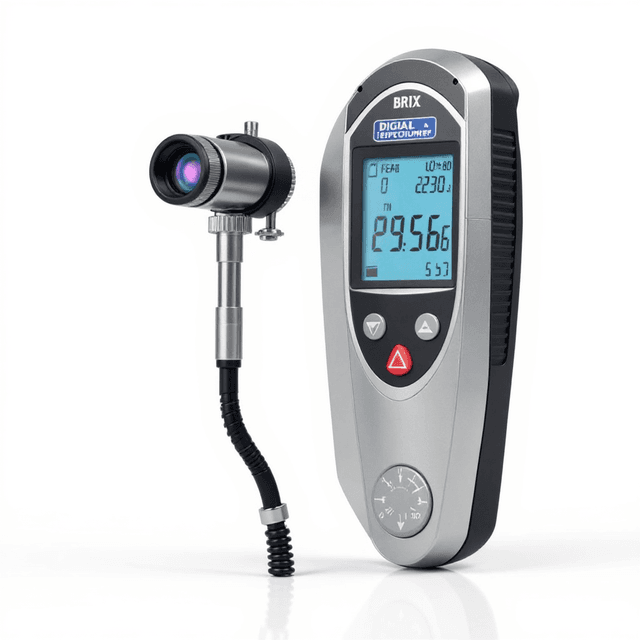
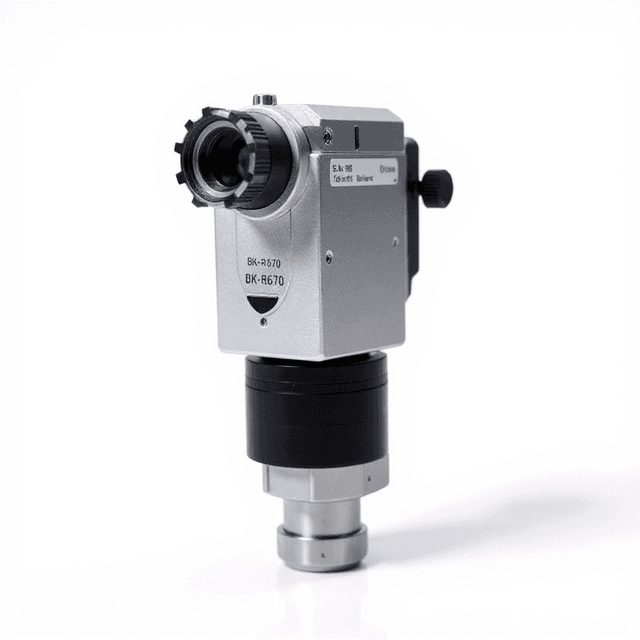
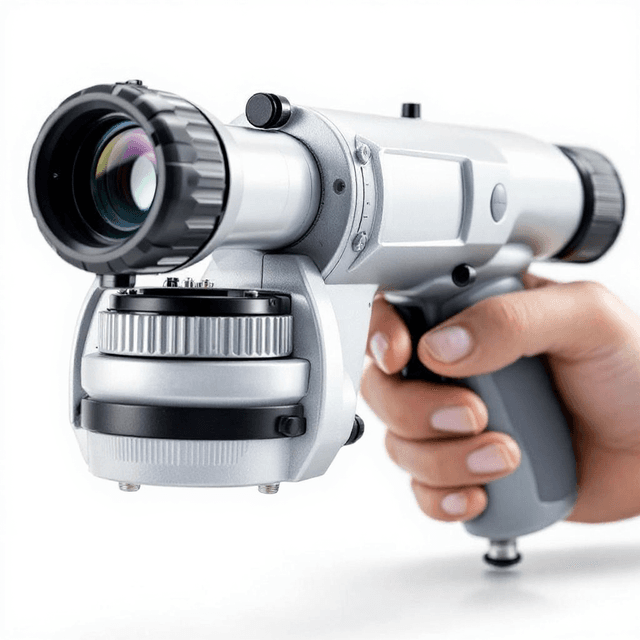
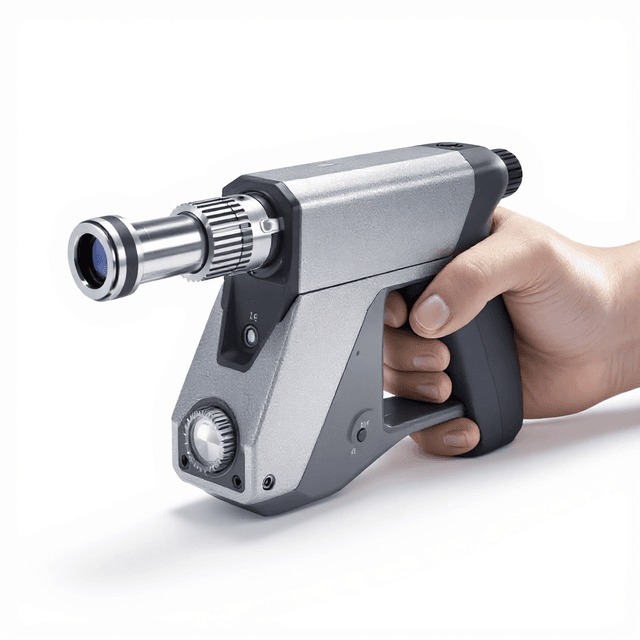
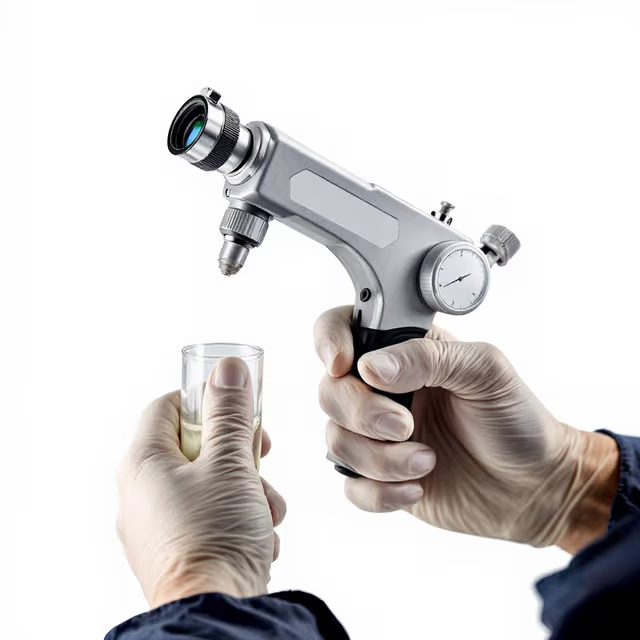
Brix Meter
Precision optical refractometer for quantitative Brix measurement with multiple range configurations (0-20% to 45-82%) and automatic temperature compensation for sugar analysis applications.
| Model | LH-T10 |
| Scope of use | Model.No. |
| Brix | LH-T10 |
| LH-T20 | 0-20% |
| LH-T32 | 0-32% |
| LH-T50 | 0-50% |

The ConductScience Brix Meter (Model LH-T10) is a precision optical refractometer designed for quantitative sugar content analysis in research and quality control applications. This handheld instrument measures the refractive index of aqueous solutions to determine Brix values, providing direct readouts of dissolved sugar concentrations across multiple measurement ranges from 0-20% to 45-82% depending on model configuration.
The system employs critical angle refractometry principles, utilizing LED illumination and precision optics to measure refractive index changes at the sample-prism interface. Built-in temperature compensation ensures accurate readings across varying environmental conditions, while the daylight plate viewing system provides clear scale visibility for precise measurements. The instrument supports applications spanning food science research, beverage quality control, agricultural monitoring, and industrial process optimization where sugar concentration determination is critical for experimental protocols or product specifications.
How It Works
The Brix meter operates on the principle of critical angle refractometry, measuring the refractive index of liquid samples to determine sugar concentration. When light passes from the sample into a glass prism at varying angles, total internal reflection occurs at a critical angle that depends on the refractive index difference between the sample and prism material. This critical angle shifts proportionally with dissolved sugar concentration, as sucrose molecules increase the solution's optical density.
The instrument employs LED illumination directed through a daylight plate onto the sample-prism interface. As sugar concentration increases, more light undergoes total internal reflection, creating a sharp boundary between light and dark regions visible through the optical system. The boundary position corresponds directly to specific Brix values via calibrated scales, with the relationship governed by established ICUMSA (International Commission for Uniform Methods of Sugar Analysis) standards.
Automatic temperature compensation accounts for thermal effects on refractive index measurements, as both sample density and prism optical properties vary with temperature. The built-in compensation system applies correction algorithms to ensure accurate readings across the typical laboratory temperature range, eliminating the need for manual temperature corrections during routine measurements.
Features & Benefits
Model
- LH-T10
Scope of use
- Model.No.
Brix
- LH-T10
LH-T20
- 0-20%
LH-T32
- 0-32%
LH-T50
- 0-50%
LH-T62
- 28-62%
LH-T80
- 0-80%
LH-T82
- 45-82%
LH-T90
- 0-90%
LH-T20S
- 0-20%
LH-T32S
- 0-32%
Automation Level
- manual
Brand
- ConductScience
Research Domain
- Agricultural Research
- Analytical Chemistry
- Environmental Monitoring
- Food Science
- Industrial Hygiene
- Materials Science
- Pharmaceutical QC
Weight
- 0.26 kg
Dimensions
- L: 20.0 mm
- W: 10.0 mm
- H: 5.0 mm
Comparison Guide
| Feature | This Product | Typical Alternative | Advantage |
|---|---|---|---|
| Brix Measurement Range | Multiple configurations from 0-20% (LH-T10) up to 45-82% (LH-T82) and 0-90% (LH-T90) | Entry-level models often limited to single ranges like 0-30% or require separate instruments for high concentrations | Single instrument series covers the complete range from dilute research samples to concentrated industrial solutions. |
| Temperature Compensation | Automatic temperature compensation system with built-in thermal sensing | Manual temperature corrections or limited compensation ranges in budget models | Eliminates calculation errors and improves measurement consistency across varying laboratory conditions. |
| Calibration Requirements | Zero-point calibration using distilled water only | Multiple reference standards often required for full calibration verification | Simplifies routine calibration procedures and reduces dependence on external reference materials. |
| Optical System | LED illumination with daylight plate for consistent lighting | Incandescent bulbs or ambient light systems in older models | Provides stable illumination conditions and longer service life compared to traditional bulb-based systems. |
| Sample Volume | 2-3 drop requirement (approximately 50-100 μL) | Varies by model, some requiring larger sample chambers | Minimizes sample consumption for analysis of valuable or limited-volume research specimens. |
| Model Configurations | Ten different range configurations (LH-T10 through LH-T32S) including specialized S-series models | Limited range options requiring compromise on precision vs. measurement span | Allows selection of optimal range configuration matching specific application requirements for maximum accuracy. |
The ConductScience Brix Meter series provides comprehensive range coverage from research-grade dilute measurements through industrial concentration analysis. The automatic temperature compensation and LED optical system ensure consistent performance, while the extensive model configurations allow precision optimization for specific applications.
Practical Tips
Verify zero-point calibration with distilled water at the beginning of each measurement session and after every 10-15 samples during extended use.
Why: Thermal drift and sample residue can introduce systematic errors that compound over multiple measurements.
Clean the prism surface immediately after each use with distilled water followed by lint-free tissue, avoiding harsh solvents or abrasive materials.
Why: Sample residue and surface scratches permanently affect optical properties and measurement accuracy.
Allow samples and instrument to equilibrate to the same temperature for at least 10 minutes before measurement to optimize temperature compensation accuracy.
Why: Large temperature differences between sample and instrument can exceed the compensation system's correction range.
If the light-dark boundary appears fuzzy or indistinct, check for air bubbles under the daylight plate and ensure complete sample coverage of the prism surface.
Why: Incomplete sample contact or air bubbles create optical discontinuities that prevent accurate boundary determination.
Record three independent measurements for each sample and report the average to minimize random measurement variability.
Why: Manual readings are subject to operator variability, and replicate measurements improve statistical reliability of results.
Handle the instrument by the body rather than the eyepiece or optical components to prevent damage and maintain calibration stability.
Why: Physical stress on optical elements can shift alignments and affect the accuracy of the measurement system.
Use samples at room temperature whenever possible and avoid measurements immediately after removing samples from refrigerated storage.
Why: Cold samples can cause condensation on the prism surface and create thermal gradients that interfere with boundary visualization.
Store the instrument in its protective case with silica gel desiccant to prevent humidity damage to optical components.
Why: Moisture infiltration can cause fogging of internal optics and affect the long-term stability of the optical system.
Setup Guide
What’s in the Box
- Brix refractometer (main unit) (typical)
- Protective carrying case (typical)
- Calibration screwdriver (typical)
- Cleaning cloth (lint-free) (typical)
- User manual and operation guide (typical)
- Calibration certificate (typical)
Compliance
References
Background reading relevant to this product:
Warranty & ConductCare
ConductScience provides a standard one-year manufacturer warranty covering defects in materials and workmanship. Technical support includes calibration guidance and troubleshooting assistance for optimal measurement performance.
What is the measurement accuracy and resolution across different Brix ranges?
Measurement accuracy and resolution vary by model configuration. The LH-T10 through LH-T90 series spans ranges from 0-20% to 45-82% Brix. Consult the product datasheet for specific accuracy tolerances and minimum resolution increments for each range configuration.
How does temperature compensation work and what temperature range is covered?
The instrument incorporates automatic temperature compensation using built-in thermal sensing and correction algorithms. This eliminates manual temperature adjustments for routine measurements. Consult product specifications for the exact temperature compensation range and coefficient values.
Can the instrument measure samples with suspended particles or high viscosity?
Critical angle refractometry measures refractive index at the sample-prism interface, making it relatively tolerant of sample opacity and particles compared to transmission-based methods. However, samples should be filtered if particles interfere with proper contact at the prism surface.
What calibration standards are required beyond distilled water?
The instrument uses distilled water for zero-point calibration. For applications requiring certified accuracy, additional sucrose reference standards at known Brix concentrations can be used for multi-point calibration verification according to laboratory quality protocols.
How frequently should the instrument be recalibrated during use?
Zero-point calibration with distilled water should be verified at the beginning of each measurement session and periodically during extended use. Full calibration verification with reference standards depends on accuracy requirements and laboratory procedures, typically monthly to quarterly.
Is the instrument suitable for non-aqueous or mixed solvent systems?
The Brix scale is calibrated specifically for aqueous sucrose solutions. For non-aqueous solvents or complex matrices, the instrument provides refractive index measurements that require separate conversion factors or calibration curves for concentration determination.
What sample volume is required and can micro-samples be analyzed?
The instrument requires 2-3 drops (approximately 50-100 μL) to cover the prism surface adequately. Smaller volumes may not provide complete prism coverage, leading to measurement errors or inconsistent readings.
How does this compare to digital refractometers or automated systems?
This handheld optical instrument provides manual readings through direct visual scale observation, offering portability and independence from power sources. Digital systems provide electronic readouts and data logging capabilities but require batteries and are typically more expensive for equivalent measurement ranges.
Have a question about this product?
Upgrade Options