Bumblebee Y-Maze
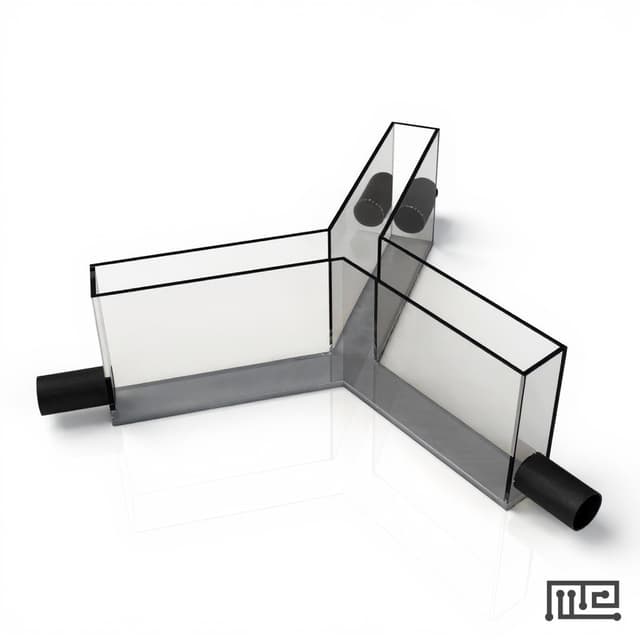
UV-transparent acrylic Y-maze apparatus for studying spatial learning, memory, and decision-making in honeybees and bumblebees with visual stimulus presentation capabilities.
| start_area_dimensions | 16.5 x 26.5 cm |
| choice_arm_dimensions | 40 x 20 cm each |
| back_wall_dimensions | 20 x 20 cm each |
| entrance_hole_diameter | 5 cm |
| micropipette_diameter | 6 mm |
| number_of_choice_arms | 2 |

The Bumblebee Y-Maze is a specialized behavioral apparatus designed for studying cognitive processes in honeybees and bumblebees. This UV-transparent acrylic maze enables researchers to investigate spatial learning, memory retention, and decision-making behaviors in pollinating insects under controlled laboratory conditions.
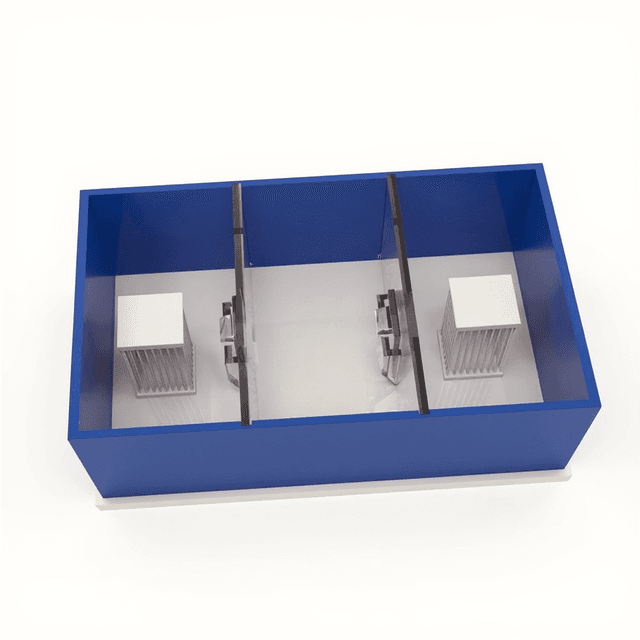
The apparatus features a Y-shaped design with two choice arms (40 x 20 cm each) extending from a central start area (16.5 x 26.5 cm). Each choice arm terminates in a back wall (20 x 20 cm) equipped for visual stimulus presentation, with micropipette reward delivery systems (6 mm diameter) positioned at the center of each back wall. A sliding door system allows precise control over subject access to choice arms during experimental protocols.
How It Works
The Y-maze protocol exploits the natural foraging behavior of bees to assess cognitive function through spatial choice paradigms. Subjects are introduced into the start area and must navigate through a 5 cm diameter entrance hole to access the choice arms. Visual stimuli presented on the back walls of each arm serve as discriminative cues, with correct choices rewarded through micropipette delivery of sugar solution.
The UV-transparent acrylic construction preserves the visual spectrum critical for bee navigation, allowing subjects to perceive ultraviolet patterns and polarized light cues that are essential for natural orientation behaviors. The sliding door mechanism enables researchers to control trial timing and prevent premature arm entry during stimulus preparation.
Cognitive assessment relies on measuring choice accuracy, response latency, and learning curves across multiple trials. The apparatus design minimizes confounding factors by providing equal arm dimensions and standardized reward delivery systems, ensuring that performance differences reflect genuine cognitive variations rather than apparatus bias.
Features & Benefits
start_area_dimensions
- 16.5 x 26.5 cm
choice_arm_dimensions
- 40 x 20 cm each
back_wall_dimensions
- 20 x 20 cm each
entrance_hole_diameter
- 5 cm
micropipette_diameter
- 6 mm
number_of_choice_arms
- 2
maze_design
- Y shape
sliding_door
- yes
visual_stimulus_placement
- back wall of each arm
food_reward_delivery
- micropipette at center of back wall
Behavioral Construct
- spatial learning
- visual discrimination
- decision making
- memory retention
- choice behavior
- foraging behavior
Automation Level
- manual
Material
- Acrylic
- UV-transparent Plexiglas
Species
- Bumblebee
- Honeybee
Research Domain
- Behavioral Pharmacology
- Developmental Biology
- Environmental Monitoring
- Learning and Memory
- Neuroscience
- Toxicology
Weight
- 21.0 kg
Dimensions
- L: 43.2 mm
- W: 38.0 mm
- H: 27.9 mm
Comparison Guide
| Feature | This Product | Typical Alternative | Advantage |
|---|---|---|---|
| Material Construction | UV-transparent acrylic preserving full visual spectrum | Standard acrylic often blocks UV wavelengths critical for bee vision | Enables studies using natural UV patterns that bees rely on for navigation and flower recognition |
| Choice Arm Dimensions | 40 x 20 cm standardized arms with equal path lengths | Varies by model with potential dimensional inconsistencies | Eliminates spatial bias that could confound cognitive assessment results |
| Reward Delivery System | Integrated micropipettes with 6 mm diameter openings | Many systems require external reward dispensers | Provides consistent reinforcement delivery directly at decision points without apparatus modification |
| Access Control | Sliding door mechanism for precise trial timing | Fixed entry points or manual blocking systems | Enables controlled trial initiation and prevents premature choice arm entry during setup |
| Species Compatibility | 5 cm entrance holes accommodating both honeybees and bumblebees | Often sized for specific species only | Allows comparative studies across different bee species using identical apparatus configuration |
The apparatus provides UV-transparent construction critical for bee vision research, standardized dimensions minimizing spatial bias, and integrated reward delivery systems for consistent reinforcement protocols. The sliding door mechanism offers precise experimental control not available in fixed-entry designs.
Practical Tips
Verify micropipette delivery volumes daily using precision pipettes and adjust flow rates to maintain consistent 2-5 μL reward volumes.
Why: Consistent reward delivery is critical for maintaining motivation and preventing learning artifacts.
Clean UV-transparent surfaces weekly with appropriate acrylic cleaners to prevent optical distortion from accumulated residues.
Why: Surface contamination can alter UV transmission properties essential for bee visual processing.
Allow 10-15 minute adaptation periods before testing to permit subjects to acclimate to maze environment and reduce stress responses.
Why: Stress can significantly impair learning performance and choice accuracy in cognitive assessments.
If subjects avoid entering choice arms, verify that entrance hole edges are smooth and lighting provides adequate stimulus visibility.
Why: Physical obstacles or poor visibility can create artificial barriers to normal exploratory behavior.
Record ambient temperature and humidity during sessions as these factors can influence bee activity and choice latency.
Why: Environmental variables significantly affect insect behavioral performance and should be controlled or documented.
Handle subjects gently using appropriate collection containers and provide adequate ventilation during testing sessions.
Why: Minimizing handling stress preserves natural behavior patterns and ensures subject welfare.
Counterbalance stimulus positions across trials and subjects to control for potential apparatus asymmetries or environmental gradients.
Why: Systematic counterbalancing prevents confounding variables from biasing choice behavior patterns.
Establish clear criteria for trial validity including minimum exploration time and definitive choice responses before data inclusion.
Why: Consistent inclusion criteria ensure data quality and enable meaningful statistical comparisons across conditions.
Setup Guide
What’s in the Box
- Y-maze main structure with choice arms
- Sliding door mechanism
- Back wall stimulus holders (2)
- Micropipette reward delivery system
- Assembly hardware
- Setup and protocol documentation (typical)
Warranty
ConductScience provides a standard 1-year manufacturer warranty covering material defects and construction issues, with technical support for experimental protocol development.
Compliance
References
Background reading relevant to this product:
What visual stimuli can be effectively presented on the back walls?
The 20 x 20 cm back walls accommodate various visual patterns including colored shapes, gratings, and UV-reflective designs. The UV-transparent acrylic preserves critical wavelengths for natural bee vision including ultraviolet patterns.
How do I control for potential side bias in choice behavior?
Randomize stimulus-reward pairings across left and right arms between trials, counterbalance arm assignments across subjects, and monitor individual choice patterns for systematic biases requiring protocol adjustment.
What sugar concentrations are optimal for reward delivery?
Typical protocols use 30-50% sucrose solutions delivered in 2-5 μL volumes through the micropipette system. Consult recent literature for species-specific preferences and experimental requirements.
Can this apparatus accommodate both individual and group testing?
The maze is designed for individual testing with single bee access through the 5 cm entrance holes. Group studies require multiple apparatus units or sequential individual trials.
What cleaning protocols prevent cross-contamination between subjects?
Clean all surfaces with ethanol between subjects, allow complete drying, and replace reward solutions to eliminate pheromonal traces that could influence subsequent subject choices.
How many trials are typically required for learning assessment?
Protocol requirements vary, but most studies employ 20-50 trials per subject across multiple sessions to assess acquisition curves and memory retention intervals.
What environmental conditions optimize bee performance?
Maintain 22-25°C temperature with moderate humidity and provide full spectrum lighting that includes UV wavelengths critical for normal bee visual processing.
Have a question about this product?
Accessories
Enhance your setup with compatible accessories
Frequently Bought Together