Butterfly Y Maze
Three-arm behavioral maze for assessing spatial learning, memory, and decision-making in laboratory rodents through controlled choice-point testing.

Louise Corscadden, PhD
Director of Science · ConductScience
Ask Louise about Butterfly Y Maze fit, setup, configuration, or quote prep.
Already working with us? Sign in to connect this with My Scientist.
Key Specifications
Full details →- Model fit
- Mouse, Rat
- SKU family
- CS-958198
- Shipping box
- 65.0 x 36.0 x 27.0 cm
- Ordering
- Online checkout and quote request available
- Category
- Behavioral Mazes
- Build notes
- Confirm accessories, station layout, and support needs before purchase
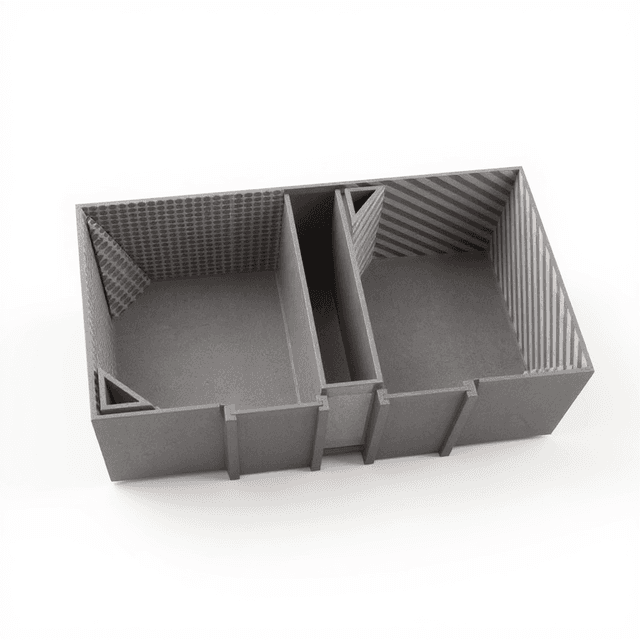
The Butterfly Y Maze is a behavioral testing apparatus designed for assessing spatial learning, memory, and decision-making processes in laboratory rodents. This three-arm maze configuration creates a choice point where subjects must select between two goal arms, enabling researchers to evaluate cognitive function, spatial navigation abilities, and behavioral preferences under controlled experimental conditions.
The apparatus supports multiple experimental paradigms including spontaneous alternation testing, spatial working memory assessment, and choice-based learning protocols. Researchers can implement various reinforcement schedules, stimulus presentations, and environmental modifications to investigate cognitive processes across different behavioral domains. The Y-shaped design provides clear spatial relationships between arms while minimizing confounding factors associated with more complex maze configurations.
How It Works
The Butterfly Y Maze operates on the principle of spatial choice behavior, where subjects navigate from a start arm to one of two goal arms at a three-way intersection. The apparatus leverages rodents' natural exploratory tendencies and spatial memory capabilities to assess cognitive function through behavioral choices. The three-arm configuration creates distinct spatial relationships that animals can use for navigation based on environmental cues, internal spatial maps, or learned associations.
Experimental protocols typically involve placing the subject in the start arm and recording which goal arm is selected, along with response latencies and movement patterns. Spontaneous alternation protocols exploit the natural tendency of rodents to explore novel areas, while reinforced learning paradigms use food rewards or other motivators to establish spatial preferences. The maze design enables researchers to manipulate environmental variables, implement different reward schedules, and control sensory cues to isolate specific cognitive processes.
Data collection focuses on choice accuracy, response times, path efficiency, and behavioral patterns across trials. The apparatus allows for systematic evaluation of working memory through delayed alternation tasks, reference memory through consistent reinforcement locations, and cognitive flexibility through reversal learning protocols.
Features & Benefits
Add-ons and modifications
| Add-on | Price |
|---|---|
| Butterfly Y Maze | $1,990 |
Add any of these to your quote request.
Behavioral Construct
- Spatial Working Memory
- Decision Making
- Exploratory Behavior
- Cognitive Flexibility
- Spatial Learning
Automation Level
- manual
Research Domain
- Aging Research
- Anxiety and Depression
- Behavioral Pharmacology
- Learning and Memory
- Neurodegeneration
- Neuroscience
Species
- Mouse
- Rat
Compatible Tracking Software
- ConductVision
Shipping weight
- 6.06 lb
Shipping box
- L: 65.0 cm
- W: 36.0 cm
- H: 27.0 cm
| Feature | This Product | Typical Alternative | Advantage |
|---|---|---|---|
| Maze Configuration | Three-arm Y-shaped design with central choice point | T-maze configurations with 90-degree angles or radial mazes with multiple arms | Provides natural angular relationships between arms while maintaining simple choice dynamics for clear cognitive assessment. |
| Pathway Design | Open pathways with uniform dimensions across all arms | Varies by model, some feature enclosed walls or variable pathway widths | Enables unobstructed movement and clear behavioral observation throughout the testing session. |
| Assembly System | Modular construction for easy setup and storage | Fixed configurations requiring dedicated storage space | Allows for flexible laboratory setup and efficient space utilization between testing sessions. |
| Surface Treatment | Smooth interior surfaces for easy cleaning | Textured or untreated surfaces that may retain odors | Prevents odor contamination between subjects that could influence behavioral choices and experimental validity. |
The Butterfly Y Maze provides a balanced approach to spatial cognitive testing through its three-arm configuration and modular design. The apparatus offers clear choice dynamics suitable for multiple experimental paradigms while maintaining practical advantages for laboratory implementation and maintenance.
Practical Tips
Conduct preliminary trials to establish baseline alternation rates and response latencies for your specific animal strain and age group.
Why: Baseline parameters are essential for interpreting experimental results and detecting meaningful cognitive changes.
Clean the maze thoroughly with dilute bleach solution between subjects and rinse with water to remove residual odors.
Why: Odor contamination from previous subjects can create artificial preferences that confound spatial choice behavior.
Rotate the maze orientation between trials or sessions to prevent animals from using external visual cues instead of spatial memory.
Why: Spatial cognitive assessment requires animals to rely on internal navigation strategies rather than external landmarks.
Record both choice accuracy and response latency to capture different aspects of cognitive performance in the same trial.
Why: Multiple behavioral measures provide more comprehensive assessment of cognitive function than choice alone.
If animals show strong arm preferences, verify maze is level and arms are identical in dimensions and surface properties.
Why: Physical asymmetries can create artificial biases that mask genuine cognitive differences between experimental groups.
Implement habituation sessions before cognitive testing to reduce anxiety-related behaviors that may interfere with spatial performance.
Why: Stress responses can impair cognitive performance and create variability unrelated to the experimental manipulation.
Monitor animals continuously during testing and ensure maze height prevents escapes while allowing normal movement.
Why: Animal safety is paramount and escape attempts can indicate maze dimensions are inappropriate for the species being tested.
Setup Guide
What’s in the Box
- Butterfly Y Maze apparatus with three arms (typical)
- Assembly instructions and user manual (typical)
- Cleaning and maintenance guide (typical)
Warranty
ConductScience provides a one-year manufacturer warranty covering defects in materials and workmanship, with technical support available for setup and protocol optimization.
Compliance
References
Background reading relevant to this product:
What experimental protocols can be implemented with the Butterfly Y Maze?
The apparatus supports spontaneous alternation testing, delayed alternation protocols, reinforced choice paradigms, and reversal learning tasks. Researchers can implement various reward schedules, delay intervals, and environmental manipulations to assess different aspects of spatial cognition.
How should I control for potential confounding factors in Y-maze testing?
Rotate the maze between trials to eliminate spatial bias, clean thoroughly between subjects to remove odor cues, maintain consistent lighting and environmental conditions, and randomize start arm placement across sessions to prevent position preferences.
What behavioral parameters should be measured during testing?
Key measurements include choice accuracy, response latency, number of arm entries, total distance traveled, time spent in each arm, and alternation percentages. Video tracking systems can provide automated analysis of movement patterns and spatial preferences.
How many trials are typically needed for reliable cognitive assessment?
Protocol requirements vary, but spontaneous alternation typically uses 5-10 trials per session, while learning paradigms may require 10-20 trials daily across multiple days. Consult literature for specific protocols relevant to your research question.
Can the maze be used with different rodent species?
The apparatus is designed for standard laboratory rodents including mice and rats. Verify that maze dimensions are appropriate for your species, as pathway width and arm length should accommodate natural locomotion patterns without spatial constraints.
What is the recommended inter-trial interval for Y-maze testing?
Inter-trial intervals typically range from 30 seconds to several minutes depending on the protocol. Longer intervals may be needed for working memory tasks to prevent interference between trials, while shorter intervals are acceptable for exploratory behavior assessment.
How should I validate cognitive impairment using this apparatus?
Establish baseline performance in control animals, use appropriate sample sizes for statistical power, implement multiple testing sessions to assess learning curves, and consider using multiple cognitive tasks to validate findings across different behavioral domains.
Have a question about this product?
Have a question? Just ask.
Send it over and we'll email you a personalized answer — no call, no scheduling.
Prefer to talk it through?