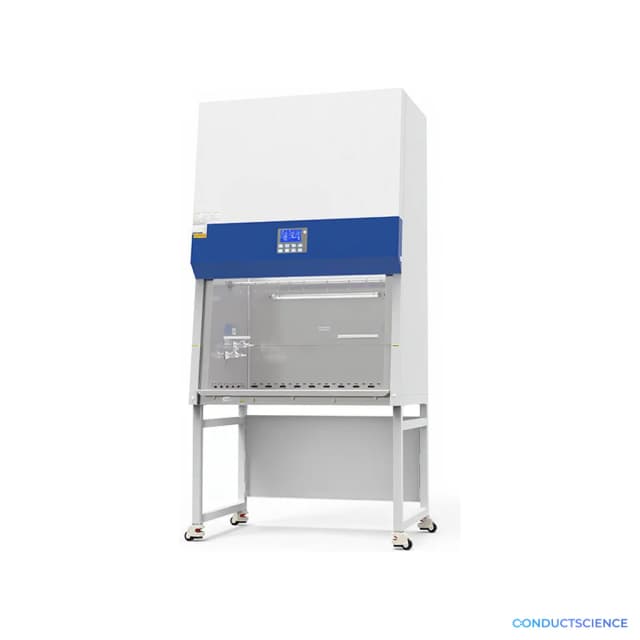
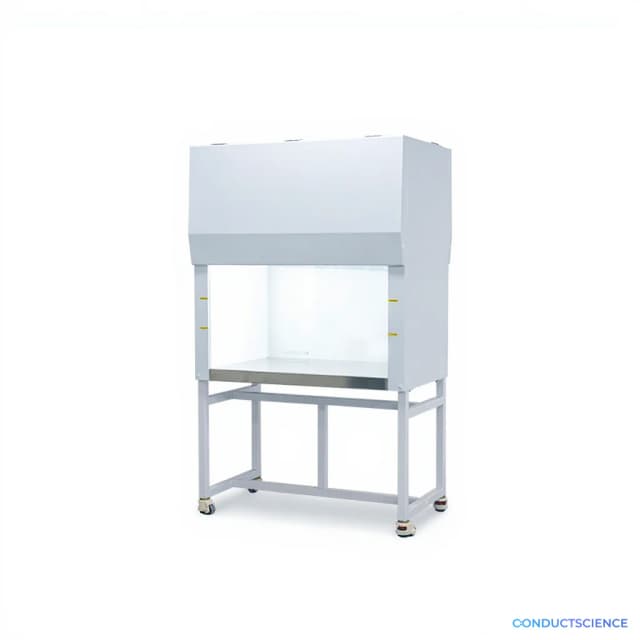
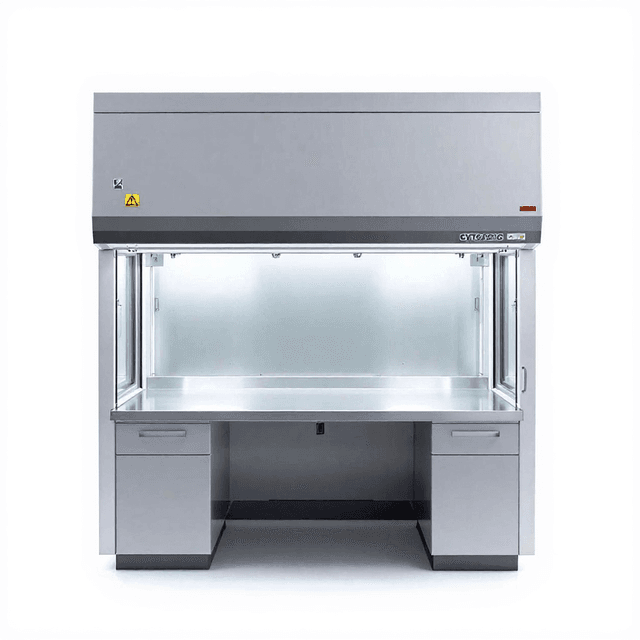
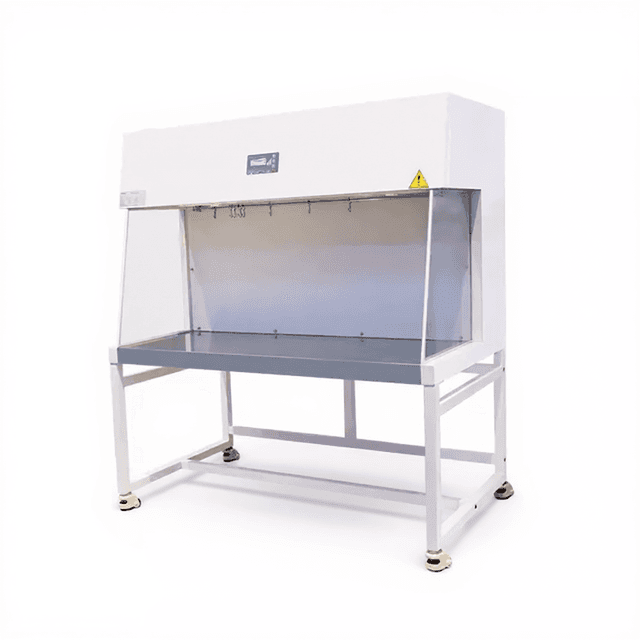
Class I Biological Safety Cabinet
Class I biological safety cabinet providing personnel protection through inward airflow and HEPA filtration for handling low to moderate risk biological materials.
| Automation Level | manual |

The Class I Biological Safety Cabinet provides personnel protection through inward airflow while handling potentially hazardous biological materials. This cabinet design draws room air across the work surface through a high-efficiency particulate air (HEPA) filter system, creating a protective barrier that prevents aerosol escape while maintaining unfiltered downflow over the work area.
Designed for containment of low to moderate risk biological agents, this cabinet supports microbiological procedures where product protection is not required but operator safety is essential. The unit accommodates standard laboratory protocols including cell culture maintenance, sample preparation, and general microbiological work where containment of airborne particulates and biological aerosols is necessary.
How It Works
The Class I biological safety cabinet operates on the principle of directional airflow containment. Room air is drawn into the cabinet through the front opening at a minimum face velocity, typically 75 feet per minute, creating an inward airflow barrier that prevents the escape of biological aerosols generated within the work area.
Air entering the cabinet passes through a HEPA filter system before being exhausted, capturing 99.97% of particles 0.3 micrometers and larger. The continuous inward airflow creates a protective envelope around laboratory personnel while allowing manipulation of materials within the work zone. Unlike Class II cabinets, Class I units do not provide sterile downflow over the work surface, focusing exclusively on containment and personnel protection.
Features & Benefits
Automation Level
- manual
Research Domain
- Cell Biology
- Clinical Diagnostics
- Environmental Monitoring
- Immunology
- Microbiology
- Pharmaceutical QC
Weight
- 38.0 kg
Dimensions
- L: 73.0 mm
- W: 55.0 mm
- H: 39.5 mm
Comparison Guide
| Feature | This Product | Typical Alternative | Advantage |
|---|---|---|---|
| Work Surface Length | 73-inch work surface length | Entry-level models often provide 48-60 inch work surfaces | Extended work surface accommodates multiple users or larger equipment setups while maintaining containment performance |
| Cabinet Depth | 55-inch depth work area | Standard models typically offer 24-30 inch depth | Greater depth provides space for larger equipment and reduces crowding of the work area during complex procedures |
| Height Profile | 39.5-inch height profile | Varies by model and manufacturer configuration | Compact height allows installation under standard laboratory ceiling heights while maintaining ergonomic access |
| Construction Weight | 38 kg unit weight | Similar-sized units typically range from 35-50 kg | Moderate weight provides stability during operation while allowing reasonable installation requirements |
This Class I biological safety cabinet offers extended work surface dimensions with 73-inch length and 55-inch depth, providing substantial work area for laboratory operations. The compact 39.5-inch height profile and 38 kg weight facilitate installation in standard laboratory environments while maintaining effective biological containment performance.
Practical Tips
Schedule annual recertification by qualified technicians to verify face velocity, HEPA filter integrity, and containment performance meet specification requirements.
Why: Proper calibration ensures continued personnel protection and regulatory compliance for biological containment applications.
Clean work surfaces daily with appropriate disinfectant and inspect airflow indicators weekly to detect any performance changes.
Why: Regular maintenance prevents contamination buildup and allows early detection of airflow problems that could compromise containment.
Allow cabinet to run for 5-10 minutes before use to establish stable airflow patterns and verify proper face velocity before handling biological materials.
Why: Stable airflow conditions are essential for effective containment and personnel protection during biological procedures.
Position materials and equipment to avoid blocking airflow patterns and maintain clear pathways for air movement across the work surface.
Why: Unobstructed airflow is critical for maintaining the inward velocity barrier that prevents biological aerosol escape.
Use smoke tubes or other visualization methods to verify airflow patterns if containment performance is questioned during routine operation.
Why: Visual airflow verification helps identify disruptions in containment performance that may not be apparent through other indicators.
Document face velocity measurements during each use period and maintain logs of filter replacement dates and certification results.
Why: Performance documentation supports regulatory compliance and helps track cabinet performance trends over time.
Avoid rapid arm movements and minimize traffic near the cabinet opening during biological procedures to prevent airflow disruption.
Why: Stable operating conditions maintain the protective inward airflow barrier essential for biological containment.
Replace HEPA filters when pressure differential increases significantly or during scheduled recertification if filter integrity testing indicates degradation.
Why: Proper filter performance is essential for biological containment and maintaining specified airflow parameters.
Setup Guide
What’s in the Box
- Class I biological safety cabinet main unit
- HEPA filter assembly (typical)
- Installation hardware (typical)
- User operation manual (typical)
- Performance specification sheet (typical)
Warranty
ConductScience provides standard manufacturer warranty coverage for one year from date of purchase, including technical support for installation guidance and operational troubleshooting. Extended warranty options may be available for critical laboratory applications requiring enhanced service coverage.
Compliance
References
Background reading relevant to this product:
What face velocity should be maintained for proper containment performance?
Class I cabinets typically require minimum face velocity of 75 feet per minute to maintain effective inward airflow containment. Regular certification should verify this parameter remains within specification during operation.
How often should HEPA filters be replaced?
HEPA filter replacement depends on usage intensity and environmental conditions, typically ranging from 1-3 years. Monitor pressure differential across filters and schedule replacement when resistance increases significantly or during annual recertification.
Can this cabinet provide sterile conditions for cell culture work?
Class I cabinets provide containment but not sterile product protection, as unfiltered room air flows over the work surface. For sterile cell culture applications requiring product protection, Class II biological safety cabinets are recommended.
What clearance is required around the cabinet for proper operation?
Maintain minimum 12-inch clearance on sides and rear for airflow patterns and service access. Avoid placement near air supply vents, doors, or high-traffic areas that could disrupt face velocity.
Is exhaust ducting required for this cabinet?
Exhaust requirements depend on local regulations and specific biological agents being handled. Many installations operate with recirculating exhaust through HEPA filtration, while some applications may require hard ducting to building exhaust systems.
What certification testing is required after installation?
Initial and annual certification should include face velocity measurement, HEPA filter leak testing, airflow pattern verification using smoke visualization, and documentation of containment performance parameters.
How does this compare to Class II biological safety cabinets?
Class I cabinets provide personnel protection through inward airflow containment but no product protection, while Class II cabinets provide both personnel and product protection through sterile downflow over the work surface.
What maintenance is required during routine operation?
Routine maintenance includes daily cleaning of work surfaces, weekly inspection of airflow indicators, monthly cleaning of interior surfaces, and periodic replacement of pre-filters if equipped.
Have a question about this product?
Replacement Parts & Consumables
Upgrade Options