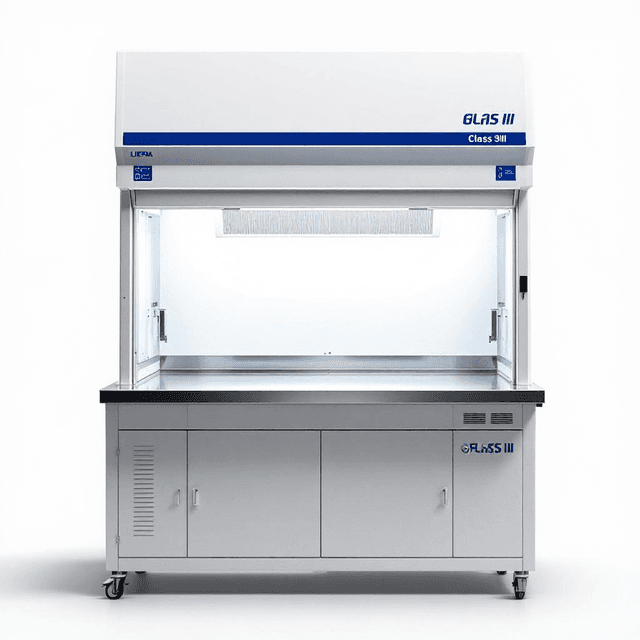
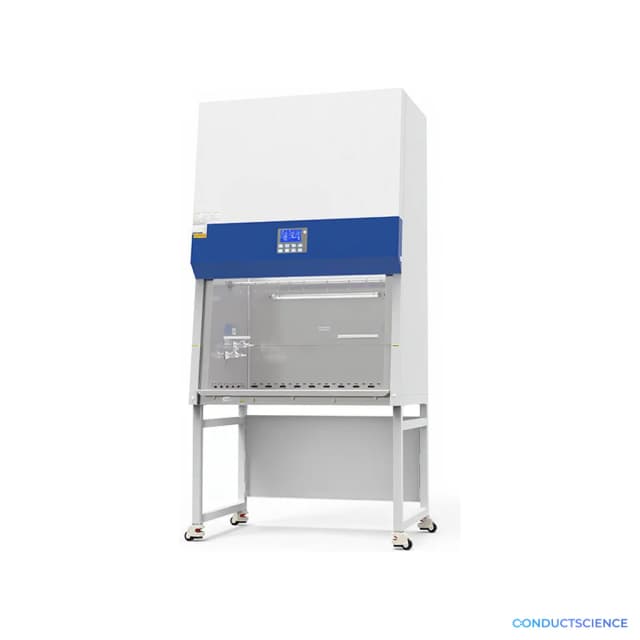
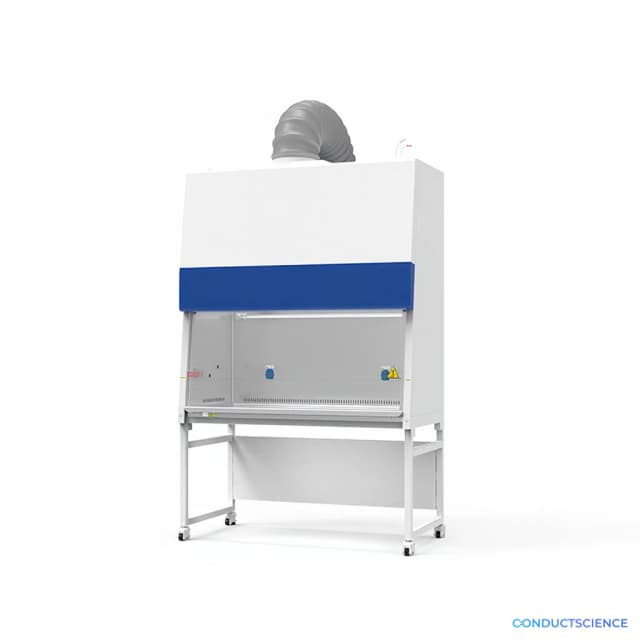
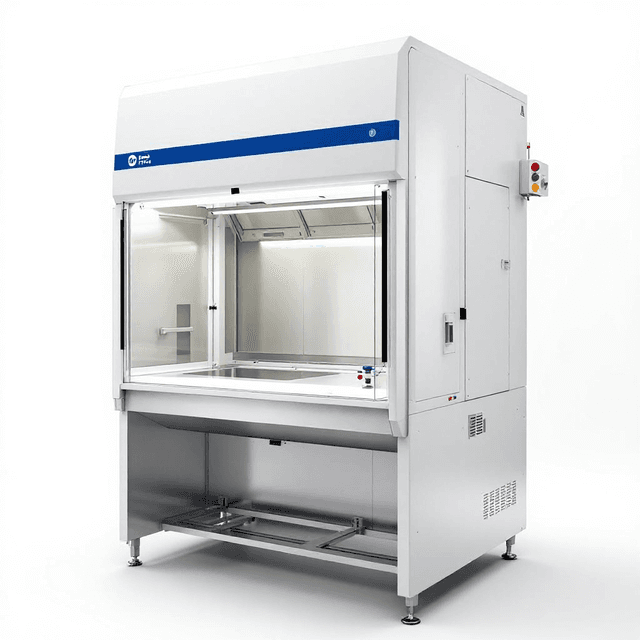
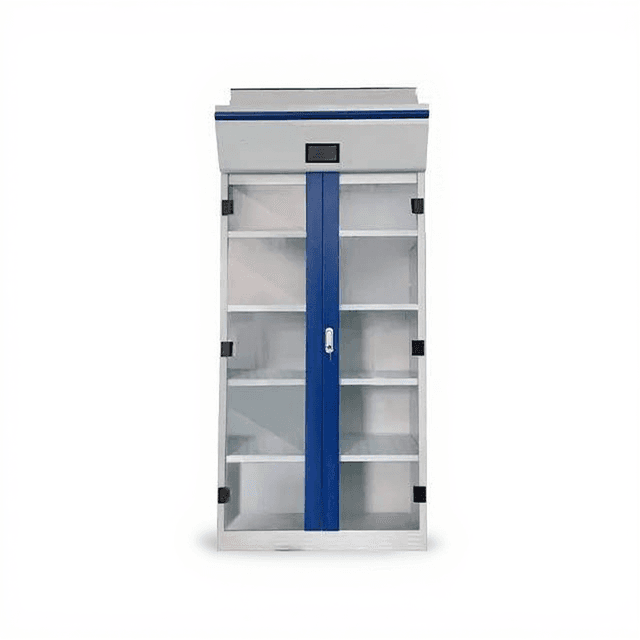
Class III Laboratory Biological Safety Biosafety Cabinet
Class III biological safety cabinet providing maximum containment through totally enclosed, negative pressure design with ULPA filtration and integrated glove ports for handling dangerous pathogens and toxic materials.
| Automation Level | semi-automated |
| External Size(W*D*H) | 1540*880*2000mm |
| Internal Size(W*D*H) | 910*650*660mm |
| Pass Box Size(W*D*H) | Internal Size: 430*330*355mm |
| Gloves | One pair of 800mm butyl rubber gloves |
| Front Window | 8mm toughened glass, anti-ultraviolet radiation |

The Class III Biological Safety Cabinet represents the highest level of containment for handling dangerous pathogens and toxic materials in laboratory environments. This totally enclosed, gas-tight system provides maximum protection for personnel, environment, and work materials through negative pressure operation (≥120Pa) and ULPA filtration achieving 99.9995% efficiency at 0.12μm particles. The cabinet features dual-barrier protection with 800mm butyl rubber gloves for direct manipulation and an integrated pass box for material transfer, eliminating direct exposure risks.
Constructed with 304 stainless steel work surfaces and 8mm toughened anti-UV glass viewing window, this cabinet maintains sterile conditions with ≥1000lux illumination and comprehensive monitoring via LCD display. Audio-visual alarm systems provide immediate notification of pressure anomalies or filter replacement requirements. The washable polyester fiber pre-filter system and low noise operation (≤67dB) ensure sustained laboratory productivity while maintaining biosafety protocols for Risk Group 3/4 pathogens and highly toxic compounds.
How It Works
Class III biological safety cabinets operate on the principle of total containment through negative pressure isolation and absolute filtration. The cabinet maintains negative pressure of at least 120Pa relative to laboratory ambient pressure, ensuring that any potential leaks result in airflow into the cabinet rather than contaminated air escape. All air entering and leaving the cabinet passes through ULPA (Ultra-Low Penetration Air) filters with 99.9995% efficiency at 0.12μm, effectively removing all viable microorganisms and particulate contaminants.
Material manipulation occurs through attached butyl rubber gloves sealed to ports in the cabinet front, providing direct access while maintaining complete barrier protection. The integrated pass box with dedicated filtration allows sterile transfer of materials into and out of the work chamber without compromising containment. Internal air circulation maintains uniform conditions while the washable polyester pre-filter extends ULPA filter life by removing larger particles before primary filtration.
Continuous monitoring systems track pressure differentials, airflow patterns, and filter integrity, triggering audio-visual alarms when parameters deviate from safe operating ranges. The 304 stainless steel interior provides chemical resistance and easy decontamination, while UV-resistant viewing glass allows clear observation of work procedures under optimal lighting conditions.
Features & Benefits
Automation Level
- semi-automated
External Size(W*D*H)
- 1540*880*2000mm
Internal Size(W*D*H)
- 910*650*660mm
Pass Box Size(W*D*H)
- Internal Size: 430*330*355mm
Gloves
- One pair of 800mm butyl rubber gloves
Front Window
- 8mm toughened glass, anti-ultraviolet radiation
Pre-filter
- Polyester fiber, washable
Pressure
- Negative, ≥120Pa
ULPA Filter
- Air Supply Filter: Efficiency 99.9995% at 0.12μm
Noise
- ≤67dB
Alarm
- Audio and visual alarm, abnormal pressure, filter replacement
Work Zone Material
- 304 stainless steel
Illumination
- ≥1000lux
Consumption
- 1200W
Brand
- ConductScience
Research Domain
- Cancer Research
- Environmental Monitoring
- Immunology
- Microbiology
- Pharmaceutical QC
- Toxicology
Display Type
- LCD display
Weight
- 350.0 kg
Dimensions
- L: 35.5 mm
- W: 43.0 mm
- H: 33.0 mm
Comparison Guide
| Feature | This Product | Typical Alternative | Advantage |
|---|---|---|---|
| Containment Level | Class III total enclosure with negative pressure ≥120Pa | Class II models provide open-front containment with personnel protection but limited environmental isolation | Complete barrier protection eliminates any risk of operator exposure to dangerous pathogens or toxic materials |
| Filtration Efficiency | ULPA filters at 99.9995% efficiency for 0.12μm particles | HEPA filtration typically achieves 99.97% efficiency at 0.3μm particles | Superior particle removal captures submicron pathogens and aerosols that may escape standard HEPA filtration |
| Work Space Access | 800mm butyl rubber gloves with 910×650×660mm work area | Open front access with smaller internal dimensions in many models | Extended glove length provides better ergonomics while maintaining sterile manipulation capabilities for complex procedures |
| Material Transfer System | Integrated pass box (430×330×355mm) with dedicated filtration | Entry through open front or separate airlock systems in some high-end models | Seamless sterile transfer without compromising containment or requiring complex airlock procedures |
| Monitoring and Alarms | LCD display with audio-visual alarms for pressure and filter status | Basic pressure gauges or limited digital displays in entry-level models | Comprehensive real-time monitoring ensures immediate awareness of any containment compromise or maintenance needs |
This Class III cabinet offers maximum containment through total enclosure design with superior ULPA filtration, extended-reach glove access, and integrated pass box for sterile material transfer. The comprehensive monitoring system with audio-visual alarms provides enhanced safety assurance for handling the most dangerous pathogens and toxic materials.
Practical Tips
Verify negative pressure readings monthly using calibrated manometer and document all measurements for compliance tracking.
Why: Consistent pressure monitoring ensures containment integrity and provides audit trail for regulatory inspections.
Clean washable polyester pre-filters weekly or when pressure differentials increase beyond normal operating range.
Why: Regular pre-filter maintenance extends expensive ULPA filter life and maintains optimal airflow performance.
Allow cabinet to operate for 15 minutes before beginning work and minimize rapid movements that create turbulence.
Why: Stabilized airflow patterns ensure consistent containment and prevent contamination through air current disruption.
Inspect butyl rubber gloves before each use for pinholes, tears, or chemical degradation, replacing immediately if compromised.
Why: Glove integrity is the primary barrier between operator and dangerous materials, making regular inspection critical for safety.
If pressure alarms activate, immediately cease work and investigate cause before continuing procedures with dangerous materials.
Why: Pressure deviations indicate potential containment breach requiring immediate attention to prevent exposure risks.
Log all pressure readings, alarm events, and maintenance activities in dedicated cabinet logbook for traceability.
Why: Detailed operational records support troubleshooting, regulatory compliance, and preventive maintenance scheduling.
Plan workflow to minimize pass box operations and group material transfers to reduce containment disruption.
Why: Efficient material management maintains sterile conditions while reducing opportunities for containment compromise.
Schedule annual certification testing including airflow verification, filter integrity, and containment performance assessment.
Why: Professional certification ensures compliance with biosafety standards and validates continued safe operation with dangerous materials.
Setup Guide
What’s in the Box
- Class III Biological Safety Cabinet (main unit)
- 800mm butyl rubber gloves (one pair)
- Washable polyester pre-filter
- LCD display control panel
- Installation hardware and mounting brackets (typical)
- User manual and safety protocols (typical)
- Certification documentation (typical)
Warranty
ConductScience provides comprehensive warranty coverage including one-year manufacturer warranty on cabinet construction and filtration systems, with technical support for installation, calibration, and operational guidance.
Compliance
References
Background reading relevant to this product:
What pathogens and materials require Class III containment versus Class II cabinets?
Class III cabinets are required for Risk Group 3/4 pathogens like M. tuberculosis, viral hemorrhagic fever agents, and emerging infectious diseases, plus highly toxic compounds where any exposure poses severe health risks. Class II cabinets are insufficient for these maximum-risk applications.
How do I verify the cabinet maintains proper containment during operation?
Monitor the LCD display for negative pressure ≥120Pa and observe alarm status. Perform regular smoke tests at glove ports and pass box seals. Audio-visual alarms immediately alert to pressure deviations or filter integrity issues.
What decontamination procedures are compatible with this cabinet design?
The 304 stainless steel interior supports chemical decontamination with appropriate disinfectants. Gaseous decontamination (formaldehyde, hydrogen peroxide) can be performed through sealed systems. UV decontamination may be used but consult protocols for material compatibility.
How frequently do ULPA filters require replacement and what are the indicators?
Filter replacement depends on usage intensity and contaminant load. The alarm system provides specific filter replacement alerts based on pressure differential monitoring. Expect 1-3 years typical service life under normal research conditions.
What are the ventilation requirements for Class III cabinet installation?
Requires dedicated exhaust system capable of maintaining cabinet negative pressure with appropriate backup systems. Exhaust must be HEPA filtered before environmental discharge. Consult facility engineers for specific CFM requirements and redundancy systems.
Can this cabinet accommodate automated equipment or robotic systems?
The 910×650×660mm work space can accommodate smaller automated systems, but equipment must be designed for glove manipulation. Consider vibration isolation and heat generation impacts on cabinet performance.
What training is required for personnel using Class III cabinets?
Personnel require specific training in Class III operations including glove techniques, pass box procedures, emergency protocols, and decontamination methods. Many institutions require certification before independent use of maximum containment equipment.
Have a question about this product?
Replacement Parts & Consumables
Upgrade Options