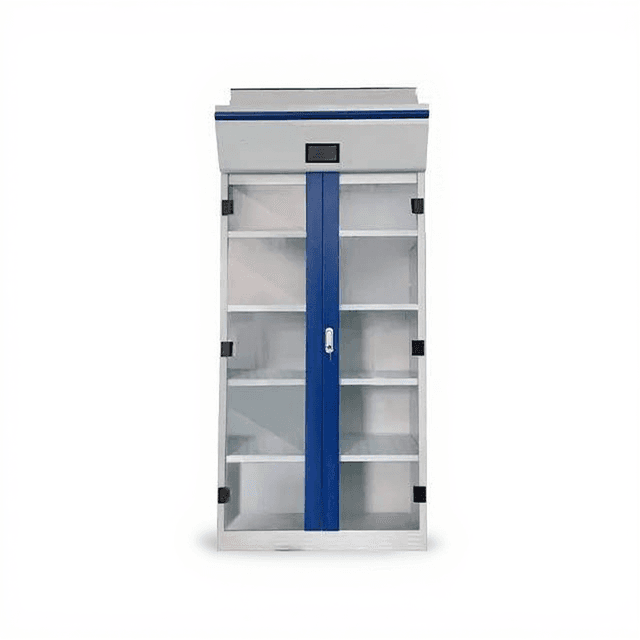
EC Series Class II B2 Biological Safety Cabinet
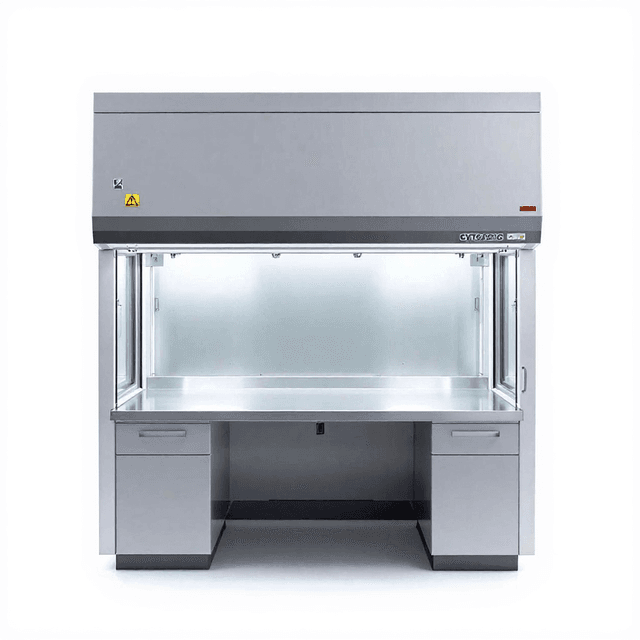
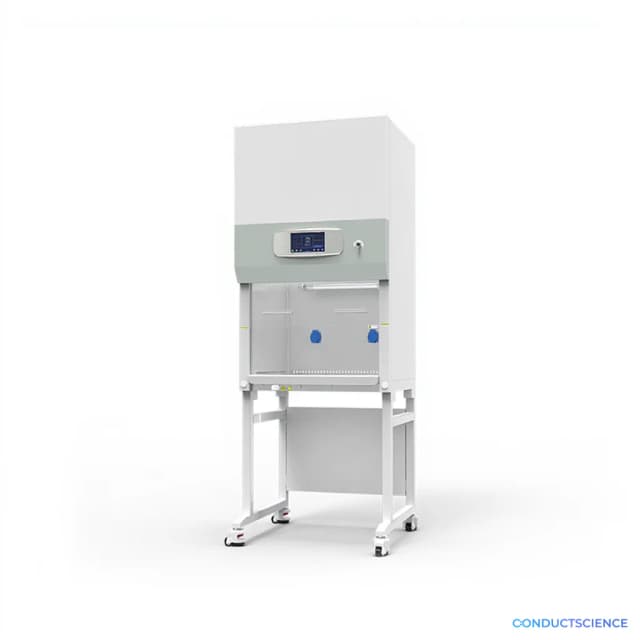
Class II B2 biological safety cabinet with dual ULPA filtration and 100% external exhaust for sterile microbiological work requiring maximum containment.

Louise Corscadden, PhD
Director of Science · ConductScience
Ask Louise about EC Series Class II B2 Biological Safety Cabinet fit, setup, configuration, or quote prep.
Already working with us? Sign in to connect this with My Scientist.
Key Specifications
Full details →- Model fit
- Configured during quote
- SKU family
- BIO-0009
- Shipping box
- 225.0 x 110.0 x 80.0 cm
- Ordering
- Online checkout and quote request available
- Category
- Clean Benches & Fume Hoods
- Build notes
- Confirm accessories, station layout, and support needs before purchase
The EC Series Class II B2 Biological Safety Cabinet provides sterile work environments for microbiological and cell culture applications requiring maximum containment. This cabinet features dual ULPA filtration with 99.9995% efficiency at 0.12 micrometers, removing submicron particles and biological contaminants from both supply and exhaust air streams. The B2 design exhausts 100% of cabinet air to the outside, preventing recirculation of potentially hazardous aerosols.
Available in three sizes with internal work areas ranging from 940×600×660mm to 1350×600×660mm, the cabinet maintains precise airflow velocities of 0.53±0.025 m/s inflow and 0.33±0.025 m/s downflow. The tempered glass front window provides anti-UV protection and operates in both manual and electric modes. Integrated UV sterilization capability and low noise operation (≤65dB) support extended use in research environments.
How It Works
The Class II B2 biological safety cabinet operates on laminar airflow principles with dual ULPA filtration to create a sterile work environment. Room air enters through the front opening and is drawn downward across the work surface, while supply air passes through the upper ULPA filter to provide sterile downflow. The B2 design exhausts 100% of cabinet air directly outside the facility, preventing any recirculation of potentially contaminated air.
The dual ULPA filtration system removes 99.9995% of particles at 0.12 micrometers, including bacteria, fungi, and viral particles. Inflow velocity of 0.53±0.025 m/s creates a protective barrier preventing contaminants from entering the work zone, while downflow velocity of 0.33±0.025 m/s maintains product sterility by sweeping particles away from work surfaces. The negative pressure gradient within the cabinet ensures containment of aerosols generated during manipulation.
UV sterilization capability provides additional decontamination between work sessions. The tempered glass sash with anti-UV coating allows visual monitoring while protecting operators from UV exposure during sterilization cycles.
Features & Benefits
Automation Level
- semi-automated
EB2-4F
- EB2-5F
External Size(W*D*H)
- 1100*800*2250mm
1300*800*2250mm
- 1500*800*2250mm
Internal Size(W*D*H)
- 940*600*660mm
1150*600*660mm
- 1350*600*660mm
Tested Opening
- Safety height 200mm(8)
Max Opening
- 460mm
Inflow Velocity
- 0.53±0.025m/s
Downflow Velocity
- 0.33±0.025m/s
ULPA Filter
- Two, 99.9995% efficiency at 0.12μm, filter life indicator
Front Window
- Manual and electric. Tempered glass≥5mm. Anti UV
Noise
- ≤65dB
UV Lamp
- 30W*1
30W*1
- 40W*1
Brand
- ConductScience
Research Domain
- Cell Biology
- Clinical Diagnostics
- Immunology
- Microbiology
- Pharmaceutical QC
Shipping weight
- 296.0 lb
Shipping box
- L: 225.0 cm
- W: 110.0 cm
- H: 80.0 cm
| Feature | This Product | Typical Alternative | Advantage |
|---|---|---|---|
| Filtration Efficiency | 99.9995% at 0.12 micrometers with dual ULPA filters | Entry-level models often provide 99.97% HEPA filtration at 0.3 micrometers | Higher efficiency filtration removes smaller particles including viruses and submicron biological contaminants. |
| Exhaust Configuration | 100% external exhaust (Class II B2) | Many models recirculate 70% of filtered air back to laboratory | Complete external exhaust prevents accumulation of volatile chemicals and provides maximum containment. |
| Work Area Size Options | Three sizes from 940×600×660mm to 1350×600×660mm internal dimensions | Limited size options with fewer workspace configurations | Multiple size options accommodate different laboratory layouts and experimental requirements. |
| Sash Operation | Both manual and electric operation with tempered glass | Basic models typically offer manual operation only | Electric operation provides consistent positioning and reduces operator fatigue during extended use. |
| UV Sterilization | Integrated 30-40W UV lamp with anti-UV glass protection | UV sterilization often requires separate equipment or is not included | Built-in decontamination capability reduces dependency on chemical disinfectants and simplifies protocols. |
| Noise Level | ≤65dB operation | Budget models often exceed 70dB during operation | Lower noise levels support extended use periods without operator discomfort or communication interference. |
The EC Series provides Class II B2 containment with dual ULPA filtration and complete external exhaust for maximum protection. Available in three sizes with both manual and electric sash operation, integrated UV sterilization, and quiet operation below 65dB for extended laboratory use.
Practical Tips
Schedule annual airflow certification and filter integrity testing by qualified technicians using calibrated instruments.
Why: Maintains containment performance and ensures compliance with biosafety cabinet standards.
Monitor filter life indicators weekly and maintain logbook of airflow readings and UV lamp hours.
Why: Early detection of performance degradation prevents contamination events and extends equipment life.
Allow cabinet to run for 15 minutes before use and avoid rapid movements that disrupt airflow patterns.
Why: Ensures stable airflow establishment and maintains the protective barrier during sensitive procedures.
Position materials at least 4 inches from front and rear air grilles to maintain proper airflow.
Why: Prevents obstruction of critical airflow patterns that provide containment and product protection.
Never operate with damaged or missing ULPA filters, and ensure UV lamp is off before entering work area.
Why: Compromised filtration eliminates containment protection, and UV exposure can cause skin and eye damage.
If airflow alarms activate, check for obstructions in air grilles and verify external exhaust system operation.
Why: Blocked airflow compromises both containment and sterility, requiring immediate correction before continuing work.
Document all maintenance activities, filter changes, and performance testing in equipment logbooks.
Why: Provides audit trail for regulatory compliance and helps identify performance trends over time.
Clean interior surfaces weekly with appropriate disinfectants and run UV sterilization cycles between different biological agents.
Why: Prevents cross-contamination between experiments and maintains sterile work environment integrity.
Setup Guide
What’s in the Box
- EC Series Biological Safety Cabinet (main unit)
- Dual ULPA filters (pre-installed)
- UV sterilization lamp
- Power cord and electrical connections
- User manual and safety guidelines
- Installation and certification documentation (typical)
- Filter replacement schedule (typical)
Warranty
ConductScience provides a comprehensive 1-year manufacturer warranty covering all components and filtration systems. Technical support includes installation guidance, operational training, and maintenance scheduling assistance.
Compliance
What is the difference between Class II B2 and other biosafety cabinet types?
B2 cabinets exhaust 100% of air directly outside the facility, preventing any recirculation. This provides maximum containment for volatile chemicals and highly hazardous biological agents, unlike A2 cabinets which recirculate filtered air.
How often do ULPA filters need replacement and what are the indicators?
Filter replacement depends on usage and environmental conditions, typically 1-3 years. The integrated filter life indicator monitors pressure differential and alerts when filtration efficiency may be compromised.
Can this cabinet handle both biological and chemical work?
Yes, the B2 design with 100% external exhaust is suitable for work with volatile chemicals and biological agents simultaneously, unlike recirculating cabinet types.
What exhaust system requirements are needed for installation?
B2 cabinets require dedicated external exhaust ducting with sufficient fan capacity to maintain proper airflow. Consult product datasheet for specific CFM requirements based on cabinet size.
How is airflow performance verified and maintained?
Annual certification includes smoke pattern tests and airflow velocity measurements at specified points. Daily monitoring involves visual inspection and operational checks of airflow indicators.
What is the maximum size of equipment that can be used inside the cabinet?
Equipment must fit within the internal dimensions (940-1350mm width depending on model) while maintaining proper airflow patterns. Items should not block air grilles or exceed the safety opening height of 200mm.
Can multiple users work simultaneously in the larger models?
The largest model (1350×600×660mm internal) can accommodate two operators working side by side, though coordination is required to maintain proper aseptic technique and airflow integrity.
How does UV sterilization integrate with normal workflow?
UV lamps provide surface decontamination between work sessions or overnight. The anti-UV glass sash protects operators when UV is activated, and lamps should be used when the cabinet is not occupied.
Have a question about this product?
Have a question? Just ask.
Send it over and we'll email you a personalized answer — no call, no scheduling.
Prefer to talk it through?
Replacement Parts & Consumables