Conditioned Place Preference Spyraki 1988 - 2
SKU CS-958259
$1,830.00
IncludesStandard care
Standardized behavioral apparatus for evaluating reward and aversion mechanisms through place conditioning paradigms in laboratory animals.
CE MarkedBAA available
Scientist guidance

Louise Corscadden, PhD
Director of Science · ConductScience
Ask Louise about Conditioned Place Preference Spyraki 1988 - 2 fit, setup, configuration, or quote prep.
Already working with us? Sign in to connect this with My Scientist.
Key Specifications
Full details →- Model fit
- Mouse, Rat
- SKU family
- CS-958259
- Shipping box
- 65.0 x 36.0 x 27.0 cm
- Ordering
- Online checkout and quote request available
- Category
- Behavioral Mazes
- Build notes
- Confirm accessories, station layout, and support needs before purchase
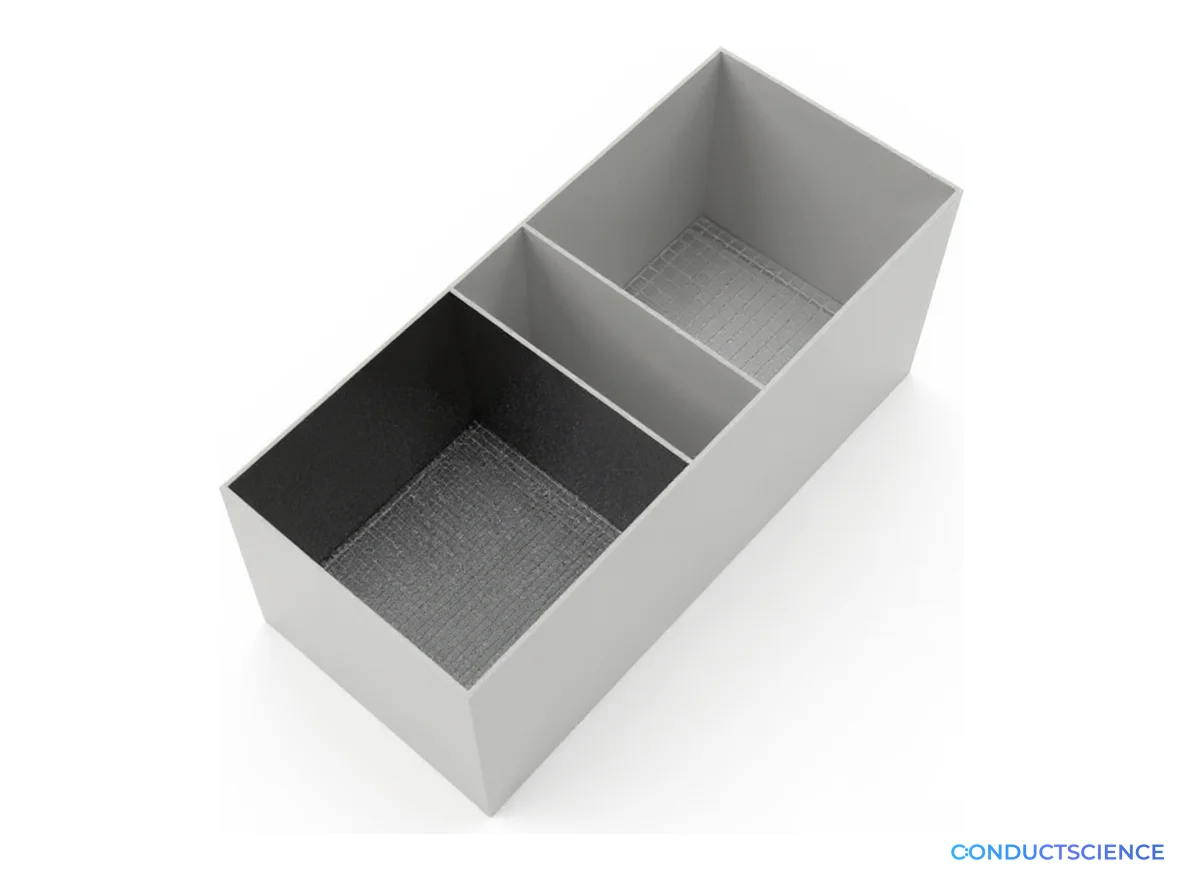
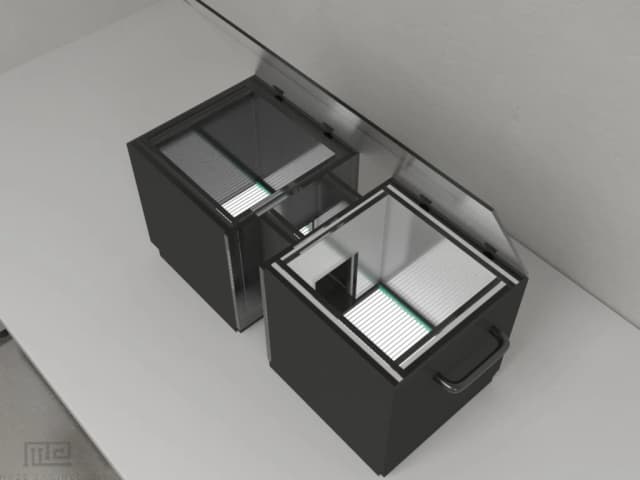
The Conditioned Place Preference Spyraki 1988 - 2 apparatus represents a standardized behavioral testing system designed for evaluating reward and aversion mechanisms in laboratory animals. This classical conditioning paradigm allows researchers to assess an animal's preference for environmental contexts that have been associated with rewarding or aversive stimuli, providing insights into motivational states and drug reward properties.
The system enables controlled assessment of place conditioning by creating distinct environmental chambers where animals can form associative memories between specific locations and administered treatments. Researchers utilize this methodology to investigate addiction potential of pharmacological compounds, evaluate withdrawal effects, and study the neural mechanisms underlying reward processing and spatial memory formation.
How It Works
The conditioned place preference paradigm operates on principles of classical conditioning, where neutral environmental cues become associated with the rewarding or aversive properties of administered treatments. Animals learn to associate specific spatial locations with the pharmacological or physiological effects of experimental interventions, resulting in measurable approach or avoidance behaviors.
During conditioning phases, animals receive treatments in one environmental context and control treatments in a distinctly different context. The formation of conditioned associations between spatial cues and treatment effects is subsequently assessed during test sessions where animals have free access to both environments without treatment administration. Preference is quantified by measuring time spent in each compartment, with increased time in the treatment-paired environment indicating reward conditioning, while decreased time indicates aversion conditioning.
Features & Benefits
Standardized chamber dimensions
Provides consistent spatial parameters across experiments for reliable behavioral assessment and data comparison between studies.
Distinct environmental compartments
Enables clear discrimination between conditioning contexts, ensuring robust associative learning and measurable preference behaviors.
Neutral connecting area
Allows animals to make unbiased choices between conditioned environments during preference testing phases.
Removable chamber components
Facilitates thorough cleaning between subjects and prevents olfactory contamination that could influence behavioral responses.
Versatile configuration options
Accommodates various experimental designs including biased and unbiased conditioning protocols for different research applications.
Compatible with tracking systems
Integrates with automated video tracking software for precise position monitoring and objective behavioral quantification.
Behavioral Construct
- reward
- aversion
- conditioning
- spatial preference
- associative learning
- motivation
Automation Level
- manual
Research Domain
- Addiction Research
- Anxiety and Depression
- Behavioral Pharmacology
- Learning and Memory
- Neuroscience
Species
- Mouse
- Rat
Compatible Tracking Software
- ConductVision
Shipping weight
- 6.06 lb
Shipping box
- L: 65.0 cm
- W: 36.0 cm
- H: 27.0 cm
| Feature | This Product | Typical Alternative | Advantage |
|---|---|---|---|
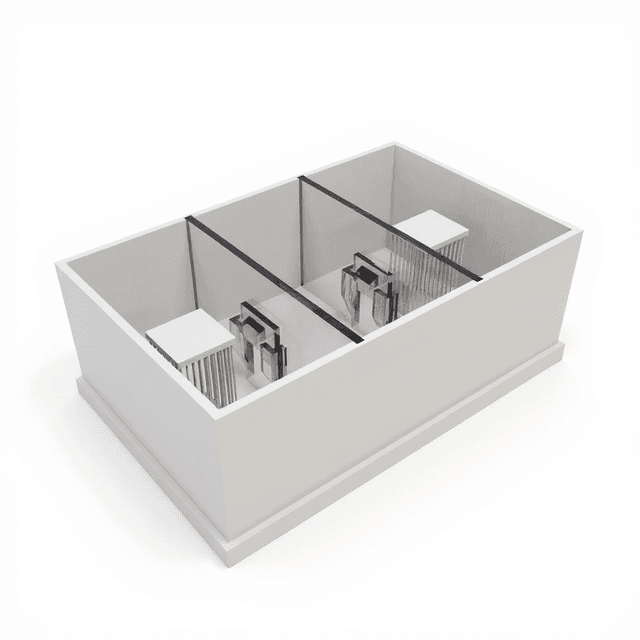
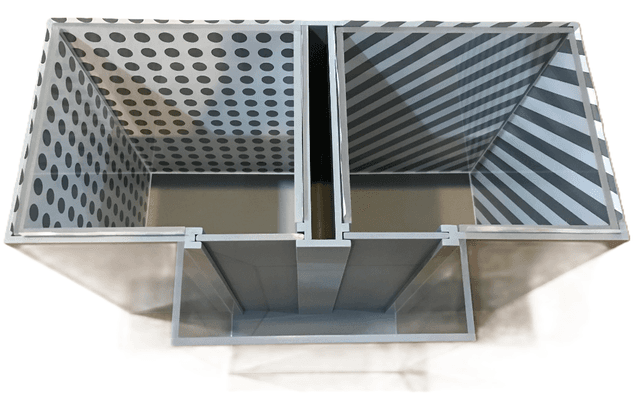
| Chamber Configuration | Dual compartment system with connecting neutral zone | Some models use three-compartment designs with biased layouts | Two-chamber design simplifies experimental protocols and data analysis while maintaining robust preference discrimination. |
| Environmental Cue Options | Removable inserts for visual and tactile differentiation | Fixed chamber features limit experimental flexibility | Customizable environmental cues allow adaptation to different experimental requirements and species-specific needs. |
| Setup Complexity | Straightforward assembly with standard components | Complex multi-chamber systems require extensive setup | Simple configuration reduces setup time and technical barriers for laboratories new to place conditioning studies. |
| Cleaning Access | Removable components for thorough decontamination | Fixed assemblies complicate cleaning procedures | Easy disassembly ensures complete odor removal between subjects, preventing olfactory contamination of behavioral responses. |
This system provides a standardized, configurable platform for place conditioning research with simplified setup and maintenance compared to complex multi-chamber alternatives. The two-compartment design offers reliable preference discrimination while maintaining experimental flexibility through removable environmental components.
Addiction Research
Assessing the rewarding properties of potential drugs of abuse by measuring preference for environments paired with drug administration versus vehicle treatment.
Behavioral Pharmacology
Evaluating the aversive effects of withdrawal states by conditioning animals to environments associated with precipitated withdrawal and measuring subsequent place avoidance.
Neuroscience
Investigating the neural circuits of reward processing by examining place preference behaviors in conjunction with optogenetic or pharmacological manipulations of specific brain regions.
Learning and Memory
Studying associative learning mechanisms by examining how animals form and retain memories linking environmental contexts with positive or negative experiences.
Anxiety and Depression
Assessing the rewarding or aversive properties of antidepressant medications by measuring changes in place preference following chronic treatment protocols.
Practical Tips
Calibration
Conduct initial preference tests with naive animals to verify chamber neutrality before beginning conditioning experiments.
Why: Inherent chamber biases can confound interpretation of treatment-induced preferences.
Maintenance
Clean all chamber surfaces with appropriate disinfectant between each subject and allow complete drying before the next session.
Why: Residual odors from previous animals can influence behavioral responses and compromise experimental validity.
Best Practices
Randomize the time of day for conditioning sessions and maintain consistent environmental conditions throughout the experiment.
Why: Circadian factors and environmental variables can interact with treatment effects and affect conditioning strength.
Data Quality
Record animal behavior for the entire test session rather than using snapshot sampling to capture preference patterns.
Why: Animals may show different preference patterns early versus late in test sessions, and total time measurements provide more reliable preference indices.
Troubleshooting
If animals show strong baseline preferences for one chamber, consider using a biased conditioning design where treatment is paired with the non-preferred side.
Why: This approach can overcome inherent chamber preferences and demonstrate treatment-specific conditioning effects.
Safety
Ensure chamber edges are smooth and secure to prevent injury during animal exploration and movement.
Why: Animal injuries can introduce stress confounds and compromise welfare standards in behavioral testing.
Setup Guide
Unpack and Inspect
Remove apparatus components from packaging and inspect for damage. Verify all chambers and connecting hardware are present.
Chamber Assembly
Assemble the testing chambers according to configuration requirements. Ensure distinct environmental features are properly positioned in each compartment.
Environmental Setup
Configure distinct visual, tactile, or olfactory cues in each chamber to create clearly distinguishable environments for conditioning.
Baseline Testing
Conduct initial preference assessments with naive animals to establish baseline chamber preferences and ensure apparatus neutrality.
Conditioning Protocol
Implement conditioning sessions with appropriate treatment administration and environmental pairing according to experimental design.
Data Collection
Record animal position and movement during test sessions using manual observation or automated tracking systems.
What’s in the Box
- Testing chamber components (typical)
- Environmental inserts for chamber differentiation (typical)
- Assembly hardware (typical)
- User manual with setup instructions (typical)
- Cleaning and maintenance guide (typical)
Warranty
ConductScience provides a one-year manufacturer warranty covering defects in materials and workmanship, with technical support for setup and operational guidance.
Compliance
Guide for the Care and Use of Laboratory AnimalsApparatus design supports behavioral testing protocols that adhere to established guidelines for laboratory animal welfare and experimental procedures.
ARRIVE GuidelinesStandardized apparatus configuration facilitates reproducible experimental designs that support comprehensive reporting of animal research methods and results.
Q
What conditioning schedule is most effective for establishing robust place preferences?
A
Most protocols utilize alternating daily sessions with 8-12 conditioning trials total, though the optimal schedule depends on treatment potency and species. Strong reinforcers may require fewer sessions while weak reinforcers benefit from extended conditioning.
Q
How do I control for inherent chamber bias in the experimental design?
A
Conduct pre-conditioning tests to identify any baseline preferences, then counterbalance treatment assignment so equal numbers of animals receive treatment in each chamber. Some protocols use a biased design where treatment is paired with the initially non-preferred side.
Q
What is the recommended duration for preference test sessions?
A
Test sessions typically last 15-30 minutes, providing sufficient time for preference expression while minimizing habituation effects. Longer sessions may reduce discrimination between chambers due to exploration habituation.
Q
How should environmental cues be configured to ensure adequate discrimination?
A
Use multiple sensory modalities including visual patterns, floor textures, and lighting conditions. Cues should be distinctly different but not inherently rewarding or aversive to avoid confounding preference measurements.
Q
What data analysis approaches are appropriate for place preference experiments?
A
Compare time spent in treatment-paired versus vehicle-paired chambers using paired t-tests or repeated measures ANOVA. Calculate preference scores as difference or ratio measures for additional analysis of conditioning strength.
Q
How do I minimize stress-related confounds in place conditioning studies?
A
Allow adequate habituation to handling and apparatus, use consistent experimental timing, maintain appropriate environmental conditions, and consider the stress effects of injection procedures when interpreting results.
Have a question about this product?
Track rodents with ConductVision
ConductVision is our video-tracking software. Record your sessions on video, and it scores standard rodent tests, such as those listed below.
Examples of tests it scores
To check whether ConductVision scores your protocol in this apparatus, ask in your quote request.
Ask a question
Have a question? Just ask.
Send it over and we'll email you a personalized answer — no call, no scheduling.
Personalized email reply
Usually within one business day
Helpful answers published here
Prefer to talk it through?
Accessories
Enhance your setup with compatible accessories
Total: $0.00

Conditioned Place Preference Spyraki 1988 - 2
$1,830.00
Added to quoteView Quote