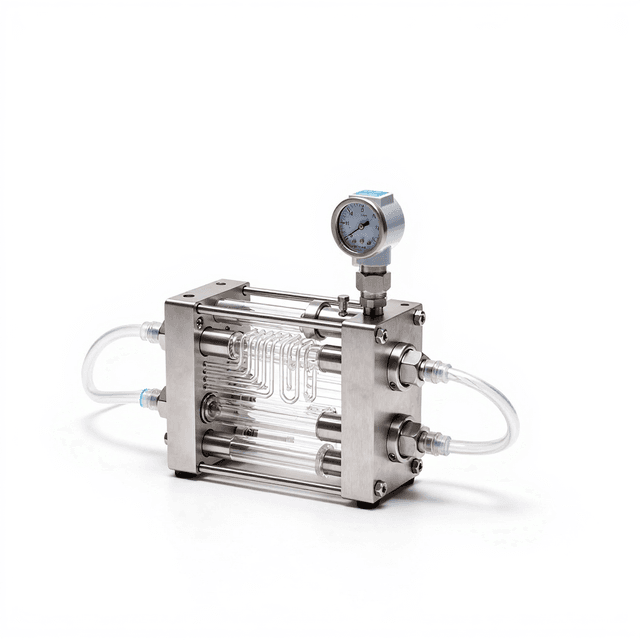
Continuous Flow Glass Microreactor Platform (Lab-684)
Mid-scale glass microreactor platform for continuous flow chemistry process development and reaction optimization in laboratory environments.
| Scale | Lab-scale (mid-range) |
| Automation Level | semi-automated |
| Brand | ConductScience |
| Material | glass |

The Continuous Flow Glass Microreactor Platform (Lab-684) is a mid-scale laboratory system designed for process development and reaction optimization in controlled flow chemistry environments. This glass-based platform enables researchers to conduct continuous flow synthesis reactions with precise control over reaction parameters, facilitating systematic optimization of chemical processes at laboratory scale.
The platform's glass construction provides chemical inertness and optical transparency for real-time reaction monitoring, while the continuous flow design allows for improved heat and mass transfer compared to traditional batch processes. The system supports process development workflows where reaction conditions must be systematically varied and optimized for scale-up considerations.
How It Works
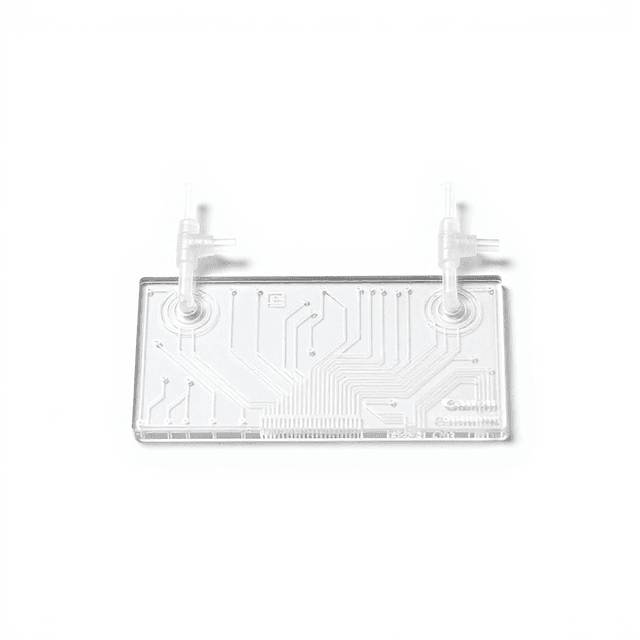
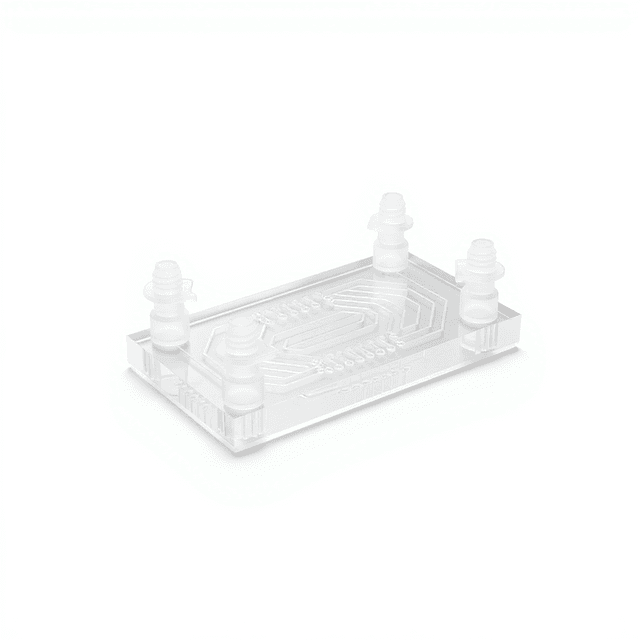
Continuous flow microreactor systems operate on the principle of controlled fluid transport through precisely defined reaction channels. Reactants are continuously introduced into the glass microreactor channels where they mix and react under controlled temperature, pressure, and residence time conditions. The glass construction allows for visual monitoring of the reaction progress and provides chemical compatibility with a wide range of solvents and reagents.
The platform utilizes laminar flow principles to achieve predictable mixing patterns and residence time distributions. Heat transfer is enhanced due to the high surface-area-to-volume ratio of the microchannels, enabling precise temperature control and rapid thermal equilibration. The continuous nature allows for steady-state operation once equilibrium is established, providing consistent reaction conditions for optimization studies.
Process parameters such as flow rates, temperature, and reagent concentrations can be systematically varied to map reaction performance across different conditions. The system generates continuous product streams that can be analyzed in real-time or collected for downstream processing, enabling efficient optimization of reaction conditions for subsequent scale-up.
Features & Benefits
Scale
- Lab-scale (mid-range)
Automation Level
- semi-automated
Brand
- ConductScience
Material
- glass
Research Domain
- Analytical Chemistry
- Environmental Monitoring
- Food Science
- Industrial Hygiene
- Materials Science
- Pharmaceutical QC
Weight
- 12.0 kg
Dimensions
- L: 400.0 mm
- W: 300.0 mm
- H: 200.0 mm
Comparison Guide
| Feature | This Product | Typical Alternative | Advantage |
|---|---|---|---|
| Construction Material | Glass construction for optical transparency and chemical inertness | Metal or polymer systems may offer higher pressure ratings but limited optical access | Glass enables real-time visual monitoring and broad solvent compatibility for diverse chemistry applications |
| Scale Range | Mid-range laboratory scale optimized for process development | Micro-scale systems offer higher throughput screening while macro-scale systems approach pilot plant conditions | Mid-range scale balances research flexibility with practical material requirements for optimization studies |
| Application Focus | Designed specifically for process development and reaction optimization | General-purpose flow systems may lack optimization-specific features | Purpose-built design supports systematic parameter screening essential for process development workflows |
| Platform Design | Integrated platform with compact 400 x 300 mm footprint | Modular systems may require larger bench space and multiple components | Compact integration reduces setup complexity while maintaining full functionality for laboratory environments |
| Monitoring Capability | Optical transparency enables real-time reaction monitoring | Opaque systems rely on offline sampling and analysis | Real-time monitoring allows for immediate process adjustments and enhanced understanding of reaction kinetics |
This platform combines glass construction for optical access and chemical compatibility with a mid-range scale optimized for process development applications. The integrated design provides a complete solution for continuous flow reaction optimization in a compact laboratory footprint.
Practical Tips
Establish steady-state conditions before collecting optimization data by allowing several residence times to pass after changing parameters.
Why: Ensures reproducible data collection and eliminates transient effects from parameter changes
Inspect glass components regularly for signs of etching, especially when using fluoride-containing reagents or strong bases.
Why: Early detection of glass degradation prevents component failure and maintains reaction environment integrity
Verify pump flow rates gravimetrically with the actual solvents to be used rather than relying solely on pump settings.
Why: Solvent viscosity and density affect actual delivered flow rates, impacting reaction stoichiometry and residence times
Install appropriate pressure relief systems when operating with reactions that may generate gas or experience thermal runaway.
Why: Glass systems have pressure limitations and require protection against unexpected pressure excursions
Document all system parameters including temperature, pressure, and flow rates for each optimization experiment.
Why: Complete parameter documentation enables reproducible results and facilitates scale-up correlation
If blockages occur, use gentle reverse flow with appropriate solvent before attempting higher pressures.
Why: Prevents damage to glass components while effectively clearing most obstructions in microreactor channels
Gradually change process conditions rather than making large step changes to maintain system stability.
Why: Gradual changes prevent system upset and provide better data for understanding process sensitivities
Flush the system thoroughly with clean solvent between different chemistries to prevent cross-contamination.
Why: Eliminates residual reactants that could interfere with subsequent experiments or cause unwanted side reactions
Setup Guide
What’s in the Box
- Continuous flow glass microreactor platform (main unit)
- Standard fittings and connectors (typical)
- User manual and operation guide (typical)
- Installation hardware (typical)
- Basic maintenance kit (typical)
Warranty
ConductScience provides a standard one-year manufacturer warranty covering defects in materials and workmanship, with technical support available for setup and operation guidance.
Compliance
What solvents and reagents are compatible with the glass microreactor platform?
The glass construction provides broad chemical compatibility with most organic solvents, aqueous solutions, and common reagents. Avoid hydrofluoric acid and strong alkaline solutions that can etch glass. Consult product datasheet for specific compatibility guidelines.
What flow rate range can the platform accommodate?
The specific flow rate range depends on the connected pump systems and microreactor channel dimensions. The platform is designed for laboratory-scale flow rates typical of process development applications. Consult product datasheet for detailed specifications.
How is temperature controlled during reactions?
Temperature control is achieved through external heating/cooling systems connected to the platform. The glass construction and microreactor design provide rapid thermal equilibration. Specific temperature range and control precision depend on the connected thermal management system.
Can the platform handle pressure-sensitive reactions?
The glass microreactor can accommodate moderate pressures typical of flow chemistry applications. Pressure ratings depend on the specific glass components and fittings used. Consult product datasheet for maximum operating pressure specifications.
What analytical techniques can be integrated with the platform?
The optical transparency allows for visual monitoring and integration of spectroscopic techniques such as UV-Vis, fluorescence, or IR spectroscopy. In-line sampling ports can accommodate chromatographic analysis. The specific analytical setup depends on the reaction requirements.
How do I clean and maintain the glass components?
Clean with appropriate solvents between reactions, followed by thorough rinsing. Avoid thermal shock during cleaning. Inspect glass components regularly for signs of etching or damage. Replace fittings and seals according to usage frequency and chemical exposure.
What pump systems are recommended for this platform?
Syringe pumps or peristaltic pumps providing accurate flow rate control are typically used. The choice depends on the required flow rates, pressure requirements, and chemical compatibility. Consult application requirements for specific pump recommendations.
Have a question about this product?
Upgrade Options