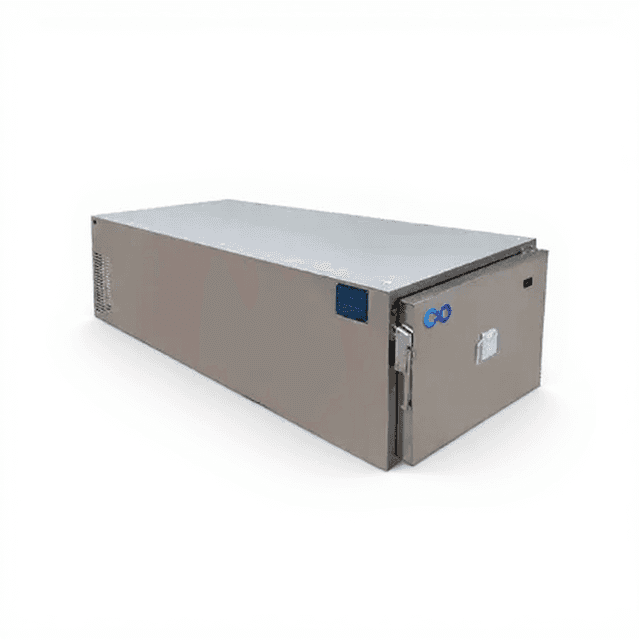
Lab Microreactor System (Lab-484)
Compact glass microreactor system for small-scale chemical synthesis and reaction optimization in academic research laboratories.

Louise Corscadden, PhD
Director of Science · ConductScience
Ask Louise about Lab Microreactor System (Lab-484) fit, setup, configuration, or quote prep.
Already working with us? Sign in to connect this with My Scientist.
Key Specifications
Full details →- Model fit
- Configured during quote
- SKU family
- WHM-0058
- Shipping box
- 250.0 x 200.0 x 150.0 cm
- Ordering
- Online checkout and quote request available
- Category
- Lab Equipment
- Build notes
- glass
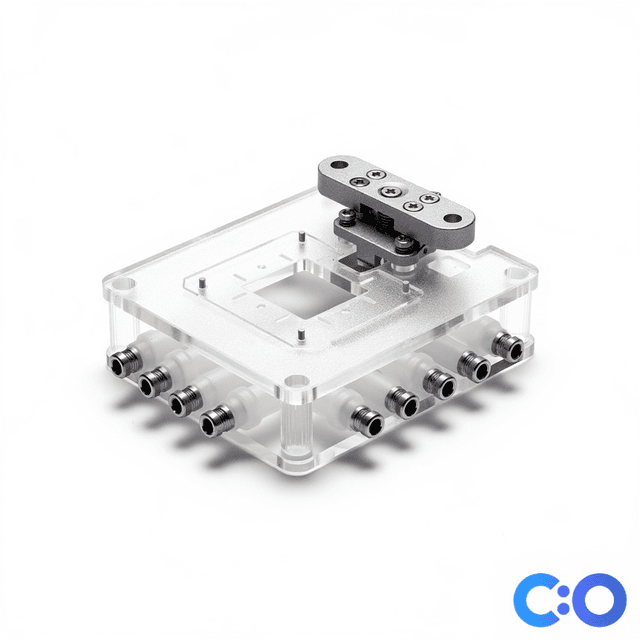
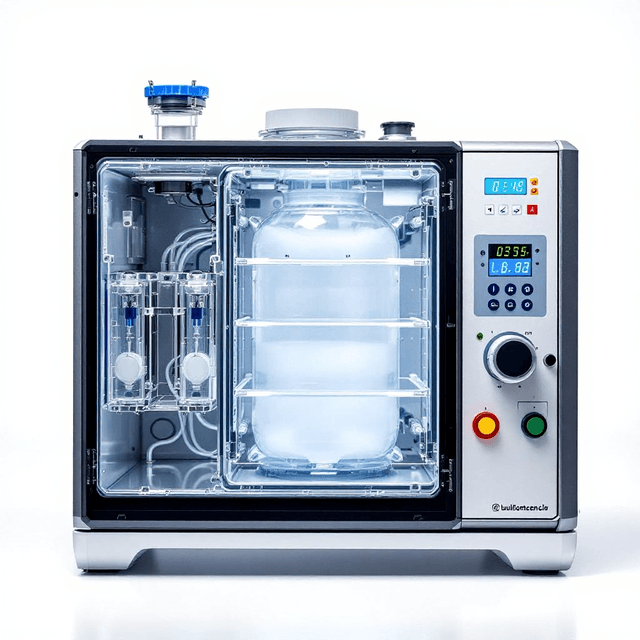
The Lab Microreactor System (Lab-484) is a compact glass-based reaction vessel designed for small-scale chemical synthesis and reaction optimization in academic research environments. This lab-scale system provides researchers with a controlled platform for conducting preliminary synthetic reactions, process development, and method validation studies where reaction volumes are typically measured in milliliters rather than liters.
The glass construction ensures chemical compatibility with a wide range of solvents and reagents while allowing visual monitoring of reaction progress. The compact footprint (250 × 200 × 150 mm) makes it suitable for benchtop installation in space-constrained laboratory settings, while the 6 kg weight provides stability during operation without requiring specialized mounting or support structures.
How It Works
The Lab Microreactor System operates as a controlled reaction environment where chemical transformations occur within a glass vessel under defined temperature, pressure, and mixing conditions. The glass construction provides an inert reaction medium that does not interfere with most organic and inorganic chemical processes, while allowing researchers to visually monitor color changes, precipitation events, and other reaction indicators.
Heat transfer occurs through direct contact between the reaction vessel and external heating elements or temperature-controlled surfaces. The compact design minimizes thermal mass, enabling rapid heating and cooling cycles essential for temperature-sensitive reactions. Mixing is typically achieved through magnetic stirring or other mechanical agitation methods, with the small reaction volume ensuring efficient mass transfer and uniform reaction conditions.
The lab-scale format allows researchers to optimize reaction conditions using minimal quantities of potentially expensive or hazardous reagents before scaling up to larger production volumes. This approach reduces material costs and safety risks while providing quantitative data on reaction kinetics, yields, and selectivity.
Features & Benefits
Scale
- Lab-scale (compact)
Automation Level
- manual
Brand
- ConductScience
Material
- glass
Research Domain
- Analytical Chemistry
- Environmental Monitoring
- Food Science
- Materials Science
- Pharmaceutical QC
Shipping weight
- 6.0 lb
Shipping box
- L: 250.0 cm
- W: 200.0 cm
- H: 150.0 cm
| Feature | This Product | Typical Alternative | Advantage |
|---|---|---|---|
| Construction Material | Glass construction for chemical compatibility and visual monitoring | Entry-level systems often use plastic or metal construction with limited chemical compatibility | Glass provides broad solvent compatibility and allows real-time visual monitoring of reaction progress and color changes |
| Scale and Footprint | Lab-scale compact design (250 × 200 × 150 mm) | Larger benchtop systems often require more laboratory space | Compact footprint enables installation in space-constrained laboratories while maintaining full functionality |
| Weight and Portability | 6 kg weight provides stability with portability | Heavier systems often require permanent installation | Optimal balance between operational stability and laboratory flexibility for research applications |
| Application Focus | Optimized for academic research and small-scale synthesis | Many systems target industrial applications with different requirements | Design specifically addresses the needs of research laboratories where method development and optimization are primary objectives |
The Lab-484 combines glass construction for broad chemical compatibility with a compact design optimized for academic research applications. The 6 kg weight and 250 × 200 × 150 mm footprint provide an optimal balance of stability and laboratory flexibility for small-scale synthesis work.
Practical Tips
Verify temperature monitoring accuracy using certified reference thermometers before conducting temperature-sensitive reactions.
Why: Accurate temperature control is critical for reproducible reaction outcomes and method validation.
Inspect glass components regularly for stress cracks, especially around connection points and after thermal cycling.
Why: Early detection of glass damage prevents catastrophic failure during pressurized or high-temperature operations.
Start with dilute solutions and mild conditions when testing new reaction protocols in the microreactor system.
Why: Conservative initial conditions allow safe evaluation of reaction behavior before optimizing for higher yields or faster rates.
Always verify pressure relief systems are functional before introducing reactive chemicals or pressure to the system.
Why: Proper pressure relief prevents overpressurization that could cause glass failure and chemical exposure.
Record all reaction parameters including temperature, pressure, flow rates, and reagent concentrations for each experiment.
Why: Comprehensive documentation enables reproducibility and facilitates method optimization and scale-up activities.
If mixing appears inadequate, check for proper stirrer bar placement and verify that stirring speed is appropriate for the solution viscosity.
Why: Poor mixing leads to non-uniform reaction conditions and can result in incomplete conversions or side product formation.
Allow the system to equilibrate at operating temperature for at least 10-15 minutes before introducing reagents.
Why: Thermal equilibration ensures consistent reaction conditions and prevents temperature fluctuations that could affect reaction kinetics.
Setup Guide
What’s in the Box
- Lab Microreactor System main unit
- Glass reaction vessel (typical)
- Connection fittings and seals (typical)
- User manual and operating procedures
- Safety documentation (typical)
- Quality certificate (typical)
Warranty
ConductScience provides a standard 1-year manufacturer warranty covering defects in materials and workmanship, with technical support available for setup, operation, and troubleshooting assistance.
Compliance
What is the typical reaction volume range for this microreactor system?
The system is designed for lab-scale synthesis, typically handling reaction volumes in the milliliter range. Consult product datasheet for specific volume specifications and optimal operating range.
What temperature and pressure ranges can the glass construction safely handle?
Glass construction parameters depend on the specific glass type and wall thickness used. Consult product datasheet for maximum operating temperature and pressure specifications before conducting reactions.
How do I ensure proper mixing in the compact reaction vessel?
The small reaction volume facilitates efficient mixing through magnetic stirring or mechanical agitation. The compact design ensures good mass transfer, but stirring speed should be optimized based on reaction viscosity and requirements.
Can this system handle air-sensitive or moisture-sensitive reactions?
The system can be configured for inert atmosphere work depending on the sealing system and gas connections available. Consult product specifications for compatibility with your specific atmospheric requirements.
What cleaning protocols are recommended between different reactions?
Glass construction allows for standard laboratory cleaning procedures including solvent rinses, acid/base washes, and thermal treatment. Always ensure complete removal of previous reaction residues before starting new syntheses.
How does this compare to traditional round-bottom flask synthesis?
The microreactor provides better heat transfer, more precise temperature control, and improved safety compared to traditional glassware, while using smaller reagent quantities and offering better scalability to larger systems.
What monitoring and control options are available?
The system accepts standard laboratory instrumentation for temperature, pressure, and flow monitoring. Integration capabilities depend on the specific monitoring equipment and connection options required for your applications.
Is the system suitable for multi-step synthetic sequences?
The compact design and precise control make it well-suited for multi-step synthesis optimization, though each step may require separate runs unless the system is configured for continuous operation.
Have a question about this product?
Have a question? Just ask.
Send it over and we'll email you a personalized answer — no call, no scheduling.
Prefer to talk it through?