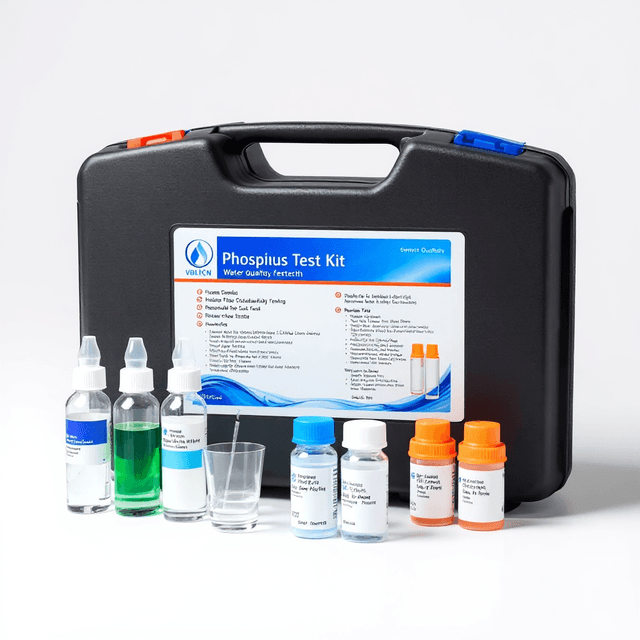
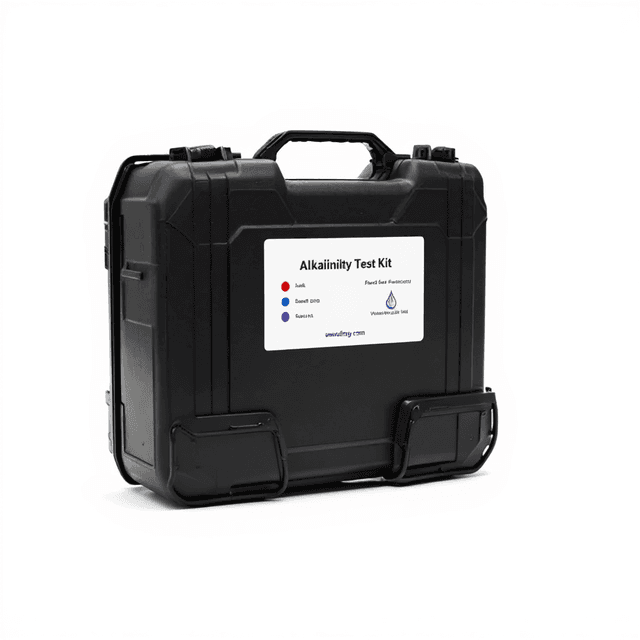
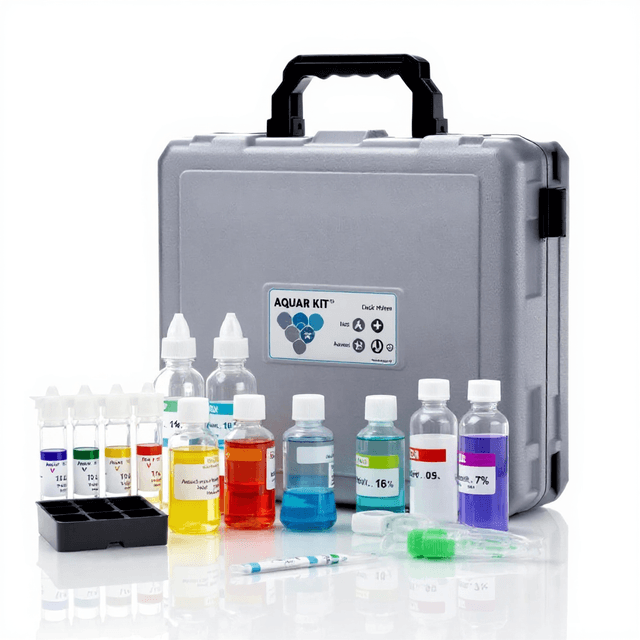
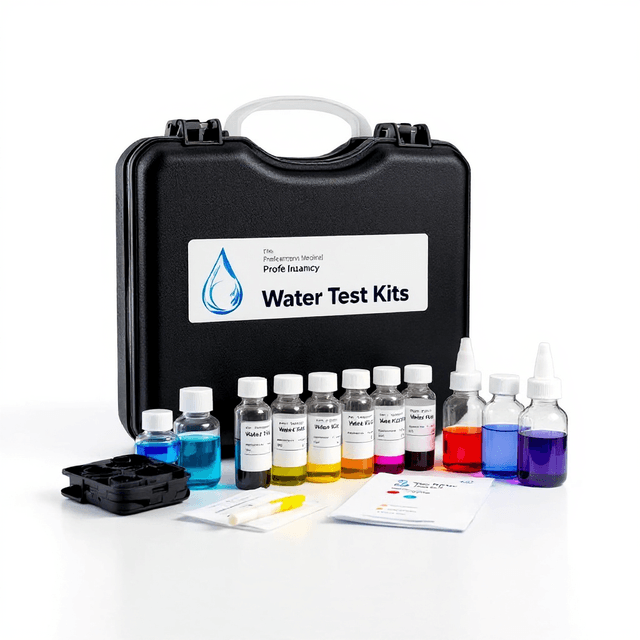
Copper Water Test Kit
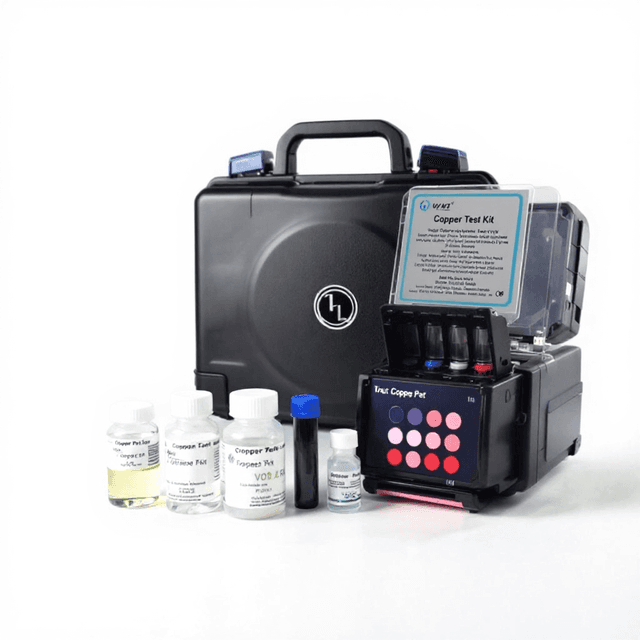
Colorimetric test kit for quantitative measurement of copper concentrations in water samples, supporting environmental monitoring and water quality assessment applications.
| Product name | Model No. |
| copper water test kit | LH2023 |
| Automation Level | manual |
| Brand | ConductScience |

The Copper Water Test Kit (Model LH2023) provides quantitative measurement of copper concentrations in water samples for laboratory and field testing applications. This colorimetric test system enables researchers to assess copper levels in environmental water samples, industrial process streams, and laboratory preparations with portable, bench-top convenience.
The kit utilizes established analytical chemistry principles for copper detection, suitable for applications requiring rapid screening or preliminary assessment of copper contamination. Results support water quality monitoring protocols, environmental compliance documentation, and research investigating copper bioavailability and toxicity in aquatic systems.
How It Works
The copper water test kit employs colorimetric analysis based on the formation of colored complexes between copper ions and specific chelating reagents. When copper is present in the water sample, it reacts with the provided reagents to form a colored solution whose intensity is proportional to the copper concentration.
The analytical method typically utilizes bathocuproine or similar copper-specific chelating agents that form stable, colored complexes under controlled pH conditions. Sample preparation may involve pH adjustment and addition of masking agents to eliminate interference from other metal ions commonly present in water matrices.
Quantitative results are obtained by comparing the developed color intensity to a calibrated color chart or standard curve, enabling semi-quantitative determination of copper concentrations within the kit's specified measurement range.
Features & Benefits
Product name
- Model No.
copper water test kit
- LH2023
Automation Level
- manual
Brand
- ConductScience
Research Domain
- Analytical Chemistry
- Environmental Monitoring
- Food Science
- Industrial Hygiene
- Materials Science
- Toxicology
Weight
- 0.26 kg
Dimensions
- L: 30.0 mm
- W: 20.0 mm
- H: 10.0 mm
Comparison Guide
| Feature | This Product | Typical Alternative | Advantage |
|---|---|---|---|
| Analysis Method | Colorimetric detection with visual comparison | Entry-level test strips often provide only qualitative results | Semi-quantitative results enable concentration estimates rather than simple presence/absence determination. |
| Test Capacity | Multiple analyses per kit | Single-use test products limit analysis volume | Supports replicate measurements and quality control protocols essential for research applications. |
| Portability | Complete portable test system | Laboratory instruments require fixed installation and utilities | Enables field testing and on-site analysis without laboratory infrastructure or sample transportation. |
| Result Format | Color chart comparison for quantification | Basic test kits may lack standardized comparison methods | Provides traceable quantitative results suitable for research documentation and method validation. |
The kit provides portable colorimetric analysis with semi-quantitative results, offering field deployment capabilities and multiple-test capacity for research screening applications. The standardized protocol and color comparison method support consistent results across multiple operators and testing locations.
Practical Tips
Prepare fresh calibration standards for each testing session using certified reference materials.
Why: Reagent degradation and color stability changes can affect accuracy over time.
Store reagent bottles in cool, dark conditions and check expiration dates before each use.
Why: Many colorimetric reagents are light-sensitive and degrade with temperature exposure.
Filter turbid samples or allow settling before analysis to prevent interference with color development.
Why: Suspended particles scatter light and interfere with accurate color comparison.
Analyze duplicate samples and include blank controls with each testing batch.
Why: Quality control measures verify method performance and identify contamination or procedural errors.
If color development is weak or inconsistent, verify reagent mixing order and reaction times.
Why: Colorimetric reactions require proper sequencing and timing for complete complex formation.
Use appropriate personal protective equipment and ensure adequate ventilation when handling chemical reagents.
Why: Chemical reagents may pose inhalation or contact hazards requiring standard laboratory safety precautions.
Setup Guide
What’s in the Box
- Test reagent bottles (typical)
- Sample measurement vessels (typical)
- Color comparison chart (typical)
- Instruction manual with protocols (typical)
- Calibration standards or reference materials (typical)
- Sampling accessories and transfer pipettes (typical)
Warranty
ConductScience provides a standard one-year manufacturer warranty covering defects in materials and workmanship, with technical support for method questions and troubleshooting assistance.
Compliance
What is the detection limit and measurement range for copper analysis?
Consult the product datasheet for specific detection limits and measurement range. Colorimetric methods typically provide detection capabilities in the mg/L range with accuracy dependent on sample matrix and interference levels.
How do other metals interfere with copper measurements?
Iron, zinc, and other transition metals may interfere with colorimetric copper determination. The kit should include masking agents or specify sample pretreatment procedures to minimize common interferences.
What sample preservation is required before analysis?
Water samples for metal analysis typically require acidification to pH <2 with nitric acid and analysis within specified holding times. Consult kit documentation for specific preservation requirements.
Can this kit analyze samples with high dissolved solids?
Sample matrix effects may impact colorimetric analysis accuracy. High ionic strength or turbid samples may require dilution or pretreatment. Verify method suitability for specific sample types.
How does this compare to instrumental methods like ICP or AAS?
Colorimetric methods provide rapid, portable screening with lower precision than instrumental techniques. Suitable for field testing and preliminary assessment, with confirmatory analysis by ICP or AAS for regulatory reporting.
What is the shelf life of kit reagents?
Reagent stability varies by component. Check expiration dates on individual bottles and store according to specified temperature and light conditions. Some reagents may require refrigerated storage.
Have a question about this product?
Accessories
Enhance your setup with compatible accessories
Frequently Bought Together