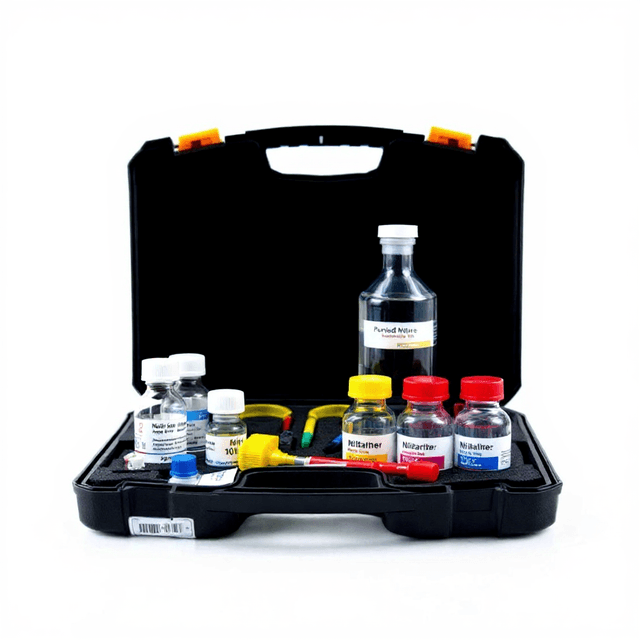
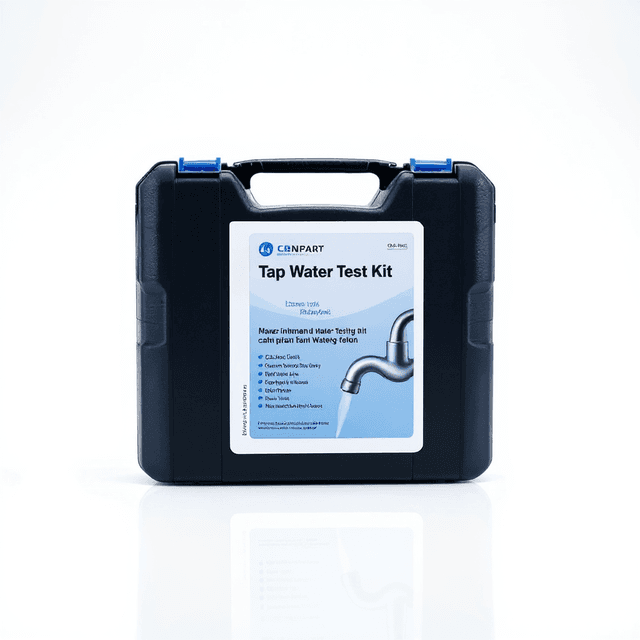
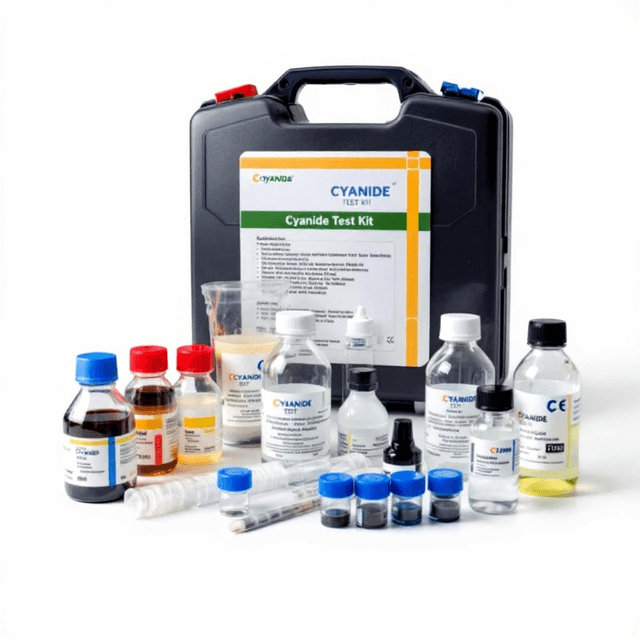
Alkalinity Test Kit
Portable alkalinity test kit for quantitative water quality analysis using colorimetric or titrimetric methods, available in low-range and high-range variants.

Louise Corscadden, PhD
Director of Science · ConductScience
Ask Louise about Alkalinity Test Kit fit, setup, configuration, or quote prep.
Already working with us? Sign in to connect this with My Scientist.
Key Specifications
Full details →- Model fit
- 2 selectable configurations
- SKU family
- CS-LH-WTK022
- Shipping box
- 30.0 x 20.0 x 10.0 cm
- Ordering
- Online checkout and quote request available
- Category
- Water Test Kits
- Build notes
- Confirm accessories, station layout, and support needs before purchase
The Alkalinity Test Kit provides quantitative measurement of water alkalinity through visual colorimetry or titrimetry methods. This portable analytical tool enables field and laboratory determination of bicarbonate, carbonate, and hydroxide ion concentrations in aqueous samples without requiring specialized instrumentation. The kit employs standardized methodologies recognized internationally for water quality assessment.
Available in low-range (LH2018) and high-range (LH2019) configurations, the test kit accommodates diverse alkalinity levels encountered in environmental, industrial, and research applications. The colorimetric approach utilizes pH indicator chemistry to produce measurable color changes proportional to alkalinity concentration, while titrimetric methods provide quantitative endpoint determination through acid neutralization.
How It Works
Alkalinity measurement relies on the acid neutralization capacity of water samples containing bicarbonate (HCO3-), carbonate (CO32-), and hydroxide (OH-) ions. The colorimetric method employs pH indicators that undergo distinct color transitions at specific pH endpoints corresponding to alkalinity species. Methyl orange indicator typically provides the total alkalinity endpoint at pH 4.3, where all alkalinity species are converted to carbonic acid.
The titrimetric approach involves stepwise addition of standardized acid solution to the sample while monitoring pH or color changes. The volume of acid required to reach the endpoint is directly proportional to the alkalinity concentration. This neutralization reaction follows stoichiometric principles where each mole of alkalinity consumes one equivalent of acid, enabling quantitative determination through volumetric analysis.
Temperature and ionic strength corrections may be applied to ensure accuracy across different sample matrices. The method's reliability stems from well-established acid-base chemistry principles and standardized procedures that minimize interference from other dissolved species.
Features & Benefits
Brand
- ConductScience
Research Domain
- Analytical Chemistry
- Environmental Monitoring
- Food Science
- Industrial Hygiene
- Materials Science
- Pharmaceutical QC
Shipping weight
- 0.26 lb
Shipping box
- L: 30.0 cm
- W: 20.0 cm
- H: 10.0 cm
| Feature | This Product | Typical Alternative | Advantage |
|---|---|---|---|
| Measurement Method | Visual colorimetry and titrimetry options | Many field kits offer only single method approaches | Provides method flexibility for different precision requirements and field conditions |
| Range Configuration | Dual-range system with LR and HR variants | Single-range kits often require dilution for extreme values | Eliminates dilution steps and associated errors for diverse sample types |
| Portability Design | Compact, lightweight portable kit | Some test systems require additional equipment or power sources | Enables truly field-portable analysis without infrastructure requirements |
| International Standards | Based on internationally recognized methodologies | Not all kits follow standardized procedures | Ensures results are globally acceptable for regulatory and research documentation |
The Alkalinity Test Kit offers methodological flexibility through both colorimetric and titrimetric approaches, dual-range capability for diverse sample types, and portable design based on international standard procedures for reliable field and laboratory alkalinity determination.
| Model | SKU | Listed price | Status | Shipping box |
|---|---|---|---|---|
| 50 | CS-LH-WTK022 | $999.99 | Available | 30.0 x 20.0 x 10.0 cm |
| 25 | CS-LH-WTK022 | $549.99 | Available | 30.0 x 20.0 x 10.0 cm |
Practical Tips
Verify kit accuracy using certified alkalinity reference standards before critical analyses.
Why: Reference standards confirm proper reagent function and technique execution.
Collect samples in clean containers and analyze promptly to avoid alkalinity changes from CO2 exchange.
Why: Atmospheric CO2 absorption can significantly alter sample alkalinity during storage.
Record sample temperature and pH alongside alkalinity measurements for complete documentation.
Why: These parameters provide context for alkalinity interpretation and quality assessment.
Store reagents in cool, dry conditions and monitor expiration dates regularly.
Why: Proper storage maintains reagent stability and prevents analytical errors from degraded chemicals.
If color endpoints appear unclear, ensure adequate lighting and consider sample dilution for high-alkalinity waters.
Why: Poor lighting or extreme alkalinity levels can make visual endpoint determination difficult.
Wear appropriate PPE when handling reagents and dispose of waste according to local regulations.
Why: Chemical reagents may be corrosive or hazardous requiring proper handling protocols.
Setup Guide
What’s in the Box
- LR alkalinity test reagents (LH2018) (typical)
- HR alkalinity test reagents (LH2019) (typical)
- pH indicator solutions (typical)
- Measuring vessels and pipettes (typical)
- Color comparison chart (typical)
- Detailed instruction manual (typical)
- Storage container (typical)
Warranty
ConductScience provides standard manufacturer warranty covering defects in materials and workmanship, with technical support for proper test kit utilization and result interpretation.
Compliance
References
Background reading relevant to this product:
What is the measurement range and precision for each model variant?
Specific ranges for LR (LH2018) and HR (LH2019) models should be consulted in the product datasheet. Precision depends on proper technique and adherence to standardized procedures.
How does sample temperature affect alkalinity measurements?
Temperature influences indicator color development and reaction kinetics. Samples should be analyzed at consistent temperature or appropriate corrections applied as specified in the methodology.
What interferences can affect alkalinity test results?
Common interferences include high turbidity, color, or dissolved organics. Sample pretreatment or dilution may be required for highly contaminated samples.
How long are the reagents stable after opening?
Reagent stability varies by component and storage conditions. Follow kit instructions for proper storage and expiration monitoring to ensure analytical reliability.
Can the kit be used for seawater or high-salinity samples?
High ionic strength samples may require method modifications or dilution. Consult product documentation for specific guidance on challenging sample matrices.
What quality control measures should be implemented?
Regular analysis of certified reference materials, duplicate samples, and method blanks ensures analytical quality and identifies potential procedural issues.
How does this compare to instrumental alkalinity analyzers?
The test kit provides portable, cost-effective analysis suitable for field use, while automated analyzers offer higher throughput and precision for laboratory applications.
Have a question about this product?
Have a question? Just ask.
Send it over and we'll email you a personalized answer — no call, no scheduling.
Prefer to talk it through?
Accessories
Enhance your setup with compatible accessories
Frequently Bought Together