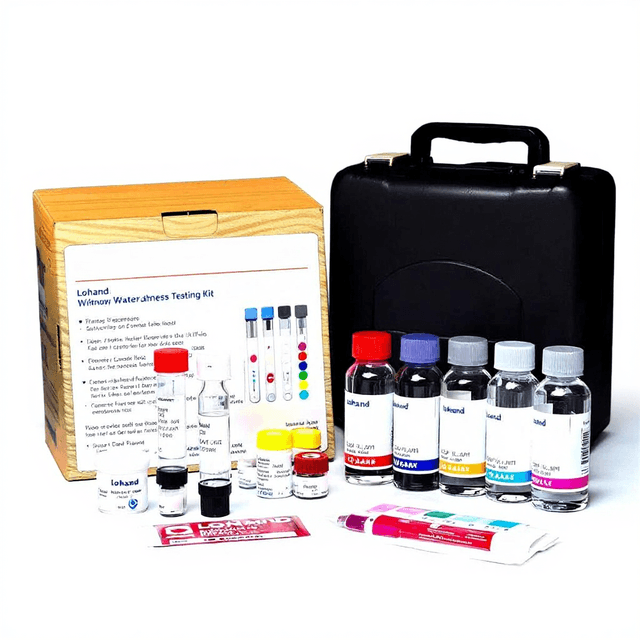
Aquarium Test Kit
Portable analytical kit for quantitative free chlorine analysis in aquatic systems using colorimetric and titrimetric methods.

Louise Corscadden, PhD
Director of Science · ConductScience
Ask Louise about Aquarium Test Kit fit, setup, configuration, or quote prep.
Already working with us? Sign in to connect this with My Scientist.
Key Specifications
Full details →- Model fit
- Configured during quote
- SKU family
- CS-LH-WTK005
- Shipping box
- 30.0 x 20.0 x 10.0 cm
- Ordering
- Online checkout and quote request available
- Category
- Water Test Kits
- Build notes
- Confirm accessories, station layout, and support needs before purchase
The ConductScience Aquarium Test Kit provides quantitative analysis of free chlorine concentrations in aquatic systems using standardized colorimetric and titrimetric methods. This portable analytical kit enables rapid field testing without requiring specialized laboratory instrumentation, delivering results within minutes of sample collection.
The kit employs visual colorimetry for semi-quantitative screening and titrimetric analysis for precise quantification, following internationally recognized analytical protocols. Each test requires minimal sample volume and includes pre-measured reagent packets to ensure consistent stoichiometry and reduce measurement variability.
How It Works
The test kit utilizes the DPD (N,N-diethyl-p-phenylenediamine) colorimetric method for free chlorine determination, which forms a magenta-colored complex proportional to chlorine concentration. Free chlorine oxidizes the DPD reagent to form a quinoneimine dye, with color intensity directly correlating to chlorine concentration according to Beer-Lambert law principles.
For titrimetric analysis, the kit employs iodometric titration where free chlorine liberates iodine from potassium iodide, which is then titrated with standardized sodium thiosulfate solution. This redox reaction provides quantitative stoichiometric determination with detection limits typically in the 0.1-10 mg/L range depending on sample volume and reagent concentration.
Both methods are based on established analytical chemistry principles and provide complementary approaches: colorimetry for rapid screening and titrimetry for precise quantification when regulatory compliance documentation is required.
Features & Benefits
Item name
- Testing
Aquarium test kit
- Free chlorine
Automation Level
- manual
Brand
- ConductScience
Research Domain
- Environmental Monitoring
- Food Science
- Industrial Hygiene
- Microbiology
- Pharmaceutical QC
Shipping weight
- 0.26 lb
Shipping box
- L: 30.0 cm
- W: 20.0 cm
- H: 10.0 cm
| Feature | This Product | Typical Alternative | Advantage |
|---|---|---|---|
| Analytical Method | Dual colorimetric and titrimetric analysis options | Single method instruments often provide only colorimetric or electrochemical detection | Provides both rapid screening capability and precise quantification in one kit for comprehensive analytical flexibility. |
| Portability | Compact kit with no power requirements | Electronic analyzers require battery power or AC connection | Enables field deployment in remote locations without infrastructure constraints or battery management concerns. |
| Reagent Format | Pre-measured reagent packets | Bulk reagents require field weighing or liquid handling | Eliminates measurement errors and cross-contamination while ensuring consistent analytical stoichiometry. |
| Training Requirements | Simple visual methods requiring minimal specialized training | Electronic instruments often require technical calibration and maintenance procedures | Reduces operator training time and enables deployment by personnel without extensive analytical chemistry background. |
This kit emphasizes simplicity and field portability while maintaining analytical reliability through standardized chemistry. The dual-method approach provides both rapid assessment and quantitative documentation capabilities in a single portable package.
Practical Tips
Verify analytical accuracy periodically using certified chlorine reference standards at expected concentration ranges.
Why: Ensures continued analytical reliability and meets quality assurance requirements for regulatory applications.
Store reagent packets in original sealed packaging at recommended temperature to prevent degradation.
Why: Reagent stability directly affects analytical accuracy and measurement precision.
Rinse test tubes thoroughly with sample water before analysis to eliminate carryover contamination.
Why: Prevents interference from previous samples and ensures representative measurement of current sample matrix.
If colorimetric results appear inconsistent, check for adequate mixing time and verify reagent packet integrity.
Why: Incomplete dissolution or degraded reagents are common sources of analytical variability in field testing.
Record sampling time, temperature, and pH alongside chlorine measurements for comprehensive documentation.
Why: Environmental parameters affect chlorine stability and provide context for interpreting analytical results.
Handle reagents according to safety data sheet requirements and maintain proper ventilation during analysis.
Why: Chemical reagents may present inhalation or contact hazards requiring appropriate personal protective equipment.
Setup Guide
What’s in the Box
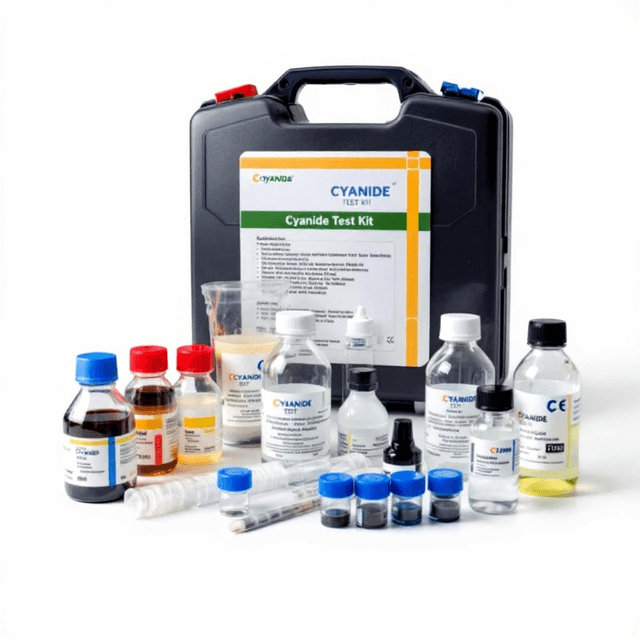
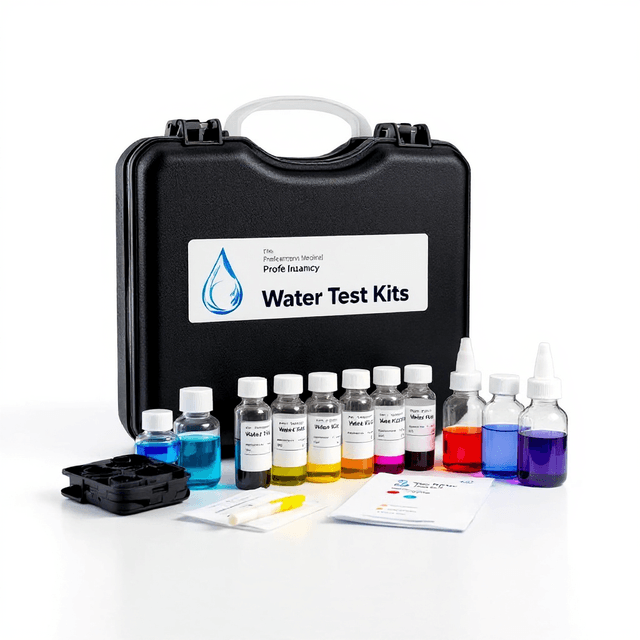
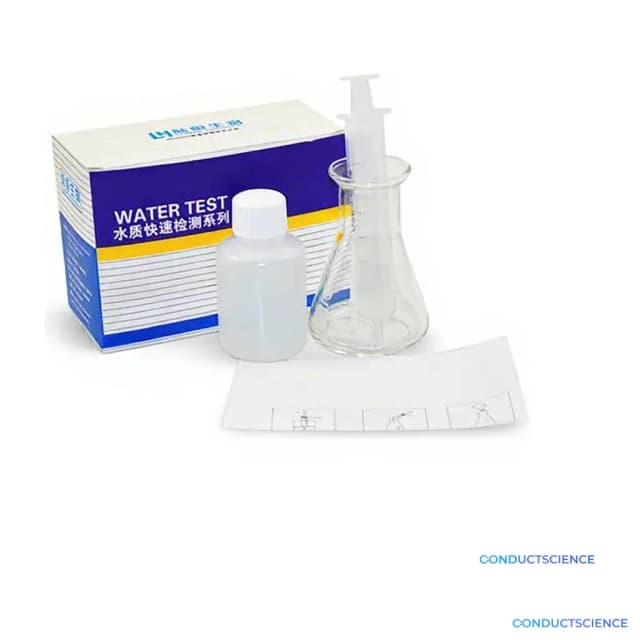
- Test tubes with graduation markings
- DPD reagent packets for colorimetric analysis (typical)
- Titration reagents for quantitative analysis (typical)
- Color comparison chart
- Instruction manual with analytical protocols
- Sampling guidance documentation (typical)
Warranty
ConductScience provides a one-year warranty covering reagent stability and analytical performance under proper storage conditions. Technical support includes protocol consultation and troubleshooting assistance.
Compliance
What is the detection range and precision of the chlorine analysis?
Detection range typically spans 0.1-10 mg/L for most protocols. Precision depends on method: colorimetry provides ±0.2 mg/L repeatability while titrimetry achieves ±0.1 mg/L when performed by trained operators.
Can this kit distinguish between free chlorine and total chlorine?
The standard DPD method measures free available chlorine. Total chlorine determination requires modified reagent chemistry or additional analytical steps - consult product datasheet for specific capabilities.
How should samples be preserved if immediate analysis is not possible?
Chlorine samples should be analyzed immediately as chlorine residuals are unstable. If delay is unavoidable, store samples in dark containers at 4°C and analyze within 2 hours to minimize degradation.
What interferences can affect chlorine measurements?
Common interferences include high iron concentrations, nitrites, and organic compounds that react with DPD. Sample pH outside 6.2-6.5 range can also affect colorimetric accuracy.
Is calibration verification possible with this kit?
Kit relies on standardized reagent chemistry rather than electronic calibration. Accuracy verification can be performed using certified chlorine reference standards or comparison with laboratory instrumentation.
What sample volume is required for analysis?
Consult product instructions for specific volume requirements, typically ranging from 10-25 mL depending on test tube size and analytical sensitivity needed.
Have a question about this product?
Have a question? Just ask.
Send it over and we'll email you a personalized answer — no call, no scheduling.
Prefer to talk it through?
Accessories
Enhance your setup with compatible accessories
Frequently Bought Together