Crayfish Y-Maze
Specialized three-armed aquatic maze for assessing spatial learning, memory, and decision-making behaviors in crayfish and other aquatic invertebrates.

Louise Corscadden, PhD
Director of Science · ConductScience
Ask Louise about Crayfish Y-Maze fit, setup, configuration, or quote prep.
Already working with us? Sign in to connect this with My Scientist.
Key Specifications
Full details →- Model fit
- Crayfish
- SKU family
- CS-958190
- Shipping box
- 65.0 x 36.0 x 27.0 cm
- Ordering
- Online checkout and quote request available
- Category
- Behavioral Mazes
- Build notes
- Confirm accessories, station layout, and support needs before purchase
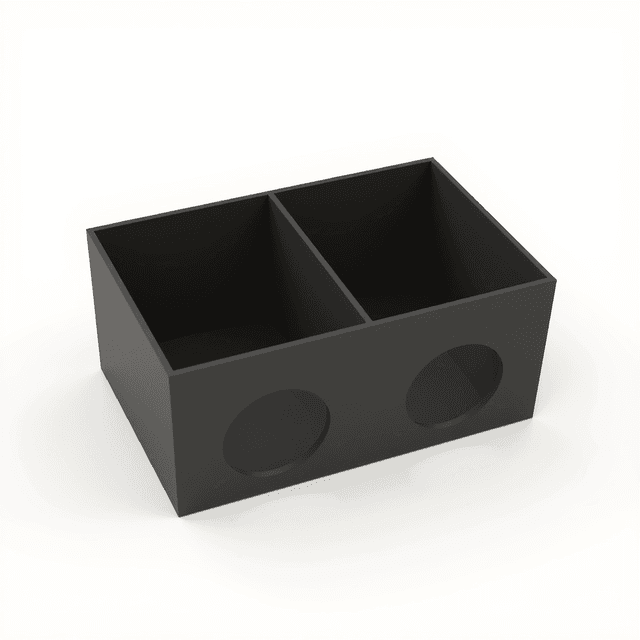
The Crayfish Y-Maze is a specialized behavioral testing apparatus designed for investigating spatial learning, memory, and decision-making behaviors in crayfish and other aquatic invertebrates. This three-armed maze configuration provides researchers with a controlled environment to assess cognitive functions, spatial navigation abilities, and choice preferences in decapod crustaceans.
Constructed for aquatic behavioral studies, the Y-maze enables researchers to conduct standardized spatial learning protocols while maintaining appropriate water conditions for test subjects. The apparatus supports both spontaneous alternation tasks and reinforcement-based learning paradigms, making it suitable for comparative cognition research and neurobiological investigations in invertebrate species.
How It Works
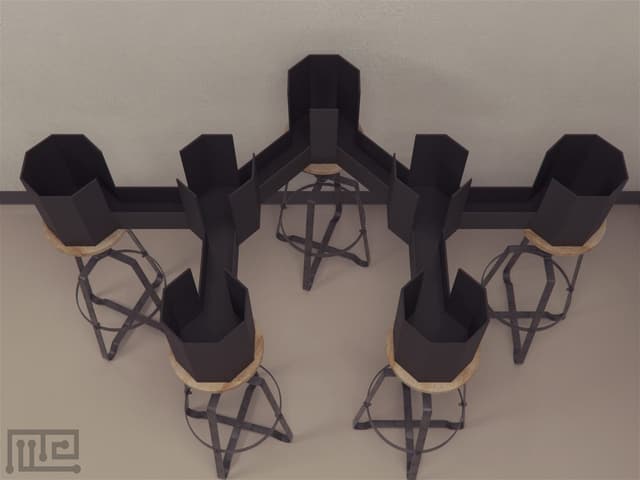
The Y-maze operates on the principle of spatial choice discrimination, presenting test subjects with three equidistant arms radiating from a central decision zone. Crayfish naturally exhibit exploratory behavior and spatial memory, making them suitable subjects for maze-based cognitive assessments. The three-arm configuration allows for measurement of spontaneous alternation rates and investigation of spatial working memory through sequential arm entry patterns.
During testing, researchers can implement various experimental paradigms including free exploration trials, reinforcement-based learning tasks, or avoidance conditioning protocols. The aquatic environment maintains physiological conditions necessary for normal crayfish behavior while providing controlled spatial cues for navigation studies. Water flow patterns and environmental enrichment can be standardized to ensure consistent testing conditions across experimental sessions.
Features & Benefits
Behavioral Construct
- Spatial Learning
- Working Memory
- Decision Making
- Spatial Navigation
- Spontaneous Alternation
Automation Level
- manual
Research Domain
- Behavioral Pharmacology
- Developmental Biology
- Environmental Monitoring
- Learning & Memory
- Neuroscience
- Toxicology
Species
- Crayfish
Compatible Tracking Software
- ConductVision
Shipping weight
- 6.06 lb
Shipping box
- L: 65.0 cm
- W: 36.0 cm
- H: 27.0 cm
| Feature | This Product | Typical Alternative | Advantage |
|---|---|---|---|
| Arm Configuration | Three-arm Y-maze design | Simple T-mazes or more complex radial arm mazes | Optimal balance between spatial complexity and behavioral assessment feasibility for invertebrate subjects. |
| Aquatic Compatibility | Designed for aquatic environments | Terrestrial maze designs requiring adaptation | Maintains natural physiological conditions for crayfish without environmental stress. |
| Species Specialization | Optimized for crayfish testing | Generic designs for multiple species | Tailored dimensions and features specifically for decapod crustacean behavioral assessment. |
| Protocol Flexibility | Supports multiple behavioral paradigms | Single-purpose apparatus designs | Enables diverse experimental approaches within the same testing apparatus. |
The Crayfish Y-Maze provides specialized aquatic behavioral testing capabilities with three-arm spatial configuration optimized for invertebrate cognition research. The apparatus balances experimental control with species-appropriate environmental conditions for reliable cognitive assessment.
Practical Tips
Allow subjects to acclimate to the maze environment for several minutes before data collection begins.
Why: Reduces stress-related behaviors that could confound cognitive performance measurements.
Clean the maze thoroughly between subjects to remove chemical traces that could influence behavior.
Why: Prevents cross-contamination of olfactory cues that might affect spatial navigation decisions.
Record multiple trials per subject and counterbalance maze orientation across sessions.
Why: Improves statistical power and controls for potential environmental bias in spatial testing.
Maintain consistent water temperature and lighting conditions throughout the experimental period.
Why: Environmental stability ensures reliable behavioral responses and reduces variability in cognitive performance.
Monitor for subjects that remain motionless or show minimal exploration during trials.
Why: Identifies animals that may be stressed or unsuitable for cognitive testing protocols.
Handle crayfish subjects with appropriate restraint techniques to prevent injury to both animal and researcher.
Why: Ensures subject welfare and maintains consistent handling stress across experimental groups.
Setup Guide
What’s in the Box
- Y-maze apparatus components (typical)
- Assembly instructions (typical)
- User manual with protocol guidelines (typical)
- Water system connections (typical)
Warranty
ConductScience provides standard manufacturer warranty coverage with technical support for behavioral testing equipment applications.
Compliance
References
Background reading relevant to this product:
What water parameters are recommended for crayfish behavioral testing?
Maintain species-appropriate temperature, pH, and dissolved oxygen levels. Consult product datasheet for specific water quality requirements and circulation recommendations.
How do I measure spontaneous alternation in the Y-maze?
Record sequential arm entries and calculate the percentage of trials where subjects choose a different arm than the previous visit, indicating spatial working memory function.
What trial duration is appropriate for crayfish cognitive testing?
Trial length depends on the specific protocol, but typically ranges from 5-15 minutes to allow adequate exploration while maintaining subject motivation.
Can the maze be modified for different crayfish sizes?
The apparatus dimensions should accommodate the size range of your test subjects. Consult specifications for appropriate subject size recommendations.
How do I control for environmental bias in spatial testing?
Rotate the maze orientation between trials, maintain consistent lighting, and remove external spatial cues that could influence navigation behavior.
What data parameters should be recorded during testing?
Track arm entries, time spent in each arm, latency to first choice, total distance traveled, and sequence of arm visits for comprehensive behavioral analysis.
Have a question about this product?
Have a question? Just ask.
Send it over and we'll email you a personalized answer — no call, no scheduling.
Prefer to talk it through?